
Parmesan Crusted Chicken
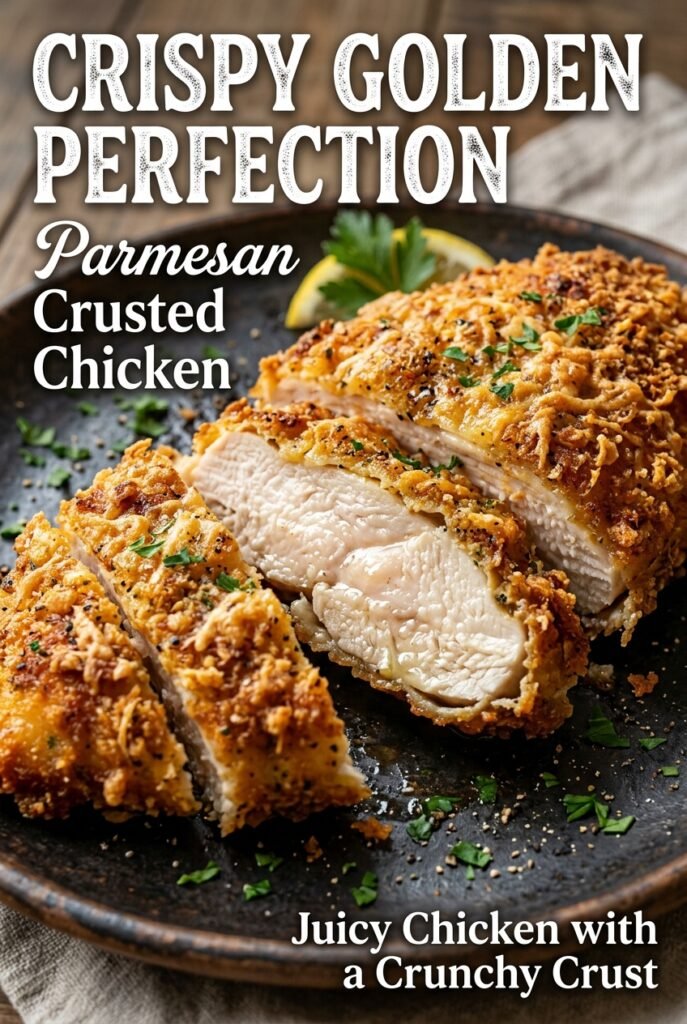
Parmesan crusted chicken earns a permanent spot in the dinner rotation because it gives you that crisp, savory coating without needing a fryer or a sink full of dishes. The…
Tip: save now, read later.
Parmesan crusted chicken earns a permanent spot in the dinner rotation because it gives you that crisp, savory coating without needing a fryer or a sink full of dishes. The crust turns deeply golden in the oven, the chicken stays juicy underneath, and the whole thing feels a little more special than plain baked chicken without asking for much more effort.
What makes this version work is the balance between fine Parmesan and panko. Parmesan brings salt, richness, and that toasted nutty edge, while panko keeps the coating light instead of heavy and pasty. Pounding the chicken to an even thickness matters more than people think. It keeps the meat from drying out before the crust has a chance to brown, and it gives you a cleaner bite from end to end.
Below, you’ll find the small details that keep the coating crisp, plus a few smart swaps if you need to work with what’s already in your kitchen.
The crust baked up crunchy instead of soggy, and the chicken stayed juicy all the way through. I added the broil at the end and it gave me that extra golden finish my family loved.
Parmesan crusted chicken with that crisp panko finish deserves a spot in your saved dinners for busy nights.
The Reason the Crust Stays Crisp Instead of Going Soft
Most baked chicken coatings fail for one of two reasons: the crumbs never get enough direct heat, or the chicken releases moisture and turns the bottom layer soggy. This recipe avoids both by using a hot oven, a parchment-lined sheet pan, and a light drizzle of oil over the top of the coating. That oil helps the Parmesan and panko toast instead of drying out into dusty crumbs.
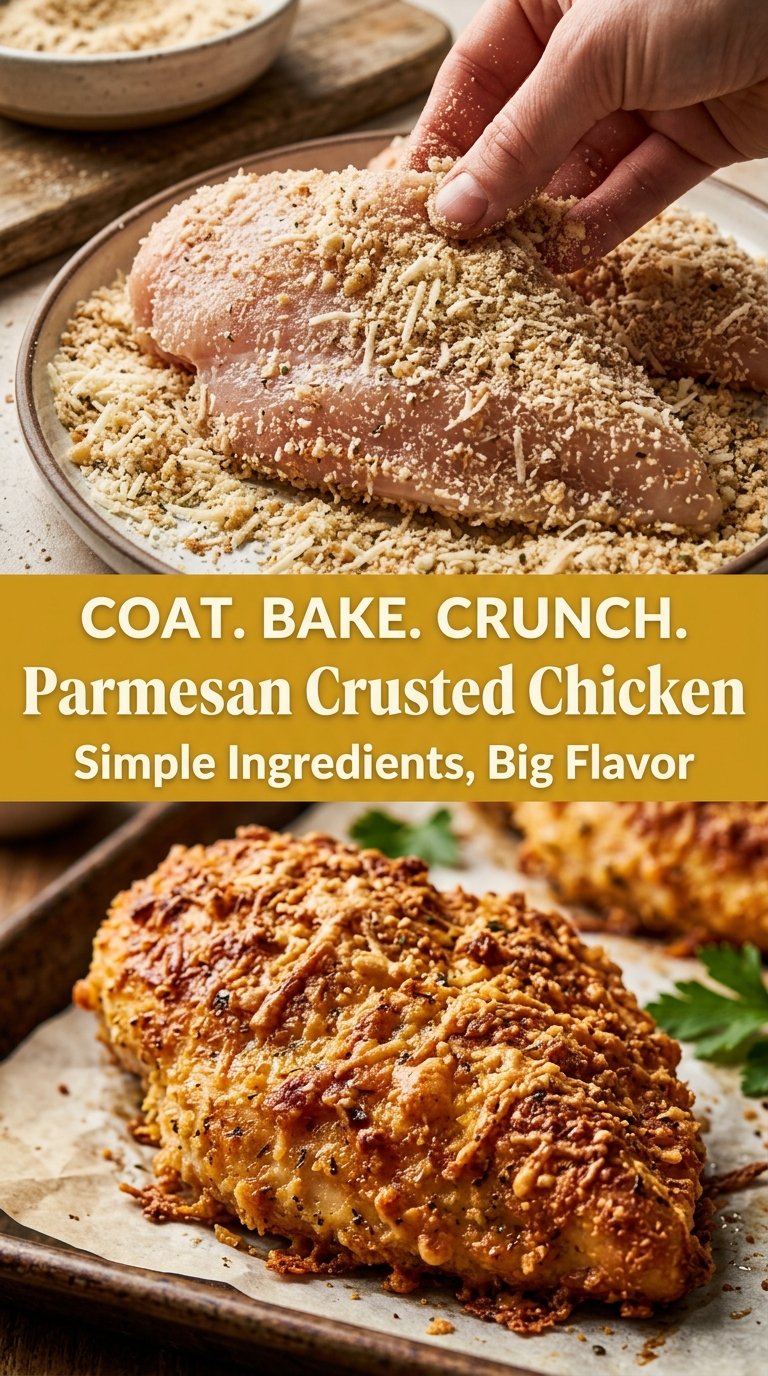
The other thing that matters is the order of assembly. The egg mixture should be thin enough to coat the chicken without clumping, and the crumb mixture should be pressed on firmly so it actually sticks. If the coating looks patchy before baking, it’ll bake patchy too. A loose crust won’t brown evenly, and the first flip or movement on the pan can knock half of it off.
- Panko breadcrumbs — These are what keep the crust light and crisp. Regular breadcrumbs work in a pinch, but they give a denser finish and don’t stay as crunchy after baking.
- Parmesan cheese — Use finely grated Parmesan, not big shreds. The finer texture helps it meld with the panko and brown evenly. Pre-grated Parmesan from a canister works here better than you might expect, though freshly grated tastes sharper.
- Olive oil — The drizzle on top helps the crust turn golden. You don’t need much. Too much oil can make the coating greasy instead of crisp.
- Chicken breasts — Pound them to an even thickness so the thinner end doesn’t dry out before the thick end is done. If your chicken breasts are huge, slice them in half horizontally after pounding for faster, more even cooking.
Building the Coating So It Bakes Up Golden
Evening Out the Chicken
Pound the chicken breasts to an even thickness before anything else. You want the surface flat enough that the coating sits in one layer and the meat cooks at the same pace from edge to edge. If one side is much thicker, the crust on the thinner end will overbake before the center is done.
Mixing the Crumb Layer
Combine the Parmesan, panko, garlic powder, Italian seasoning, paprika, salt, and pepper in a shallow bowl. Stir until the seasoning is evenly distributed, because paprika and garlic powder tend to clump if they’re not broken up well. The mixture should look sandy with little flecks of cheese throughout, not like a pile of plain crumbs with seasoning sitting on top.
Coating and Baking
Dip the chicken in the egg mixture, then press it into the crumb mixture so the coating really adheres. Lay each piece on the parchment-lined baking sheet without crowding; if the pieces touch, the sides steam instead of crisping. Bake until the crust is deeply golden and the chicken reaches 165°F in the thickest part, then broil briefly if you want a deeper color. Watch that broil closely, because Parmesan can go from browned to burnt fast.
What to Change When You Need a Different Version
Gluten-Free Version
Swap the panko for gluten-free panko or crushed gluten-free crackers. Gluten-free panko gives the closest crunch, while crackers can taste a little richer and more toasted. Keep the coating light, because heavier gluten-free crumbs can pack down and turn dense if you press them too hard.
Dairy-Free Adaptation
Use a dairy-free Parmesan-style substitute if you need to avoid dairy, but know the flavor will be milder and usually less salty. Add a little extra garlic powder and a pinch more salt to compensate. The crust will still crisp, though it won’t have the same savory bite as the original.
Chicken Thigh Swap
Boneless skinless thighs work well if you want a juicier result. They usually need a few extra minutes in the oven, and the coating can look darker because thighs stay moist longer. Use the same method, but rely on internal temperature rather than color alone.
Storage and Reheating
- Refrigerator: Store leftovers in an airtight container for up to 3 days. The coating softens a bit, but the chicken stays usable.
- Freezer: It freezes well after baking. Wrap pieces tightly and freeze for up to 2 months, then thaw in the refrigerator before reheating.
- Reheating: Reheat on a wire rack in a 375°F oven until hot and the crust re-crisps. The microwave will make the coating limp, which is the main mistake people make with this dish.
Questions I Get Asked About This Recipe
Parmesan Crusted Chicken
Ingredients
Equipment
Method
- Preheat oven to 425°F (220°C) and line a sheet pan with parchment for easy release. Set up the baking space so the chicken can go in right after coating.
- Pound chicken breasts to an even thickness so they cook at the same rate. Keep the pieces flat enough to promote an even, crisp crust.
- In a shallow bowl, combine Parmesan, panko, garlic powder, Italian seasoning, paprika, salt, and pepper. Stir until the coating looks uniformly speckled.
- In another bowl, whisk eggs and milk until smooth. The mixture should look slightly frothy for better coating adhesion.
- Dip chicken into the egg mixture. Let excess drip back into the bowl so the crust stays thick rather than wet.
- Coat chicken thoroughly with the Parmesan breadcrumb mixture. Press lightly so the crumbs cling across the entire surface.
- Place coated chicken on the parchment-lined baking sheet. Arrange with space between pieces for crisping and even browning.
- Drizzle lightly with olive oil to help the coating turn golden. Use a light hand so it crisps instead of pooling.
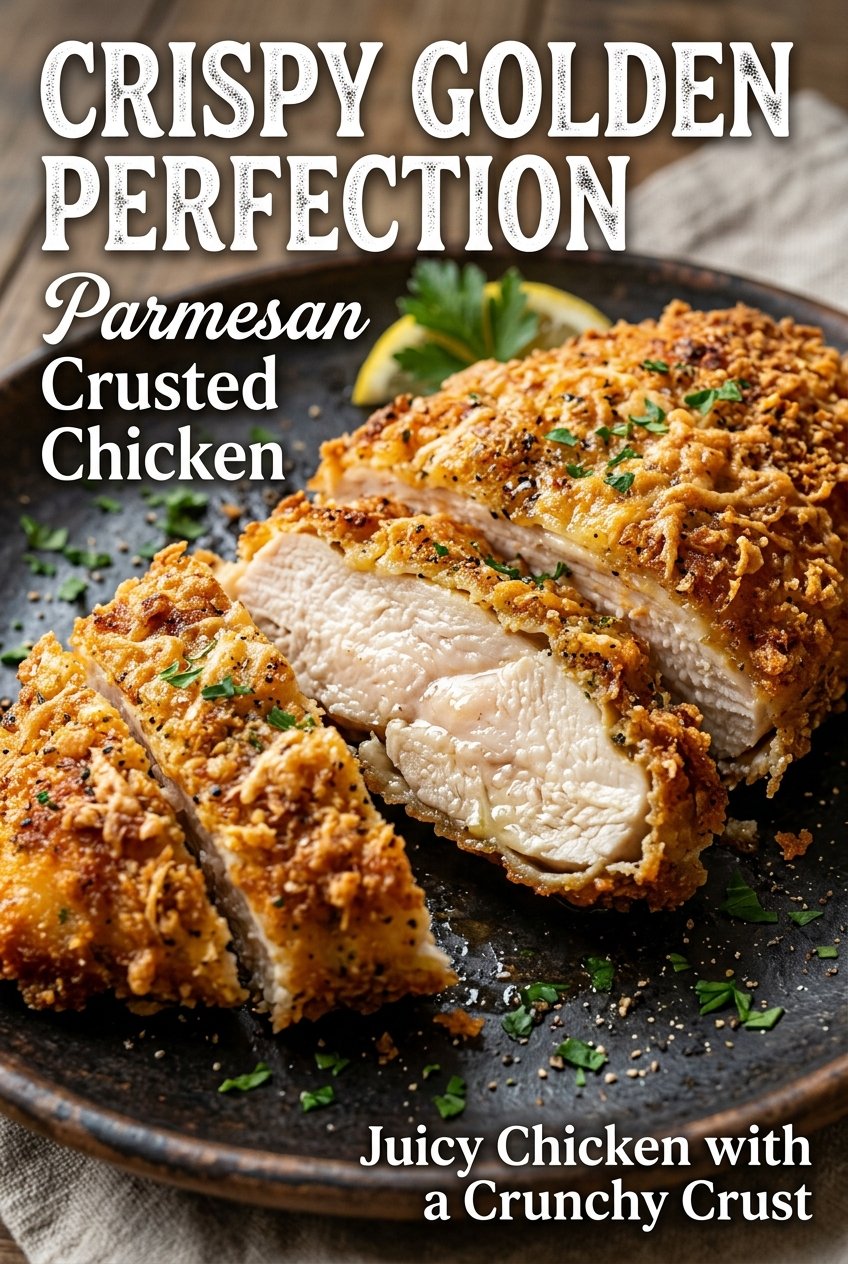
- Bake at 425°F (220°C) for 20–25 minutes until golden brown and cooked through. Look for a crisp, browned crust and ensure the chicken is fully cooked.
- Broil for 2–3 minutes for extra crispiness if desired. Watch closely so the top browns without burning.
- Garnish with chopped parsley and lemon wedges. Add lemon right before serving for bright flavor.
- Serve immediately while the crust is at peak crispness. Plate the chicken with your preferred sides.
