
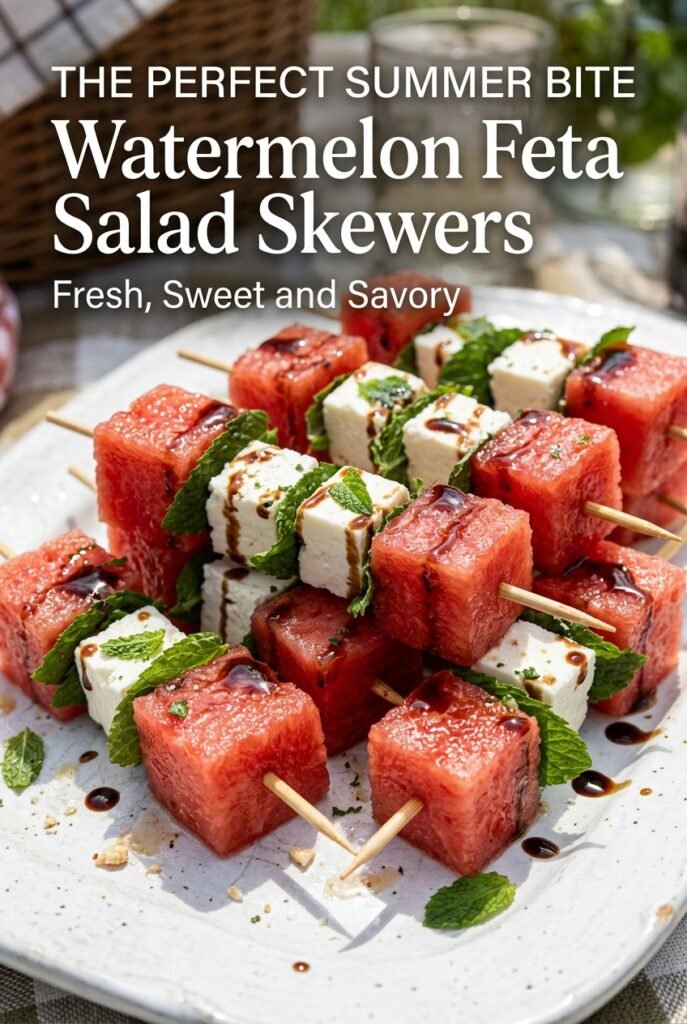
Watermelon Feta Salad Skewers
Juicy watermelon, creamy feta, and mint on a skewer hit that sweet-salty balance without turning into a soggy salad bowl. The balsamic glaze gives each bite a little tang and…
Tip: save now, read later.
Juicy watermelon, creamy feta, and mint on a skewer hit that sweet-salty balance without turning into a soggy salad bowl. The balsamic glaze gives each bite a little tang and a glossy finish, and the whole thing stays crisp and clean enough to serve at a picnic table without forks or fuss.
What makes these skewers work is the order of the ingredients and the reduced glaze. Watermelon sits best beside the feta instead of underneath it, so the cheese doesn’t slide around and the mint stays fresh. Reducing the balsamic with a little honey turns it syrupy enough to cling to the fruit instead of running straight to the plate.
You’ll find a few small details below that matter more than they look on paper: how to keep the feta from crumbling, why the glaze has to cool before drizzling, and a couple of easy ways to adapt the skewers for a bigger crowd.
The balsamic glaze thickened up just like you said, and the mint kept the skewers tasting fresh even after sitting out for our cookout. Everyone kept grabbing them before I could put the platter down.
These watermelon feta salad skewers are the kind of no-cook appetizer that disappears fast, especially once the balsamic glaze hits the platter.
The Trick to Keeping Watermelon Skewers Crisp, Not Watery
Watermelon is the problem and the payoff here. It brings the bright, juicy bite you want, but if the cubes are too small or the fruit sits cut for too long, the skewers start weeping onto the plate and the feta gets slippery. Cut the melon into firm, even cubes and work with it while it’s cold from the fridge. That gives you cleaner edges and a better texture once the glaze goes on.
The glaze matters for the same reason. Thin balsamic vinegar just runs; reduced balsamic clings. Honey helps it thicken a little faster and adds enough sweetness to round out the saltiness of the feta without making the whole dish taste like dessert.
What Each Ingredient Is Actually Doing in This Dish
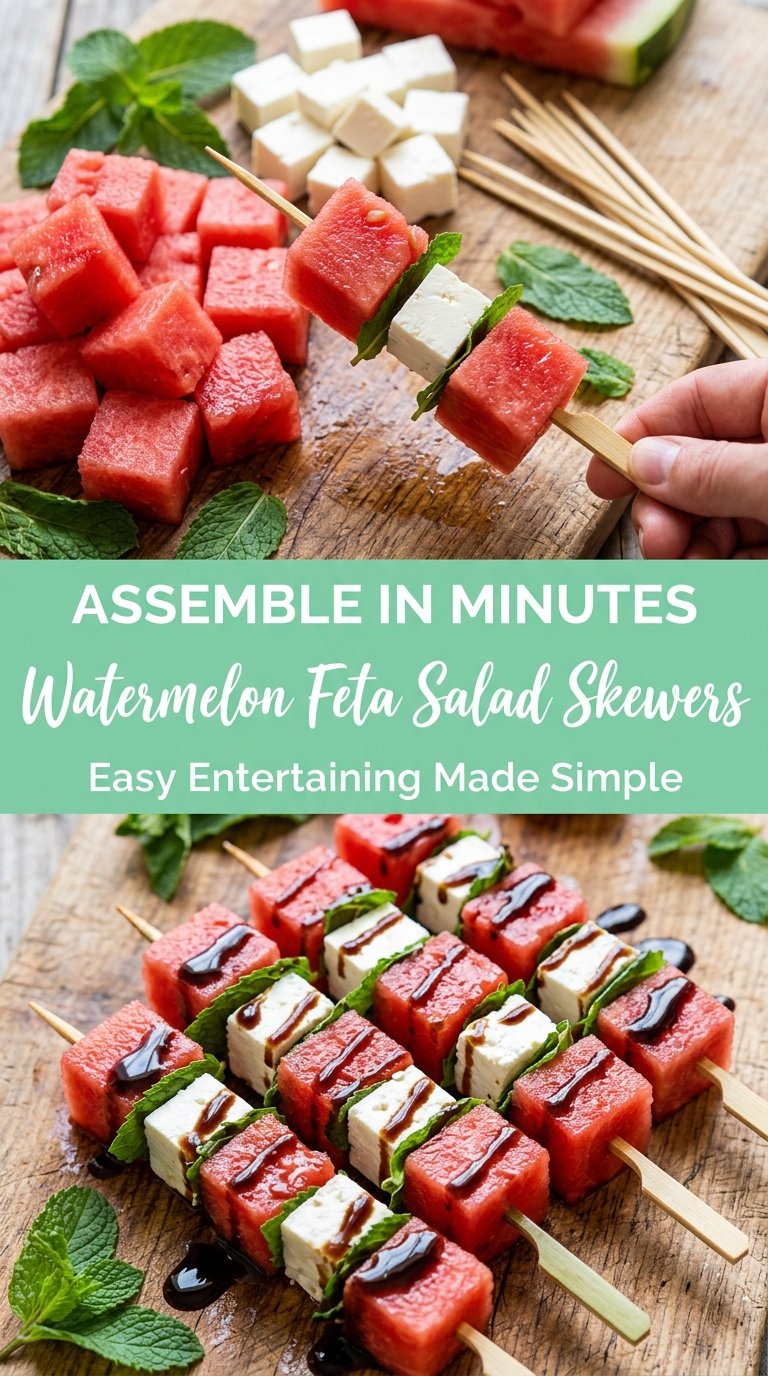
Seedless watermelon — Choose a melon that feels heavy and sounds hollow when tapped. Softer watermelon still works, but the skewers won’t hold their shape as well and the juices will loosen the feta faster.
Feta cheese — Buy a block of feta and cut it yourself. Pre-crumbled feta is too dry and breaks apart on the skewer; block feta gives you clean cubes that stay put. If you want a milder result, rinse the feta briefly and pat it dry before cutting.
Fresh mint — Mint is more than garnish here. It keeps the whole bite from tasting flat and gives a cool finish that belongs with watermelon. Fold the leaves instead of threading them flat so they stay visible and don’t tear.
Balsamic vinegar and honey — These are the backbone of the glaze. You can use any decent balsamic, but don’t skip the reduction step. If the glaze is still thin and sharp, it will slide off the skewers instead of settling into the fruit.
Building the Skewers So They Hold Together
Reducing the Glaze
Set the balsamic vinegar and honey over medium heat and let it simmer until it coats a spoon and leaves a clear trail when you drag your finger through it. That usually takes 8 to 10 minutes, but the real clue is texture, not the clock. Pull it off the heat before it looks fully syrupy in the pan, because it thickens more as it cools. If you cook it until it seems perfect on the stove, it often turns sticky and hard once it rests.
Threading in the Right Order
Start with watermelon, then a folded mint leaf, then feta, then another watermelon cube. That order anchors the softer pieces and keeps the mint tucked in without ripping. Press the ingredients together just enough to hold, but don’t force them; squeezed too tightly, the watermelon splits and the feta crumbles. Small wooden skewers work best because they’re easy to arrange on a platter and simple to eat in a couple of bites.
Finishing Without Making It Soggy
Arrange the finished skewers on a serving platter and drizzle the cooled glaze over the top right before serving. A light hand with the glaze is the difference between polished and watery. A little freshly cracked black pepper sharpens the sweet-salty contrast, and extra mint on top makes the platter look as fresh as it tastes.
Three Smart Ways to Adapt These Skewers
Dairy-Free Version With a Salty Crunch
Swap the feta for a firm dairy-free cheese that cuts into cubes, or use cubes of avocado if you want a softer, richer bite. The flavor changes a lot, so the balsamic glaze becomes even more important for contrast. Avocado works best if you assemble and serve immediately, since it browns and softens faster than feta.
No-Honey Glaze
Use maple syrup instead of honey if that’s what you have, or skip the sweetener entirely for a sharper glaze. Without honey, the balsamic takes longer to tighten up, so keep the heat low and watch for a slow, glossy reduction. The result is a little less rounded and a touch more tart, which some people prefer with very sweet watermelon.
Making Them Ahead for a Crowd
You can cube the watermelon, cut the feta, and reduce the glaze a few hours ahead. Keep everything chilled separately and assemble the skewers close to serving time so the fruit doesn’t soften the cheese. If you need to transport them, pack the glaze in a small container and drizzle it on at the end.
Storage and Serving Notes
- Refrigerator: Best served the day they’re made. Leftover skewers can be chilled for up to 1 day, but the watermelon will release juice and the mint will soften.
- Freezer: Don’t freeze these. Watermelon turns mushy when thawed, and the feta loses its clean texture.
- Reheating: Not needed. If the balsamic glaze firms up in the fridge, let it sit at room temperature for a few minutes before drizzling again.
Questions I Get Asked About This Recipe
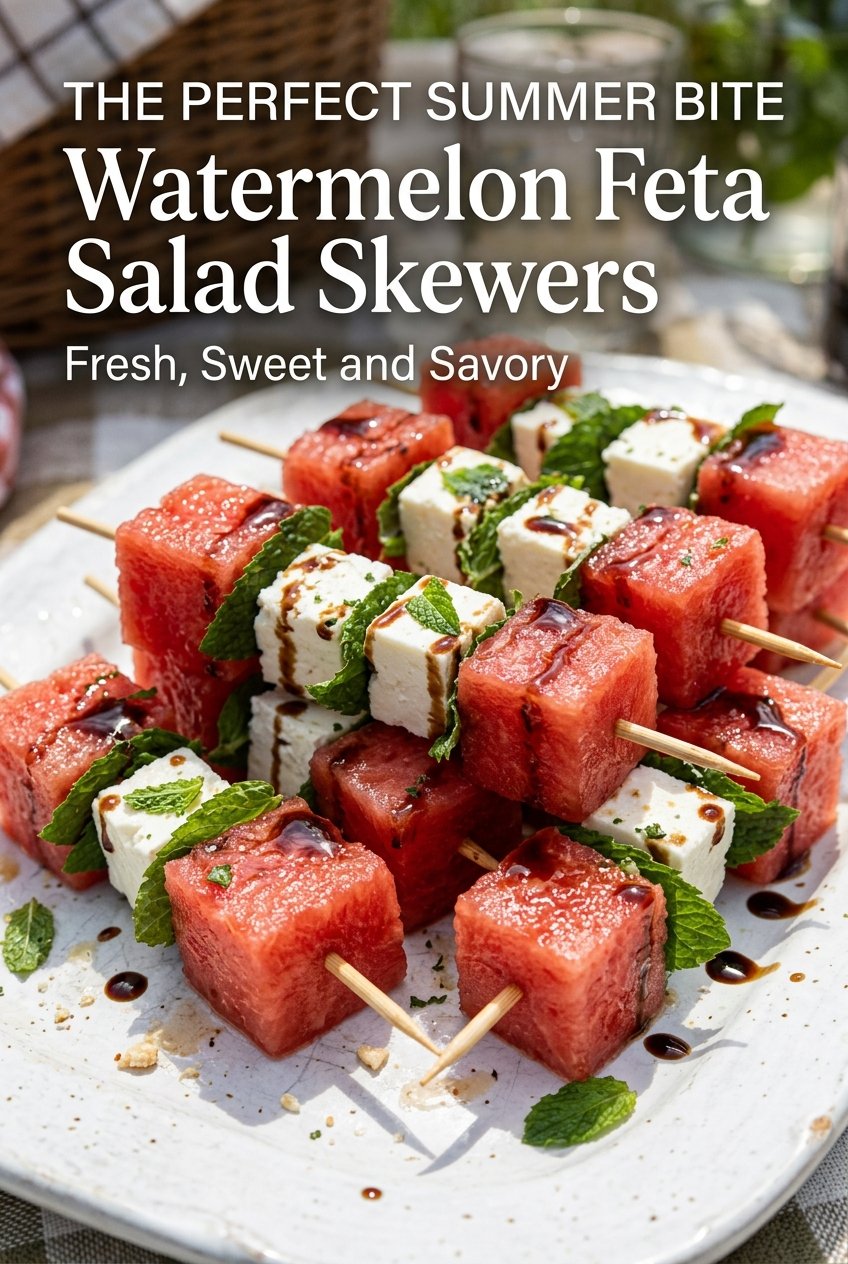
Watermelon Feta Salad Skewers
Ingredients
Equipment
Method
- Combine balsamic vinegar and honey in a small saucepan and stir until honey dissolves. Medium heat is used so the mixture starts warming quickly.
- Simmer over medium heat for 8–10 minutes until reduced and syrupy, stirring occasionally to prevent scorching. Reduce to a glossy, pourable consistency.
- Allow the glaze to cool completely before using, so it won’t melt the feta. Set it aside until the skewers are ready.
- Thread one watermelon cube onto each of the small wooden skewers. Keep the cubes snug so they don’t slide while you stack.
- Add a folded mint leaf on top of the watermelon cube. Place it so it stays between layers for maximum aroma.
- Add a cube of feta cheese after the mint leaf, centered on the skewer. Press gently so the feta grips the watermelon.
- Finish each skewer with another watermelon cube to cap the feta. Make sure the final cube sits firmly as a top layer.
- Arrange the skewers on a serving platter in a single layer. Leave small gaps so each skewer is easy to pick up.
- Drizzle the cooled balsamic glaze over the skewers. Use a light, even pour so the glaze clings without pooling.
- Sprinkle lightly with freshly cracked black pepper to add contrast. Add it just before serving so the aroma stays bright.
- Garnish with extra mint leaves for a fresh finish. Place the mint on top where it’s visible.
- Serve the skewers chilled. Refrigerate until ready to serve for the best texture.
