

Gingerbread Waffles
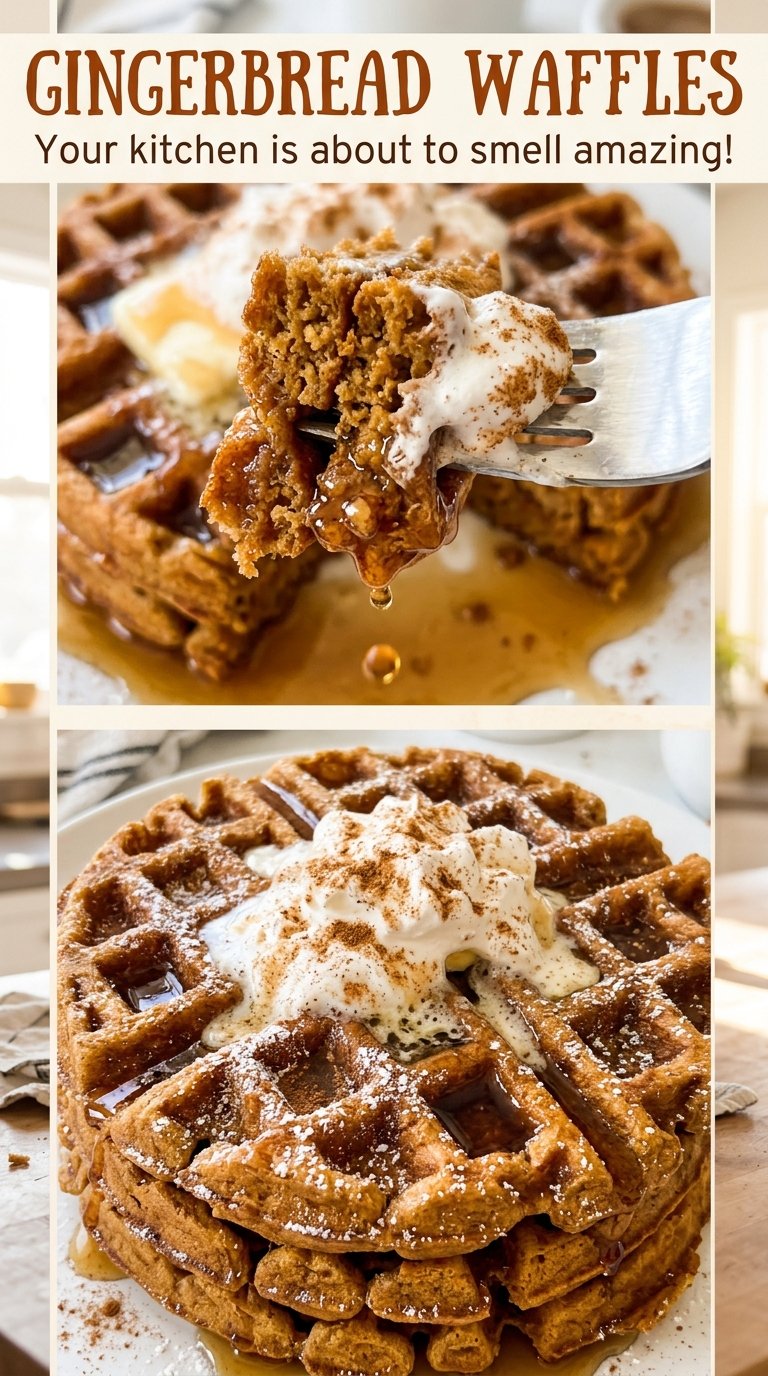
The batter hits the hot waffle iron and the kitchen starts smelling like ginger and molasses before the first waffle is even ready. These gingerbread waffles come out with browned,…
Tip: save now, read later.
The batter hits the hot waffle iron and the kitchen starts smelling like ginger and molasses before the first waffle is even ready. These gingerbread waffles come out with browned, crisp edges and a soft middle, with enough spice to taste unmistakably like gingerbread without losing the gentle tang of buttermilk.
Molasses gives the batter its deep color and warm, almost caramel-like flavor, while cinnamon, ginger, cloves, and nutmeg keep each bite lively. I like that the batter comes together in two bowls with a quick fold, so there’s no mixer to wash and no long wait before breakfast. Let the waffles cook until the steam has mostly eased off, and you’ll get a crisp surface instead of a pale, soft one.

Kitchen Note
Let the melted butter cool before it goes in with the eggs and buttermilk. If it’s still hot, it can leave little cooked flecks in the mixture; cooled butter whisks in smoothly.
Save these gingerbread waffles for a cozy breakfast: crisp edges, warm spice, and a deep molasses note in every bite.
Why a Few Lumps Make These Gingerbread Waffles Lighter
It’s natural to want waffle batter perfectly smooth, but that isn’t the goal here. Once the flour is hydrated, more whisking develops gluten and can leave the waffles chewy instead of tender. A few small lumps are harmless; they disappear as the batter cooks.
Look for a mixture with no dry streaks of flour, not a glossy, uniform batter. That distinction matters because the dry ingredients include both baking powder and baking soda, while the buttermilk brings the acidity that works with the soda. A gentle fold keeps the batter from being overworked and lets those leaveners do their job. If you keep stirring to chase every little lump, you’re putting effort into the wrong cue.
Keep the dry and wet bowls separate until you’re ready to combine them. That gives you a chance to distribute the spices and leaveners evenly through the flour before the liquid goes in, so the finished waffles taste balanced rather than having a concentrated pocket of clove or baking soda.
What Molasses, Buttermilk, and the Spice Blend Each Bring
- Unsulphured molasses — This gives the waffles their signature dark, rounded sweetness. A standard grocery-store bottle works well; there’s no need to seek out an especially fancy brand. Blackstrap molasses is much more assertive and bitter, so it isn’t a straight stand-in. Dark molasses can replace unsulphured molasses, but its flavor will come through more strongly.
- Buttermilk — Its gentle tang keeps the sweet, spiced batter from tasting flat, and its acidity works with the baking soda. If you’re out, milk soured with lemon juice or white vinegar can stand in, though the waffles won’t have quite the same creamy tang or body.
- Ginger and the supporting spices — Ground ginger leads, while cinnamon, cloves, and nutmeg give the waffles their familiar layered gingerbread character. Fresh, fragrant spices make the biggest difference here; stale jars can leave the flavor muted. A pumpkin pie spice blend can replace the individual spices, but check that it includes ginger and expect a slightly different balance.
- Light brown sugar — Its mild molasses note deepens the flavor without making the batter taste as dark as the molasses alone. Dark brown sugar works in its place for a more pronounced caramel note; pack it into the measuring cup so the amount stays consistent.
- Unsalted butter and eggs — Butter brings richness and helps the outside brown, while eggs give the batter structure. Everyday butter and large eggs are just right. Keep the butter melted and cooled before whisking it with the eggs so it blends into the wet mixture without cooking them.
Mixing and Cooking the Batter Without Losing the Crisp Edges
Bring the waffle iron up to heat
Preheat the waffle iron to medium-high, following the manufacturer’s instructions for your model. A properly heated iron starts cooking the batter as soon as it closes, which helps the outside brown instead of slowly drying out. If your iron has an indicator light, use it as directed rather than guessing from the outside of the appliance. Keep nonstick cooking spray nearby for the first waffle and the spaces between batches.
Distribute the spices through the dry ingredients
In a large bowl, whisk together the flour, packed light brown sugar, baking powder, baking soda, kosher salt, ginger, cinnamon, cloves, and nutmeg. Take a moment to break up any small brown sugar clumps and spread the spices evenly through the flour. This prevents a bite with too much clove or a spot that tastes flat. A whisk works well here because the ingredients are all dry.
Whisk the wet ingredients, then fold
In a medium bowl, whisk the eggs, buttermilk, molasses, melted and cooled butter, and vanilla until smooth. Pour this mixture into the dry ingredients and fold until no dry streaks remain. Don’t beat the batter; the flour should be incorporated without turning the mixture elastic. Let it rest for five minutes before cooking.
Cook until the iron’s steam tapers off
Lightly coat the waffle iron with nonstick cooking spray, then add about ½ cup of batter for each standard 7-inch waffle and close the iron. Cook for 4 to 6 minutes, until the waffle is browned and crisp and the steam mostly subsides. Opening the iron too soon can tear a waffle that hasn’t set, so use the steam and color as cues rather than lifting the lid repeatedly. Spray again between waffles as needed.
Simple Changes for Different Tables and Tastes
Make the waffles gluten-free
Replace the all-purpose flour with the same amount of a cup-for-cup gluten-free flour blend intended for baking. The texture may be a little more delicate, so let each waffle cook until it releases easily from the iron instead of pulling it away early.
Use a dairy-free buttermilk and butter
For the buttermilk, add 1 tablespoon lemon juice to a liquid measuring cup and fill with unsweetened soy milk to the 1¾-cup line; let it stand for 5 minutes. Use the same amount of melted dairy-free butter in place of the unsalted butter. Soy milk gives the batter body, though the waffles will have a slightly different richness.
Add little bites of candied ginger
Fold 2 tablespoons of finely chopped crystallized ginger into the batter after combining the wet and dry mixtures. The pieces add a brighter, pleasantly chewy ginger hit, along with extra sweetness, so the waffles taste more boldly spiced.
Storage and Reheating
- Refrigerator: Keep cooled waffles in an airtight container for up to 4 days. They’ll soften in the refrigerator, but reheating brings back some crispness.
- Freezer: Freeze cooled waffles in a single layer first, then transfer them to a freezer-safe bag with parchment between layers. They keep well for up to 2 months.
- Reheating: Toast refrigerated or frozen waffles until hot and crisp. Avoid the microwave if you want crisp edges; it warms them but leaves them soft.
Questions I Get Asked About These Gingerbread Waffles
Gingerbread Waffles
Ingredients
Equipment
Method
- Preheat a waffle iron to medium-high according to the manufacturer's instructions.
- In a large bowl, whisk together the all-purpose flour, packed light brown sugar, baking powder, baking soda, kosher salt, ground ginger, ground cinnamon, ground cloves, and ground nutmeg.
- In a medium bowl, whisk the large eggs, buttermilk, unsulphured molasses, melted and cooled unsalted butter, and vanilla extract until smooth.
- Pour the wet ingredients into the dry ingredients and fold just until no dry streaks remain; a few small lumps are fine.
- Let the batter rest for 5 minutes.
- Lightly coat the waffle iron with nonstick cooking spray.
- Add about 1/2 cup batter per standard 7-inch waffle and close the iron.
- Cook for 4 to 6 minutes, until browned and crisp and the steam mostly subsides, greasing the iron again as needed between waffles.
