
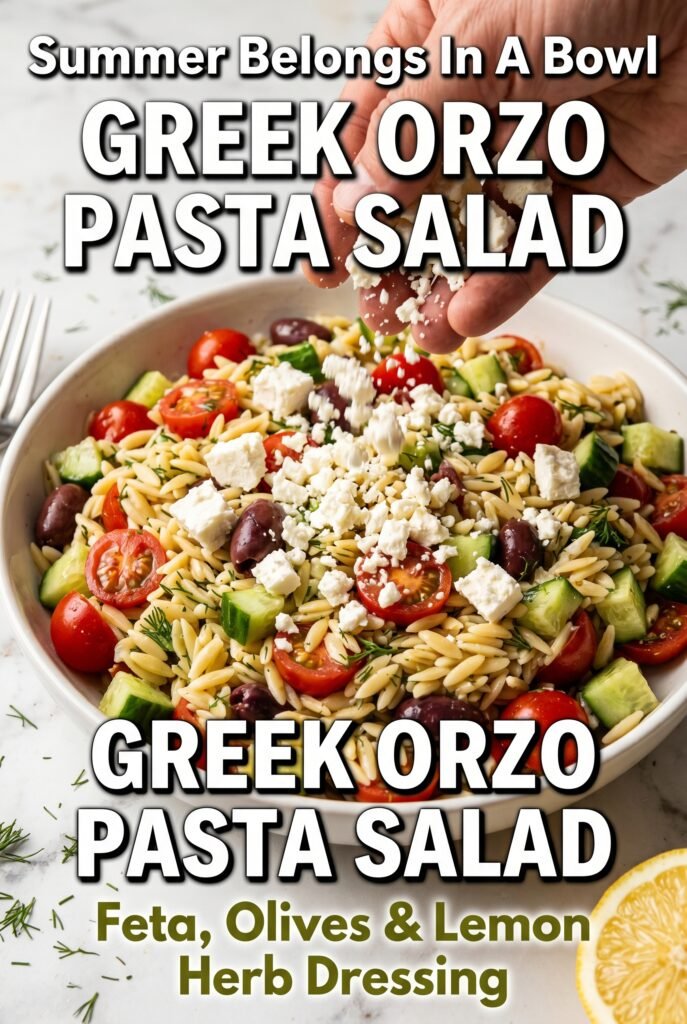
Greek Orzo Pasta Salad with Feta and Olives
Greek orzo pasta salad lands on the table with the kind of bright, briny balance that keeps people going back for another spoonful. The orzo gives it just enough substance…
Tip: save now, read later.
Greek orzo pasta salad lands on the table with the kind of bright, briny balance that keeps people going back for another spoonful. The orzo gives it just enough substance to eat as a meal or a side, while the cucumbers, tomatoes, olives, and feta keep every bite sharp, creamy, and fresh. It tastes like something you’d happily pack for lunch, bring to a cookout, or serve alongside grilled chicken without it feeling like an afterthought.
The part that makes this version work is the way the pasta is handled. Rinsing the orzo after cooking stops it from turning gummy, and spreading it out to cool keeps the dressing from disappearing into a warm clump. The lemon-herb dressing also does more than coat the salad; the Dijon helps it emulsify, the garlic gives it backbone, and the oregano ties the whole bowl back to classic Greek flavors.
You’ll find a few small technique details below that keep the salad lively instead of soggy, plus a couple of smart swaps if you need to work around what’s in your fridge. Once you’ve made it this way, it’s hard to go back to a dry, underdressed pasta salad.
The dressing coated every piece without pooling at the bottom, and the feta stayed nice and crumbly even after chilling. I made it the night before a potluck and it tasted even better the next day.
Save this Greek orzo pasta salad for the days when you want something cold, lemony, and packed with feta and olives.
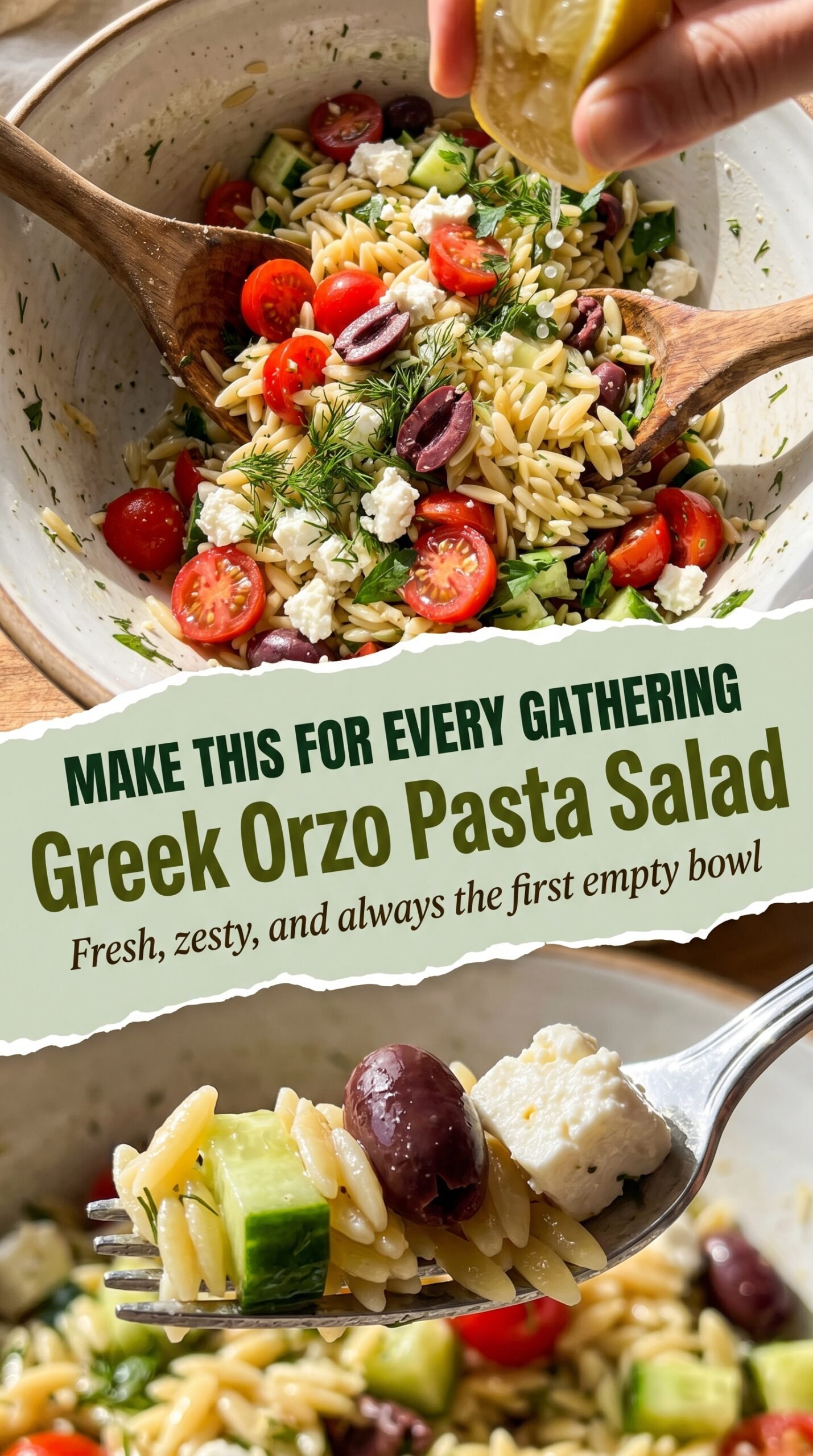
The Reason This Salad Stays Fresh Instead of Turning Heavy
Most pasta salads fail in one of two ways: the pasta drinks up all the dressing, or the mix turns dense and muddy after a few hours in the fridge. Orzo is especially prone to that because it’s small and eager to absorb liquid. The fix starts with cooling it fast, then giving it a light coating of olive oil so the grains separate instead of sticking into one tight mass.
The other thing that matters is balance. Feta brings salt and creaminess, but the olives and red onion bring the sharper edges that keep the salad from tasting flat. If you skip the lemon zest or use bottled lemon juice only, the dressing tastes one-note. Fresh zest gives the whole bowl lift.
- Orzo — This pasta has the right size and shape for catching the dressing without overpowering the vegetables. Any small pasta will work in a pinch, but orzo gives the salad its specific texture.
- Feta — Buy a block if you can and crumble it yourself. Pre-crumbled feta works, but it’s drier and sometimes a little chalky, so it won’t melt into the salad as nicely.
- Kalamata olives — These bring the briny punch that makes the whole dish taste Mediterranean. If you need a substitute, use another firm black olive, but the flavor won’t be quite as rich.
- Fresh dill and parsley — These herbs matter more than they seem. Parsley keeps the salad grassy and clean, while dill adds the classic Greek note that dried herbs can’t fully replace.
- Dijon mustard — Just a teaspoon helps the dressing emulsify so it clings to the pasta instead of separating in the bowl. You won’t taste mustard directly; you’ll taste a dressing that holds together.
How to Keep the Orzo Light, Cold, and Properly Dressed
Cooking the Orzo Past Al Dente
Boil the orzo in well-salted water until it’s just tender with a little firmness at the center. If you cook it until it’s completely soft, it turns mushy after you toss it with the dressing and vegetables. Drain it, rinse it under cold water, and spread it out right away so the heat escapes fast instead of steaming itself into a sticky mass.
Whisking a Dressing That Clings
Combine the olive oil, lemon juice, zest, Dijon, garlic, oregano, salt, and pepper until the dressing looks slightly thickened and glossy. If it stays thin and separate, the salad will taste uneven because the acid runs to the bottom of the bowl. The Dijon is the quiet helper here; it gives the dressing enough body to coat the orzo evenly.
Folding the Salad Without Crushing It
Add the cooled pasta, vegetables, olives, herbs, and most of the feta to a large bowl before pouring the dressing over the top. Toss gently so the cucumber keeps its crunch and the tomatoes stay intact. If you stir too aggressively, the feta breaks down too much and the salad starts to look cloudy instead of fresh.
Letting the Flavor Mingle
Serve it right away at room temperature or chill it for at least 30 minutes so the lemon and herbs settle into the pasta. The salad tastes even better after a short rest, but don’t drown it in extra dressing at the start because the orzo will keep absorbing moisture. Save a little feta and a few olives for the top so the bowl still looks lively when it hits the table.
Three Smart Ways to Adapt This Greek Orzo Salad
Make It Gluten-Free
Swap the orzo for a gluten-free small pasta shape that holds dressing well, like rice-based ditalini or small shells. Cook it just until tender and rinse it the same way, because gluten-free pasta can go soft fast if you leave it in hot water too long.
Make It Dairy-Free
Leave out the feta and add a handful of chopped marinated artichokes or extra olives for richness and salt. The salad becomes a little less creamy, but the lemon, dill, and oregano still carry the flavor cleanly.
Add Protein for a Fuller Meal
Toss in chopped grilled chicken, shrimp, or chickpeas if you want this to eat like a main dish. Chickpeas keep it vegetarian and hold up well after chilling, while chicken gives it a heartier, lunchbox-friendly finish.
Storage and Reheating
- Refrigerator: Store covered for up to 3 days. The pasta will absorb some dressing, so the salad may seem a little drier on day two.
- Freezer: Don’t freeze this one. The cucumber, tomatoes, and feta lose their texture after thawing and the salad turns watery.
- Reheating: This salad is meant to be eaten cold or at room temperature. If it’s been in the fridge, let it sit out for 15 to 20 minutes and add a small drizzle of olive oil or squeeze of lemon if it needs waking up.
Answers to the Questions Worth Asking
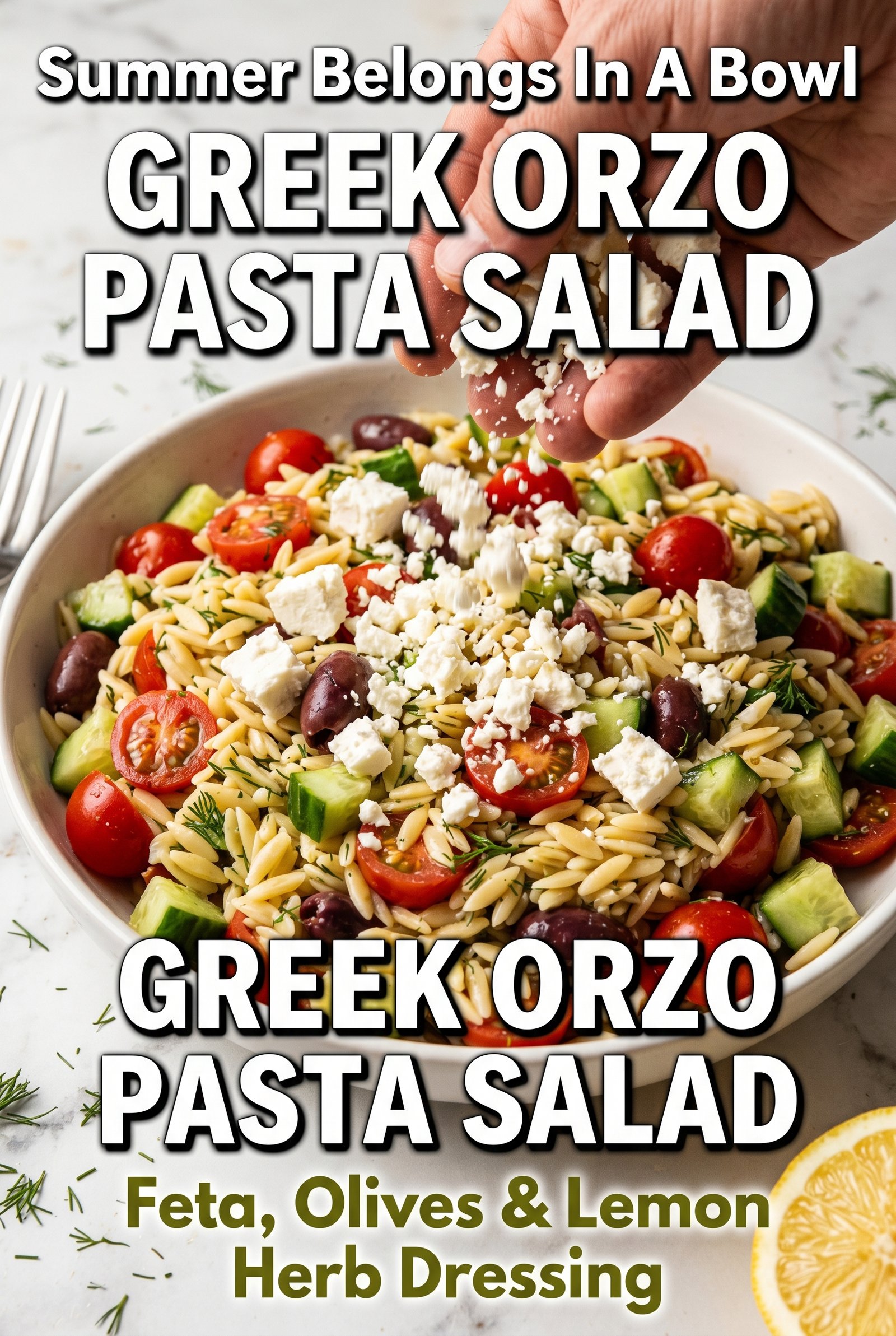
Greek Orzo Pasta Salad with Feta and Olives
Ingredients
Equipment
Method
- Bring a large pot of salted water to a rolling boil, then cook the dry orzo according to package directions (about 8–10 minutes) until al dente, stirring occasionally so it stays loose.
- Drain the orzo and rinse under cold water to stop cooking, then spread it onto a sheet pan and drizzle with a little olive oil to prevent sticking.
- Let the orzo cool completely before assembling the salad so the feta doesn’t melt and the dressing coats evenly.
- Whisk extra virgin olive oil, fresh lemon juice, lemon zest, dried oregano, Dijon mustard, minced garlic, salt, and black pepper in a small bowl until emulsified and glossy.
- Taste the dressing and adjust salt or lemon as needed so it has a bright, balanced flavor.
- Halve the cherry tomatoes, dice the cucumber, thinly slice the red onion, and halve the Kalamata olives so every bite is evenly portioned.
- Roughly chop the parsley and chop the dill for a fresh, herb-forward finish.
- In a large mixing bowl, combine the cooled orzo, cherry tomatoes, cucumber, red onion, olives, roasted red peppers, parsley, and dill, then toss gently to avoid breaking the orzo.
- Pour the lemon-herb dressing over the salad and toss to coat everything evenly, then fold in most of the crumbled feta while reserving a small handful for topping.
- Transfer to a serving bowl or platter, scatter the reserved feta over the top, add a few extra olive halves, then finish with a pinch of dried oregano and a drizzle of olive oil.
- Serve immediately at room temperature, or cover and refrigerate for at least 30 minutes to let the flavors meld.
