
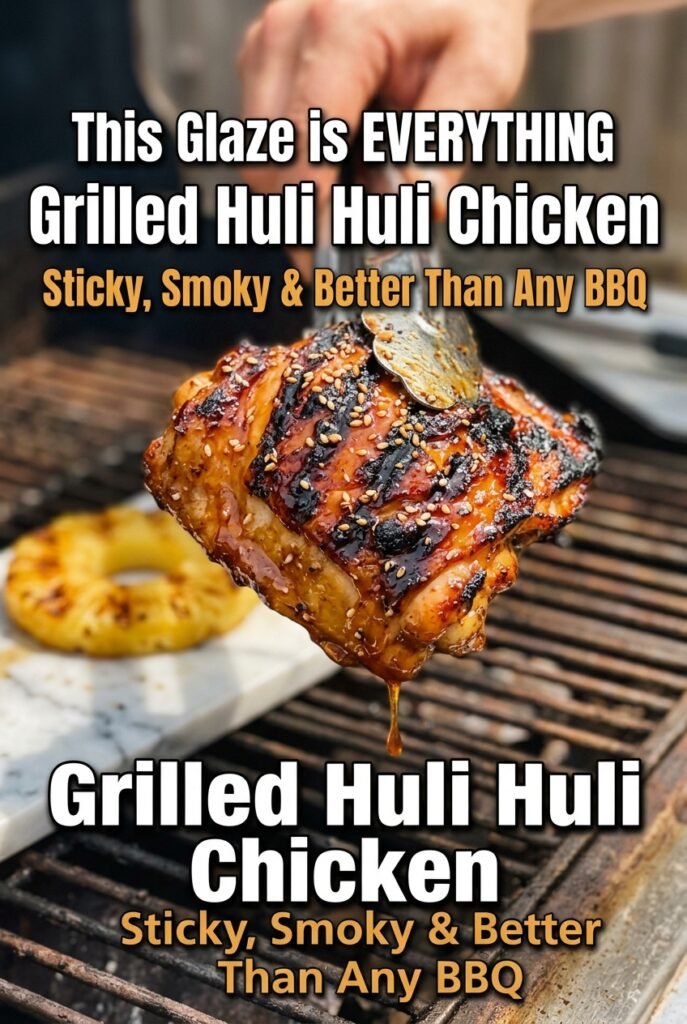
Grilled Huli Huli Chicken
Sticky, smoky grilled Huli Huli chicken earns its place in the rotation fast. The skin turns lacquered and a little charred at the edges, while the meat stays juicy under…
Tip: save now, read later.
Sticky, smoky grilled Huli Huli chicken earns its place in the rotation fast. The skin turns lacquered and a little charred at the edges, while the meat stays juicy under a sweet-savory glaze that tastes like pineapple, ginger, and garlic all working together. It’s the kind of chicken that disappears first at the table, mostly because every turn on the grill builds another layer of caramelized flavor.
What makes this version work is the balance in the marinade and the way it gets used two ways. Pineapple juice brings sweetness and a little acidity, soy sauce gives the backbone, and brown sugar helps the glaze cling and brown instead of running off. Reserving part of the marinade for basting matters, too, because you want a clean glaze for the final layers on the grill, not chicken that’s been dipped back into its raw marinade.
Below, I’ll walk through the grilling cues that matter most, the ingredient swap that keeps the marinade from tasting flat, and a few smart variations if you want to change the heat level or make it work with what’s already in the kitchen.
The glaze thickened up on the grill and the chicken had that sticky, smoky coating I’ve been trying to get for years. I used the pineapple rings on the side and my husband said it tasted like restaurant BBQ.
Pin this grilled Huli Huli chicken for a sticky pineapple-soy glaze that caramelizes beautifully on the grill.
The Marinade Needs Two Jobs: Flavor and a Sticky Finish
A lot of grilled chicken marinades taste good in the bowl and fade once they hit the fire. This one holds up because it has enough sugar to caramelize, enough soy sauce to season the meat, and enough acid to keep the chicken from tasting heavy. The pineapple juice does more than add sweetness; it helps give the glaze that glossy finish you expect from Huli Huli chicken.
The part that trips people up is basting with raw marinade. That’s why the recipe reserves a clean portion before the chicken goes in. Once the chicken starts to cook, the reserved glaze can be brushed on generously without worrying about contamination, and it builds a thick, shiny coating instead of a thin wash that burns off.
What Each Ingredient Is Actually Doing in This Dish
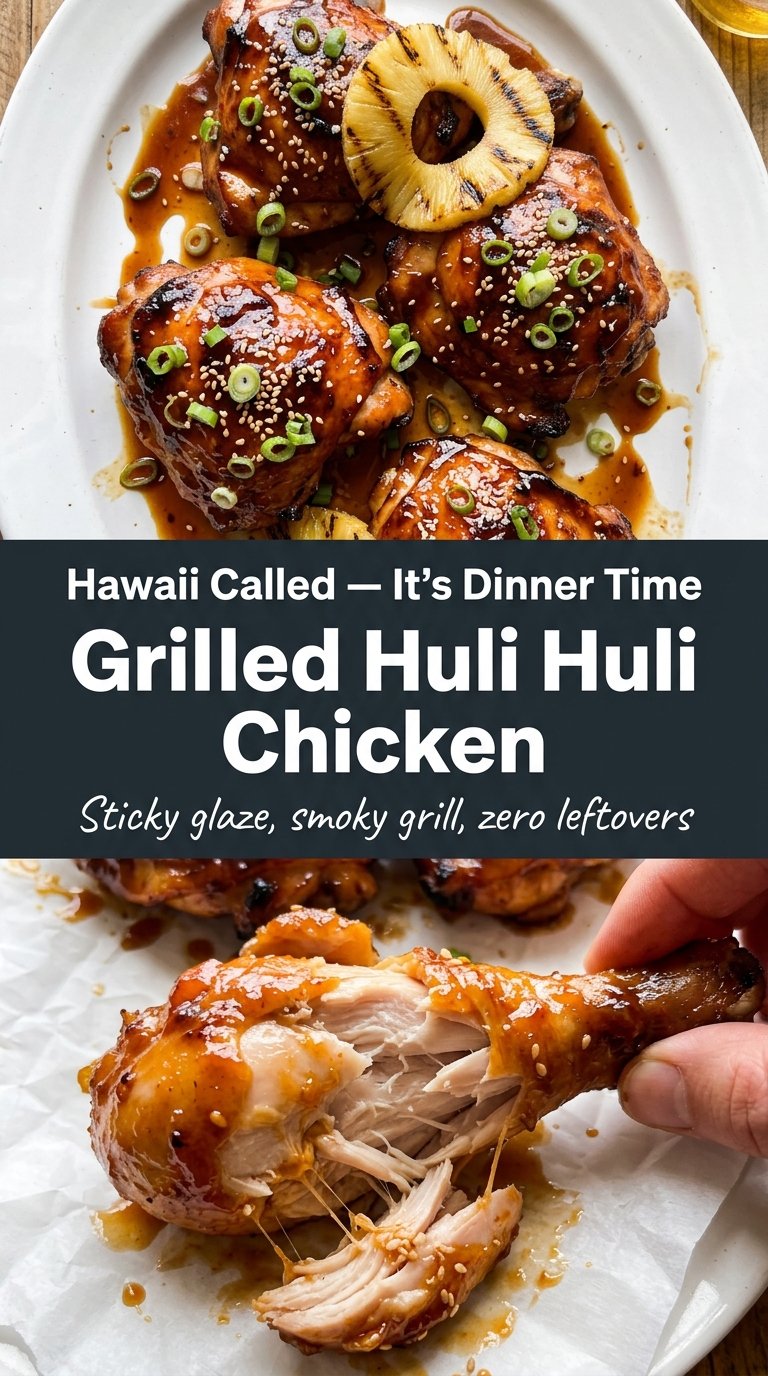
The pineapple juice is non-negotiable for the classic flavor. Fresh or bottled both work, but bottled is perfectly fine here because it’s being balanced by soy sauce, ketchup, and brown sugar. Low-sodium soy sauce is the smarter pick since the glaze reduces and intensifies on the grill.
- Brown sugar — This is what gives the chicken that sticky lacquer. Packed brown sugar melts into the glaze and helps it cling; granulated sugar won’t give quite the same depth.
- Ketchup — It sounds simple, but it adds body and a little tomato sweetness that helps the glaze brown evenly. It also thickens the marinade just enough so it brushes on in a coat instead of dripping away.
- Rice vinegar — This keeps the glaze from tasting flat. If you need a swap, apple cider vinegar works, but use a touch less because it’s sharper.
- Sesame oil — A little goes a long way. It brings a toasted note that reads as grilled, even before the chicken hits the heat.
- Ginger and garlic — Fresh is worth using here. The marinade is short on ingredients, so stale jarred versions stand out fast.
- Sriracha — Optional, but it adds just enough heat to keep the sweetness in check. Leave it out if you want a milder glaze, or add more if you like a little bite.
- Bone-in, skin-on chicken thighs and drumsticks — This cut handles grilling better than boneless pieces because the skin protects the meat and the bones help it stay juicy while the glaze caramelizes.
The Grilling Steps That Keep the Glaze from Burning
Build the marinade before the chicken goes anywhere near it
Whisk the marinade until the sugar dissolves and the mixture looks smooth, not gritty. If the brown sugar stays sandy in the bowl, it won’t coat the chicken evenly and you’ll lose some of that lacquered finish later. Reserve the basting glaze before the chicken goes in; once raw chicken touches the marinade, that portion is off-limits for brushing.
Give the chicken a dry surface before it hits the grill
Pat the chicken dry, then season it lightly with salt and pepper. A wet surface steams before it browns, and that delays the skin from releasing cleanly. The marinade will do the heavy lifting on flavor, so the outside just needs to be dry enough to sear instead of sputter.
Start skin-side down and leave it alone
Lay the chicken skin-side down on a medium grill and let it cook without moving for 5 to 6 minutes. If you try to flip too early, the skin tears and leaves half the glaze on the grates. When it’s ready, the chicken lifts with only a little resistance and the skin has a deep golden color with dark grill marks starting to form.
Baste after the first side sets, then finish over controlled heat
Once the chicken has started to cook through, begin brushing on the reserved glaze every few minutes. The sugar in the marinade can burn if the grill runs too hot, so keep the heat at medium until the end, then turn it up briefly for the last sticky char. The chicken is done at 165°F in the thickest part, but the best visual cue is skin that looks glossy, bronzed, and slightly blistered at the edges.
How to Make This Work With What You Have on Hand
Make it a little spicier
Add more sriracha or a pinch of red pepper flakes to the marinade. The heat sits behind the sweet glaze instead of taking over, so the result still tastes like Huli Huli chicken, just with more bite.
Make it gluten-free
Use tamari or a certified gluten-free soy sauce in place of regular soy sauce. The flavor stays deep and salty, and the rest of the marinade already works without any other changes.
Use boneless chicken thighs
Boneless thighs cook faster and pick up more surface glaze, but they won’t stay as juicy as bone-in pieces over direct heat. Pull them sooner and watch the grill closely, because they can go from glazed to dry in a narrow window.
Swap in chicken breasts
Chicken breasts work, but they need gentler heat and a shorter grill time. Pound them to an even thickness so the glaze caramelizes before the lean meat dries out.
Storage and Reheating
- Refrigerator: Store leftovers in an airtight container for up to 4 days. The skin softens, but the flavor stays bold.
- Freezer: It freezes well if you strip the meat from the bones first. Wrap tightly and freeze for up to 2 months; the glaze may lose a little shine, but the taste holds up.
- Reheating: Reheat in a 325°F oven, covered loosely with foil, until warmed through. A hot microwave tends to make the skin rubbery and can dry out the edges before the center is warm.
Answers to the Questions Worth Asking
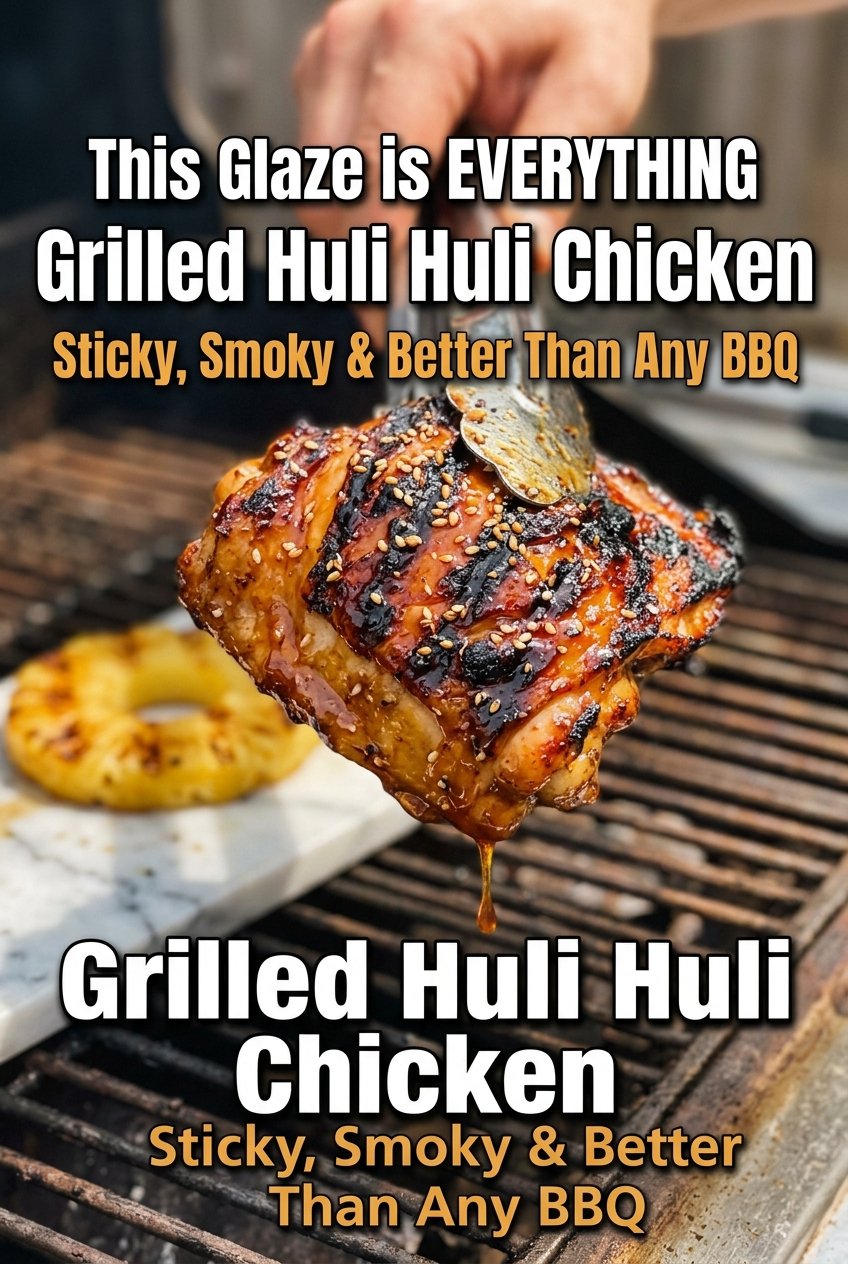
Grilled Huli Huli Chicken
Ingredients
Equipment
Method
- In a medium bowl, whisk together pineapple juice, soy sauce, brown sugar, ketchup, rice vinegar, sesame oil, grated ginger, minced garlic, and sriracha until the sugar dissolves completely.
- Reserve 1/2 cup of the marinade in a separate small bowl as your basting glaze, then cover and refrigerate it.
- Pat the chicken thighs and drumsticks dry with paper towels, then season lightly with salt and black pepper.
- Place the chicken in a large zip-lock bag or shallow dish and pour the remaining marinade over it.
- Seal or cover and refrigerate the chicken for at least 2 hours, ideally overnight for maximum flavor.
- When ready to cook, remove the chicken from the refrigerator 30 minutes before grilling to allow it to come to room temperature.
- Discard the used marinade after removing the chicken.
- Preheat your grill to medium heat (around 375°F), then clean the grates and brush with vegetable oil to prevent sticking.
- Place chicken skin-side down on the grill and cook 5–6 minutes without moving, until the skin is golden and releases cleanly from the grates.
- Flip the chicken and baste generously with the reserved glaze.
- Continue grilling and basting every 4–5 minutes, turning occasionally, until the internal temperature reaches 165°F (about 25–30 minutes total).
- During the last 2 minutes, increase heat briefly to high and baste one final time for a signature sticky, lacquered char.
- Remove the chicken from the grill and let rest for 5 minutes.
- Garnish with sliced green onions and sesame seeds, then serve with grilled pineapple rings (optional) and steamed rice.
