
Pizza Grilled Cheese
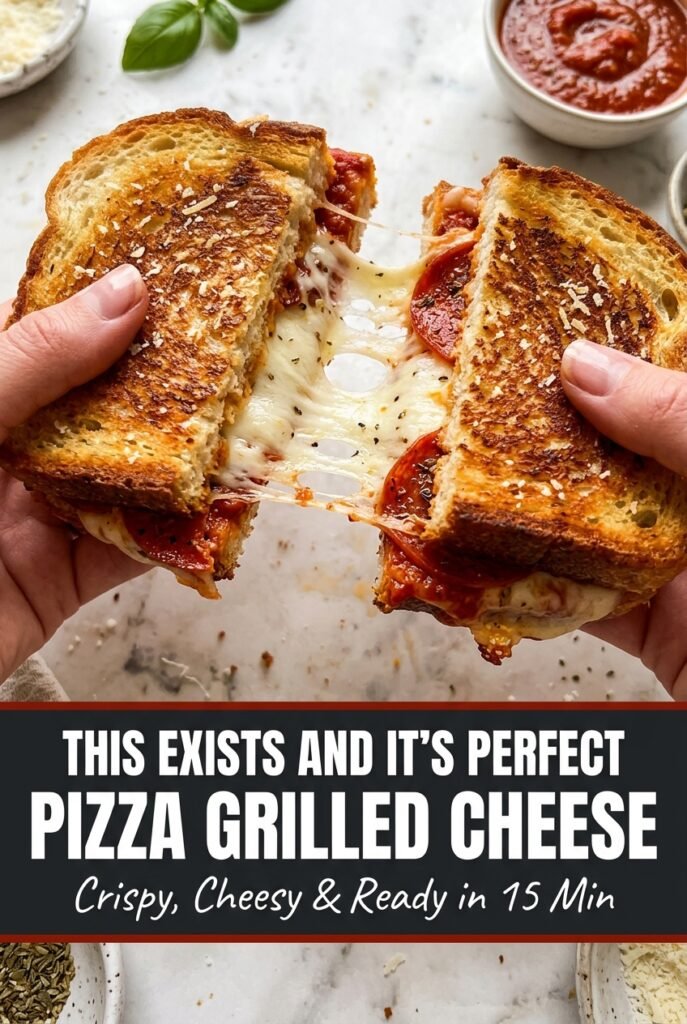
Pizza grilled cheese gives you the crisp, buttery edges of a classic grilled cheese with the stretchy center and savory punch of a slice of pizza. The bread turns deeply…
Tip: save now, read later.
Pizza grilled cheese gives you the crisp, buttery edges of a classic grilled cheese with the stretchy center and savory punch of a slice of pizza. The bread turns deeply golden before the cheese fully melts, so every bite lands with a crackle first and then that soft, molten middle. It’s the kind of sandwich that disappears fast because it hits the comfort-food sweet spot without asking for much time or effort.
The trick is using enough cheese to hold the sandwich together, but not so much filling that the bread slips around in the skillet. Marinara belongs inside the sandwich in a thin layer, not spooned on heavily, or it can soak the bread before the crust has a chance to set. Low to medium-low heat matters here too. That slower pace gives the cheese time to melt while the outside turns evenly crisp instead of scorching before the center is ready.
Below, you’ll find the small details that keep the sandwich from getting soggy, plus a few easy add-ins if you want to push it closer to your favorite pizza order.
The marinara stayed put, the mozzarella melted all the way through, and the bread came out crisp instead of greasy. My kids asked for it again the next day.
Love that gooey pizza grilled cheese? Save it to Pinterest for the next time you want crisp bread, stretchy mozzarella, and marinara in one skillet.
The Trick to Keeping Pizza Filling Inside a Grilled Cheese
The biggest mistake people make with pizza grilled cheese is treating it like a regular grilled cheese and overfilling it. Marinara, mozzarella, and pepperoni all bring moisture, and if the sandwich is stuffed too aggressively, that moisture leaks into the bread before the crust has time to form. The result is a soft, slippery sandwich instead of a crisp one that holds together when you cut it.
Thin layers work better than a heavy pile. A little marinara gives you the pizza flavor without flooding the bread, and shredded mozzarella melts more evenly than thick slices because it fills the sandwich fast and bonds the layers together. Cooking over medium-low heat is the other non-negotiable here. That slower heat lets the bread turn golden at the same pace the cheese melts, which is what keeps the finished sandwich neat instead of scorched outside and cold inside.
What Each Ingredient Is Actually Doing in This Sandwich
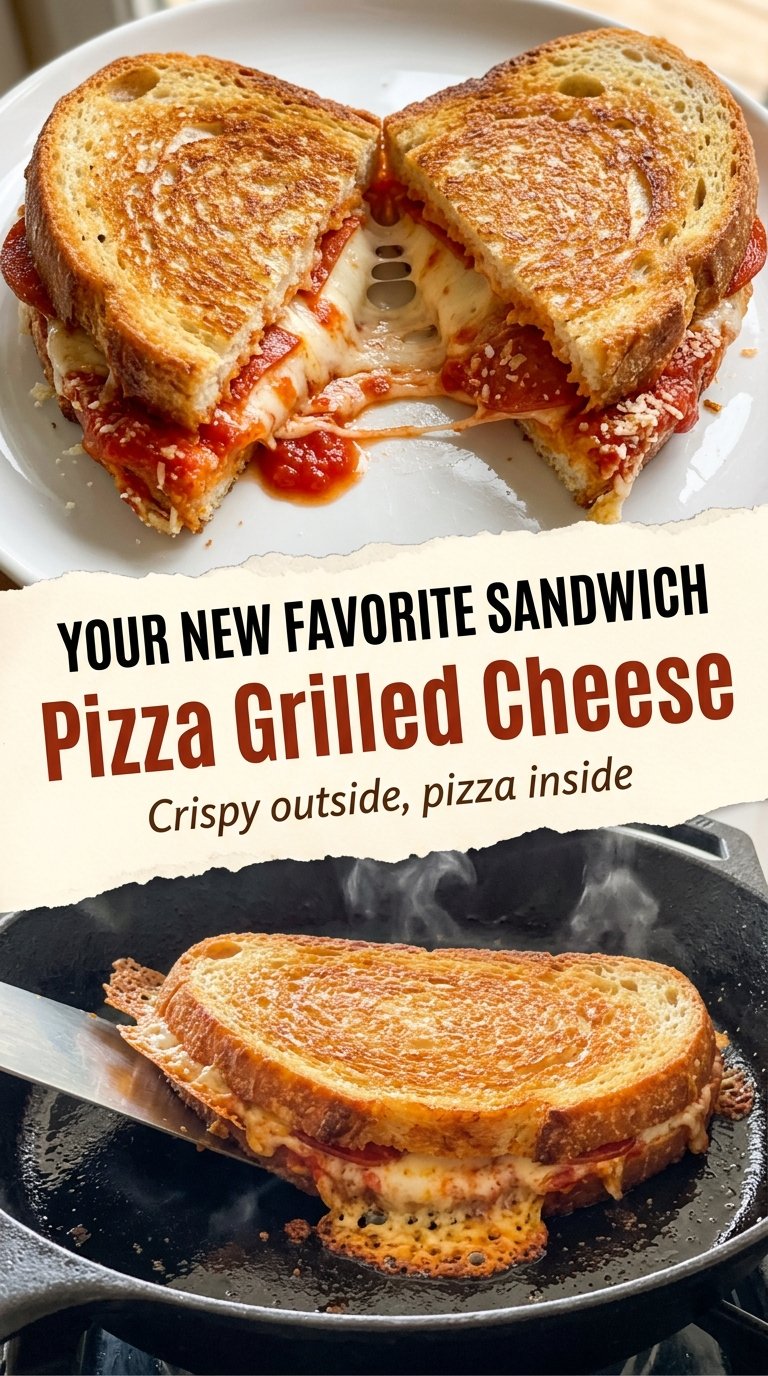
- Thick-cut white sandwich bread — This gives you the sturdy frame the filling needs. Thin bread tends to collapse once the cheese softens. If you only have standard sandwich bread, use it, but handle the sandwich gently and keep the filling a little lighter.
- Softened unsalted butter — Soft butter spreads all the way to the edges, which is what gives you that even, deeply golden crust. Salted butter works in a pinch, but unsalted keeps the sandwich from tasting overly salty once the Parmesan and pepperoni are in play.
- Marinara sauce — This is the pizza note, so use a sauce you’d actually want to eat. A thicker marinara works best because it stays where you spread it. If your sauce is loose, simmer it for a few minutes first so it doesn’t soak the bread.
- Shredded mozzarella — Shredded mozzarella melts faster and more evenly than slices, which helps the sandwich come together before the bread over-browns. Low-moisture mozzarella is the best choice here because fresh mozzarella releases too much liquid.
- Pepperoni — Pepperoni adds the salty, spicy edge that makes this taste like pizza instead of plain tomato toast. If you want a milder version, turkey pepperoni works, though it won’t render as much flavor into the cheese.
- Parmesan, Italian seasoning, and garlic powder — These are small additions that make the sandwich taste layered instead of flat. Parmesan adds sharpness, Italian seasoning brings herbs, and garlic powder gives you that familiar pizzeria backbone. None of them should overwhelm the mozzarella.
Build the Sandwich, Then Give the Cheese Time to Catch Up
Butter the bread first
Spread the softened butter evenly from edge to edge on one side of each bread slice. That edge-to-edge coverage matters because bare spots brown unevenly and can turn dry before the rest of the sandwich is done. Put the buttered sides facing out so they hit the skillet directly.
Layer the filling in thin, even amounts
Spread the marinara on the unbuttered side of one slice, keeping a small border so it doesn’t squeeze out when you press the sandwich. Add the mozzarella, then pepperoni, then the seasonings and Parmesan. If you use the optional peppers or olives, keep them in a single layer so the sandwich doesn’t turn bulky and unstable.
Cook low enough for the center to melt
Set the sandwich in a preheated skillet over medium-low heat and let the bottom develop a deep golden crust before flipping. If the heat is too high, the bread will brown before the cheese softens and you’ll end up with a cold center. Press gently with a spatula after the first side sets, just enough to help everything make contact with the pan.
Let it rest before slicing
Once both sides are golden and the cheese is visibly melted, pull the sandwich off the heat and let it sit for a minute. That short rest helps the molten filling settle so it doesn’t gush out the second you cut into it. Slice diagonally for the best cheese pull and serve it while the crust still crackles.
How to Adapt Pizza Grilled Cheese Without Losing the Point
Dairy-Free Version With a Melty Finish
Use your favorite dairy-free butter and a meltable plant-based mozzarella. The sandwich will still crisp up well, but the cheese usually won’t stretch the same way as dairy mozzarella, so keep the heat moderate and don’t rush the melt.
Vegetarian Pizza Grilled Cheese
Skip the pepperoni and add bell pepper, olives, or even sautéed mushrooms that have been cooked until their moisture cooks off. That keeps the sandwich from turning watery while still giving you the savory, pizza-like bite you want.
Extra Crispy Version for Bread People
Swap half the butter for mayonnaise on the outside of the bread. It browns a little differently, but it gives you a thin, even crust that stays crisp after a few minutes on the plate.
Storage and Reheating
- Refrigerator: Store leftovers wrapped in foil or in an airtight container for up to 2 days. The bread softens a bit as it sits, but it still reheats well.
- Freezer: Freezing isn’t ideal here because the bread can turn spongy after thawing and the cheese loses its clean melt.
- Reheating: Reheat in a skillet over low heat with a lid for a few minutes, flipping once. A microwave will make the bread limp, which is the quickest way to lose the crisp crust.
Answers to the Questions Worth Asking
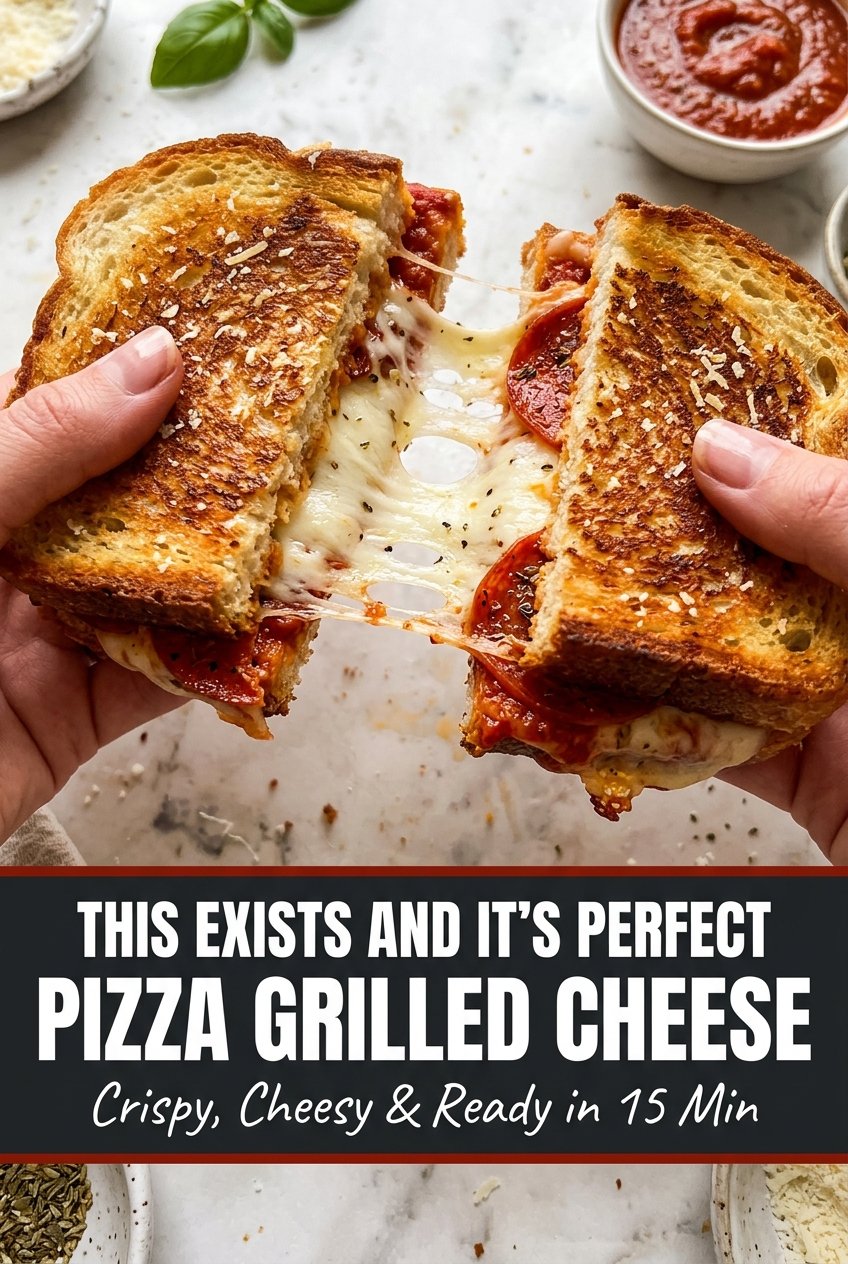
Pizza Grilled Cheese
Ingredients
Equipment
Method
- Heat a non-stick skillet or cast iron pan over medium-low heat.
- Spread the softened butter evenly on one side of each bread slice, all the way to the edges for a fully golden crust.
- Flip both slices buttered-side down and spread marinara sauce on the unbuttered side of one slice, about 1 tbsp, leaving a small border.
- Layer the shredded mozzarella generously over the marinara, then add the pepperoni in a single layer.
- Sprinkle the Italian seasoning, garlic powder, and Parmesan over the top.
- Add any optional toppings now if using the bell pepper, olives, and/or red pepper flakes.
- Spread the second slice of bread with marinara on its unbuttered side, then press it down firmly on top with the buttered side facing out.
- Place the sandwich in the preheated skillet and cook for 3–4 minutes until the bottom is deep golden brown and the bread looks toasted.
- Press gently with a spatula to help the crust crisp and the filling melt.
- Carefully flip and cook the second side for another 3–4 minutes until equally golden and the cheese is fully melted and gooey inside.
- Remove from the heat and let sit for 1 minute so the filling sets slightly before cutting.
- Slice diagonally and serve immediately.
