
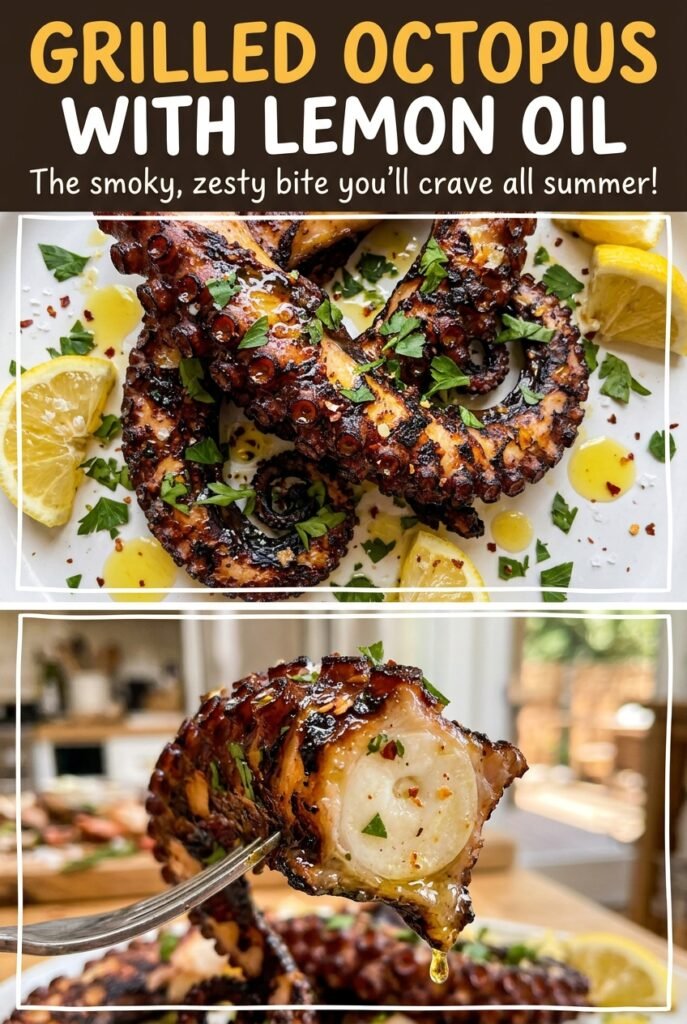
Grilled Octopus with Lemon Oil
The tentacles should pick up dark grill marks in just a few minutes, not sit over the fire until they turn tough. That’s why I cook the octopus in a…
Tip: save now, read later.
The tentacles should pick up dark grill marks in just a few minutes, not sit over the fire until they turn tough. That’s why I cook the octopus in a gentle simmer first, then use the grill for a quick, hot finish. Grilled octopus with lemon oil comes out tender inside, browned at the edges, and bright with fresh lemon.
The most useful cue isn’t the timer: it’s how easily a knife slides into the thickest part. Octopus can take a little longer than an hour to reach that point, so I check the texture instead of treating the clock as a finish line. Once it’s tender, the rest is simple: a short pause in the cooking liquid, a quick brush with lemon oil, and a few minutes on a clean grill.
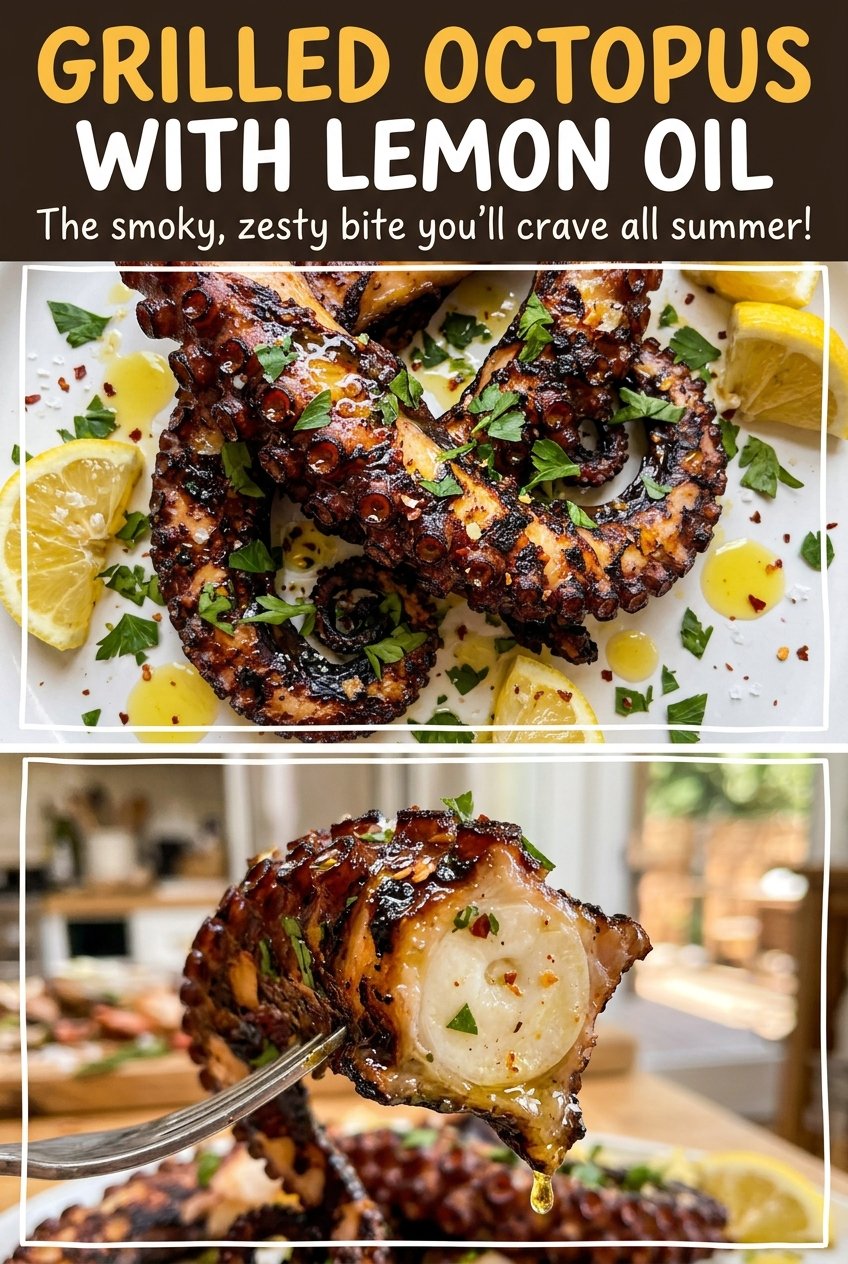
Kitchen Note
I leave the octopus in the cooking liquid for the full 15 minutes after turning off the heat. That pause is easy to miss when the grill is ready, so I set a timer before I start the lemon oil.
Save this grilled octopus with lemon oil for tender bites, quick grill marks, and a bright lemon finish.
The Grill Marks Are a Finish, Not the Tenderizing Step
Octopus needs two kinds of heat here, and they do different jobs. The covered, gentle simmer gives the thick parts time to become tender throughout. The grill comes later, after that texture is already where it needs to be; its job is to heat the octopus and brown the outside quickly.
Trying to make the grill do both jobs is where the texture can go wrong. A long stretch over high heat may darken the surface before the inside has softened, and leaving tender octopus on the grill while waiting for it to become tender can dry it out. I treat the simmer as the doneness stage and the grill as the finishing stage. That distinction also makes the short grilling time easier to trust: the octopus isn’t raw when it hits the grates.
The lemon oil plays two roles without needing a separate sauce. Half coats the octopus before grilling, while the rest goes on after it’s transferred to the platter. Keeping some oil back gives the finished dish a fresh lemon aroma that isn’t all cooked away over the heat.
Why the Whole Lemon Matters More Than Fancy Olive Oil

- Cleaned octopus — Buy it cleaned, and thaw it before poaching if it’s frozen. The thickest section is the best place to judge tenderness, so don’t rely on the tentacle tips alone. There isn’t a close substitute for octopus in this dish; another seafood will cook and eat differently.
- Fresh lemon — The zest brings fragrant citrus oils, while the juice gives the oil its sharp, fresh edge. Bottled juice can supply acidity but can’t replace the zest, so it won’t give the same result. Choose a lemon with an unblemished peel that’s easy to zest.
- Extra-virgin olive oil — It carries the lemon and adds its own flavor, but an everyday bottle is fine; you don’t need a costly finishing oil because it’s whisked with lemon and brushed onto the octopus. Regular olive oil works in the same amount if that’s what you have, though the finished oil will taste less grassy and fruity.
- Bay leaf and whole peppercorns — These gently scent the poaching liquid, which is discarded after cooking. Whole peppercorns are useful here because they’re easy to remove with the liquid; ground pepper would leave bits clinging to the octopus.
- Kosher salt — It seasons the lemon oil, so the seasoning lands across the octopus rather than only in the poaching water. Whisk it in until it’s distributed through the oil and lemon juice.
From Gentle Simmer to Quick, Browned Grill Finish
Poach Until the Thickest Part Is Tender
Put the octopus, water, bay leaf, and whole peppercorns in an 8-quart stockpot, adding enough water to cover. Bring it to a boil over high heat, then cover the pot and reduce the heat to a gentle simmer. Cook for 45 to 60 minutes, turning the octopus halfway through. Test the thickest part with a knife; it should slide in easily, not meet a firm, rubbery center.
Let It Rest, Then Prepare the Pieces
Turn off the heat and leave the octopus in the cooking liquid for 15 minutes. Transfer it to a cutting board, discard the liquid and aromatics, and pat the octopus dry. Separate the tentacles, then split the mantle open. Keep the pieces arranged so they’re ready to brush and move to the grill without delay.
Whisk the Lemon Oil
In a small bowl, whisk together the extra-virgin olive oil, lemon zest, all of the lemon juice, and kosher salt. The mixture may look separated as it sits; give it another whisk before brushing or drizzling. Set aside half for the finish so it doesn’t touch the raw octopus or the grill.
Grill for Color and Serve
Heat a gas or charcoal grill to medium-high, about 450°F, and clean the grates. Brush the octopus with half the lemon oil, then grill it for 2 to 3 minutes per side. Look for hot pieces with well-browned grill marks; don’t leave them on longer in pursuit of tenderness. Transfer the octopus to a platter and drizzle with the remaining lemon oil.
Make-Ahead and Platter Options That Keep the Octopus Tender
Poach Ahead, Grill Just Before Serving
Poach the octopus, let it sit in the liquid, then transfer it, pat it dry, and refrigerate it up to a day ahead. Make the lemon oil and grill the octopus close to serving time, so it reaches the table hot with fresh grill marks rather than sitting around after its quick finish.
Slice It for an Easy-to-Share Platter
Grill the tentacles and mantle in larger pieces, then slice them into bite-size portions after they come off the grill. This changes the feel of the platter without adding another ingredient, and each piece gets a little of the lemon oil as you drizzle it over the top.
Storage and Reheating
- Refrigerator: Refrigerate leftovers in a covered container within 2 hours and use within 3 to 4 days. The chilled olive oil may look cloudy or firm; that’s normal.
- Freezer: Freeze the octopus separately from any extra lemon oil in an airtight container for up to 2 months for best texture. Thaw it in the refrigerator before reheating.
- Reheating: Warm it briefly on a hot grill until heated through. Avoid leaving it on long enough to develop a second round of dark marks, which can dry out the tender pieces.
Questions That Come Up Before the Octopus Hits the Grill
Grilled Octopus with Lemon Oil
Ingredients
Equipment
Method
- Put the octopus, water, bay leaf, and peppercorns in an 8-quart stockpot, adding enough water to cover the octopus.
- Bring to a boil over high heat.
- Cover and reduce to a gentle simmer for 45-60 minutes, turning the octopus halfway through, until a knife slides easily into the thickest part.
- If it is not tender after 60 minutes, continue cooking.
- Check tenderness every 10 minutes.
- Turn off the heat and let the octopus sit in the cooking liquid for 15 minutes.
- Transfer it to a cutting board and discard the liquid and aromatics.
- Pat the octopus dry.
- Separate the tentacles and split the mantle open.
- Whisk the olive oil, lemon zest, all the lemon juice, and kosher salt in a small bowl.
- Heat a gas or charcoal grill to medium-high, about 450°F, and clean the grates.
- Brush the octopus with half of the lemon oil.
- Grill for 2-3 minutes per side, until hot with well-browned grill marks.
- Transfer to a platter and drizzle with the remaining lemon oil.
