
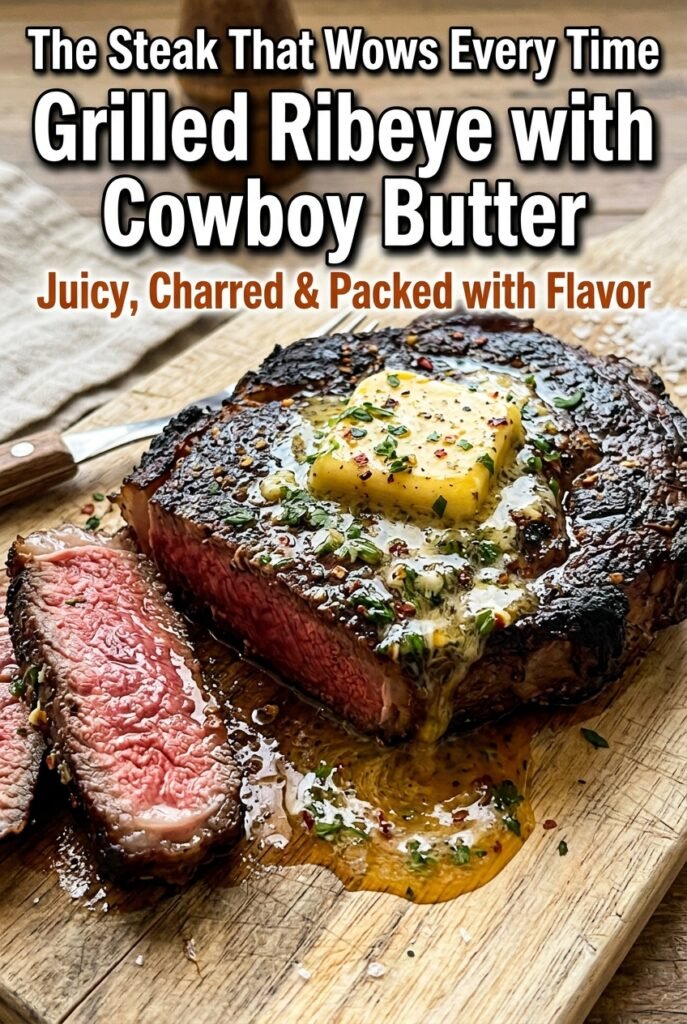
Grilled Ribeye Steak with Cowboy Butter
Grilled ribeye steak gets even better when the crust is deeply browned and the finish is a spoonful of cowboy butter melting into every ridge of the meat. The steak…
Tip: save now, read later.
Grilled ribeye steak gets even better when the crust is deeply browned and the finish is a spoonful of cowboy butter melting into every ridge of the meat. The steak stays juicy and rich, but the butter changes the whole bite: garlic, herbs, lemon, and a little heat cut through the fat instead of fighting it. That balance is what makes this version worth firing up the grill for.
The key is giving the ribeye time to come off the fridge before it hits the fire, then cooking it over high heat long enough to build a proper crust without overcooking the center. Cowboy butter works here because softened butter carries flavor better than melted butter, and the Dijon plus lemon keep it from tasting heavy. I also like finishing the steaks with a little butter right on the grill in the last minute so it sizzles into the meat instead of just sitting on top.
Below, I’ll walk through the grilling cues that matter, the ingredient choices that make the butter bold instead of greasy, and a few smart swaps if you need to work with what’s already in the kitchen.
The cowboy butter melted into the steak and the crust stayed crisp even after resting. I used the grill temp and timing exactly as written and got a perfect medium-rare with zero guesswork.
Save this grilled ribeye with cowboy butter for a steak-night dinner that brings a hard sear, juicy center, and bright herb butter together on one plate.
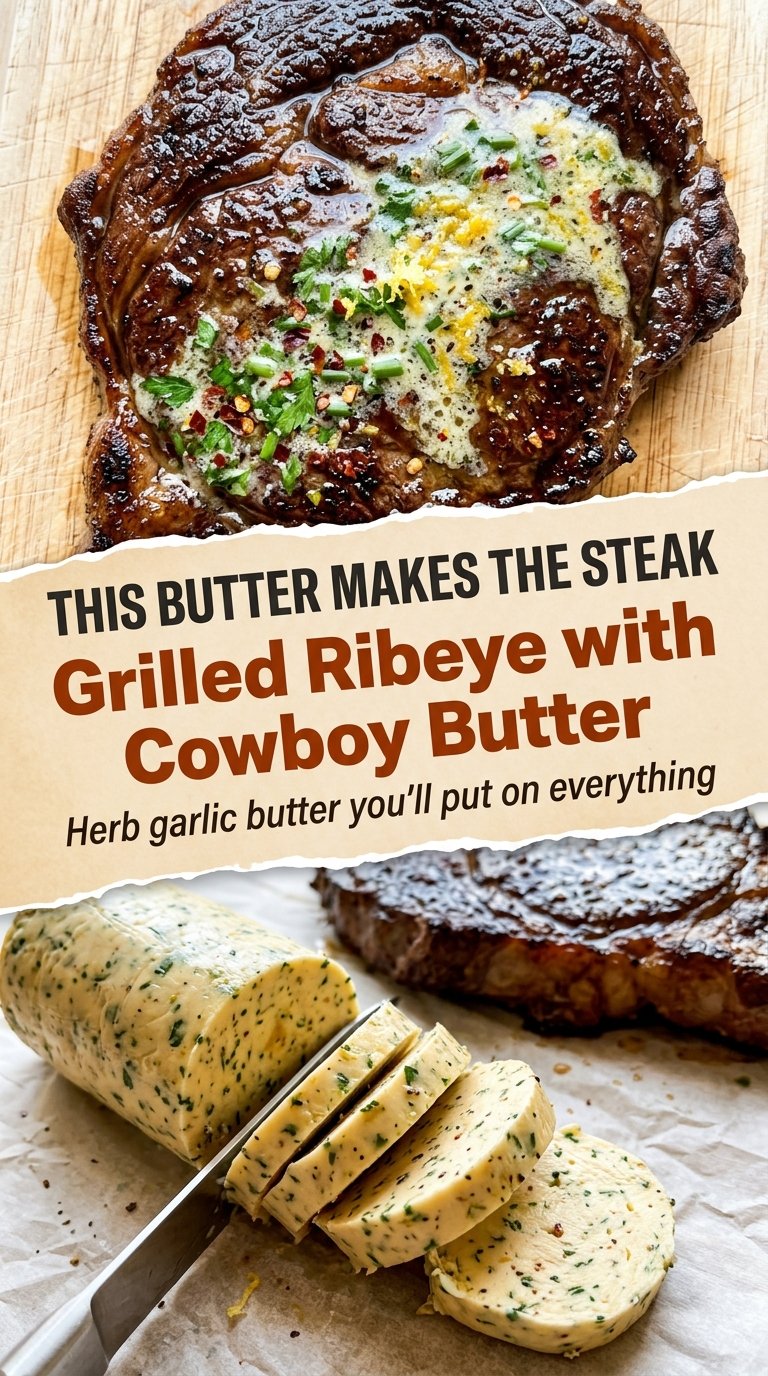
The Crust, the Rest, and the Butter Timing That Keep Ribeye Juicy
Ribeye gives you a lot of fat and a lot of flavor, but that also means it can go from deeply browned to overcooked faster than people expect. The mistake is crowding the timing: too much moisture on the surface, not enough heat on the grill, or butter added too early so it burns before the steak is ready. Dry steaks and a hot grill are what give you that dark crust that releases cleanly when it’s time to flip.
The cowboy butter comes in at the end for a reason. Garlic, herbs, and lemon all taste sharper and cleaner when they melt over hot meat instead of cooking down for too long. The butter should soften and pool around the steak, not separate into oil and browned solids. If your grill runs unevenly, use the hottest zone for the sear and pull the steaks a minute earlier if the crust looks right but the center still needs time.
- Ribeye steaks — A 1.5-inch thickness gives you enough room to build a crust before the center overcooks. Bone-in ribeye brings a little more insurance against drying out, and the fat cap bastes the meat as it cooks.
- Kosher salt — This does more than season the surface. It helps draw moisture out early, which is why patting the steaks dry before they hit the grill matters so much.
- Smoked paprika — This is a small amount, but it adds a grilled, slightly woodsy note that makes sense next to the char. Regular paprika will work if that’s what you have, but you’ll lose some depth.
- Unsalted butter — Use unsalted here so you can control the seasoning. If you use salted butter, cut back the added salt in the compound butter and taste before serving.
- Dijon mustard — It’s not there to make the butter taste like mustard. It sharpens the butter and helps the herbs stay lively instead of flat.
- Fresh lemon juice and zest — Fresh really matters. Bottled juice tastes dull here, and the zest adds the bright top note that keeps the butter from tasting heavy against the ribeye.
Getting the Heat Right Before the Steak Hits the Grate
Making the Cowboy Butter First
Combine the softened butter, garlic, parsley, thyme, chives, Dijon, red pepper flakes, lemon zest, lemon juice, salt, and pepper in a bowl and mix until the color looks even throughout. The butter should be soft enough to stir smoothly, not melted into a puddle. If it’s too cold, the herbs clump and the seasoning stays uneven. Set it aside at room temperature if you’re grilling right away, or chill it into a log so you can slice it over the finished steak.
Seasoning the Ribeye Properly
Pat the steaks dry on all sides before you add oil or seasoning. That step matters because surface moisture turns to steam, and steam is the enemy of a hard crust. Rub the steaks lightly with olive oil, then season generously with salt, pepper, garlic powder, and smoked paprika. Don’t press so hard that the spices cake up in one spot; even coverage gives you a better crust.
Grilling for a Deep Sear
Put the steaks on the hottest part of the grill and leave them alone for 3 to 4 minutes. You’re looking for a dark brown crust that lifts easily when it’s ready to turn; if it sticks, give it another 30 seconds. Flip once and cook the second side until the internal temperature reaches about 130°F for medium-rare. During the last minute, spoon cowboy butter over the top so it melts into the meat instead of simply warming on the plate.
Resting and Finishing
Move the steaks to a cutting board and rest them for 5 to 7 minutes under loose foil. If you slice too early, the juices run out and the center won’t settle properly. Add another spoonful of butter before serving, then slice against the grain if you’re serving it carved. The buttery drippings left on the board are worth spooning back over the steak.
Three Smart Ways to Adapt This Ribeye Without Losing What Makes It Work
Dairy-Free Version With Olive Oil Herb Finish
Swap the butter for a thick drizzle of good olive oil mixed with the garlic, herbs, lemon, Dijon, and pepper flakes. You won’t get the same lush melt over the steak, but you do keep the bright, savory finish that balances ribeye’s richness. Spoon it over the hot steak right after resting so it clings instead of sliding off.
No Grill, Same Sear on Cast Iron
Use a heavy cast iron skillet over high heat and cook the ribeyes in a little oil until the first side forms a dark crust. If your pan smokes hard before the steak sears, the heat is right; if it just gently steams, the pan isn’t hot enough. Finish with cowboy butter in the pan during the last minute, then rest as usual.
Making It Spicier or Milder
The red pepper flakes control the heat without changing the structure of the butter. Use the full amount for a noticeable kick, or cut it back to a pinch if you want the herbs and lemon to stay front and center. You can also add a little more black pepper for a sharper finish without increasing the burn.
Cooking for a Smaller Ribeye or Thicker Cut
A thinner steak needs less time on the grill and a thicker steak needs a lower heat finish after the sear. Keep the butter timing the same, but trust the thermometer over the clock when the cut changes. Ribeye is forgiving on flavor and not on doneness, so the internal temperature matters more than the exact minute count.
Storage and Reheating
- Refrigerator: Store leftover steak in an airtight container for up to 3 days. The crust softens, but the meat stays flavorful if you don’t overcook it the first time.
- Freezer: The steak freezes well, though the butter topping is best made fresh. Wrap slices tightly and freeze for up to 2 months.
- Reheating: Warm slices gently in a low oven or a covered skillet over low heat until just heated through. High heat dries ribeye fast and turns the fat grainy instead of silky.
Answers to the Questions Worth Asking
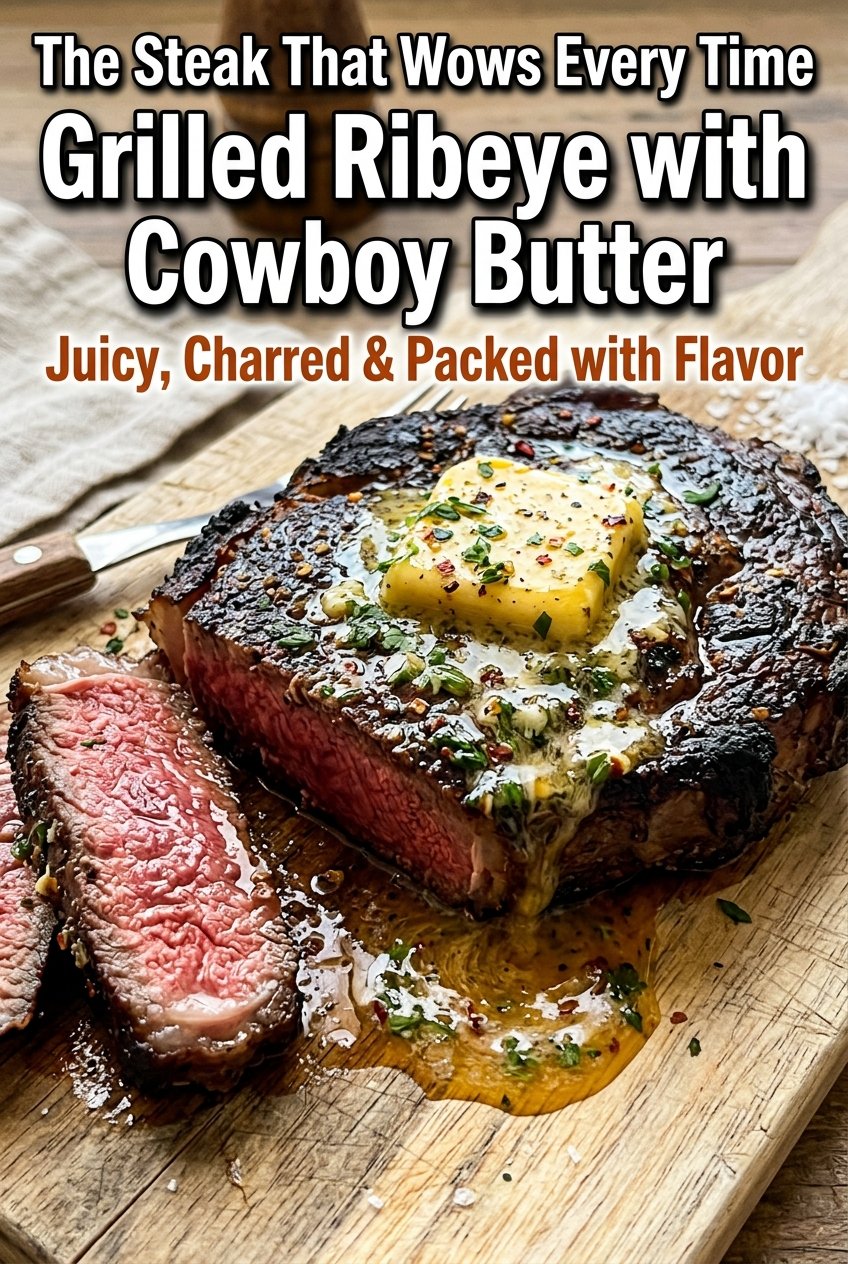
Grilled Ribeye Steak with Cowboy Butter
Ingredients
Equipment
Method
- Take the ribeye steaks out of the fridge 45 minutes before grilling to bring them to room temperature for even cooking.
- In a bowl, combine the softened unsalted butter, minced garlic, parsley, thyme leaves, chives, Dijon mustard, red pepper flakes, lemon zest, lemon juice, kosher salt, and black pepper.
- Mix until completely combined, then taste and adjust seasoning if needed.
- Set the cowboy butter aside at room temperature, or roll it into a log in plastic wrap and refrigerate until the steaks are ready.
- Preheat a grill (gas or charcoal) to high heat, aiming for 450–500°F (230–260°C), and clean and oil the grates well.
- Pat the steaks very dry with paper towels, then rub all over with olive oil.
- Season both sides and the edges generously with kosher salt, coarse black pepper, garlic powder, and smoked paprika.
- Place the steaks on the hottest part of the grill and grill without touching for 3–4 minutes until a deep, dark crust forms.
- Flip the steaks once and grill another 3–4 minutes for medium-rare, reaching an internal temperature of 130°F / 54°C, adjusting time for your preferred doneness.
- In the last 60 seconds of grilling, place a generous spoonful of cowboy butter on top of each steak so it begins to melt and sizzle over the hot meat.
- Remove the steaks from the grill and transfer to a cutting board.
- Tent loosely with foil and rest for 5–7 minutes to lock in the juices.
- Top with another tablespoon of cowboy butter right before serving, then slice against the grain or serve whole and spoon any pooled cowboy butter from the board over the meat.
