
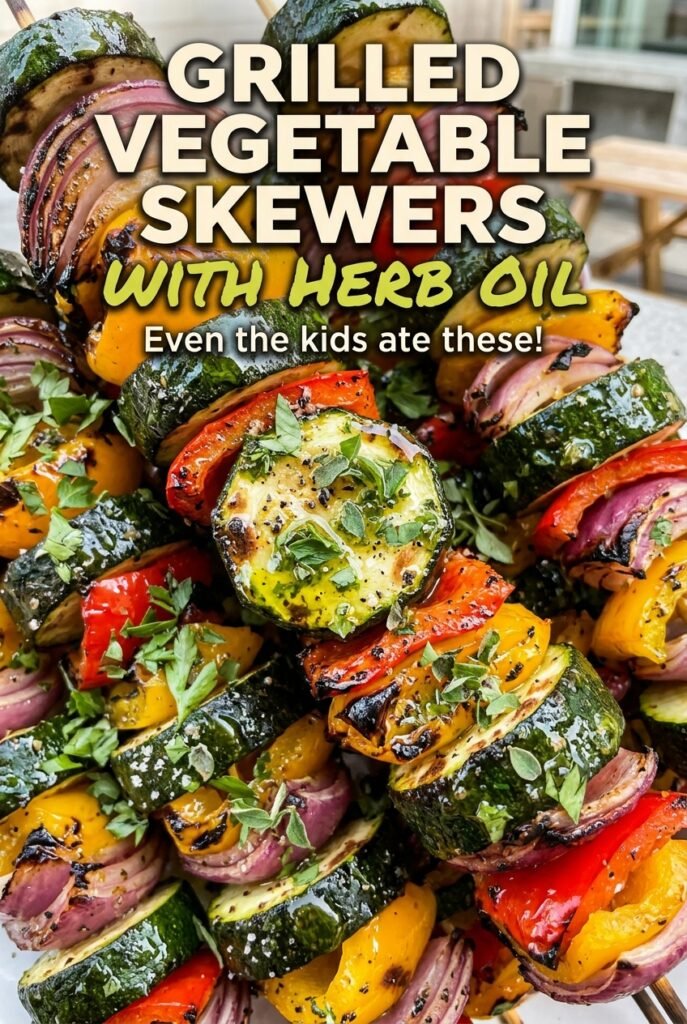
Grilled Vegetable Skewers with Herb Oil
The cherry tomatoes soften before the other vegetables, while the zucchini picks up little charred spots where it meets the grill. That mix of tender centers and browned edges is…
Tip: save now, read later.
The cherry tomatoes soften before the other vegetables, while the zucchini picks up little charred spots where it meets the grill. That mix of tender centers and browned edges is what I want from these grilled vegetable skewers with herb oil; the trick is giving each vegetable room to cook instead of packing the pieces together.
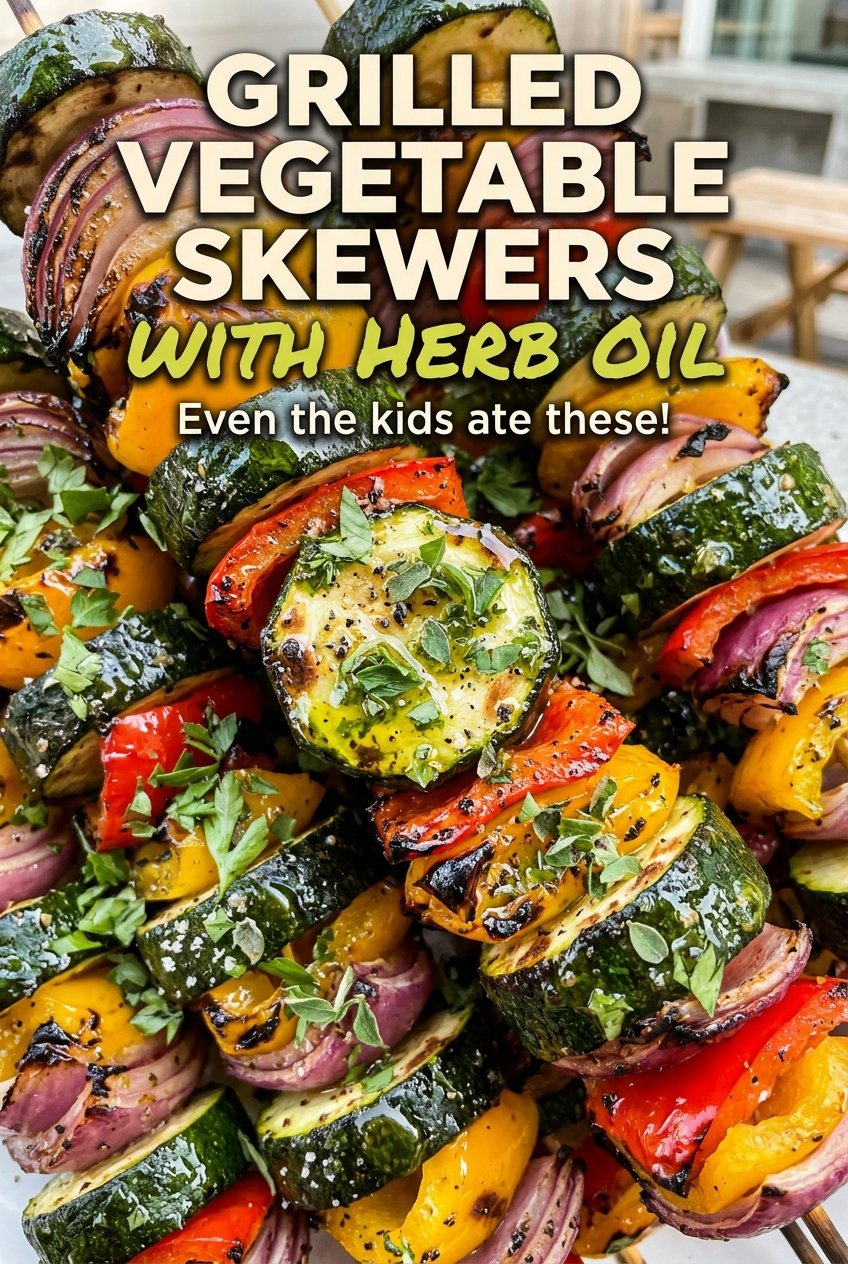
I toss the vegetables with just enough herb oil to coat them, then save the rest for after grilling. Parsley, basil, garlic, and lemon stay bright in that finishing drizzle, so the vegetables taste fresh rather than oily or muted. The skewers come off the grill tender, lightly charred, and glossy with herbs.
Kitchen Note
The reserved herb oil belongs on the vegetables after they leave the grill. The parsley, basil, and lemon taste fresher when they finish the dish instead of cooking over the grates.
Save these grilled vegetable skewers with herb oil for a cookout: lightly charred vegetables finished with a bright parsley-basil drizzle.
Why These Skewers Need Different-Sized Cuts
It’s easy to assume every vegetable should be cut to the same size before it goes on a skewer. Here, that would work against the mix. Zucchini rounds are cut thicker than the pepper and onion pieces, while the mushrooms and cherry tomatoes stay whole. Each shape has a different amount of surface touching the grill, and each one softens at its own pace.
The varied cuts help the vegetables finish in the same general window without turning the smaller pieces to mush while the thicker ones stay firm. Keep the pieces consistent within each vegetable: two zucchini rounds should be close in thickness, and pepper pieces should be similar in size. That consistency makes turning easier and helps you judge doneness across the whole skewer. If the pieces are crowded against one another, they steam where they touch instead of developing those lightly charred patches.
Think of the cut as part of the cooking, not just preparation. A little breathing room between pieces lets the heat reach more of each surface, and alternating the colors makes it easier to spot the softer vegetables as you turn the skewers.
Fresh Herbs and Produce Make the Difference in the Herb Oil
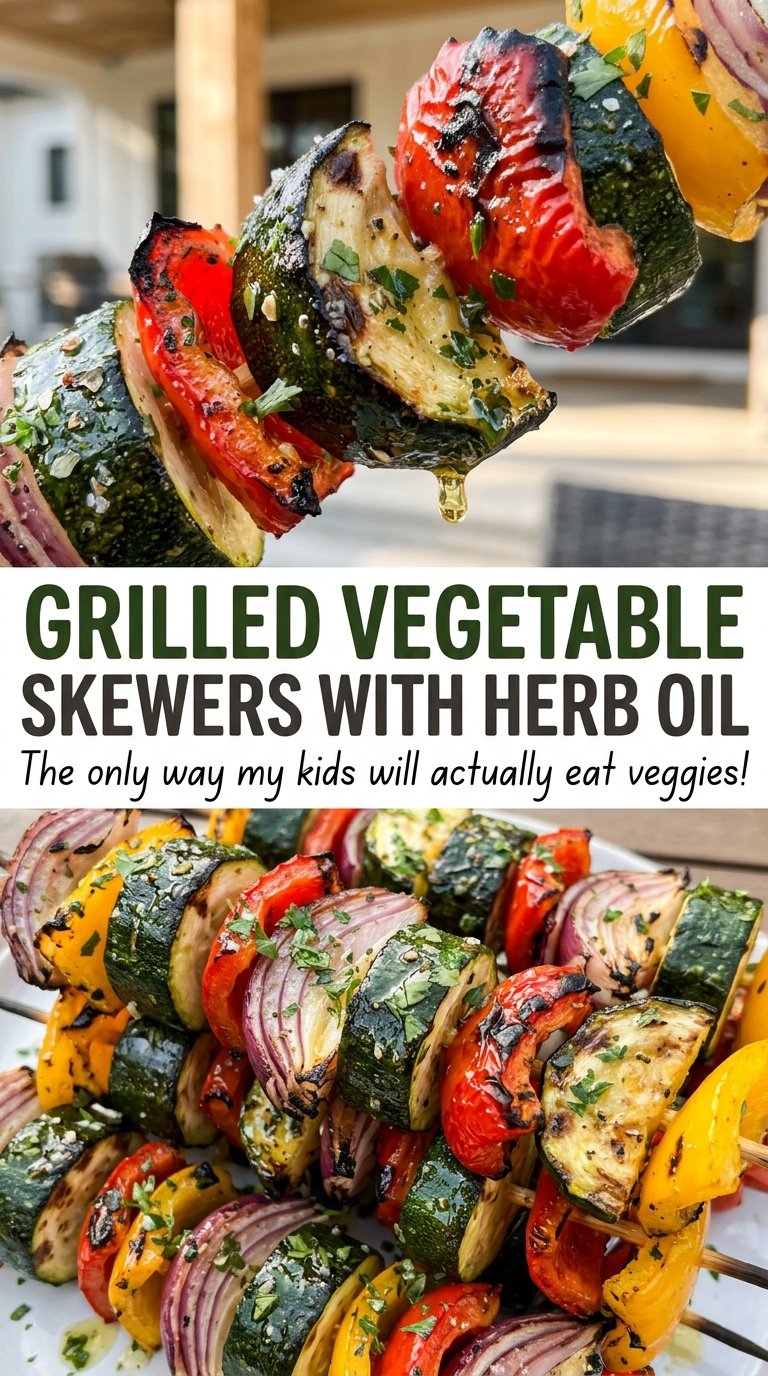
- Parsley and basil — Fresh herbs give the finishing oil its green, lively flavor. Parsley brings a clean, grassy note; basil adds a softer sweetness. If you’re short on basil, use additional parsley from the listed herbs, knowing the oil will taste more parsley-forward. Dried herbs won’t give the same fresh finish.
- Olive oil, garlic, and lemon — Olive oil carries the chopped herbs over the vegetables, while grated garlic and lemon juice give the oil its savory, sharp edge. Choose an olive oil whose taste you enjoy, since it remains noticeable after grilling. The fine garlic texture helps it spread through the oil instead of leaving large, sharp pieces.
- Zucchini and bell peppers — Choose zucchini that feels firm, with unblemished skin, and peppers that feel crisp and heavy for their size. The red and yellow peppers can trade places if needed; the color changes, but the sweet pepper character stays. Keep the zucchini rounds and pepper pieces close to their specified cuts so they cook predictably.
- Red onion — A large red onion gives the skewers both sweetness and a little bite. Separate the cut onion into layers so the pieces can be threaded individually. If you leave it out, the skewers lose that distinct savory-sweet contrast, so use another listed vegetable in its place for a fuller mix.
- Cremini mushrooms and cherry tomatoes — Cremini mushrooms bring a firm, earthy bite, and whole cherry tomatoes add juicy pockets. Look for mushrooms that are firm and dry rather than slick, and tomatoes with taut skins. If you need to change the mix, extra mushrooms can stand in for some of the tomatoes, though the skewers will be less juicy.
Build the Skewers So Every Vegetable Gets Grill Contact
Whisk the Herb Oil and Reserve the Finish
Whisk the olive oil, chopped parsley, chopped basil, finely grated garlic, lemon juice, and kosher salt together in a small bowl. Spoon two tablespoons into a large bowl for coating the vegetables, then set the rest aside for serving. This split keeps the oil for finishing separate from the bowl that will hold the raw vegetables. If the oil separates while it sits, whisk it again before using it.
Coat and Thread the Vegetables
Add the zucchini, red and yellow bell peppers, separated red onion, trimmed cremini mushrooms, cherry tomatoes, and ground black pepper to the large bowl. Toss until the pieces have a light coating of herb oil rather than a pool of oil at the bottom. Thread the vegetables alternately onto eight 10-inch metal skewers, leaving a little space between pieces. Don’t press them together; the open spaces help the heat reach their sides.
Turn for Tender Centers and Light Char
Heat a clean grill to medium-high, about 400°F to 450°F. Grill the skewers for 10 to 14 minutes, turning every 3 to 4 minutes. Look for tender vegetables with lightly charred patches, not uniformly blackened surfaces. When they’re ready, brush them with the reserved herb oil and serve.
Ways to Change the Vegetable Mix Without Losing the Grill-Friendly Balance
A red-and-yellow pepper mix
Let the two bell peppers take up more of the vegetable mix and use less zucchini or mushroom. The skewers will taste sweeter and have a firmer bite, with less of the earthy, juicy contrast from mushrooms and tomatoes.
Onion- and garlic-free skewers
Leave out the red onion and garlic, then fill the space with more zucchini, peppers, mushrooms, or tomatoes. The herb oil will be gentler and less savory, but parsley, basil, and lemon still give it a fresh finish. This is a useful adjustment when you’re avoiding those two ingredients.
Parsley-only herb oil
Use parsley in place of the basil, keeping the herb oil within the same fresh-herb family. The flavor will be more grassy and less sweet, but it still pairs well with the charred vegetables and lemon.
Storage and Reheating
- Refrigerator: Store leftover grilled vegetables in a covered container for 3 to 4 days. The zucchini and tomatoes soften as they sit.
- Freezer: Freezing isn’t recommended; thawed zucchini and tomatoes turn watery and lose their pleasant texture.
- Reheating: Spread the vegetables in a microwave-safe dish and heat in short bursts until steaming hot, stirring once if the portion is large. Don’t heat them for too long or the softer vegetables will collapse. Refrigerate leftovers within 2 hours, and reheat to 165°F.
Questions That Come Up Before the Skewers Hit the Grill
Grilled Vegetable Skewers with Herb Oil
Ingredients
Equipment
Method
- Whisk the olive oil, parsley, basil, garlic, lemon juice, and salt in a small bowl.
- Spoon 2 tablespoons into a large bowl for the vegetables and set the remaining herb oil aside.
- Add the zucchini, bell peppers, onion, mushrooms, tomatoes, and black pepper to the large bowl; toss to coat with the herb oil.
- Thread the vegetables onto eight 10-inch metal skewers, alternating them and leaving a little space between pieces.
- Heat a clean grill to medium-high, about 400°F to 450°F.
- Grill the skewers for 10 to 14 minutes, turning every 3 to 4 minutes, until the vegetables are tender and lightly charred.
- Brush the grilled vegetables with the reserved herb oil.
- Serve the grilled vegetables.
