
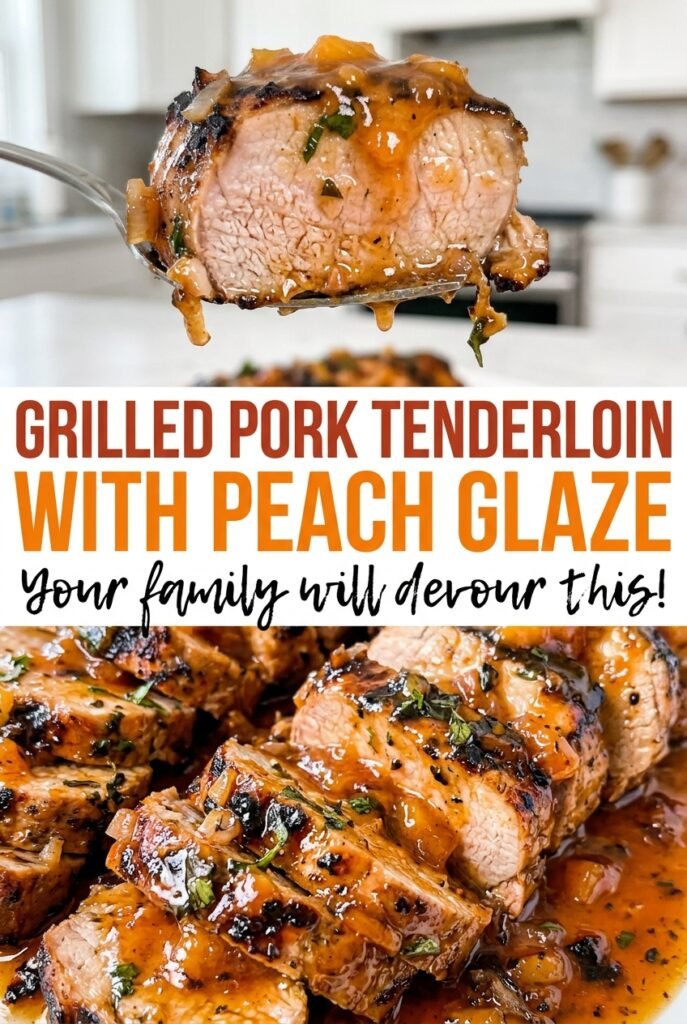
Grilled Pork Tenderloin with Peach Glaze
The glaze starts to smell like warm peaches as soon as the preserves hit the saucepan, but on the grill that sweetness needs a little protection. I brown the tenderloins…
Tip: save now, read later.
The glaze starts to smell like warm peaches as soon as the preserves hit the saucepan, but on the grill that sweetness needs a little protection. I brown the tenderloins over direct heat first, then move them away from the flame before brushing on the peach mixture. That order gives the pork color without letting the glaze scorch before the center is cooked.
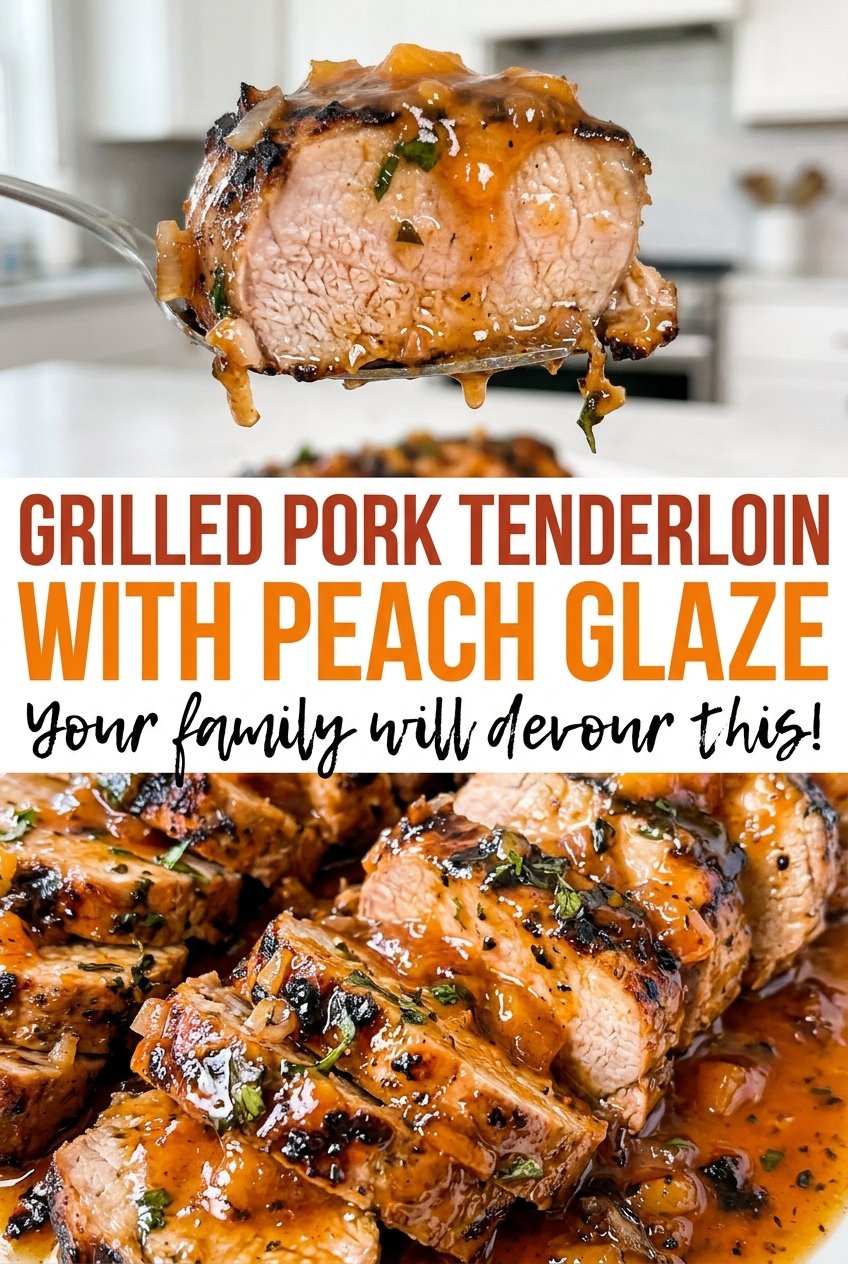
For this grilled pork tenderloin with peach glaze, Dijon and apple cider vinegar keep the preserves from tasting one-note sweet, while garlic gives the sauce a savory edge. I use two tenderloins so there’s plenty for four, and I rely on a thermometer rather than the clock alone: tenderloins vary in thickness, and the temperature tells you when to move from browning to glazing. The pork comes off juicy, with a glossy coating that tastes like peaches but still belongs beside a savory dinner.
Kitchen Note
Pour the serving portion into a clean bowl before the glaze goes anywhere near the raw pork. That small separation means the sauce you bring to the table stays untouched by the grill brush and raw meat.
Save this grilled pork tenderloin with peach glaze for a cookout when you want smoky browned pork and a sweet-tangy finish.
Why Peach Glaze Belongs at the End of the Grill
Peach preserves bring plenty of sugar, which is why a glaze that behaves beautifully in a saucepan can darken too quickly over a live flame. The pork needs direct heat for browning, but the glaze doesn’t need that same exposure. I keep those jobs separate: first build color on the bare, seasoned meat; then move it to indirect heat and brush on the glaze near the finish.
That two-zone setup also gives you a little breathing room. If the outside is browning faster than the center is warming, the cooler side of the grill lets the tenderloin continue cooking without sitting directly over the flame. Once the glaze goes on, the indirect zone helps it turn shiny and cling to the meat instead of blackening. The result is a more balanced bite: browned pork, a lightly sticky coating, and enough tartness from the vinegar and mustard to keep the peach flavor in check.
Keep the lid closed while the pork finishes on indirect heat, and use the thermometer reading—not the glaze’s color—to judge doneness. The preserves can look glossy before the pork is ready, so a good-looking coating isn’t a reason to take it off early.
What Keeps the Peach Glaze Savory Instead of Candy-Sweet
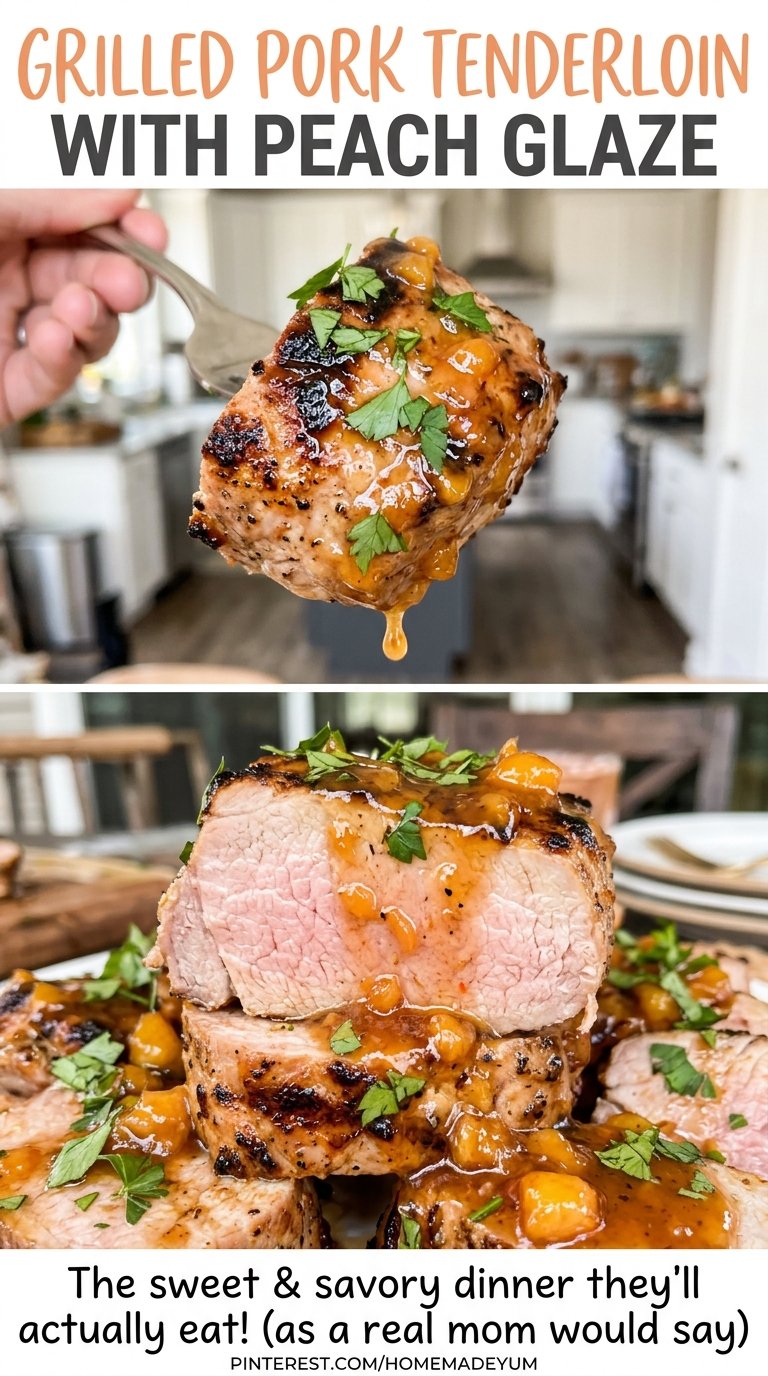
- Peach preserves — Preserves give the glaze its fruit flavor and body, so they cling to the pork as it finishes cooking. A jar with a clear peach aroma matters more here than an expensive brand; dull-tasting preserves make a dull glaze. Stir the mixture as it simmers so it smooths out evenly.
- Dijon mustard — Dijon adds a sharp, savory note that cuts through the sweetness and keeps the glaze tasting like a sauce rather than warmed jam. A smooth Dijon blends in cleanly; a coarse mustard would change the texture. For a gluten-free version, use a certified gluten-free Dijon.
- Apple cider vinegar — Its acidity lifts the fruit and mustard, especially once the glaze meets the rich, browned pork. Keep this ingredient in the balance; leaving it out makes the sauce noticeably sweeter and flatter.
- Garlic — Minced garlic gives the short-simmered glaze a savory backbone. Mince it finely so it disperses instead of leaving large raw-tasting pieces in the finished coating.
- Pork tenderloin — Tenderloin is lean and cooks quickly, which makes the thermometer especially useful. Removing the silver skin matters: that tough strip doesn’t soften on the grill, and it can make a tender slice chew unevenly.
- Neutral oil, kosher salt, and black pepper — The oil helps the seasoning coat the meat and supports browning; the salt and pepper keep the pork itself well seasoned beneath the glaze. Patting the tenderloins dry first helps the surface brown rather than steam.
Build the Glaze, Brown the Pork, Then Finish Gently
Simmer Until the Glaze Turns Smooth
Combine the peach preserves, Dijon, vinegar, and minced garlic in a small saucepan over medium heat. Bring the mixture to a simmer, stirring for 3–5 minutes until it looks smooth and slightly thickened. Keep it at a simmer rather than a hard boil; a steady bubble is enough to bring the ingredients together. Transfer 1/4 cup to a clean bowl for serving, then keep the remaining glaze separate for brushing.
Set Up Two Heat Zones
Preheat a gas or charcoal grill to medium-high, about 400–450°F, with an area reserved for indirect heat. Pat the tenderloins dry, rub them all over with neutral oil, and season with kosher salt and black pepper. Dry surfaces take on better color, so don’t skip the pat-down. Keep the glaze off the raw pork until the finishing stage.
Brown Every Side Over Direct Heat
Place the tenderloins over direct heat for 2–3 minutes per side, turning to brown all sides. You’re looking for visible golden-brown patches rather than a fully cooked center at this stage. If one side darkens much faster, turn it and continue browning the remaining sides. Move the tenderloins to indirect heat once they’re browned.
Brush, Finish, and Rest
Close the lid and cook over indirect heat, turning once, for 8–15 minutes, until the thickest part reaches about 135°F. Brush on the remaining glaze and continue over indirect heat for 2–4 minutes, turning once, until the thickest part reaches 145°F. Transfer the pork to a cutting board and rest it for 3 minutes before slicing. Serve with the reserved glaze.
Small Changes for a Sharper Glaze or a Smaller Grill
A less-sweet, more tangy finish
Shift the glaze balance toward Dijon and apple cider vinegar and use less peach preserve. The sauce will taste sharper and less fruity, while still coating the pork; keep the mixture smooth as it simmers so the altered balance comes together evenly.
A half batch for two
Use one tenderloin and scale the glaze and seasoning ingredients down proportionally. Keep the same direct-then-indirect grilling approach, but let the thermometer—not an assumed shorter cook—tell you when the pork is ready. Choose a tenderloin close to the usual size so it browns and cooks at a similar pace.
Gluten-free peach glaze
Replace the Dijon with a certified gluten-free Dijon mustard, and choose peach preserves labeled gluten-free as well. Those swaps keep the sweet-tangy character close to the original; the sauce may vary slightly by brand, so simmer until it looks smooth and lightly thickened.
Storage and Reheating
- Refrigerator: Refrigerate leftover pork in a covered container within 2 hours and use it within 3–4 days. The slices will firm up as they chill.
- Freezer: Freeze sliced pork in an airtight container for up to 2–3 months; freeze the reserved glaze separately so you can add it after thawing.
- Reheating: Reheat covered slices in the microwave until they reach 165°F, stopping as soon as they’re hot throughout. Lean tenderloin dries out if it’s heated longer than necessary.
Questions That Come Up at the Grill
Grilled Pork Tenderloin with Peach Glaze
Ingredients
Equipment
Method
- Combine the peach preserves, Dijon mustard, apple cider vinegar, and garlic in a small saucepan over medium heat; bring to a simmer and cook for 3–5 minutes, stirring, until smooth and slightly thickened.
- Transfer 1/4 cup of the glaze to a clean bowl for serving, and set aside the remaining glaze for brushing on the pork.
- Preheat a gas or charcoal grill to medium-high heat, about 400–450°F, with an area for indirect heat.
- Pat the pork dry, rub it all over with the oil, and season with the salt and pepper.
- Grill the tenderloins over direct heat for 2–3 minutes per side, turning to brown all sides.
- Move the tenderloins to indirect heat, close the lid, and cook for 8–15 minutes, turning once, until the thickest part reaches about 135°F.
- Brush the tenderloins with the remaining glaze and continue grilling over indirect heat for 2–4 minutes, turning once, until the thickest part reaches 145°F.
- Transfer the pork to a cutting board and rest for 3 minutes before slicing; serve with the reserved glaze.
