
Guinness Beef Stew with Herb Dumplings
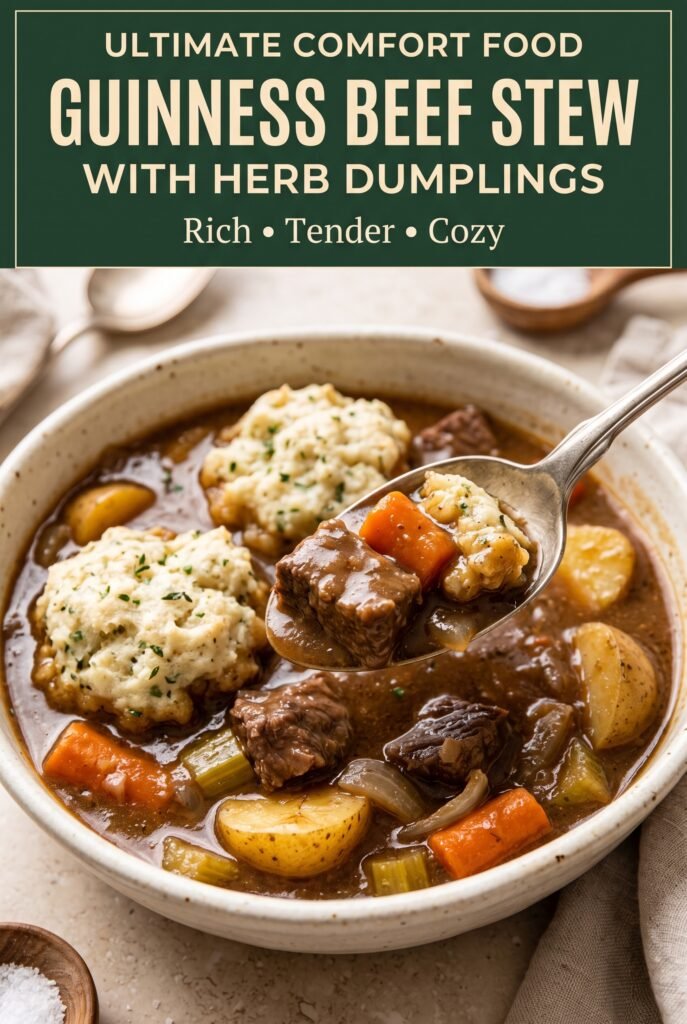
Guinness beef stew earns its place on the table when the broth turns dark, glossy, and full of slow-cooked beef flavor, and the dumplings sit on top like little pillows…
Tip: save now, read later.
Guinness beef stew earns its place on the table when the broth turns dark, glossy, and full of slow-cooked beef flavor, and the dumplings sit on top like little pillows that soak up every bit of it. The vegetables stay recognizable instead of melting away, the potatoes hold their shape, and the whole pot tastes deeper than the short ingredient list first suggests.
The stout does more than add flavor. It brings roasted bitterness and a malty edge that balances the richness of the beef and the sweetness of the carrots, while the Worcestershire and tomato paste round out the base so it tastes layered instead of flat. Browning the beef in batches matters here too; if you crowd the pot, the meat steams and the stew loses that dark, savory foundation.
Below, I’ll walk through the part that matters most: building the stew so the liquid tastes finished before the dumplings ever go on top. The dumplings themselves are simple, but there’s a small technique detail that keeps them light instead of dense.
The stew was rich and beefy, and the dumplings steamed up fluffy instead of gummy. I loved that the potatoes stayed intact and the broth thickened just enough without turning heavy.
Save this Guinness beef stew with herb dumplings for a night when you want a deep, slow-simmered dinner with fluffy dumplings on top.
The Reason the Beef Needs a Real Brown Crust Before the Simmer Starts
If the beef goes into the pot pale, the stew can still taste fine, but it won’t have the same depth. Browning creates those dark bits on the bottom of the Dutch oven, and that is where the stew gets its backbone. When you deglaze with Guinness, those bits lift right back into the liquid instead of staying stuck to the pan.
The other common mistake is rushing the simmer. A hard boil tightens beef chuck and turns the broth cloudy instead of rich. Keep it at a gentle bubble, just enough movement to break the surface now and then, and the meat stays tender while the liquid slowly concentrates.
What Each Ingredient Is Actually Doing in This Dish
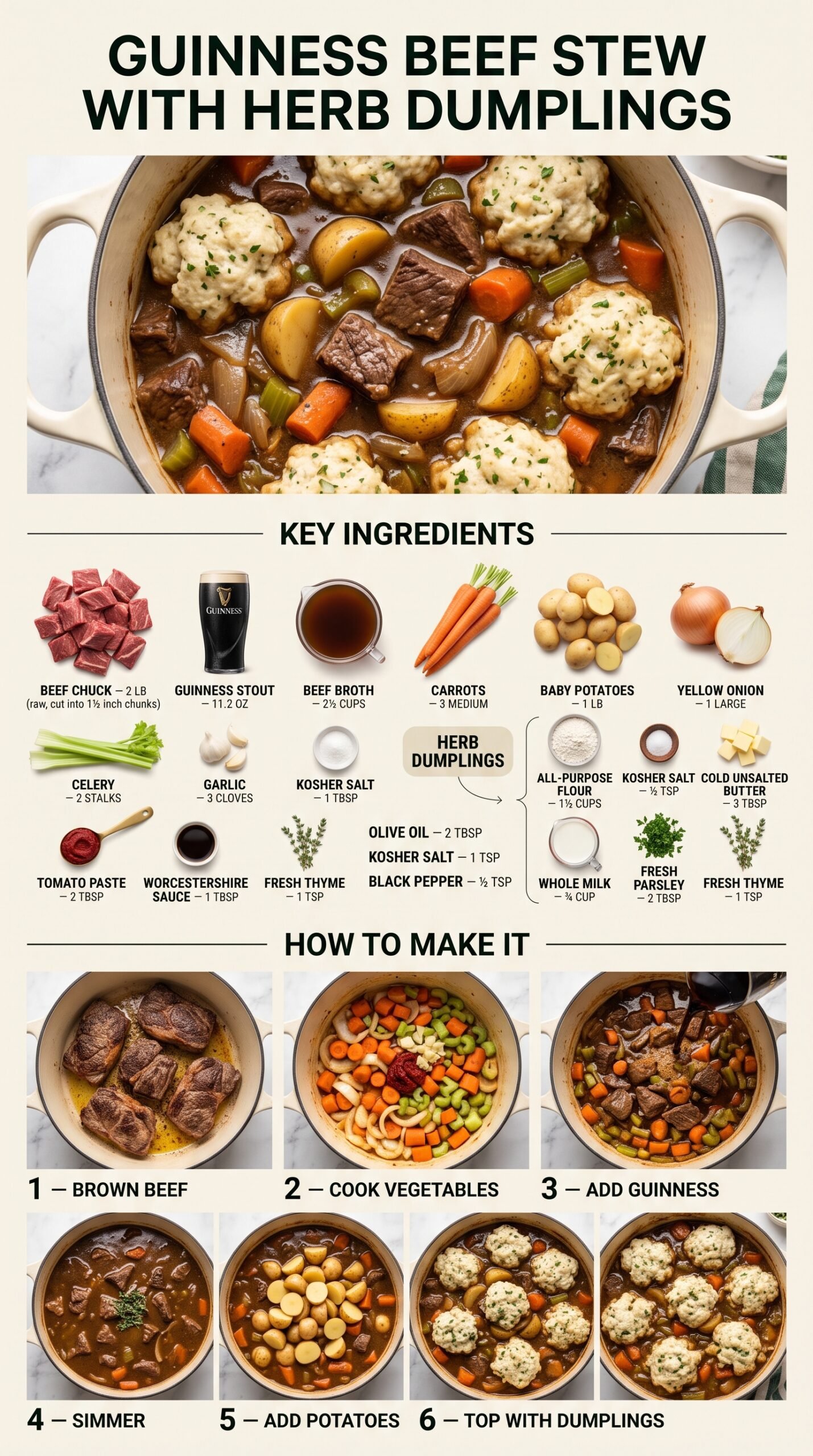
- Beef chuck — This is the cut that gets tender with time. Leaner stew meat can work in a pinch, but it won’t give you the same silky texture after a long simmer.
- Guinness stout — The stout adds roasted depth and a little bitterness that keeps the stew from tasting one-note. Don’t swap in a sweeter beer unless you want a softer, less savory finish.
- Tomato paste — It brings concentrated savoriness and helps the gravy taste fuller. Cook it for a minute with the garlic so it loses that raw edge before the liquid goes in.
- Baby potatoes — Halving them keeps them intact during the simmer. If you use larger potatoes, cut them into evenly sized chunks so they finish at the same time as the beef.
- Cold butter for the dumplings — Those small cold bits create steam pockets in the dough, which is what gives the dumplings their light, fluffy texture. Warm butter will blend in too quickly and the dumplings can turn heavy.
Building the Stew, Then Letting the Dumplings Steam on Top
Getting the Meat Properly Browned
Season the beef, dust it lightly with flour, and brown it in batches in hot oil. You want a deep brown crust, not gray edges, so leave space around each piece and let it sit until it releases on its own. If the beef sticks hard, it needs another minute; if the pot looks crowded, the meat is steaming instead of searing.
Pulling Flavor Out of the Pot
Cook the onion, carrots, and celery until they soften and pick up some color, then stir in the garlic and tomato paste for a minute. The paste should darken slightly and smell sweeter, not sharp. Pour in the Guinness and scrape every browned bit from the bottom, because those bits dissolve into the sauce and give the stew its dark, savory taste.
Keeping the Simmer Gentle
Add the broth, Worcestershire, thyme, bay leaf, and browned beef, then cover and cook low and slow. The liquid should barely tremble, not boil hard. When the potatoes go in later, they should slide onto a tender stew base and cook without breaking apart.
Dropping in the Dumpling Dough
Mix the dumpling dough just until it comes together. Overmixing makes them tight, and tight dumplings stay doughy in the middle. Drop rounded spoonfuls over the surface of the simmering stew, cover the pot, and do not lift the lid for 15 minutes; the trapped steam is what cooks them through.
Three Ways to Work This Stew Into Your Routine
Gluten-Free Version Without the Dumpling Graininess
Use a good 1:1 gluten-free flour blend in both the stew coating and the dumplings. The stew thickens a little differently, so let it simmer uncovered for a few extra minutes at the end if you want a fuller gravy. The dumplings will be a touch more delicate, but they’ll still steam up well if you keep the dough cold.
Dairy-Free Dumplings That Still Stay Tender
Swap the butter for a plant-based butter that stays firm when cold, and use unsweetened oat milk or almond milk in the dumpling dough. You’ll lose a little of the buttery flavor, but the texture can still be light if you handle the dough gently and keep the pieces small.
No Alcohol, Still Deep and Savory
Replace the stout with an equal amount of extra beef broth plus 1 tablespoon balsamic vinegar and 1 teaspoon soy sauce. That won’t taste like Guinness, but it does bring back some of the roasted tang and savory weight that the beer normally gives the pot.
Make-Ahead Stew for an Easier Dinner
Cook the stew base a day ahead and chill it without the dumplings. The flavor gets even better overnight, and the fat rises so you can lift off any excess before reheating. Add the dumplings only when you’re ready to serve, since they’re at their best fresh from the steam.
Storage and Reheating
- Refrigerator: Store the stew and dumplings for up to 4 days. The dumplings soften as they sit, but the flavor stays strong.
- Freezer: The stew freezes well without the dumplings for up to 3 months. Freeze the dumplings separately only if you don’t mind a slightly firmer texture after reheating.
- Reheating: Warm the stew gently on the stove over low heat until steaming, adding a splash of broth if needed. Don’t boil it hard or the beef can tighten and the dumplings can fall apart.
Answers to the Questions Worth Asking
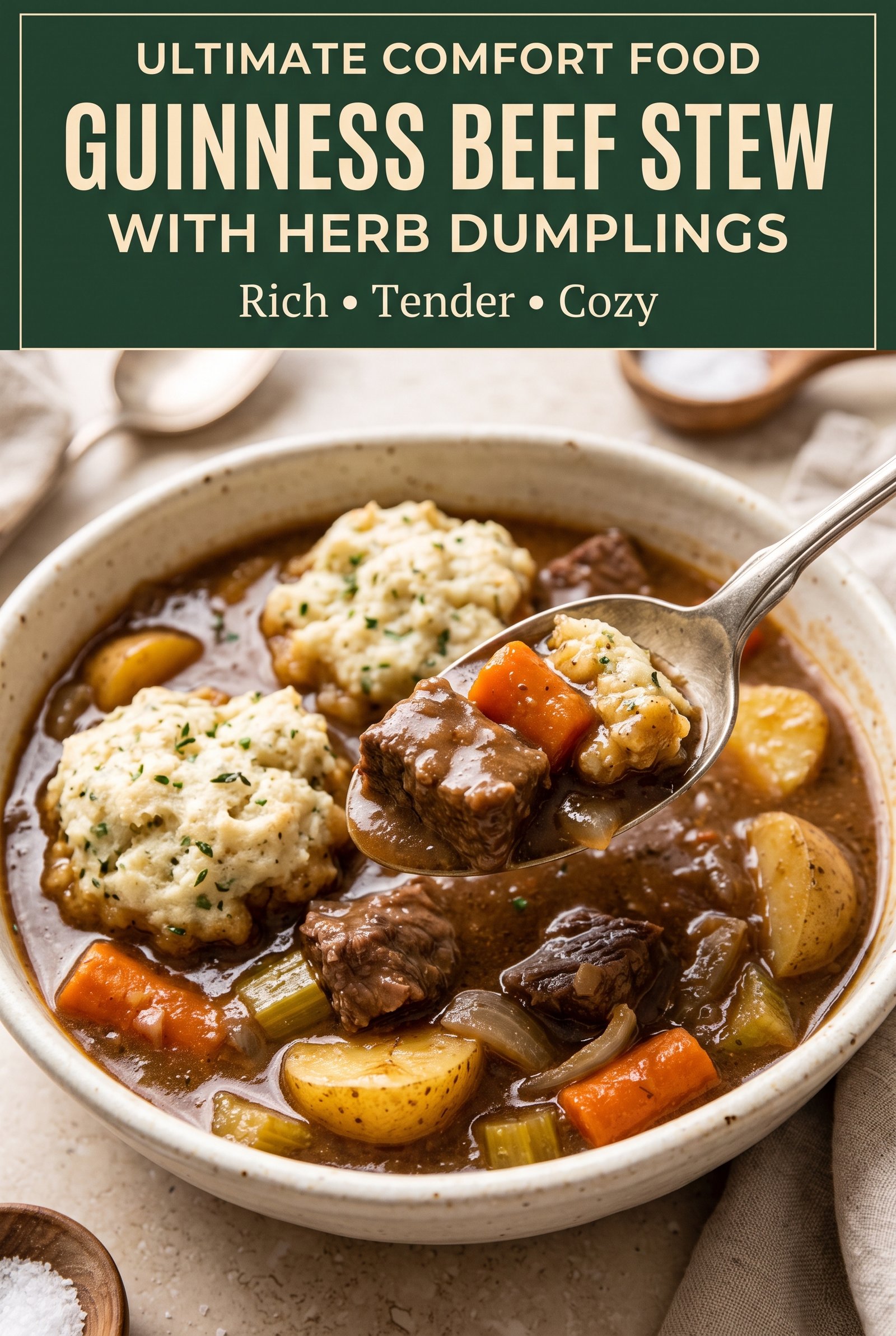
Guinness Beef Stew with Herb Dumplings
Ingredients
Equipment
Method
- Season the beef chuck with kosher salt and black pepper. Toss with 3 tbsp all-purpose flour until lightly coated.
- Heat 2 tbsp olive oil in a large Dutch oven over medium-high heat. The oil should shimmer when ready.
- Brown the beef in batches for 3–4 minutes per side, placing it in a single layer as much as possible. Transfer browned beef to a plate when deep golden-brown forms.
- Add the yellow onion, carrots, and celery to the pot. Cook for 5–6 minutes until the vegetables begin to soften.
- Stir in the garlic and tomato paste. Cook for 1 minute until fragrant.
- Pour in the Guinness stout and scrape the browned bits from the bottom of the pot. Stir until the mixture looks cohesive.
- Add the beef broth, Worcestershire sauce, dried thyme, bay leaf, and browned beef to the pot. Stir to combine.
- Bring the stew to a gentle simmer. Cover and cook over low heat for 90 minutes.
- Add the baby potatoes. Continue simmering over low heat for 25–30 minutes until the beef and potatoes are tender.
- While the stew finishes, combine the all-purpose flour, baking powder, kosher salt, chopped parsley, and fresh thyme leaves in a bowl. Mix until evenly distributed.
- Cut the cold unsalted butter into the flour mixture until small coarse crumbs form. Stop when the mixture looks like uneven pebbly crumbs.
- Pour in the whole milk and stir gently just until a soft dough forms. The dough should hold together without being dry.
- Drop 8–10 rounded spoonfuls of dumpling dough over the surface of the simmering stew. Leave space between each dumpling.
- Cover the pot and cook over low heat for 15 minutes without lifting the lid. The dumplings will look puffed above the stew line.
- Uncover and check the dumplings. They should be puffed and cooked through in the center.
- Remove the bay leaf from the stew. Serve the stew with one or two herb dumplings per portion.
