
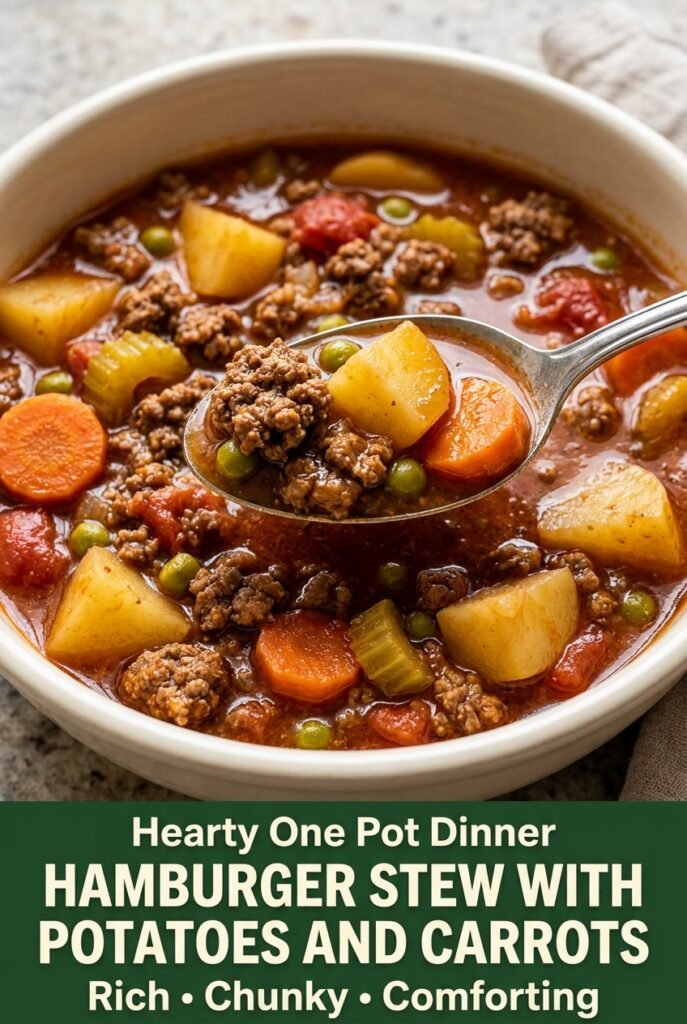
Hamburger Stew with Potatoes and Carrots
Hamburger stew with potatoes and carrots lands in the bowl with the kind of comfort that feels old-fashioned in the best way: browned beef, soft potatoes, sweet carrots, and a…
Tip: save now, read later.
Hamburger stew with potatoes and carrots lands in the bowl with the kind of comfort that feels old-fashioned in the best way: browned beef, soft potatoes, sweet carrots, and a tomato-rich broth that tastes like it simmered all afternoon. It’s filling without being heavy, and the best versions have enough body to coat a spoon while still staying brothy enough to soak into a piece of bread.
What makes this one work is the order. The beef gets browned first so it brings depth to the pot, then the tomato paste cooks long enough to lose its raw edge before the broth goes in. Yukon Gold potatoes hold their shape better than russets here, and the carrots are cut thick enough to stay intact instead of melting away before the stew is done. The peas go in at the end on purpose, so they stay bright and sweet instead of turning dull and mushy.
Below you’ll find the little details that keep the broth flavorful, the vegetables tender, and the stew hearty instead of watery. If you’ve ever had a beef-and-vegetable stew fall a little flat, the technique notes here are worth reading before you start.
The tomato broth thickened up beautifully and the potatoes held their shape instead of turning to mush. I used the leftovers for lunch the next day and it tasted even better.
Save this hamburger stew with potatoes and carrots for a one-pot dinner with a rich broth and tender vegetables.
The Secret to Stew That Tastes Full-Bodied, Not Thin and Soupy
The difference between a stew that tastes satisfying and one that feels like beef soup usually comes down to two things: browning and timing. If the meat goes into a crowded pan and steams instead of browning, you miss the savory foundation that makes the broth taste rich. If the potatoes go in too early, they break apart before the carrots are tender and the whole pot turns muddy.
This version builds flavor in layers. The tomato paste cooks against the hot beef and onions, which deepens its taste before any liquid dilutes it. Then the stew simmers just long enough for the potatoes to become creamy at the edges while still holding their shape. You want the broth at a gentle bubble, not a hard boil, because aggressive boiling shakes the vegetables apart and can make the beef taste grainy.
What Each Ingredient Is Actually Doing in This Pot
- Lean ground beef — This is the backbone of the stew, and browning it well matters more than the exact fat percentage. Lean beef keeps the broth from getting greasy, but you still want enough fat in the pan to carry the onion and garlic flavor. If you use extra-lean beef, add a touch more oil so the meat doesn’t stick and dry out.
- Yukon Gold potatoes — These hold their shape and give the stew a naturally creamy texture as they simmer. Russets will soften faster and can start to fall apart, which makes the broth thicker but less defined. Cut the chunks evenly so they finish at the same time as the carrots.
- Tomato paste — This is what gives the broth depth and a little body. Cook it for a full minute with the garlic so it darkens slightly and loses that sharp, raw edge. If you skip that step, the stew can taste flat and tinny.
- Beef broth and Worcestershire sauce — The broth sets the base, but Worcestershire is what adds the dark, savory note that makes the pot taste like it cooked longer than it did. A good broth helps, but this is one place where the Worcestershire is doing real work, so don’t leave it out unless you replace it with something equally assertive.
- Frozen peas — They’re not just for color. Stirring them in at the end keeps their sweetness bright and gives the stew a fresh pop against the richer broth. Fresh peas work too, but they need a little less time.
The Part of the Simmer That Makes the Vegetables Tender, Not Crumbly
Brown the Beef First
Heat the oil in a wide Dutch oven and add the ground beef in an even layer. Let it sit long enough to brown before breaking it up too aggressively; you want some darker bits for flavor, not steamed crumbles. If liquid starts pooling right away, the pot is too crowded or not hot enough, and the meat will boil instead of sear.
Build the Aromatic Base
Add the onion and celery and cook until the onion turns translucent and the celery softens at the edges. Stir in the garlic and tomato paste and cook for a minute until the paste deepens in color and smells sweet, not raw. That short cooking time changes the whole stew, because it turns the tomato paste from a sharp note into part of the broth.
Simmer Until the Potatoes Yield
Add the potatoes, carrots, tomatoes, broth, and seasonings, then bring the pot to a gentle boil before lowering the heat. Cover and simmer until the potatoes can be pierced cleanly with a fork and the carrots are tender but still intact. If the stew is boiling hard, turn it down; a heavy boil can break the potatoes and turn the broth cloudy.
Finish With the Peas and Parsley
Stir in the peas during the last few minutes so they stay bright and keep a little snap. Pull out the bay leaf, taste the broth, and add salt only if it needs it after simmering. Finish with parsley right before serving so the stew tastes fresher and less flat.
Three Ways to Adjust This Stew Without Losing What Makes It Work
Make It Dairy-Free and Still Rich
This stew is already naturally dairy-free, so the only thing to watch is the broth you use. Choose a beef broth with a clean, savory taste, since dairy usually isn’t doing any of the heavy lifting here anyway. If you want extra body, let the stew simmer uncovered for the last few minutes so the broth tightens up a bit.
Make It Gluten-Free Without Changing the Texture
The recipe is naturally close to gluten-free, but Worcestershire sauce can vary by brand, so check the label. Use a certified gluten-free version if needed, and keep the broth gluten-free as well. The texture stays the same because the stew gets its body from the potatoes and the tomato paste, not from flour.
Swap in Ground Turkey for a Lighter Stew
Ground turkey works, but it needs a little help because it doesn’t bring the same deep flavor as beef. Add an extra teaspoon of oil when browning it and don’t skip the tomato paste step, since that’s what replaces some of the richness you lose. The finished stew will be lighter and a little cleaner tasting, but still satisfying.
Add More Vegetables Without Turning It Watery
Mushrooms, green beans, or corn all fit well here, but add them with the right timing. Sturdier vegetables can go in with the potatoes and carrots, while quick-cooking ones should wait until the last 10 minutes. If you overload the pot, the stew loses its body, so keep extra vegetables to about 1 to 1 1/2 cups total.
Storage and Reheating
- Refrigerator: Store in an airtight container for up to 4 days. The broth thickens as it chills, and the potatoes soften a little more overnight.
- Freezer: This freezes well for up to 3 months, though the potatoes will soften slightly after thawing. Cool it completely first, then freeze in portions for the easiest reheating.
- Reheating: Warm it gently on the stovetop over medium-low heat, stirring now and then and adding a splash of broth if it looks too thick. Microwaving works too, but stop and stir halfway through so the potatoes heat evenly and don’t split apart.
Answers to the Questions Worth Asking
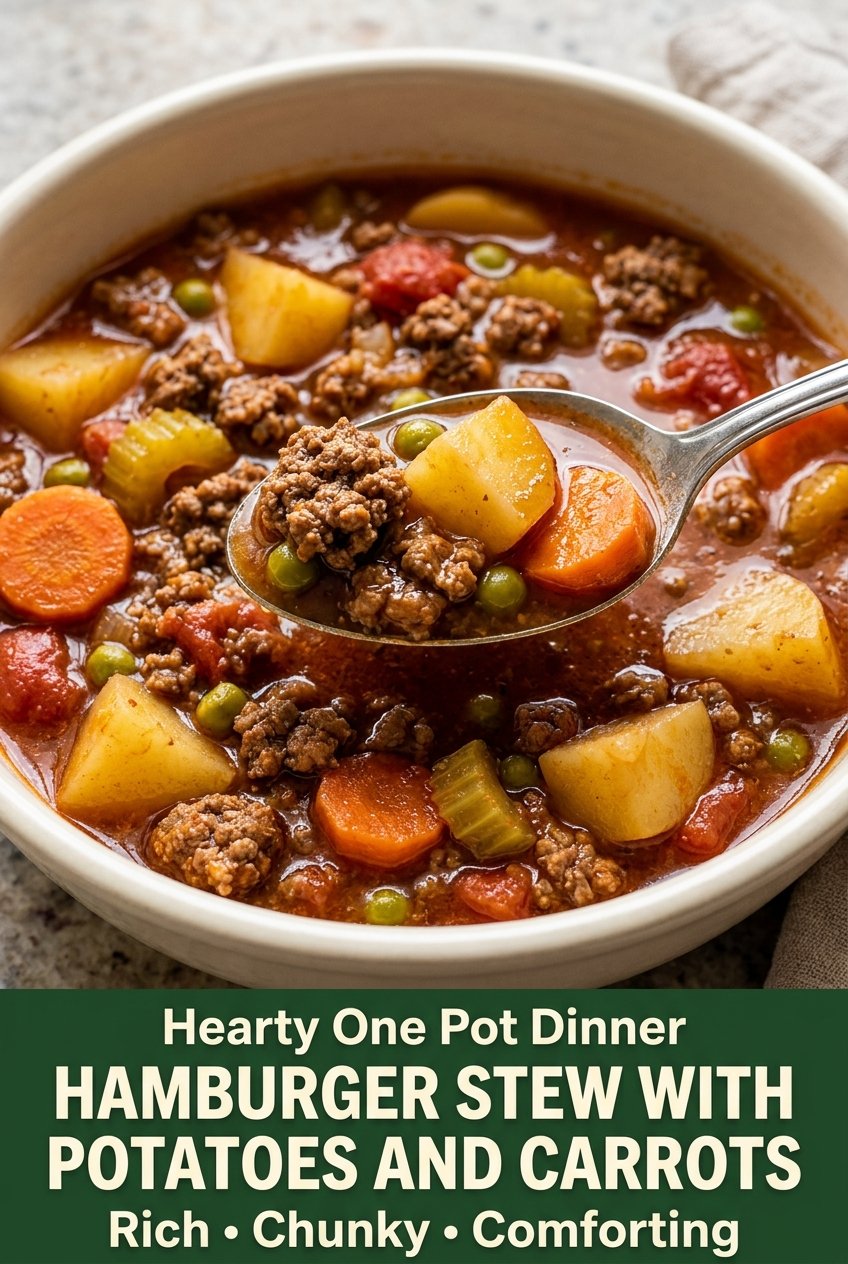
Hamburger Stew with Potatoes and Carrots
Ingredients
Equipment
Method
- Heat 1 tbsp olive oil in a large Dutch oven over medium-high heat. Add 1½ lb lean ground beef and cook for 6–8 minutes, breaking it into generous bite-size crumbles.
- Add the diced yellow onion and sliced celery to the Dutch oven. Cook for 4–5 minutes until softened, stirring as needed.
- Stir in the minced garlic and tomato paste. Cook for 1 minute until fragrant.
- Add the 1-inch chunk potatoes and sliced carrots. Stir until evenly distributed with the beef.
- Pour in the diced tomatoes and beef broth. Add Worcestershire sauce, dried thyme, dried oregano, bay leaf, kosher salt, and black pepper.
- Bring the stew to a gentle boil in the Dutch oven. Reduce the heat to low and cover.
- Simmer covered for 25–30 minutes until the potatoes and carrots are fork-tender. Keep the lid on and avoid boiling hard.
- Stir in the frozen peas. Simmer uncovered for another 4–5 minutes.
- Remove the bay leaf and taste the stew for seasoning. Adjust if needed.
- Stir in the chopped fresh parsley and serve the stew warm.
