
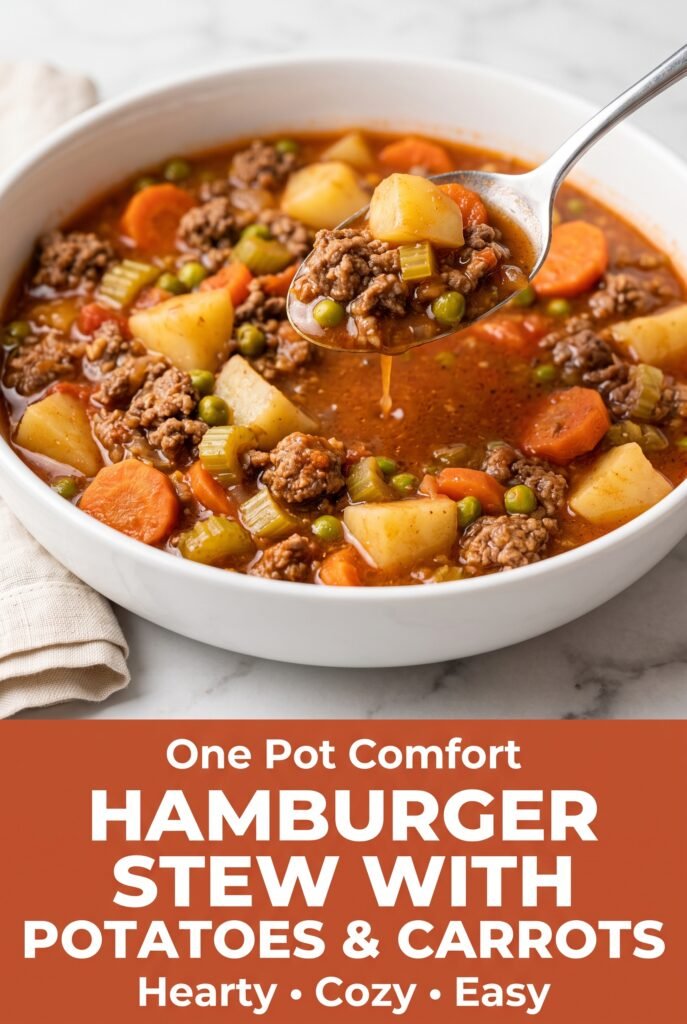
Hamburger Stew with Potatoes and Carrots
Hamburger stew with potatoes and carrots lands in that sweet spot between hearty and practical: the broth is rich enough to feel like comfort food, but the vegetables still hold…
Tip: save now, read later.
Hamburger stew with potatoes and carrots lands in that sweet spot between hearty and practical: the broth is rich enough to feel like comfort food, but the vegetables still hold their shape and the beef gives every spoonful a deep, savory base. It’s the kind of pot that quietly solves dinner, then gets even better after it sits for a few minutes on the stove.
What makes this version work is the order. Browning the beef first gives you those little caramelized bits that keep the broth from tasting flat, and tomato paste gets cooked before the liquid goes in so it loses that raw, tinny edge. Yukon Gold potatoes are the right choice here because they turn tender without collapsing, while the carrots and celery keep enough bite to give the stew some structure.
Below, I’ll walk through the parts that matter most, including how to keep the broth balanced instead of muddy and how to adjust the stew if you want it a little thicker or a little lighter.
The potatoes stayed tender without falling apart, and the broth had that rich, beefy tomato flavor I was hoping for. I made it on a Tuesday and my kids ate it without picking out the carrots, which never happens.
Save this hamburger stew with potatoes and carrots for a one-pot dinner with tender vegetables, savory beef, and a tomato-rich broth.
The Beef Browning Step That Keeps the Broth from Tasting Flat
The biggest mistake with hamburger stew is treating the beef like it’s only there for protein. If you cook it until it’s deeply browned, not just gray, you build the base of the broth before any liquid goes in. Those browned bits on the bottom of the pot are the reason the finished stew tastes layered instead of like vegetables floating in seasoned water.
Tomato paste does the same kind of work. Letting it cook for a full minute wakes up the flavor and takes away the raw edge that can make a stew taste sharp. If you skip that short step, the tomato flavor stays thin and the whole pot loses depth.
What Each Ingredient Is Actually Doing in This Stew
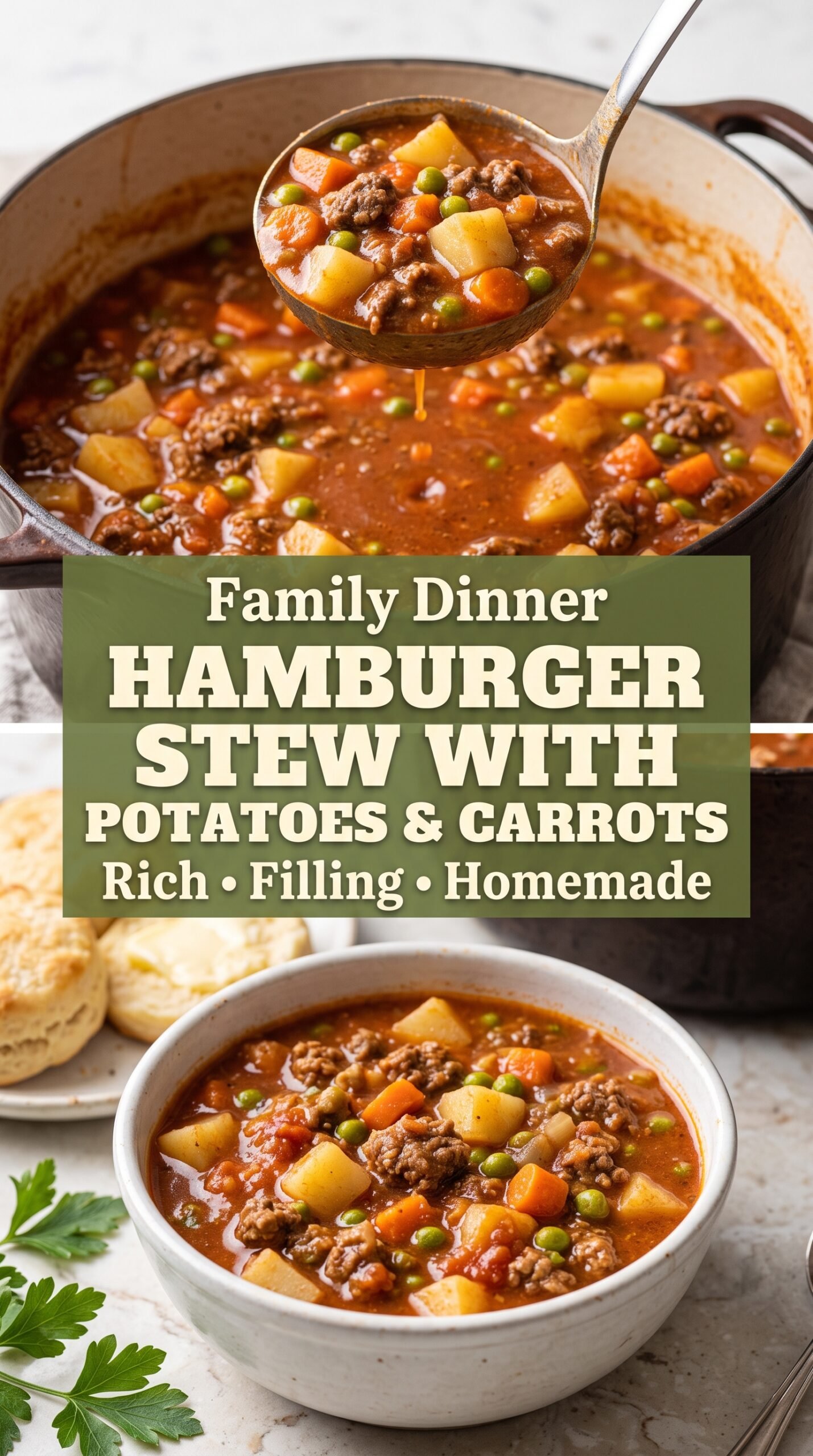
- Lean ground beef — Gives the stew its hearty base and enough fat for flavor without turning greasy. If yours is fattier, drain off the excess after browning so the broth stays clean-tasting.
- Yukon Gold potatoes — These hold their shape better than russets and turn creamy at the edges without falling apart. That texture matters here because the stew should feel substantial, not mushy.
- Tomato paste plus tomato sauce — The paste adds concentrated depth, while the sauce smooths everything into a cohesive broth. If you only use diced tomatoes, the stew will taste brighter and a little less rounded.
- Worcestershire sauce — This is the quiet ingredient that makes the beef taste beefier. Don’t skip it unless you have to; a splash of soy sauce can cover the same savory ground in a pinch.
- Frozen peas and fresh parsley — The peas add sweetness at the end, and the parsley keeps the finished pot from tasting heavy. Stir them in late so they stay green and bright instead of dull and soft.
Building the Stew So the Vegetables Stay Tender, Not Mushy
Browning the Beef Properly
Let the beef sit in the hot oil long enough to pick up real color before you start breaking it apart too much. If you stir it constantly, it steams instead of browns. A few dark bits are good here; they melt into the broth later and give the stew its savory backbone.
Softening the Onion and Toasting the Tomato Paste
Once the beef is browned, add the onion and let it turn translucent and sweet before the garlic goes in. Garlic needs only a short stay in the pot, or it can turn bitter. Then stir in the tomato paste and cook it until it darkens slightly and smells sweeter than sharp.
Simmering Until the Potatoes Give Cleanly
When the broth goes in, bring everything to a gentle boil, then drop it to a steady simmer. Hard boiling can rough up the potatoes and make the broth cloudy. You’re looking for potatoes that slip cleanly off a fork and carrots that are tender but still hold a little structure.
Finishing with Peas and Parsley
The peas only need a few minutes at the end, just long enough to heat through. If they simmer too long, they lose their pop and turn drab. Stir in the parsley right before serving so the top layer of the stew tastes fresh against the rich broth.
Three Useful Ways to Adjust This Stew Without Losing What Makes It Good
Make it gluten-free without changing the texture
This stew is naturally gluten-free as written as long as your beef broth and Worcestershire sauce are certified gluten-free. That matters more than people think, because those two ingredients are where hidden gluten usually shows up.
Make it dairy-free and keep it just as hearty
There’s no dairy in the pot, so you don’t need a special swap. Serve it with bread that fits your needs, or skip the bread and use extra potatoes in the bowl for a more filling finish.
Thicken it a little for a more spoon-coating stew
Mash a few potato pieces against the side of the pot near the end of cooking. That gives the broth body without flour, cornstarch, or a heavy finish, and it keeps the stew tasting like vegetables instead of gravy.
Stretch it for a bigger crowd
Add another cup of broth and an extra potato or two if you want more servings without making the stew feel thin. The flavor holds up because the tomato paste and Worcestershire are doing enough work to support the extra volume.
Storage and Reheating
- Refrigerator: Store for up to 4 days. The potatoes will absorb a little broth as it sits, which actually helps the flavor.
- Freezer: It freezes well for up to 3 months. Cool it completely first, and leave a little headspace in the container because the broth expands.
- Reheating: Warm it gently on the stove over medium-low heat until steaming. Don’t boil it hard, or the potatoes can break down and the broth can turn cloudy.
Questions I Get Asked About This Recipe
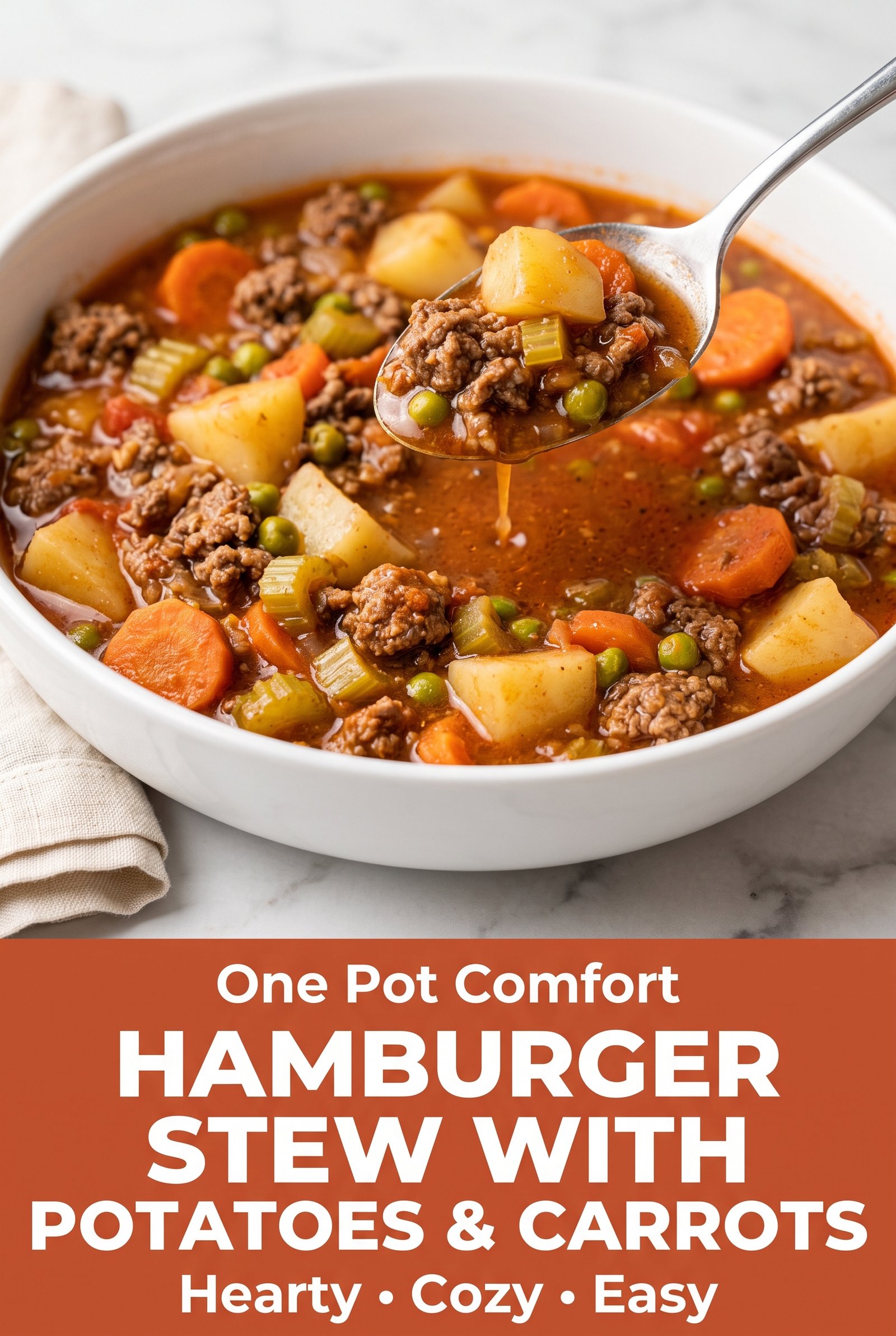
Hamburger Stew with Potatoes and Carrots
Ingredients
Equipment
Method
- Heat the olive oil in a large Dutch oven over medium-high heat. Add the lean ground beef and cook for 6–8 minutes until browned, breaking it into small crumbles; drain excess grease if necessary.
- Stir in the diced yellow onion and cook for 4 minutes until softened. Add the minced garlic and cook for 30 seconds until fragrant.
- Mix in the tomato paste and cook for 1 minute, stirring constantly, until it darkens slightly.
- Add the carrots, potatoes, celery, diced tomatoes, low-sodium beef broth, tomato sauce, Worcestershire sauce, dried thyme, Italian seasoning, paprika, kosher salt, and black pepper. Stir well to combine so everything is evenly coated.
- Bring the stew to a gentle boil. Reduce the heat to medium-low, cover, and simmer for 25–30 minutes until the potatoes and carrots are fork-tender.
- Stir in the frozen peas and cook for 3–4 minutes until heated through. Turn off the heat and sprinkle with chopped fresh parsley.
- Taste and adjust seasoning if needed, then serve hot with crusty bread or buttery biscuits.
