
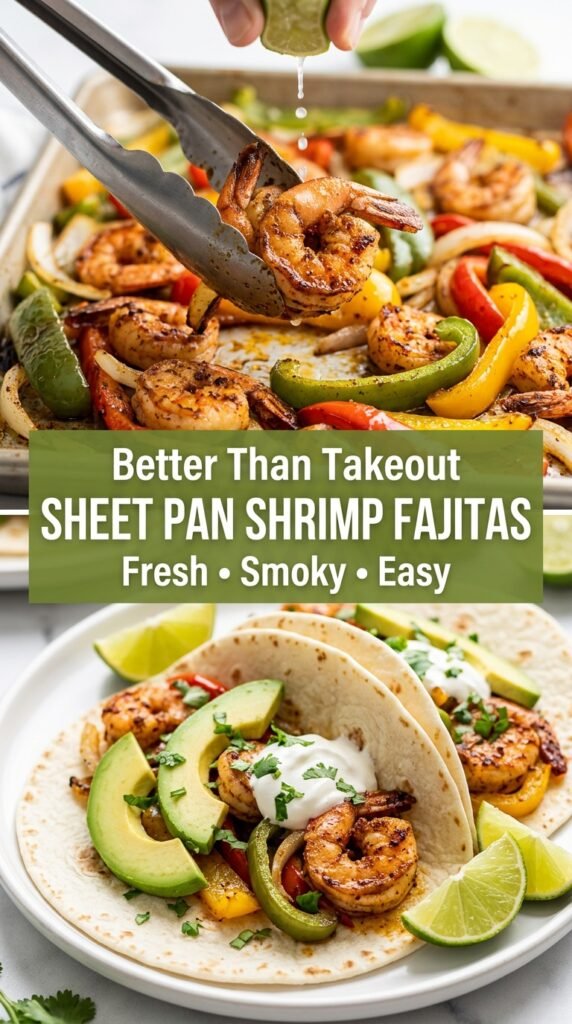
Sheet Pan Shrimp Fajitas
Sheet pan shrimp fajitas hit the table with charred edges on the peppers, sweet onion tucked into every bite, and shrimp that stay tender instead of turning rubbery. The whole…
Tip: save now, read later.
Sheet pan shrimp fajitas hit the table with charred edges on the peppers, sweet onion tucked into every bite, and shrimp that stay tender instead of turning rubbery. The whole pan gets hot enough to give the vegetables some real color, but the shrimp go in later so they cook through fast and pick up the seasoning without overcooking. That timing is the difference between a lively fajita dinner and a tray of dry shrimp sitting next to limp vegetables.
The seasoning does a lot of work here, but the order matters even more. The vegetables need that head start in the oven because they take longer to soften and caramelize. Shrimp need a shorter, hotter finish, and they also need room on the pan so they roast instead of steaming. A squeeze of lime at the end wakes everything up and keeps the whole pan from tasting flat.
Below, I’ll walk through the timing that keeps the shrimp juicy, the one seasoning detail that keeps the vegetables from tasting dusty, and a few ways to adapt this when you want it dairy-free, lower-carb, or easier to prep ahead.
The vegetables came out caramelized instead of watery, and the shrimp were perfectly juicy at 7 minutes. I’ve made this twice now and the lime at the end really pulls everything together.
Keep these sheet pan shrimp fajitas in your back pocket for nights when you want smoky peppers, juicy shrimp, and one-pan cleanup.
The Reason the Shrimp Go In After the Peppers
Most sheet pan fajitas go sideways because everything hits the oven at once. That works for sturdy vegetables, but shrimp are fast. By the time the peppers are just getting tender and browned at the edges, shrimp would already be tight and overdone if they’d been roasting from the start. Giving the vegetables a head start solves the timing problem and keeps the texture of the whole pan in balance.
The other mistake is crowding. If the vegetables are piled up, they steam and turn soft instead of taking on those browned edges that taste like fajita night. Spread them out in a true single layer, and don’t stir them before that first roast. You want a little contact with the pan so the onions can caramelize and the peppers can pick up a bit of char before the shrimp ever go in.
What Each Ingredient Is Actually Doing in This Dish
- Large shrimp — Bigger shrimp hold up better in the oven and are less likely to overcook before the vegetables finish. If you only have medium shrimp, shave a minute or two off the final roast and pull the pan as soon as they turn pink and opaque.
- Bell peppers and yellow onion — This is the sweet, savory base of the dish. The onions soften and turn glossy, while the peppers keep enough structure to taste fresh against the shrimp. Slice them evenly so they roast at the same pace.
- Olive oil — It helps the seasoning cling and encourages browning on the pan. You don’t need an expensive bottle here, but don’t cut it too far or the vegetables dry out before they caramelize.
- Chili powder, smoked paprika, cumin, garlic powder, onion powder, oregano — This blend gives you the warm, smoky fajita flavor without needing a store-bought packet. Smoked paprika matters more than the others for that grilled taste. If you swap it for regular paprika, the dish tastes flatter.
- Lime juice — Add it after the shrimp come out of the oven. If it goes in too early, the acid dulls the seasoning and can make the vegetables taste muted. Fresh lime brightens the whole pan and keeps each bite from feeling heavy.
- Flour tortillas and toppings — Warm tortillas are worth the extra minute because they stay soft and fold without tearing. The toppings add contrast, especially cool sour cream or avocado against the hot pan.
Building the Pan in the Right Order
Season the vegetables first
Toss the peppers and onion with the oil and spices until every piece looks lightly coated and not dusty. The pan should look glossy, not oily or wet. Spread the vegetables out evenly and roast them long enough to start softening and browning at the edges. If the slices overlap too much, they’ll steam and the fajita flavor will stay flat.
Add the shrimp only after the vegetables start to soften
When the vegetables come out for the first time, they should have a little color and the onions should look translucent at the edges. Toss the shrimp with the remaining oil, then tuck them back into the pan instead of burying them under the vegetables. Shrimp need direct heat to cook quickly and stay plump. If they sit under a mound of peppers, they’ll steam and go rubbery before the pan is finished.
Finish fast and stop at the right moment
Return the pan to the oven just until the shrimp are pink, opaque, and curled into loose C-shapes. If they’ve tightened into little O’s, they’ve gone too far. Pull the pan immediately, squeeze over the lime juice, and toss once so the juices coat everything. That last toss also loosens any browned seasoning on the pan and carries it back onto the vegetables and shrimp.
Three Ways to Adjust These Fajitas Without Losing the Point
Dairy-Free Taco Night
This recipe is naturally dairy-free as written if you skip the sour cream and cheese toppings. Keep the avocado, salsa, cilantro, and lime, and you still get plenty of richness and freshness without changing the core method.
Low-Carb Serving Bowl
Skip the tortillas and serve the shrimp and vegetables over cauliflower rice, shredded lettuce, or a simple cabbage slaw. The seasoning and lime carry the dish on their own, so you won’t miss the bread if you build in a crunchy base.
Make It with Chicken Instead
Thinly sliced chicken breast or boneless thighs work well if shrimp isn’t your thing. Chicken needs longer in the oven, so roast the vegetables first until they’re nearly done, then add the chicken early enough to cook through before you finish with the lime.
Gluten-Free Swap
Use certified gluten-free corn tortillas instead of flour tortillas. Warm them in a dry skillet or directly over a low flame so they stay pliable and pick up a little char, which matches the smoky pan filling nicely.
Storage and Reheating
- Refrigerator: Store the shrimp and vegetables in an airtight container for up to 3 days. The peppers soften a bit more after chilling, but the flavor holds up well.
- Freezer: I don’t recommend freezing the cooked shrimp fajita filling. Shrimp can turn watery and tough after thawing, and the peppers lose their texture.
- Reheating: Warm the filling in a skillet over medium-low heat just until heated through. The biggest mistake is blasting it in the microwave or on high heat, which pushes the shrimp from tender to chewy fast.
Questions I Get Asked About This Recipe
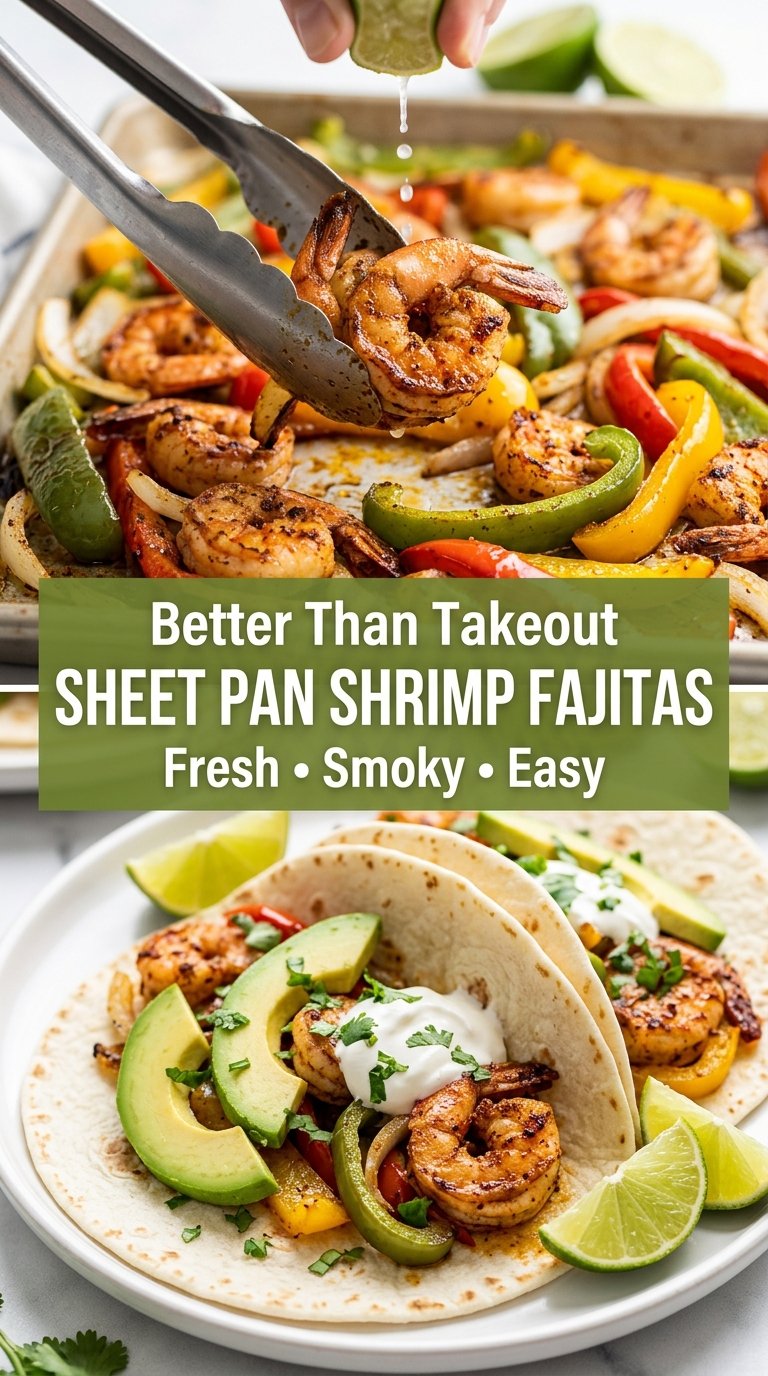
Sheet Pan Shrimp Fajitas
Ingredients
Equipment
Method
- Preheat the oven to 425°F and line a large sheet pan with parchment paper.
- Toss the sliced red bell pepper, sliced yellow bell pepper, sliced green bell pepper, and sliced yellow onion with 2 tbsp olive oil, chili powder, smoked paprika, ground cumin, garlic powder, onion powder, dried oregano, kosher salt, and black pepper.
- Spread the vegetables into an even layer on the sheet pan.
- Roast the vegetables for 10 minutes, until they begin to soften.
- Toss the peeled and deveined large shrimp with the remaining 1 tbsp olive oil and half of the roasted vegetable seasoning left on the pan.
- Arrange the shrimp among the vegetables, then return the pan to the oven.
- Bake for 6–8 minutes, until the shrimp are pink, opaque, and reach 145°F internally.
- Remove the pan from the oven and drizzle with fresh lime juice.
- Toss gently to coat everything evenly.
- Serve immediately in warm flour tortillas with chopped fresh cilantro, sliced avocado, sour cream, shredded Monterey Jack cheese, salsa, and lime wedges as desired.
