
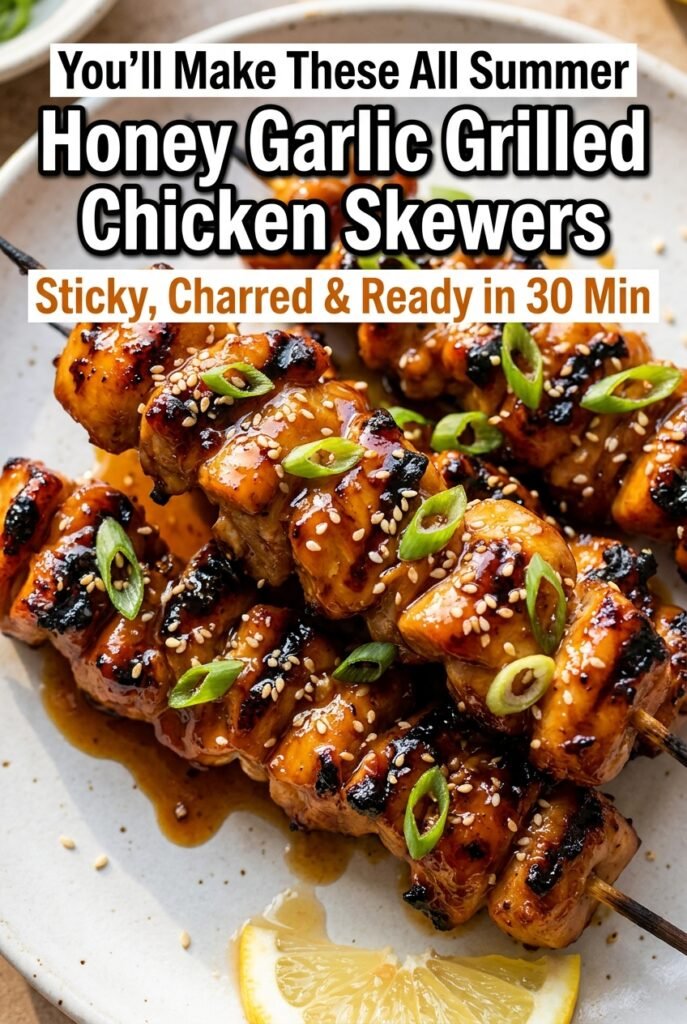
Honey Garlic Grilled Chicken Skewers
Sticky, charred honey garlic chicken skewers disappear fast because they hit that sweet spot between smoky grill flavor and a glaze that clings to every edge. The chicken stays juicy,…
Tip: save now, read later.
Sticky, charred honey garlic chicken skewers disappear fast because they hit that sweet spot between smoky grill flavor and a glaze that clings to every edge. The chicken stays juicy, the outside picks up those dark caramelized spots, and the garlic-soy-honey coating tastes bold without turning sugary or heavy.
What makes these work is the balance in the marinade. Honey gives you the lacquered finish, soy sauce brings salt and depth, and rice vinegar keeps the glaze from tasting flat. The other key move is reserving a little marinade before the chicken goes in the bowl, then brushing that on near the end so you get a glossy finish without chasing burnt sugar across the grates.
Below, I’ve broken down the small details that matter most, from soaking wooden skewers to knowing exactly when the chicken is cooked through. If you’ve ever ended up with dry chicken or a glaze that darkened too fast, the process section will save you from both.
The chicken came off the grill juicy with those caramelized edges, and the reserved glaze gave it that sticky finish without burning. My husband kept picking pieces off the platter before dinner was even served.
Love these honey garlic grilled chicken skewers? Save them to Pinterest for sticky, charred chicken that works for cookouts, quick dinners, and meal prep.
The Reason the Glaze Sticks Instead of Sliding Off
Most grilled chicken skewers fail in one of two ways: the chicken dries out before the outside has time to brown, or the sauce burns before it has a chance to thicken into a glaze. This recipe avoids both by using a marinade that carries enough oil to protect the chicken and enough honey to caramelize, then saving a small portion for basting near the end. That last detail matters. If you brush on all the honey garlic mixture at the start, the sugars will darken too quickly and leave you with bitter edges before the center is done.
Cutting the chicken into even 1.5-inch pieces matters more than people think. Smaller pieces cook too fast and can turn stringy; larger pieces hold onto raw spots in the middle while the outside overcooks. Thighs are the forgiving choice if you want maximum juiciness, but breasts still work well if you keep the pieces uniform and pull them off the grill as soon as they hit 165°F.
What Each Ingredient Is Actually Doing in This Dish

- Chicken thighs or breasts — Thighs stay juicier and are more forgiving over a hot grill. Breasts work too, but only if you cut them into even pieces and watch the cook time closely so they don’t dry out.
- Honey — This is what gives the skewers that glossy, sticky finish. You can’t fully replace it with plain sugar and expect the same clinging glaze or caramelized edges.
- Soy sauce — It seasons the chicken from the inside and balances the sweetness. Low-sodium soy sauce is the better choice here because the reduction on the grill concentrates salt fast.
- Rice vinegar — A small amount keeps the glaze from tasting one-note. If you don’t have it, use apple cider vinegar, but keep the amount small so the sauce stays mellow.
- Sesame oil — This adds a nutty depth that makes the marinade taste layered instead of just sweet and salty. Don’t swap in more olive oil here; you’d lose that toasted note.
- Garlic — Fresh minced garlic gives the glaze its sharp, fragrant edge. Garlic powder won’t give the same punch, and because the sauce cooks quickly on the grill, fresh garlic holds up well here.
Building the Skewers Without Losing the Juiciness
Soaking and Threading
If you’re using wooden skewers, soak them for at least 30 minutes so they don’t catch fire on the grill. Thread the chicken with a little space between pieces instead of packing them tight; that gap helps the heat circulate and gives you better browning on all sides. If the pieces are jammed together, the spots touching each other steam instead of char.
Mixing the Marinade
Whisk the honey, garlic, soy sauce, olive oil, rice vinegar, sesame oil, red pepper flakes, salt, and black pepper until the honey disappears into the liquid. That mixture should look smooth and glossy, not separated. Reserve about 3 tablespoons before the raw chicken goes in, or you’ll have nothing clean left for basting later.
Grilling to a Caramelized Finish
Cook over medium-high heat on lightly oiled grates. If the grill is too hot, the honey will burn before the chicken cooks through; if it’s too cool, you’ll miss the char that makes these taste grilled instead of steamed. Brush with the reserved glaze during the last 2 minutes only, then pull the skewers once the thickest pieces reach 165°F and rest them briefly so the juices settle back into the meat.
How to Adapt These Skewers for Different Nights
Use chicken thighs for the juiciest result
Thighs handle the grill heat better and stay tender even if your pieces are a little uneven. They also take on the honey garlic glaze with a richer bite than breasts. If you want the most forgiving version of this recipe, thighs are the one to use.
Make it gluten-free
Swap in tamari or a certified gluten-free soy sauce and the rest of the recipe can stay the same. You’ll get the same savory backbone without losing the sticky glaze. Just check the label, because some soy sauces sneak in wheat.
Turn the heat down for kids or spice-sensitive eaters
Leave out the red pepper flakes and the skewers will still taste balanced and bold. You’ll keep the garlic, soy, and honey combination that makes the dish work, just without the little kick at the end. It’s an easy change that doesn’t affect texture at all.
Make extra for rice bowls and salads
Double the chicken and marinade if you want leftovers that feel intentional. The skewers hold up well in lunch boxes, and the caramelized edges taste even better sliced over rice with crisp vegetables the next day. Keep the garnish separate until serving so the herbs stay bright.
Storage and Reheating
- Refrigerator: Store cooked chicken skewers in an airtight container for up to 4 days. The glaze will thicken a bit in the fridge, but the flavor holds up well.
- Freezer: Freeze the cooked chicken off the skewers for up to 2 months. Wrap tightly and thaw in the fridge before reheating for the best texture.
- Reheating: Warm gently in a skillet over medium-low heat or in a 325°F oven until heated through. High heat dries out the chicken and can turn the glaze sticky in the wrong way.
Questions I Get Asked About This Recipe
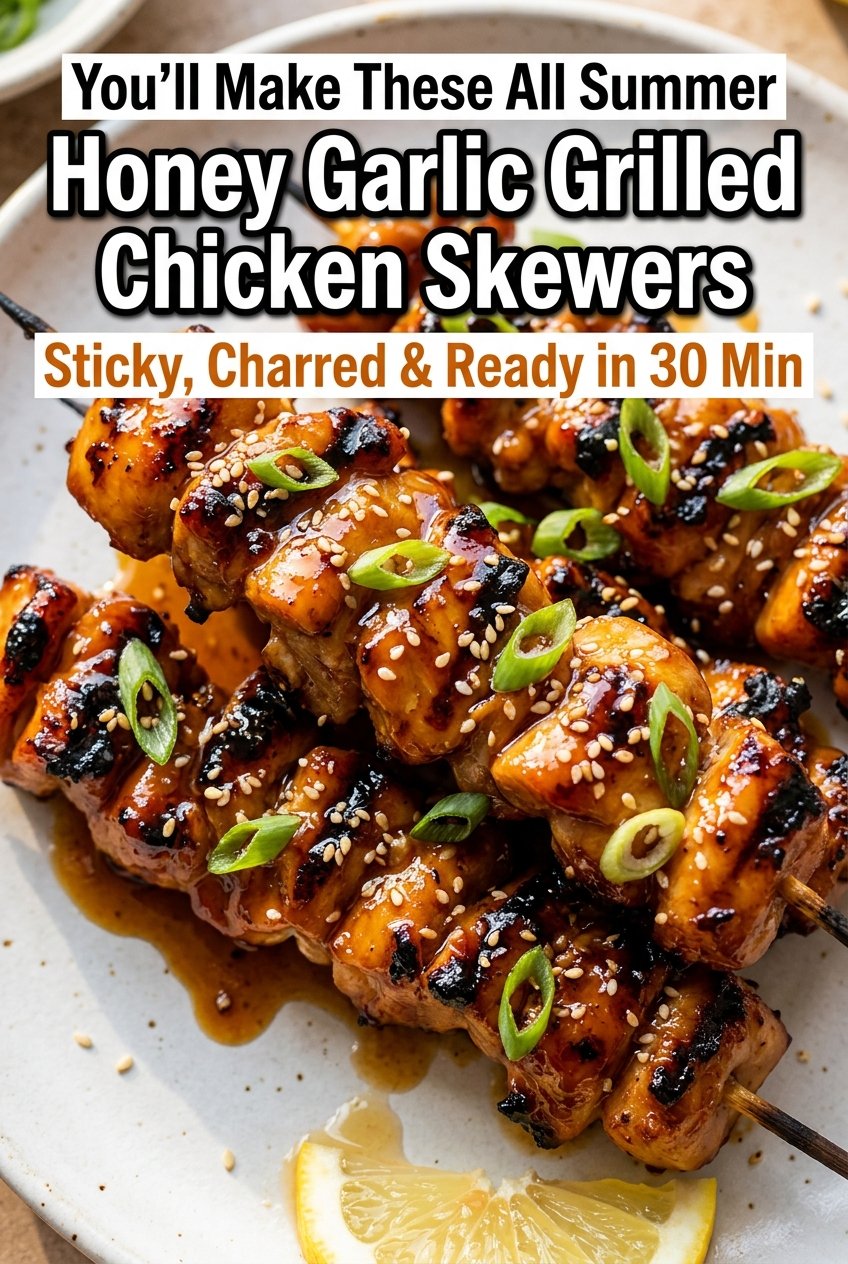
Honey Garlic Grilled Chicken Skewers
Ingredients
Equipment
Method
- If using wooden skewers, soak them in water for at least 30 minutes to prevent burning while you prep the marinade.
- In a bowl, whisk together honey, minced garlic, soy sauce, olive oil, rice vinegar, sesame oil, crushed red pepper flakes, salt, and black pepper until fully combined.
- Add the chicken chunks to the bowl, toss to coat, cover, and refrigerate for at least 30 minutes (up to 4 hours) for deeper flavor.
- Preheat your grill or grill pan to medium-high heat and lightly oil the grates.
- Thread the marinated chicken pieces onto skewers, leaving a small gap between each piece.
- Reserve about 3 tablespoons of the marinade in a small bowl to use as a basting glaze.
- Grill the skewers for 4–5 minutes per side, brushing with the reserved glaze during the last 2 minutes of cooking.
- Continue grilling until the chicken is caramelized and slightly charred on the edges, and the internal temperature reads 165°F (74°C).
- Remove from the grill and rest for 2 minutes.
- Garnish the skewers with sesame seeds and chopped parsley or green onion.
- Serve with lemon wedges for squeezing over top.
