
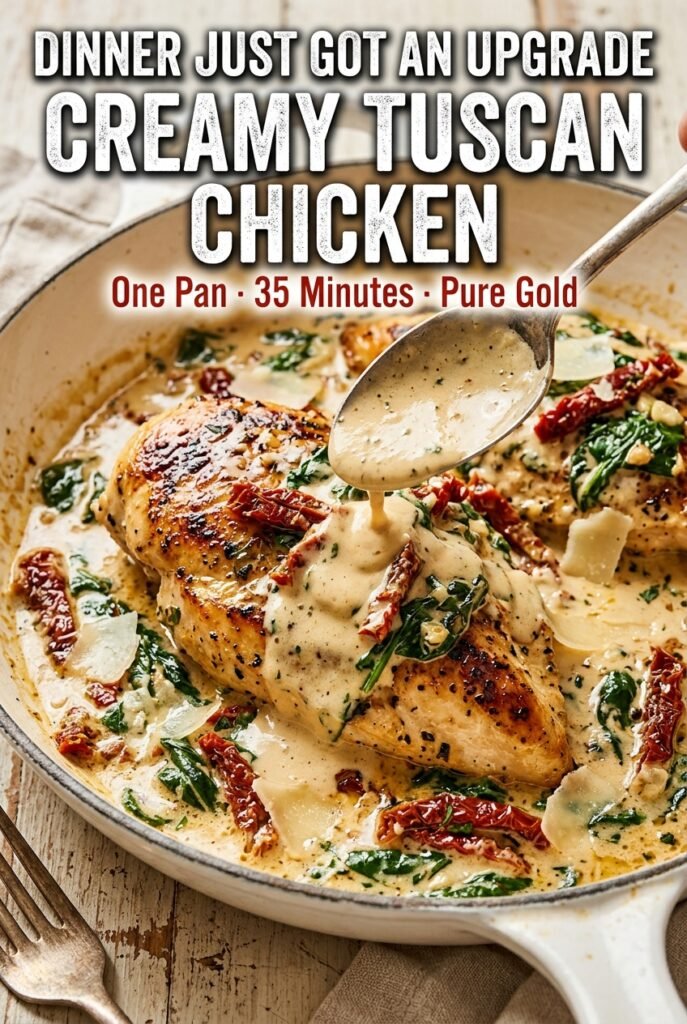
Creamy Tuscan Chicken with Sun-Dried Tomatoes
Golden-seared chicken breasts swimming in a glossy cream sauce is the kind of dinner that makes a regular weeknight feel finished and handled. The sauce coats the chicken instead of…
Tip: save now, read later.
Golden-seared chicken breasts swimming in a glossy cream sauce is the kind of dinner that makes a regular weeknight feel finished and handled. The sauce coats the chicken instead of pooling under it, and the sun-dried tomatoes bring a chewy, tangy contrast that keeps every bite from tasting flat. Add the spinach at the end and it melts right into the sauce without turning muddy or overcooked.
What makes this version work is the order. The chicken gets a hard sear first, which leaves browned bits in the pan, and those bits become the backbone of the sauce. The broth loosens everything just enough to lift those flavors, and the cream goes in over a gentle simmer so it thickens without breaking. Parmesan melts in smoothly when the heat stays low, which is the difference between a velvety sauce and one that turns grainy.
Below, I’ll walk you through the little details that matter: how to keep the chicken juicy, how to build the sauce in the same pan, and what to do if you want to swap in a few different sides or make it a touch lighter.
The sauce thickened up perfectly and the chicken stayed juicy instead of drying out. I served it over linguine, and my husband went back for seconds before I even sat down.
Save this creamy Tuscan chicken for the nights when you want a one-pan dinner with a glossy sauce, tender chicken, and plenty of sun-dried tomato flavor.
The Sear Is Doing More Work Than the Cream
The biggest mistake with creamy chicken dishes is rushing straight to the sauce and treating the chicken like an afterthought. That leaves you with pale meat and a sauce that tastes one-dimensional. The hard sear matters here because it builds fond in the pan, and fond is what gives the sauce depth without extra ingredients.
If the chicken is crowded in the skillet, it steams instead of browns. Work in a single layer with space around each piece, and don’t move it until it releases on its own. If it sticks, it isn’t ready yet. The same goes for the sauce later: gentle heat keeps the cream smooth and the Parmesan melted instead of oily or grainy.
- Dry chicken breasts — Patting them dry before seasoning is what helps the spices stick and the surface brown instead of sputter in the pan.
- Sun-dried tomatoes in oil — The oil-packed kind bring a deeper, softer chew than dry-packed tomatoes. Drain them, but don’t rinse away all the flavor clinging to them.
- Freshly grated Parmesan — Pre-grated cheese often has anti-caking agents that make the sauce less smooth. Freshly grated melts into the cream cleanly.
- Heavy cream — This is the ingredient that gives the sauce its body. Half-and-half can work in a pinch, but the sauce will be thinner and a little more delicate.
Build the Sauce in the Same Pan, Not a Clean One
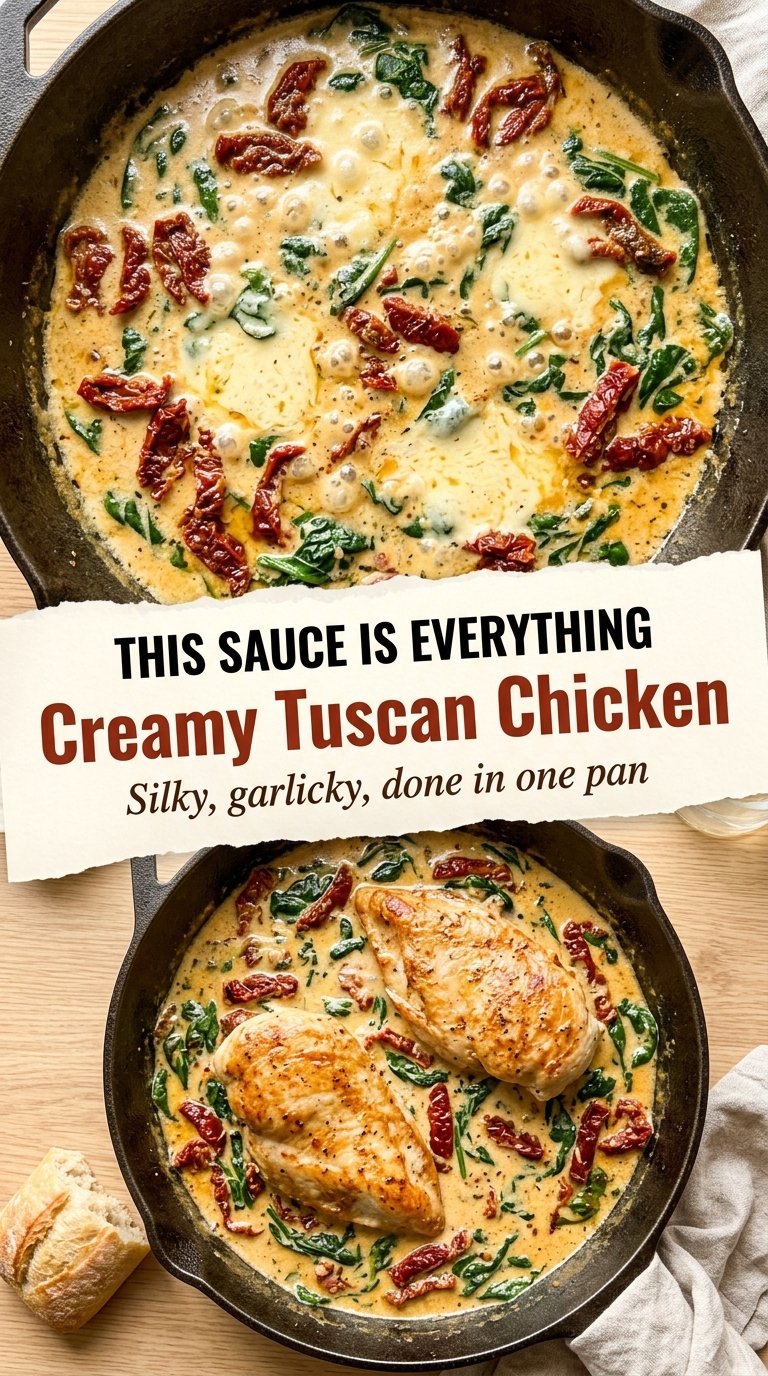
The little browned bits left behind after searing the chicken are the whole reason the sauce tastes like something you’d order out. Don’t wash that pan. Once the butter goes in, it loosens those bits and carries them into the garlic, broth, and cream.
Garlic only needs a short trip through the pan. If it browns, it turns bitter and takes the whole sauce with it. The Parmesan should go in gradually, off to the side of the heat if your burner runs hot, so it melts into the cream instead of clumping. Spinach goes in last because it wilts fast and keeps its color if you stop as soon as the leaves collapse.
- Chicken breasts — Thick pieces should be pounded to an even thickness so they cook at the same rate. Uneven breasts give you dry edges before the center is done.
- Chicken broth — This loosens the fond and keeps the sauce from tasting heavy. Use low-sodium broth if you want more control over the final seasoning.
- Butter — A small amount softens the garlic and helps carry the sun-dried tomato flavor without competing with the cream.
- Italian seasoning and red pepper flakes — The seasoning reinforces the herb notes already in the dish, while the pepper flakes add a quiet heat that wakes up the richness. Skip the flakes if you want the sauce milder.
Getting the Chicken and Sauce to Finish at the Same Time
Season and Sear the Chicken
Rub the spice mixture over both sides of the chicken while the pan heats up. When the oil shimmers, lay the breasts in and let them sit until the underside turns a deep golden brown and lifts cleanly from the skillet. If you flip too early, you tear the crust and leave flavor behind in the pan. The chicken doesn’t need to be cooked through at this stage; you’re building color first, then finishing it in the sauce.
Wake Up the Pan Drippings
After the chicken comes out, lower the heat and add the butter. Garlic goes in next, but only for half a minute or so, just until fragrant. Add the sun-dried tomatoes and stir them through the drippings so they soften and pick up some of that savory bottom-of-the-pan flavor. The broth should go in before the cream so it can release the browned bits cleanly.
Finish with Cream, Parmesan, and Spinach
Pour in the cream and let it come to a gentle simmer, not a boil. A hard boil can cause the sauce to separate, especially once the cheese goes in. Stir the Parmesan in a little at a time until the sauce turns smooth and glossy, then add the spinach and stop as soon as it wilts. Return the chicken to the pan and spoon sauce over the top until the center of the meat reaches 165°F and the sauce has thickened enough to coat a spoon.
Three Ways to Make This Work at Your Table
Dairy-Free Enough for a Weeknight Swap
Use full-fat coconut cream in place of the heavy cream and skip the Parmesan, then add a little extra salt and a squeeze of lemon at the end. The sauce won’t taste like the original, but it will still be rich and spoonable, with the sun-dried tomatoes carrying more of the flavor load.
Gluten-Free by Default
This dish is naturally gluten-free as written, as long as your broth and Parmesan are certified gluten-free. Serve it over rice, mashed potatoes, or gluten-free pasta, and you won’t lose any of the sauce’s texture or body.
Turn It Into a Pasta Sauce
Slice the chicken before returning it to the pan, then toss the sauce with hot cooked pasta and a splash of the pasta water. The starch helps the sauce cling, and the whole dish stretches a little farther without thinning out.
Make It Lighter Without Losing the Shape
Swap in half-and-half for part of the cream and use one tablespoon of butter instead of two if you want to cut the richness a bit. The sauce will be a touch thinner, but if you keep the simmer gentle and don’t rush the Parmesan, it still finishes with a silky texture.
Storage and Reheating
- Refrigerator: Store leftovers in an airtight container for 3 to 4 days. The sauce thickens in the fridge, so expect it to loosen up again when reheated.
- Freezer: It freezes, but cream sauces can separate a little after thawing. If you do freeze it, keep it in a tightly sealed container for up to 2 months and thaw it overnight in the refrigerator.
- Reheating: Warm it gently on the stove over low heat with a splash of broth or cream. High heat is what causes the sauce to break, and microwaving it too long can dry out the chicken before the sauce loosens.
Answers to the Questions Worth Asking
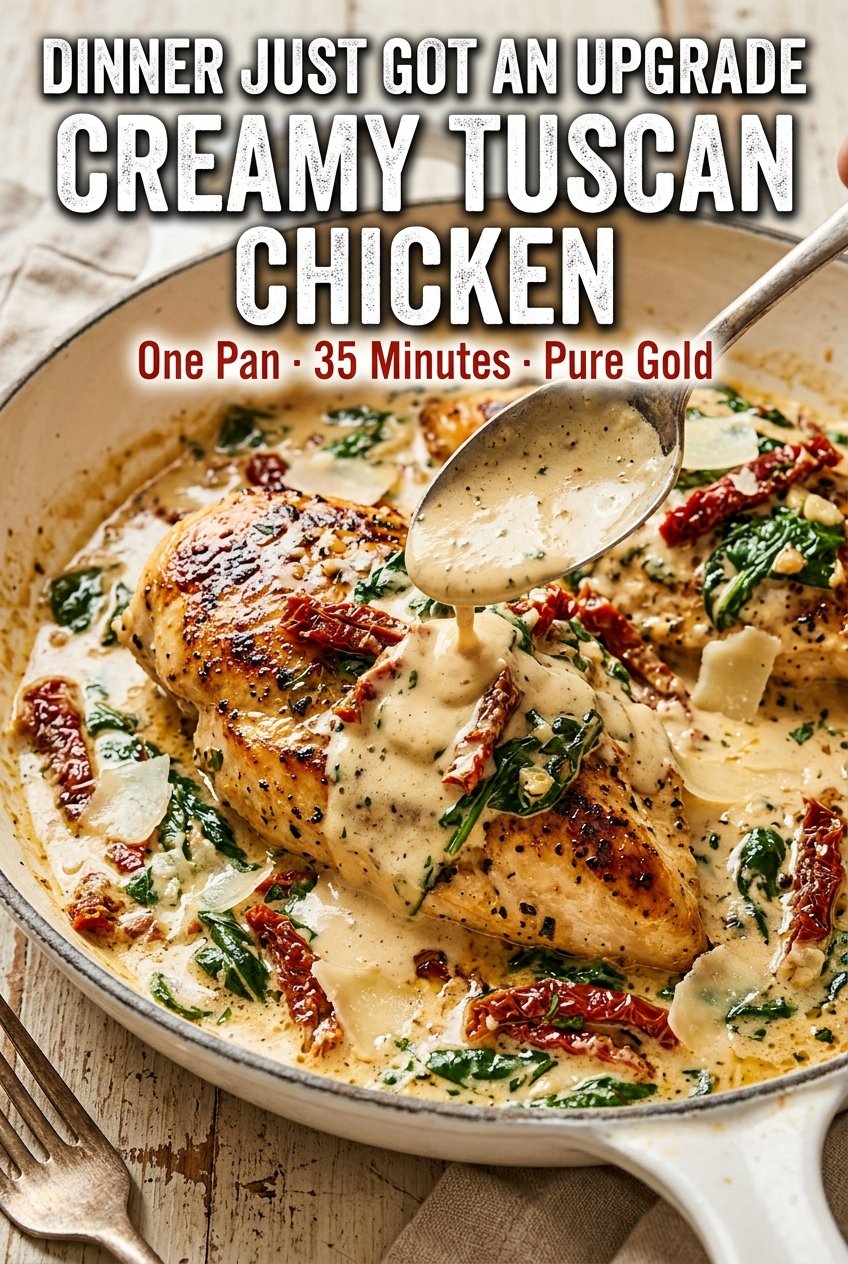
Creamy Tuscan Chicken with Sun-Dried Tomatoes
Ingredients
Equipment
Method
- Pat the chicken breasts dry with paper towels. Combine garlic powder, onion powder, Italian seasoning, paprika, salt, and black pepper, then rub evenly over both sides of each breast.
- Heat olive oil in a large skillet over medium-high heat until shimmering. Add chicken breasts and sear without moving for 5–6 minutes per side until deeply golden; internal temperature should reach 165°F.
- Transfer the chicken to a plate and tent with foil. This keeps the surface from drying out while you make the sauce.
- Reduce heat to medium and add butter to the same pan. Once melted, add minced garlic and sauté for 30–45 seconds until fragrant, making sure it does not brown.
- Stir in the chopped sun-dried tomatoes and cook for 1 minute. Let them toast slightly in the pan drippings for deeper flavor.
- Pour in the chicken broth and scrape up any golden bits from the bottom of the pan. Let it simmer for 2 minutes to reduce slightly.
- Add the heavy cream and Italian seasoning. Stir well and bring to a gentle simmer over medium heat—do not let it roll.
- Stir in the Parmesan cheese gradually until fully melted into the sauce. Add red pepper flakes if using for heat.
- Add the baby spinach and stir until just wilted, about 1–2 minutes. Keep the simmer gentle so the sauce stays silky.
- Taste and adjust seasoning with salt and black pepper. Season to balance creamy richness with the tang from the tomatoes.
- Return the seared chicken breasts to the skillet, nestling them into the sauce. Spoon sauce over the top to coat the chicken.
- Simmer gently for 3–5 minutes until the chicken is warmed through and the sauce thickens slightly. Serve immediately over pasta, mashed potatoes, rice, or with crusty bread.
