
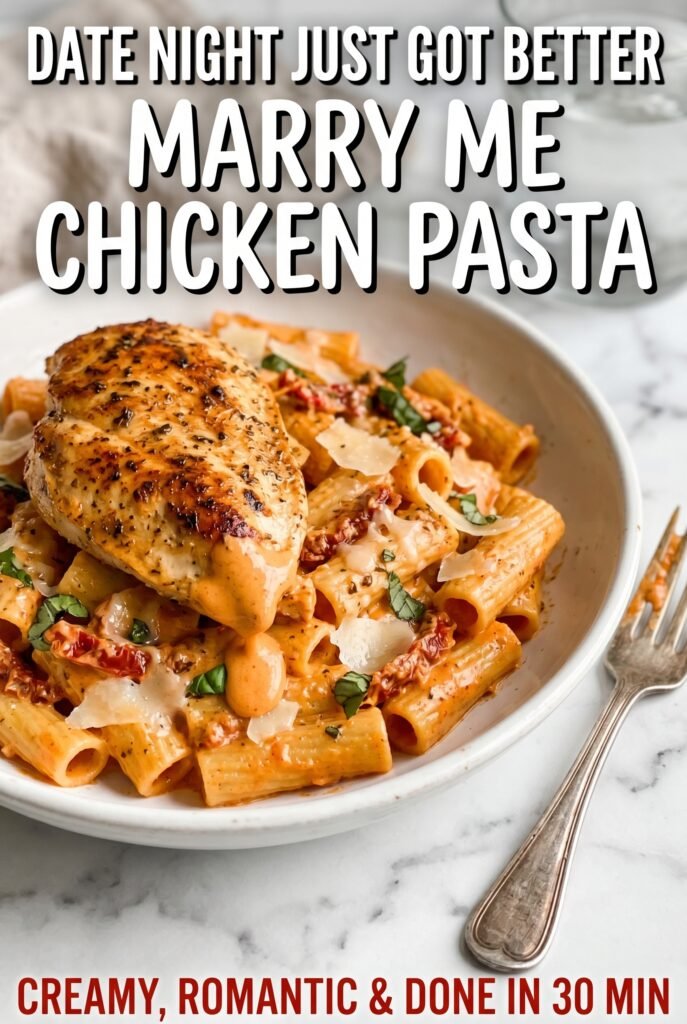
Marry Me Chicken Pasta
Creamy pasta sauces can go flat fast, but this one lands with enough richness and punch to keep every bite interesting. The chicken gets a deep golden sear before it…
Tip: save now, read later.
Creamy pasta sauces can go flat fast, but this one lands with enough richness and punch to keep every bite interesting. The chicken gets a deep golden sear before it ever meets the sauce, and the sun-dried tomatoes bring that concentrated, tangy sweetness that keeps the cream from feeling heavy. Toss it all with rigatoni and the sauce clings in the ridges instead of sliding to the bottom of the bowl.
What makes this version work is the order. The pan gets deglazed after the chicken cooks, so all those browned bits turn into part of the sauce instead of getting left behind. The cream goes in after the broth has reduced a bit, which gives the sauce a chance to thicken without breaking, and the Parmesan melts in off the heat of the simmer rather than getting grainy.
Below you’ll find the trick for keeping the sauce silky, plus a few swaps that still keep the dish balanced if you need to adjust the pasta, dairy, or spice level.
The sauce coated the rigatoni perfectly and didn’t split when I added the Parmesan. My husband went back for seconds and said the sun-dried tomatoes made it taste like something from a nice restaurant.
Pin this creamy Marry Me Chicken Pasta for the nights when you want a silky sun-dried tomato sauce and golden chicken with almost no fuss.
The Secret to Keeping the Cream Sauce Smooth After the Cheese Goes In
The biggest mistake with a pasta like this is rushing the finish. If the cream is boiling hard when the Parmesan goes in, the sauce can turn grainy or oily instead of glossy. Keep the heat at a gentle simmer, then pull the pan slightly off the burner before adding the cheese so it melts into the sauce instead of seizing up.
The other place people lose the texture is with the pasta water. That starchy water isn’t there to thin the sauce aggressively; it just helps the sauce relax enough to coat the rigatoni without turning loose and soupy. Add it in small splashes only if the sauce tightens up after the pasta goes in.
What Each Ingredient Is Actually Doing in This Dish
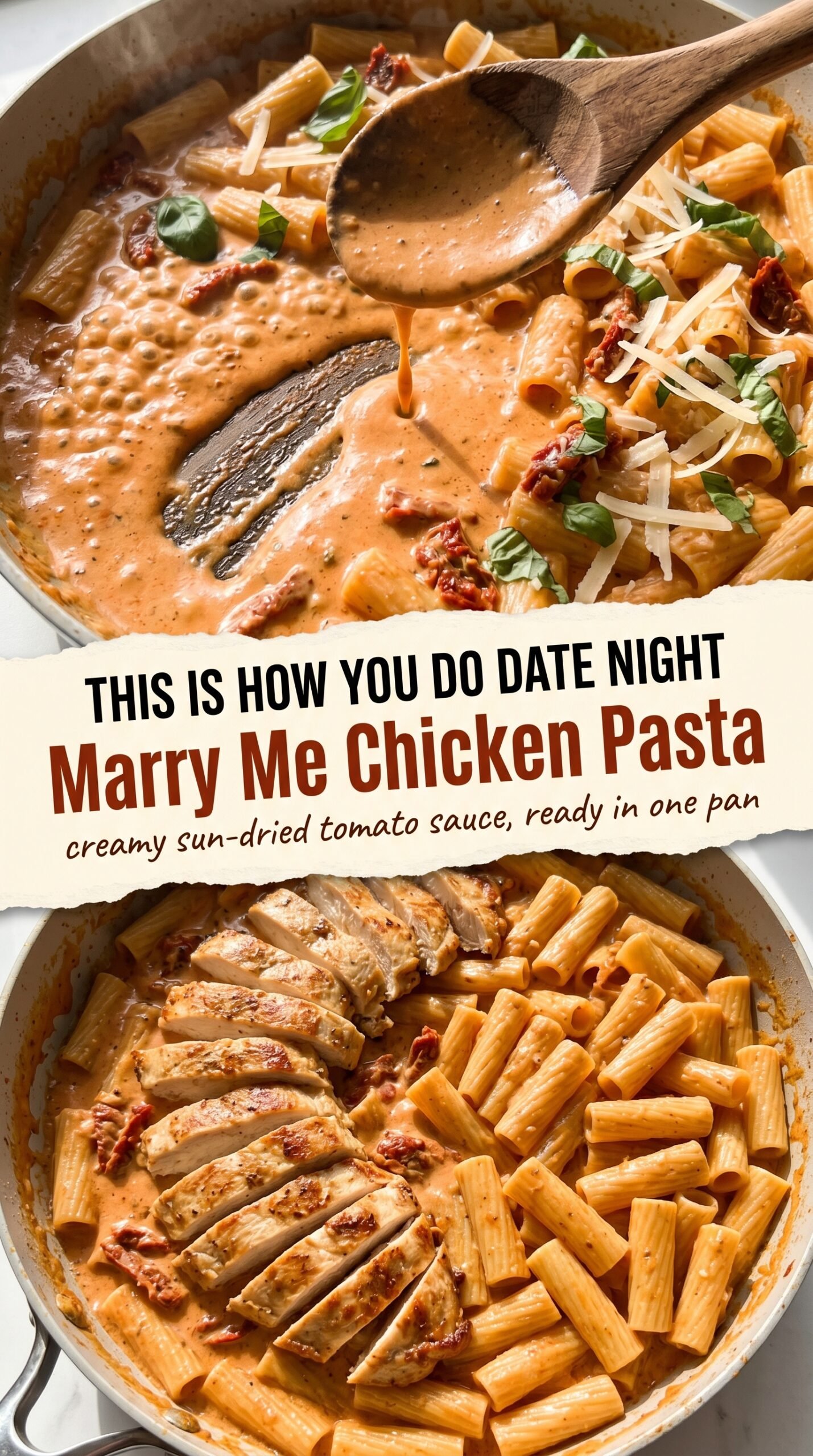
- Chicken breasts — Boneless, skinless chicken breasts slice cleanly and stay elegant in the pasta, but they need a good sear and a short rest so they stay juicy. If yours are thick in the center, pound them to an even thickness before cooking so the outside doesn’t overcook while the middle catches up.
- Sun-dried tomatoes in oil — These carry most of the recipe’s signature flavor. The oil-packed kind is softer and more concentrated than dry-packed tomatoes, and that oil helps flavor the skillet in the first few seconds after the garlic goes in.
- Heavy cream — This is what gives the sauce its body and keeps it from splitting under heat. Half-and-half will work in a pinch, but the sauce will be lighter and a little less stable, so keep the simmer very gentle.
- Freshly grated Parmesan — Pre-grated cheese doesn’t melt as smoothly because of the anti-caking agents. Grate it yourself if you want the sauce to turn silky instead of slightly sandy.
- Rigatoni — The tubular shape grabs the sauce inside and out. Penne works too, but rigatoni holds onto the creamy bits a little better, especially when the sauce is thick and glossy.
Building the Sauce in the Same Pan Without Losing the Good Bits
Cooking the Pasta First
Start the pasta in heavily salted water and pull it when it still has a firm bite. It will finish in the sauce, so if you take it all the way to fully soft in the pot, it turns bloated once it sits in the cream. Reserve some pasta water before draining; that starchy liquid is what helps the sauce loosen without thinning it out.
Getting a Deep Sear on the Chicken
Pat the chicken dry before it hits the pan or the surface moisture will steam the meat instead of browning it. You want a deep golden crust that lifts from the skillet with a little resistance and releases cleanly when it’s ready to turn. If the chicken sticks, leave it alone for another minute instead of forcing it.
Pulling the Sauce Together
After the chicken comes out, the garlic and red pepper flakes only need a short hit in the pan. Once they smell fragrant, add the sun-dried tomatoes and broth and scrape the bottom well; that browned residue is where the cooked flavor lives. Let the broth reduce before the cream goes in, then keep the simmer low so the sauce thickens slowly instead of boiling itself apart.
Finishing With Pasta and Cheese
Stir the Parmesan in after the sauce has had a moment to settle and the heat is no longer aggressive. Add the sliced chicken and cooked rigatoni, then use a splash of reserved pasta water only if the sauce looks tight or clumpy. The finished dish should look glossy, clingy, and just loose enough to spread through the pasta without puddling at the bottom of the pan.
How to Adapt This for Different Needs Without Losing the Creamy Sauce
Gluten-Free Pasta Swap
Use a sturdy gluten-free rigatoni or penne and cook it just until al dente, because gluten-free pasta softens fast once it sits in sauce. The sauce itself doesn’t need changes, but you may want an extra splash of pasta water or broth at the end since gluten-free pasta can absorb more liquid as it rests.
Dairy-Light Version
You can swap the heavy cream for evaporated milk or half-and-half, but keep the heat lower than usual and expect a thinner sauce. If you go this route, add the Parmesan off the heat and stop cooking as soon as the sauce coats a spoon, because dairy with less fat is easier to curdle under hard simmering.
Make It a Little Spicier
Increase the red pepper flakes or add a pinch of cayenne with the garlic. That heat lands best in the oil first, where it blooms into the sauce instead of sitting on top as sharp heat.
Make It Without Chicken
Swap in sautéed mushrooms or roasted cauliflower for a vegetarian version. You’ll lose the savory meatiness, so compensate with a little extra Parmesan and a stronger sear on the vegetables to build more browned flavor before the sauce goes in.
Storage and Reheating
- Refrigerator: Store leftovers in an airtight container for up to 3 days. The sauce thickens as it chills, so expect it to look much tighter on day two.
- Freezer: This pasta isn’t my first choice for freezing because cream sauces can separate when thawed. If you do freeze it, do so without the basil and reheat gently from thawed rather than from rock solid.
- Reheating: Warm it slowly in a skillet over low heat with a splash of broth, milk, or water. The common mistake is blasting it in the microwave, which makes the sauce greasy and the chicken stringy.
Answers to the Questions Worth Asking
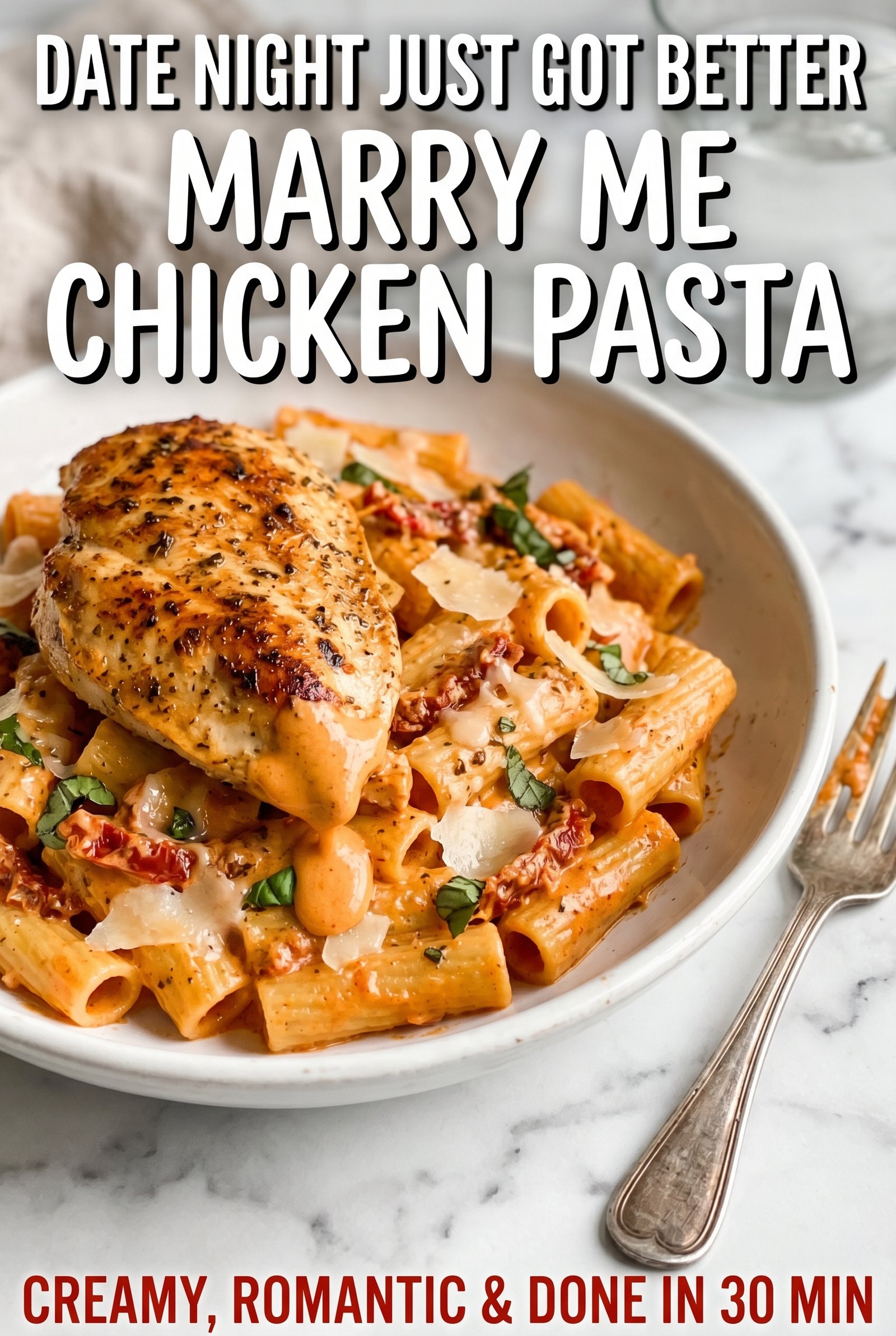
Marry Me Chicken Pasta
Ingredients
Equipment
Method
- Bring a large pot of salted water to a boil, then add rigatoni and cook until al dente according to package instructions. Visual cue: the pasta should be tender but still firm in the center.
- Reserve 1/2 cup of pasta water, then drain the rigatoni and set aside. Visual cue: a small glass amount of starchy water remains for loosening the sauce later.
- Pat the chicken breasts dry, then season both sides with salt, black pepper, garlic powder, and Italian seasoning. Visual cue: the surface looks evenly coated with seasoning.
- Heat olive oil in a large skillet over medium-high heat and sear chicken breasts for 5–6 minutes per side until deeply golden and cooked through (internal temp 165°F). Visual cue: browned edges and a thermometer reading of 165°F in the thickest part.
- Remove the chicken to a cutting board and let it rest for 10 minutes. Visual cue: juices settle and the chicken remains juicy when sliced.
- In the same skillet over medium heat, add minced garlic and red pepper flakes and sauté for 30 seconds until fragrant, without letting it burn. Visual cue: the garlic smells aromatic and turns lightly golden at the edges.
- Stir in the sun-dried tomatoes and cook for 1 minute to warm and release their oil into the pan. Visual cue: the sauce base becomes tinted and glossy from the tomato oil.
- Pour in chicken broth and scrape up the golden bits from the bottom of the pan, then let it reduce for 2 minutes. Visual cue: you see small caramelized flecks dissolve into the liquid.
- Reduce heat to medium-low, pour in heavy cream, and stir to combine. Visual cue: the mixture turns creamy and begins to steam gently.
- Simmer gently for 4–5 minutes until the sauce thickens. Visual cue: the sauce coats a spoon and leaves a slow trail when you draw a line.
- Stir in Parmesan cheese and butter until melted and the sauce is glossy and smooth, then taste and adjust with salt and black pepper. Visual cue: no grainy cheese bits remain and the surface looks shiny.
- Slice the rested chicken into thick pieces and return it to the pan. Visual cue: chicken pieces are coated as they rewarm in the sauce.
- Toss in the cooked rigatoni and stir to coat evenly. Visual cue: every rigatoni tube appears lightly coated with sauce.
- If the sauce feels too thick, loosen it with a splash of reserved pasta water. Visual cue: the sauce loosens to a silky, clingy consistency.
- Plate immediately and top with torn fresh basil, extra Parmesan, and a pinch of red pepper flakes. Visual cue: bright green basil and extra cheese sit on top of a creamy red-tinted sauce.
