
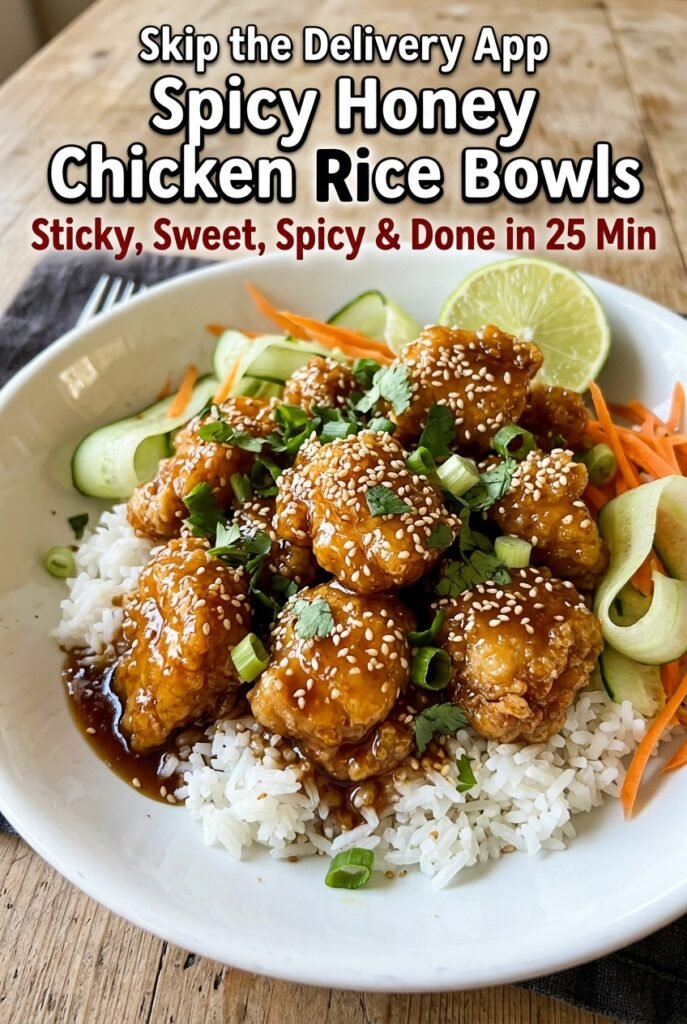
Spicy Honey Chicken Rice Bowls
Crispy-edged chicken coated in a sticky spicy honey glaze hits that sweet-heat balance that keeps you going back for one more bite. The sauce clings to every piece instead of…
Tip: save now, read later.
Crispy-edged chicken coated in a sticky spicy honey glaze hits that sweet-heat balance that keeps you going back for one more bite. The sauce clings to every piece instead of pooling in the pan, and the cool cucumber ribbons underneath keep the whole bowl bright instead of heavy. It’s the kind of dinner that tastes ordered-in, but the skillet does all the work.
What makes this version work is the cornstarch on the chicken and the quick simmer at the end. The cornstarch helps the thighs brown fast and gives the sauce something to grab onto, while the honey, soy, and vinegar keep the glaze glossy instead of bluntly sweet. Using thighs matters here too; they stay juicy during the high-heat sear and don’t dry out before the sauce finishes.
Below, I’ve broken down the part that matters most — getting that caramelized chicken without steaming it, plus the swaps that still keep the bowl balanced when you’re working with what’s in the fridge.
The chicken got those crispy little edges I was hoping for, and the sauce thickened up in the pan instead of turning watery. My husband kept stealing bites before I even finished the bowls.
Save these spicy honey chicken rice bowls for the night you want sticky glazed chicken, fresh cucumber, and a fast dinner that still feels special.
The Reason the Chicken Gets Crispy Before the Sauce Ever Touches It
The biggest mistake in bowls like this is rushing the sauce too early. If the chicken goes into the pan wet or crowded, it steams, and you lose the browned edges that make the glaze taste deeper than plain honey. The cornstarch coating fixes that by drying the surface just enough to crisp, while the hot pan gives the chicken a head start before the sauce comes in.
Another thing that matters here is restraint. The chicken should be cooked in a single layer, with space between the pieces, so the heat can hit the meat directly. Once the sauce goes in, the goal changes from browning to coating. That last minute is what turns the pan juices into a sticky glaze instead of a thin sweet sauce.
What Each Ingredient Is Actually Doing in These Bowls
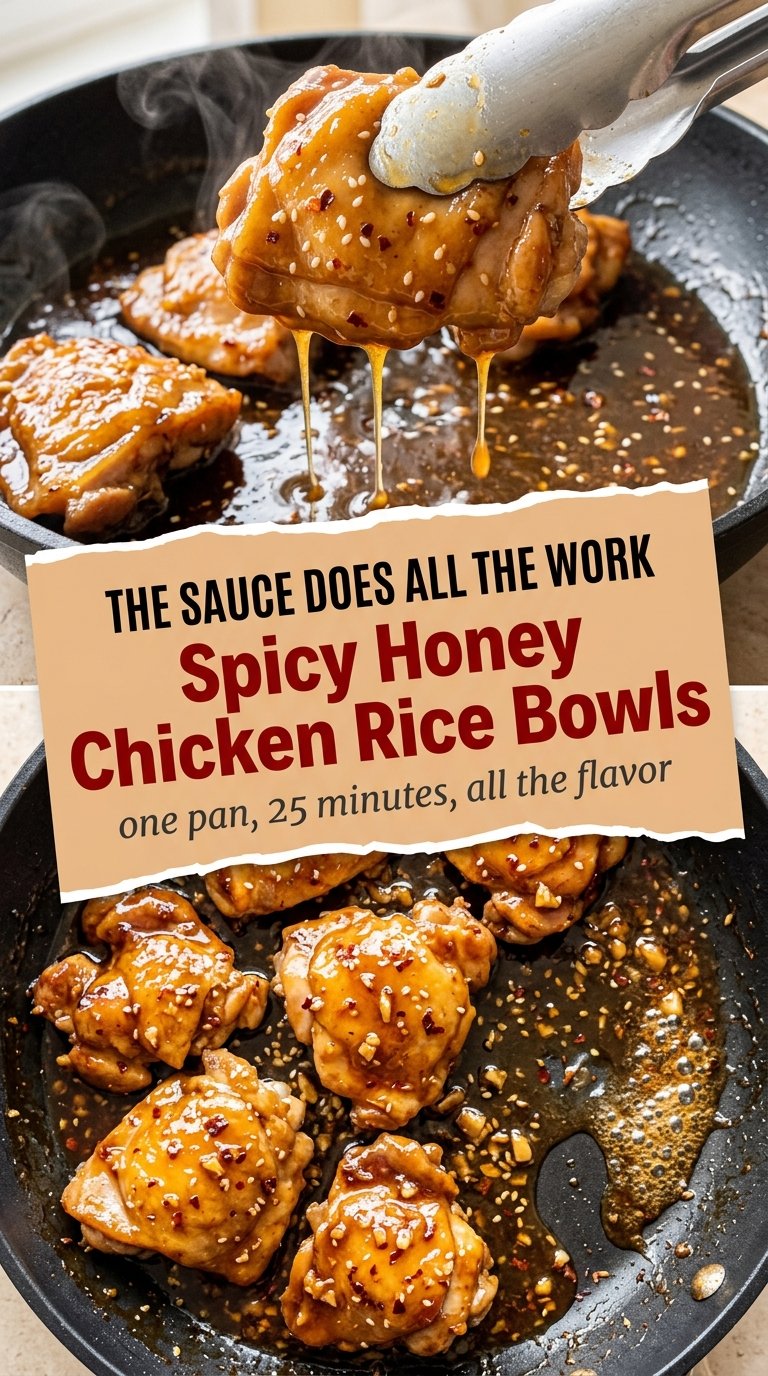
- Chicken thighs — Thighs stay tender under high heat and handle the sticky glaze better than breast meat. If you use chicken breast, cut the pieces a little larger and pull them as soon as they’re cooked through so they don’t dry out.
- Cornstarch — This is what helps the chicken brown and gives the sauce something to cling to. Flour won’t behave the same way here; it makes a heavier coating and won’t give you that light, crisp edge.
- Honey — Honey is the backbone of the sauce, bringing sweetness and that glossy finish. There isn’t a true substitute for the stickiness, but maple syrup can work in a pinch, though the flavor will be deeper and less clean.
- Sriracha, ginger, and garlic — These three keep the sauce from tasting flat. Fresh ginger matters most if you can swing it; dried ginger just doesn’t bring the same sharp lift.
- Jasmine rice — The light floral rice is the right base for this bowl because it soaks up the glaze without turning heavy. Brown rice works too, but the bowl will feel nuttier and less soft under the sauce.
- Cucumber ribbons — These aren’t decoration. They cool each bite and reset your palate between bites of sticky chicken. Slice them thin enough that they fold into the bowl instead of sitting there in chunks.
How to Build the Bowl So Nothing Turns Soggy
Cooking the Rice First
Start the rice before anything else so it has time to finish and stay hot while you cook the chicken. Fluff it with a fork after it’s done so the grains separate instead of packing into a dense layer under the glaze. If the rice sits covered too long, the bottom can go gummy, so spread it lightly in the bowl right before serving.
Coating and Searing the Chicken
Toss the chicken evenly with the cornstarch, soy sauce, garlic powder, and black pepper until every piece looks lightly dusted and tacky, not pasty. Heat the oil until it shimmers, then add the chicken without crowding the pan. Leave it alone for several minutes so the first side can turn deep golden; if you stir too soon, the coating tears and you lose the crisp edges.
Glazing at the End
Whisk the sauce before it goes in so the honey, soy, and aromatics are evenly combined. Pour it over the cooked chicken and toss immediately; the sauce should bubble and thicken fast, coating the pieces in a shiny layer. If it still looks thin after a minute or two, keep it moving over medium heat until it clings to the chicken instead of running off the pan.
Building the Bowls
Spoon the rice into bowls first, then pile the chicken over the center so the sauce drips into the grains instead of getting lost around the edges. Add the cucumber ribbons, carrots, green onions, and cilantro after the chicken is on top so they stay cool and crisp. Finish with sesame seeds and a squeeze of lime right before serving; that last hit of acid keeps the honey from taking over.
What to Change When You Want a Different Bowl
Make It Gluten-Free Without Losing the Glaze
Use a gluten-free soy sauce or tamari and keep the rest of the recipe the same. The sauce still thickens the same way because the honey and cornstarch are doing the heavy lifting, and the flavor stays balanced as long as the salt level is similar.
Turn Down the Heat Without Making It Bland
Cut the sriracha in half and leave out the red pepper flakes if you want more sweet than hot. The honey still gives the sauce its sticky finish, and the garlic, ginger, and sesame oil keep it from tasting one-note.
Swap the Base for a Lower-Carb Bowl
Serve the chicken over cauliflower rice or shredded cabbage instead of jasmine rice. You’ll lose some of the soft soak-up factor that rice gives you, so lean into the toppings and keep the sauce a little thicker so it coats the vegetables instead of disappearing.
Storage and Reheating
- Refrigerator: Store the chicken and rice for up to 4 days. The chicken stays flavorful, though the glaze softens a bit as it sits.
- Freezer: The chicken freezes well for up to 2 months, but freeze it without the cucumber, herbs, or sesame seeds. Thaw overnight in the fridge before reheating.
- Reheating: Reheat the chicken and rice in a skillet over medium-low with a splash of water to loosen the sauce, or microwave in short bursts. High heat dries out the chicken and can make the honey sauce stick to the pan instead of the meat.
Answers to the Questions Worth Asking
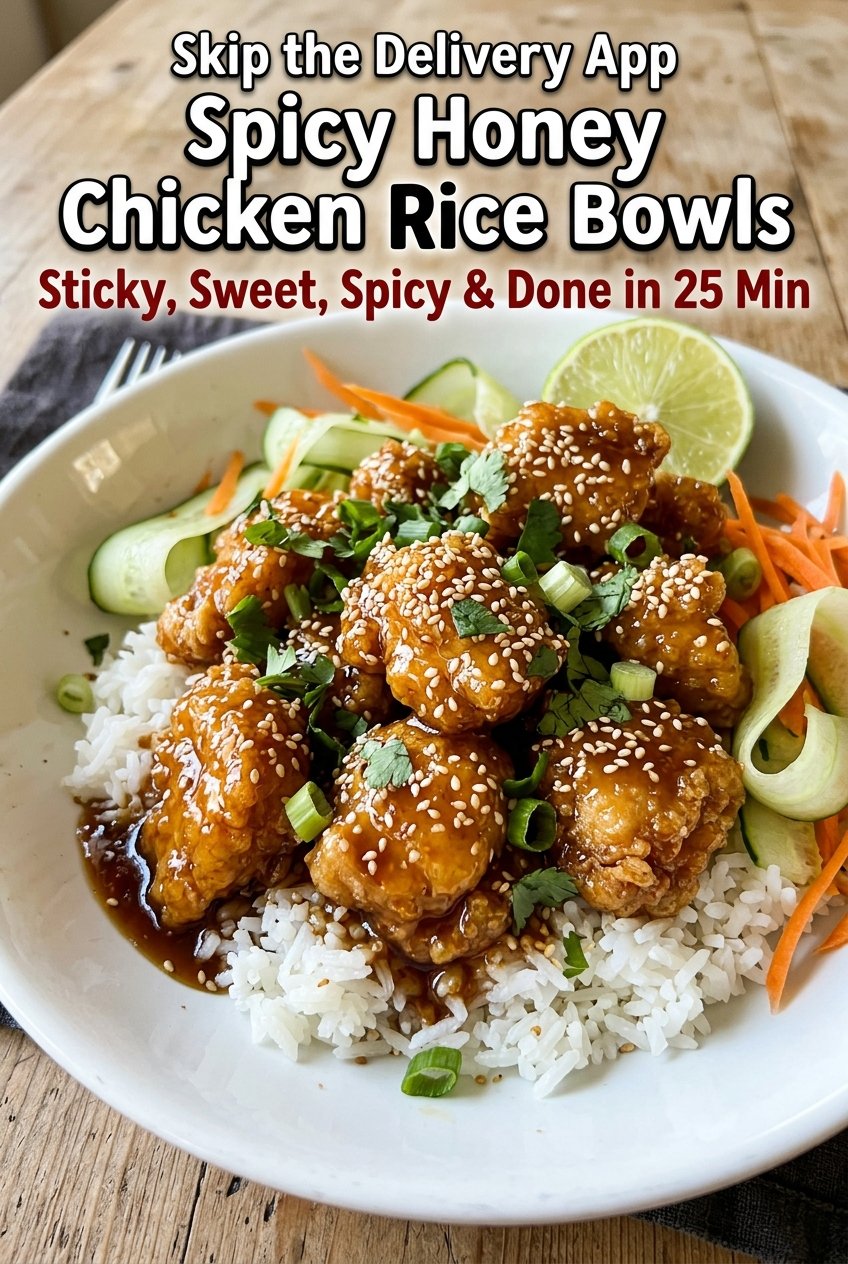
Spicy Honey Chicken Rice Bowls
Ingredients
Equipment
Method
- Cook jasmine rice according to package directions, then fluff with a fork and keep warm until ready to serve.
- Toss chicken pieces with cornstarch, soy sauce, garlic powder, and black pepper until evenly coated.
- Whisk honey, soy sauce, sriracha, rice vinegar, sesame oil, minced garlic, grated ginger, and red pepper flakes in a bowl until smooth, then set aside.
- Heat neutral oil in a large skillet or wok over medium-high heat until shimmering.
- Add chicken in a single layer (don’t crowd the pan) and cook 4–5 minutes without moving until golden and crispy on the bottom.
- Flip chicken pieces and cook 3–4 minutes more until cooked through and caramelized on all sides.
- Pour spicy honey sauce over the chicken in the pan, toss to coat, and cook 1–2 minutes more until the sauce thickens and clings to every piece.
- Build bowls with a generous scoop of jasmine rice as the base.
- Top each bowl with saucy chicken, cucumber ribbons, shredded carrots, green onions, and fresh cilantro.
- Finish with a sprinkle of sesame seeds and a squeeze of fresh lime, then serve immediately.
