
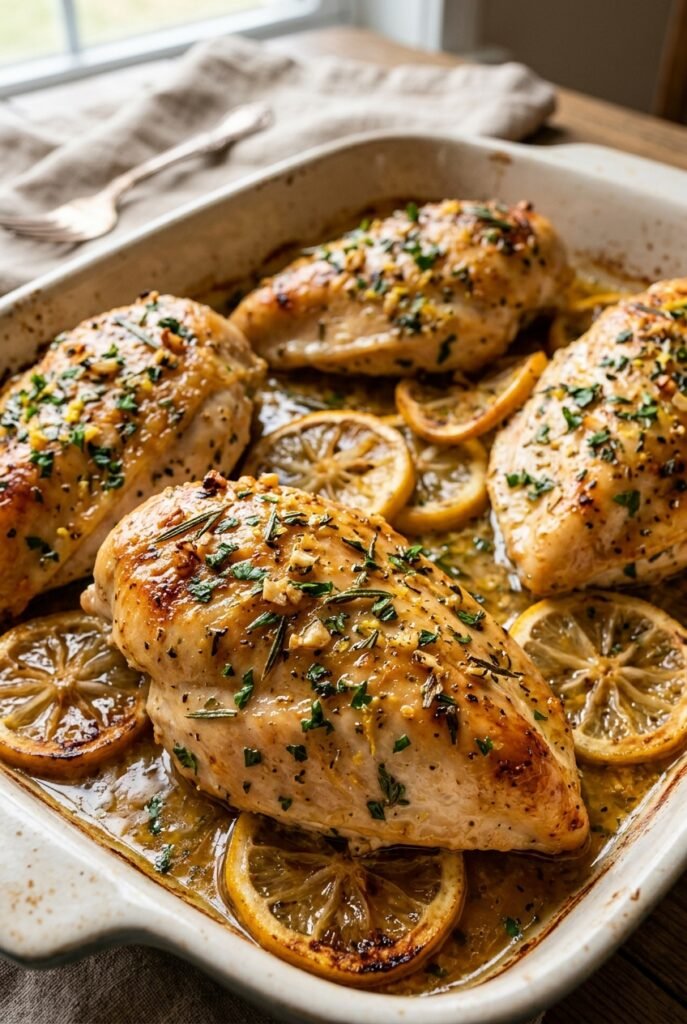
Juicy Baked Lemon Herb Chicken
Juicy baked lemon herb chicken lands on the plate with browned edges, a bright lemon finish, and meat that stays tender instead of turning stringy and dry. The garlic, Dijon,…
Tip: save now, read later.
Juicy baked lemon herb chicken lands on the plate with browned edges, a bright lemon finish, and meat that stays tender instead of turning stringy and dry. The garlic, Dijon, and fresh herbs build a pan sauce of sorts right in the baking dish, so every bite tastes seasoned all the way through, not just on the surface.
What makes this version work is the short marinade and the way the chicken is handled before it goes into the oven. A quick 30-minute soak gives the lemon time to season the meat without crossing into that mushy, cured texture you get from an all-day bath. Pounding the thick ends to an even thickness matters just as much, because chicken breasts fail most often by overcooking the thin side while the thick side catches up.
Below, I walk through the little details that keep the chicken juicy: how to get color without burning the herbs, why the lemon slices should sit around and under the chicken instead of smothering it, and what to do if your breasts are extra thick or unusually small.
The chicken stayed unbelievably juicy, and the lemon slices on the bottom kept the pan from drying out. I broiled it for just a minute at the end and got that gorgeous golden top without losing the herbs.
Juicy Baked Lemon Herb Chicken with golden edges and a bright garlic-herb finish
The Reason This Chicken Stays Juicy Instead of Going Chalky
Chicken breasts dry out when the outside cooks long before the center catches up. That’s why this recipe leans on two things that sound small but matter a lot: even thickness and high-heat roasting. When the breast is pounded to the same thickness from end to end, the oven can cook it evenly instead of leaving you with one end drifting toward overdone while the thick side still needs time.
The other common failure is overloading the pan with lemon slices or using too much marinade liquid. You want the chicken to roast, not steam. The thin layer of oil, herbs, and lemon zest clings to the meat and browns, while the broth under the chicken keeps the pan from drying out and gives you a little built-in moisture without turning the dish soggy.
If your chicken breast recipes keep coming out bland or tough, this is the part to pay attention to. The method is simple, but the order matters.
What Each Ingredient Is Actually Doing in This Dish
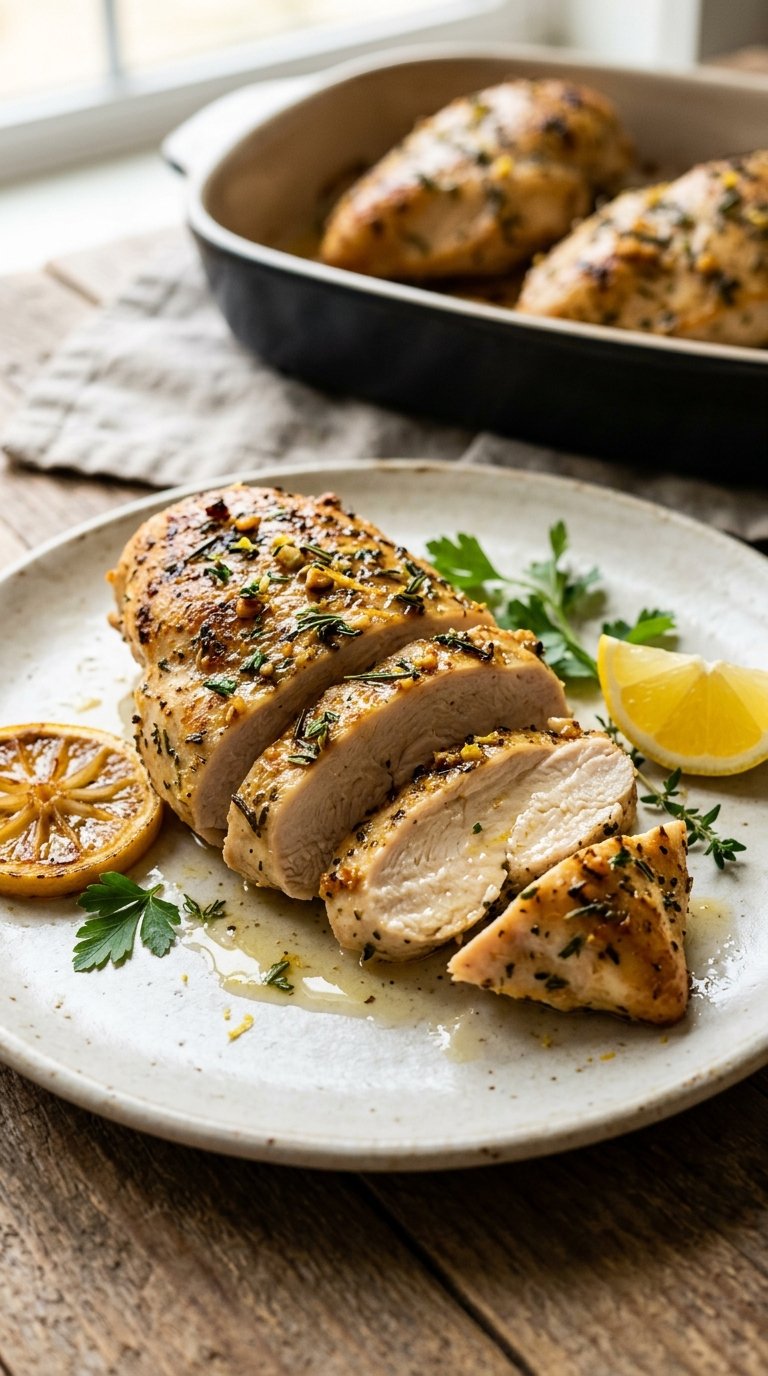
- Chicken breasts — Boneless, skinless breasts work here because they soak up the marinade quickly and cook fast. If yours are huge, split them horizontally or pound them thinner so they match the 18 to 24 minute bake time instead of lingering in the oven until they dry out.
- Fresh lemon juice and zest — Juice brings the brightness, but zest carries the stronger lemon aroma. Don’t swap in bottled juice if you can help it; it tastes flatter and can make the chicken read sharp instead of fresh. The zest is what keeps the flavor from disappearing in the oven.
- Fresh herbs — Parsley, thyme, and rosemary give the chicken a layered herbal finish that dried herbs alone can’t fully match. Dried oregano works well in the marinade because it holds up to heat. If you need a swap, use all thyme and parsley before you drop the rosemary entirely; rosemary can take over if you’re heavy-handed.
- Dijon mustard — This is the quiet ingredient that helps the marinade cling and round out the lemon. You don’t taste mustard in a loud way. You notice it when the chicken tastes balanced instead of sharp.
- Low-sodium chicken broth — Just a little broth in the baking dish keeps the pan moist and gives you a bit of steam at the edges without softening the top. Water works in a pinch, but broth adds a savory background note that makes the whole dish taste more finished.
- Butter for brushing — The melted butter helps the surface pick up color in the oven and under the broiler. Olive oil will work, but butter gives the chicken a richer, more browned finish.
How to Build the Flavor Without Steaming the Chicken
Dry and Even the Chicken First
Pat the chicken dry before anything else. Moisture on the surface blocks browning, and you want the marinade to coat the meat instead of sliding off. If one side of a breast is much thicker than the other, gently pound the thicker end until the whole piece is closer to 3/4 inch thick. That one step fixes the most common baked chicken problem: a dry outer ring around a still-juicy center.
Marinate Just Long Enough
Whisk the marinade until the garlic, herbs, and lemon zest are visible and evenly distributed. Coat the chicken and let it sit for about 30 minutes in the refrigerator. Don’t leave it in the lemon for hours, because the acid starts changing the texture and the outside can turn soft in a strange way before the chicken even gets near the oven.
Bake Hot, Then Watch for Color
Arrange the chicken in a lightly greased baking dish and tuck a few lemon slices around and partly under it, not on top of it. The top needs to stay exposed so it can brown. Bake at 425°F until the thickest part reaches 165°F, then rest it for 5 minutes before slicing. If the chicken is cooked but pale, hit it with the broiler for 1 to 2 minutes and watch it closely; herbs and garlic go from golden to burnt fast.
Finish After the Oven
The final lemon juice, parsley, and thyme go on after baking, not before. That last hit of freshness wakes up the roasted flavor and keeps the chicken from tasting flat. If you add the finishing lemon too early, it cooks off and loses the bright edge that makes this dish stand out.
Three Ways to Adjust This Chicken Without Losing What Makes It Good
For bone-in chicken thighs
Use the same marinade and seasoning, but bake longer at the same temperature until the thighs reach 175°F to 185°F for the best texture. The flavor gets deeper and the meat stays forgiving, though you lose the lean, sliced-chicken look of the breast version.
For dairy-free cooking
Skip the butter and brush the tops with a little extra olive oil before baking. You’ll still get browning, just with a slightly lighter finish and less richness on the crust.
For a lower-carb dinner plate
The chicken itself is already naturally low in carbs, so the real adjustment is what you serve with it. Pair it with roasted vegetables, cauliflower mash, or a crisp salad so the lemon-herb sauce has something to cling to without changing the recipe at all.
For meal prep lunches
Slice the chicken after it rests and store it with a spoonful of the pan juices. That keeps the reheated chicken from tasting dry, and the lemon-herb flavor actually gets stronger after a day in the fridge.
Storage and Reheating
- Refrigerator: Store in an airtight container for up to 4 days. The chicken stays flavorful, though the surface softens a bit as it sits.
- Freezer: It freezes well for up to 2 months if you cool it completely first and pack it with some of the pan juices. Thaw overnight in the refrigerator for the best texture.
- Reheating: Warm it covered in a 300°F oven with a spoonful of broth or pan juices until just heated through. High heat dries out chicken fast, and the microwave can make the edges rubbery before the center is warm.
Answers to the Questions Worth Asking
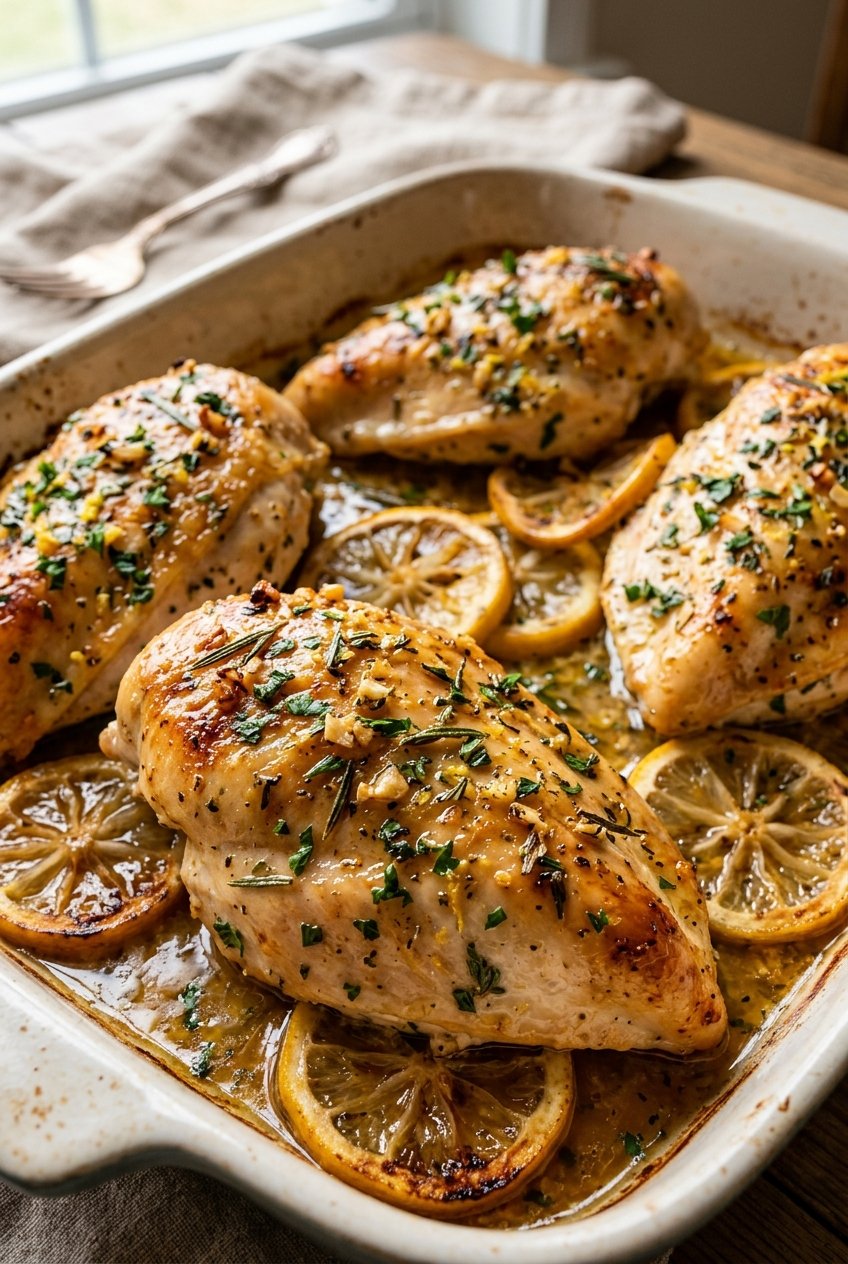
Juicy Baked Lemon Herb Chicken
Ingredients
Equipment
Method
- Pat the chicken breasts dry. If they vary considerably in thickness, gently pound the thick ends until each breast is approximately ¾ inch thick.
- Whisk together extra-virgin olive oil, fresh lemon juice, lemon zest, minced garlic, chopped parsley, thyme, rosemary, dried oregano, Dijon mustard, kosher salt, black pepper, and red pepper flakes (if using) until aromatic and herbs and zest are visibly distributed.
- Place the chicken in a shallow dish or resealable container, pour the marinade over it, and turn each breast until thoroughly coated. Refrigerate for 30 minutes.
- Avoid marinating for many hours because prolonged exposure to lemon juice can affect the chicken's texture.
- Preheat the oven to 425°F (220°C). Lightly grease a medium baking dish or sheet pan.
- Remove the chicken from the marinade and arrange the breasts in the baking dish. Season lightly with kosher salt, black pepper, garlic powder, and onion powder.
- Arrange several thin lemon slices around and partially underneath the chicken, leaving plenty of golden chicken surface visible. Add low-sodium chicken broth around the chicken.
- Brush the chicken lightly with melted butter. Bake uncovered for approximately 18–24 minutes, until the thickest part reaches 165°F (74°C).
- If the surface needs more color, broil for approximately 1–2 minutes, aiming for lightly caramelized golden edges without burning the garlic or herbs.
- Remove from the oven and rest for 5 minutes to retain the juices. Drizzle with fresh lemon juice and finish with chopped fresh parsley and fresh thyme leaves.
- Serve with lemon wedges.
