

Korean BBQ Beef Lettuce Wraps
Tender, caramelized beef tucked into cool butter lettuce hits every note you want in a handheld meal: savory, spicy, a little sweet, and crisp at the edges. The best part…
Tip: save now, read later.
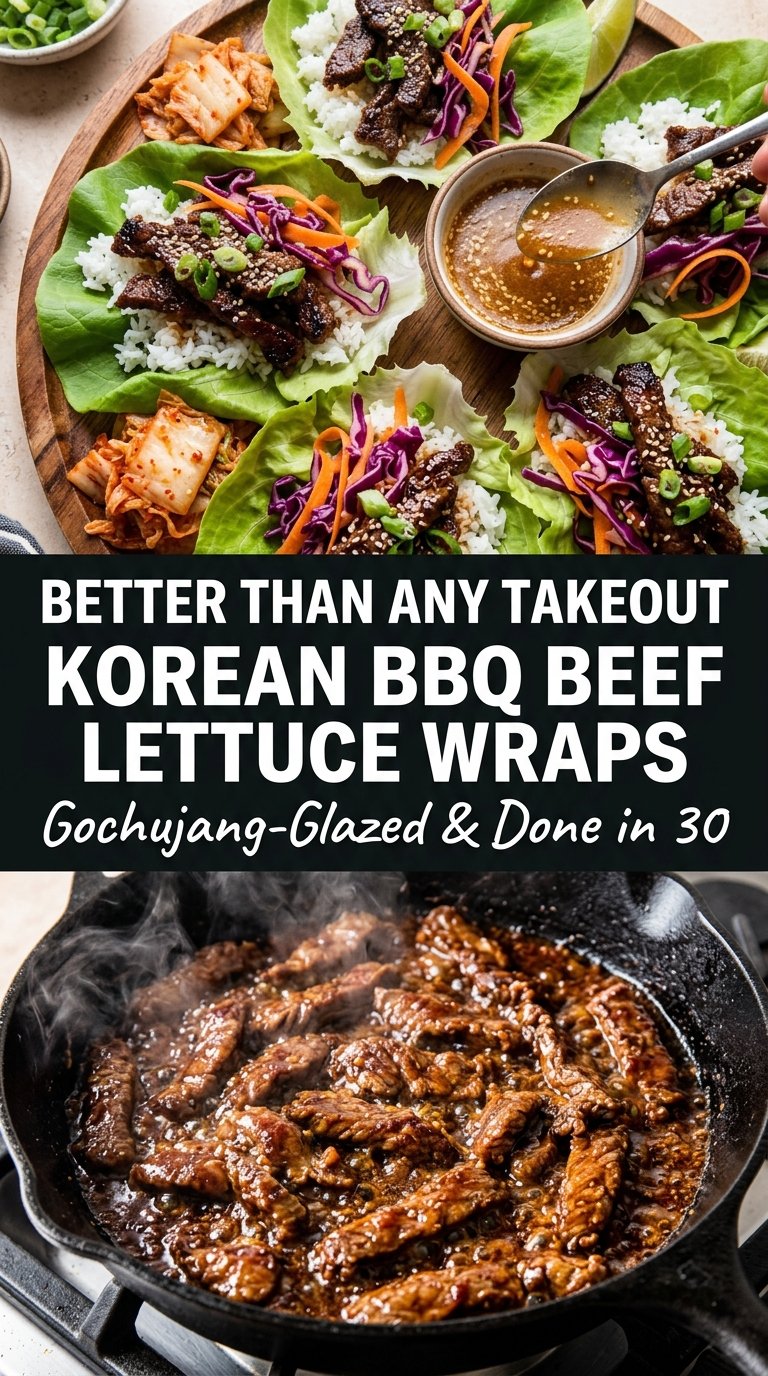
Tender, caramelized beef tucked into cool butter lettuce hits every note you want in a handheld meal: savory, spicy, a little sweet, and crisp at the edges. The best part is how the hot beef and rice soften the lettuce just enough while the slaw and kimchi keep each bite bright and snappy. It eats like something you’d order at a great Korean restaurant, but it comes together fast enough for a weeknight.
What makes this version work is the marinade. Gochujang brings heat and depth, soy sauce handles the salt, and a little pear purée helps the beef stay tender while also giving the edges a subtle gloss once it hits the pan. The real key is cooking the beef over very high heat in batches so it actually sears instead of steaming. That caramelization is where the best flavor lives.
Below, I’ve included the parts that matter most: how to get the beef browned without overcooking it, why the slaw needs just a quick toss instead of a long rest, and the small swaps that still keep these wraps balanced and punchy.
The beef got that sticky caramelized edge I was hoping for, and the sesame-lime drizzle tied everything together without making the lettuce soggy. My husband kept going back for “just one more” wrap.
Save these Korean BBQ Beef Lettuce Wraps for the night you want bold gochujang beef, crisp lettuce, and a fast dinner that still feels like a spread.
The Secret to Beating Steam Before It Ruins the Sear
The biggest mistake with beef lettuce wraps is crowding the pan and expecting color anyway. Beef releases moisture fast, and if the pieces are piled on top of each other, that liquid turns into steam before the surface ever gets a chance to brown. You end up with gray beef and a pan full of juice instead of the lacquered, sticky edges that make this dish worth making.
The fix is simple: use a hot pan, add a thin layer of oil, and cook the beef in single layers with space between the pieces. You want to hear a hard sizzle the second it hits the skillet. If the sound drops to a soft hiss, the pan is overloaded. Pull some beef out and cook it in batches. Those extra few minutes are what give you the charred bits that cling to the sauce.
- Thin-sliced sirloin or ribeye — Slice it against the grain so every bite stays tender. Ribeye gives you more richness; sirloin is leaner but still works well if it’s cut thin.
- Pear or apple purée — This softens the beef and helps the marinade cling. Fresh pear is ideal, but unsweetened applesauce is a good substitute if that’s what you have.
- Gochujang — This isn’t just heat. It gives the marinade body, sweetness, and that deep fermented note you can’t get from hot sauce alone. Use the real paste here, not a watered-down substitute.
- Butter lettuce — The leaves need to be supple enough to fold but sturdy enough to hold the fillings. Iceberg works in a pinch, but the softer edges of butter lettuce make cleaner wraps.
What Each Part Is Doing in the Bowl
- Soy sauce — It salts the beef and the drizzle while giving the sauce a dark, rounded base. Low-sodium soy is fine if that’s what you keep around; just don’t skip the taste test at the end.
- Sesame oil — A little goes a long way. It brings the nutty finish that makes the beef and drizzle taste complete, but too much will overpower the other flavors fast.
- Rice vinegar and lime juice — These keep the dish from tasting heavy. The vinegar sharpens the marinade and slaw, while the lime in the drizzle adds a cleaner pop right at the end.
- Kimchi and pickled daikon — These aren’t garnish. They add acidity, crunch, and fermented bite, which is what keeps the wraps interesting after a few bites. If you skip them, the dish loses balance.
- Short-grain white rice — This gives the wraps a soft, sticky base that helps catch the sauce. Long-grain rice works, but it won’t hold together as neatly inside the lettuce.
The Order That Keeps the Beef Juicy and the Lettuce Crisp
Mix the Marinade Until It’s Smooth
Whisk the soy sauce, gochujang, brown sugar, sesame oil, garlic, ginger, pear purée, and rice vinegar until the marinade looks glossy and fully blended. If the gochujang is left in little streaks, the beef won’t season evenly. Add the sliced beef and turn it over until every piece is coated, then let it sit long enough for the flavors to sink in but not so long that the acid starts to soften the meat too much. Twenty minutes at room temperature is enough for good flavor; a few hours in the fridge gives you even more depth.
Build the Slaw While the Beef Absorbs the Sauce
Toss the cabbage, carrot, and green onions with rice vinegar, sesame oil, and salt until the vegetables look lightly glossed. The point here is not to drown them. You want them crisp but slightly softened, with enough seasoning to taste bright against the rich beef. If the slaw sits too long, it turns watery, so mix it close to serving time and keep it uncovered if needed so it stays snappy.
Sear the Beef Fast and Leave It Alone
Heat the pan until it’s smoking hot before the beef goes in. Lay the slices in a single layer and don’t stir them for the first couple of minutes. That pause is what creates the browned edges and the sticky bits that stick to the skillet. Flip once, cook just until the beef is cooked through, then pull it off the heat right away; overcooked thin-sliced beef turns chewy fast.
Assemble While Everything Still Has Contrast
Spoon a little warm rice into each lettuce leaf, add the beef, then layer on slaw, kimchi, and pickled vegetables. Finish with the sesame-lime drizzle and a scatter of sesame seeds. The wraps should eat hot, cool, crunchy, and saucy all at once. If the rice or beef is left to cool too long, the whole thing loses that restaurant-style contrast.
Three Smart Ways to Tweak These Wraps Without Losing the Point
Make It Gluten-Free
Use a gluten-free soy sauce or tamari in both the marinade and the drizzle. The flavor stays bold and salty, but tamari usually reads a little rounder and less sharp than standard soy sauce. Double-check your gochujang, since some brands contain wheat.
Skip the Rice for a Lower-Carb Bowl
Leave out the white rice and load the lettuce with beef, slaw, kimchi, and pickles instead. You’ll get a lighter wrap with more crunch and a sharper flavor hit, though it won’t have the same soft cushion that rice gives the filling.
Use Chicken Thighs Instead of Beef
Boneless chicken thighs work well with the same marinade and cook quickly in a hot skillet. The flavor is a little lighter and less rich than beef, but the gochujang and sesame still carry the dish. Cut the chicken into thin pieces so it browns instead of steaming.
Storage and Reheating
- Refrigerator: Store the beef, rice, slaw, and toppings separately for up to 3 days. The lettuce wilts fast, so keep it dry and whole until serving.
- Freezer: The cooked beef freezes well for up to 2 months. Freeze it in a flat layer, then thaw overnight in the fridge; don’t freeze the lettuce, slaw, or drizzle.
- Reheating: Warm the beef in a skillet over medium heat with a splash of water just until hot. Microwaving it too long makes the thin slices tough, and the sauce can turn sticky in the wrong way. Reheat the rice separately and assemble fresh.
Answers to the Questions Worth Asking
Korean BBQ Beef Lettuce Wraps
Ingredients
Equipment
Method
- In a large bowl, whisk together soy sauce, gochujang, brown sugar, sesame oil, garlic, ginger, pear purée, and rice vinegar until smooth and combined.
- Add the thinly sliced beef to the marinade and toss thoroughly to coat every piece.
- Let the beef rest at room temperature for at least 20 minutes (or refrigerate up to 4 hours) so the flavors penetrate.
- In a bowl, toss shredded purple cabbage, shredded green cabbage, julienned carrot, and sliced green onions with rice vinegar, sesame oil, and a pinch of salt.
- Set aside for 5 minutes to soften slightly while the beef cooks.
- In a small bowl, stir together soy sauce, sesame oil, lime juice, honey, gochujang, and toasted sesame seeds until smooth.
- Taste and adjust so it’s punchy, savory, and slightly sweet.
- Heat a large cast iron skillet over very high heat until smoking hot, then add a thin layer of neutral oil.
- Cook the beef in a single layer without crowding for 2–3 minutes, letting it caramelize and char at the edges.
- Flip the beef once and cook 1–2 minutes more until cooked through with deep golden-brown edges.
- Remove the beef from the heat and rest for 2 minutes, then scrape the caramelized marinade residue from the pan and toss it back over the beef.
- Lay out butter lettuce leaves and spoon a small mound of warm white rice into each leaf.
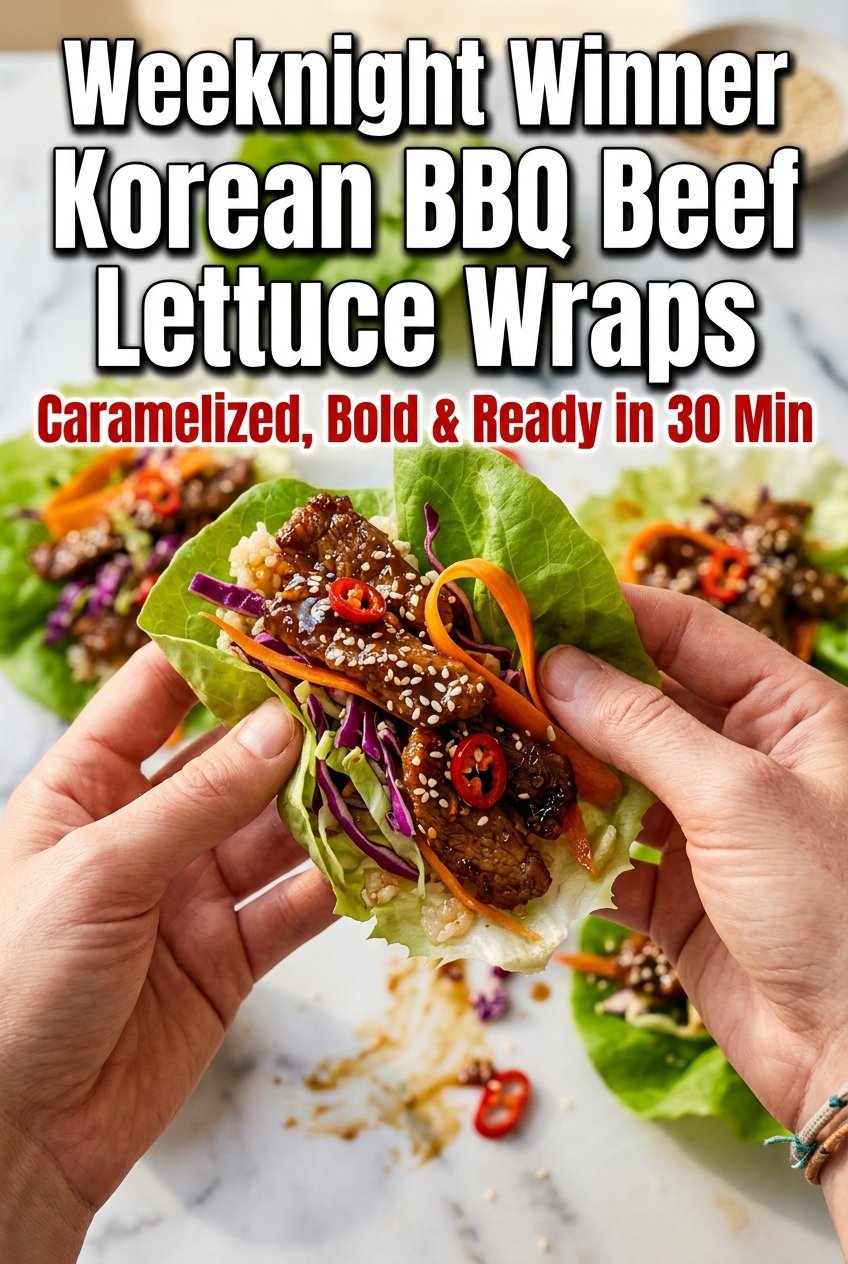
- Pile caramelized beef strips over the rice, then add slaw, kimchi, and pickled daikon or cucumber slices.
- Drizzle the sesame-lime sauce generously over each wrap, then finish with toasted sesame seeds, sliced red chili if using, and fresh cilantro sprigs.
- Serve immediately by folding the leaf around the filling and biting in.
