
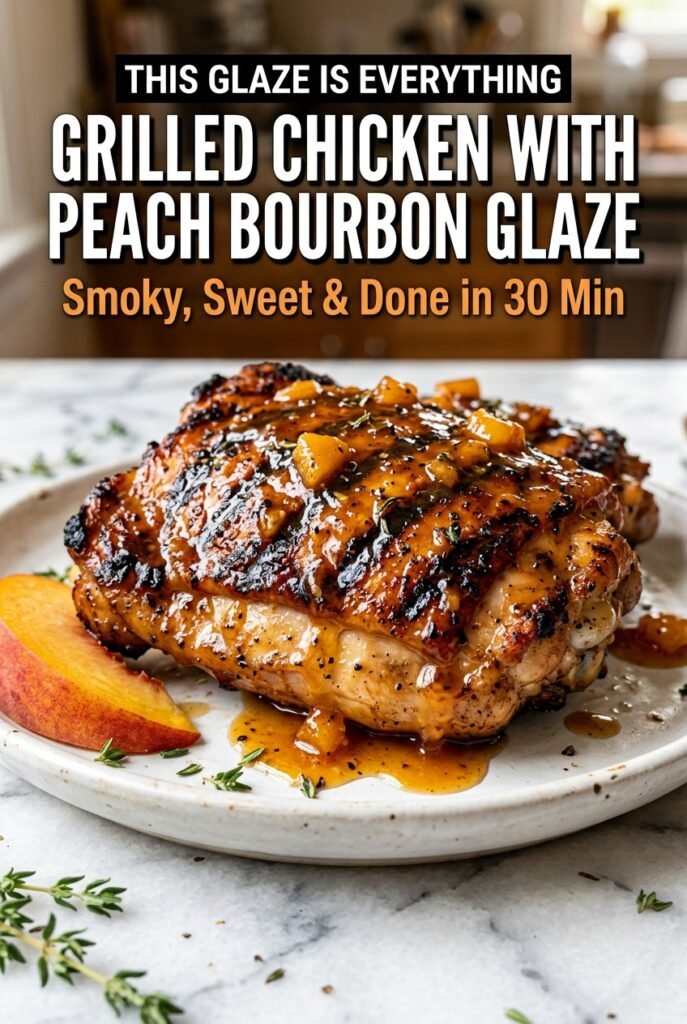
Grilled Chicken with Peach Bourbon Glaze
Smoky grilled chicken and a sticky peach bourbon glaze hit the same plate with exactly the kind of contrast that keeps people hovering near the grill. The skin turns crisp…
Tip: save now, read later.
Smoky grilled chicken and a sticky peach bourbon glaze hit the same plate with exactly the kind of contrast that keeps people hovering near the grill. The skin turns crisp at the edges, the glaze caramelizes into a glossy amber coat, and the peaches soften just enough to leave little bursts of sweetness in every bite. It tastes like you worked on it all afternoon, but the actual hands-on part stays refreshingly short.
What makes this version work is the balance in the glaze. Fresh peaches bring body and fruit flavor, bourbon adds depth, and the apple cider vinegar keeps the sweetness from getting cloying. Dijon and soy sauce pull the whole thing into savory territory, which is important because otherwise a peach glaze can drift too far into dessert. Brushing it on during the last few minutes gives you caramelization instead of burnt sugar, and that timing matters more than fancy ingredients.
Below, I’ll walk you through the trick to getting the glaze thick enough to cling without turning gummy, plus the small grill detail that keeps the chicken skin from tearing when you flip it.
The glaze reduced into this perfect sticky syrup and the peaches gave it a fresh, jammy texture. I brushed it on at the end like you said and the chicken came off the grill with those beautiful caramelized edges instead of burning.
Brush the peach bourbon glaze on during the last few minutes so it turns glossy and caramelized instead of burning on the grill.
The Difference Between Glossy Glaze and Burnt Sugar
Peach glaze can go wrong in two ways: it stays thin and slides off the chicken, or it cooks too hard and turns bitter on the grate. The fix is to reduce it in a small saucepan before it ever touches the grill. You want the peaches softened and partially broken down, the liquid reduced to a syrup that coats the back of a spoon, and the butter stirred in at the end for shine and a little roundness.
The other mistake happens at the grill. Bourbon and brown sugar will caramelize fast, which is good until the heat is too high or the glaze goes on too early. Brush it on near the end, when the chicken is already cooked through and just needs color and cling. That gives you sticky edges without the scorched, blackened spots that taste harsh.
- Reduce the glaze until it looks glossy and thick, not watery.
- Add the butter off the heat so the glaze finishes smooth.
- Use the last few minutes of grilling for glazing, not the first half.
- Watch for flare-ups once the sugar hits the fire and move the chicken if needed.
What Each Ingredient Is Doing in This Dish
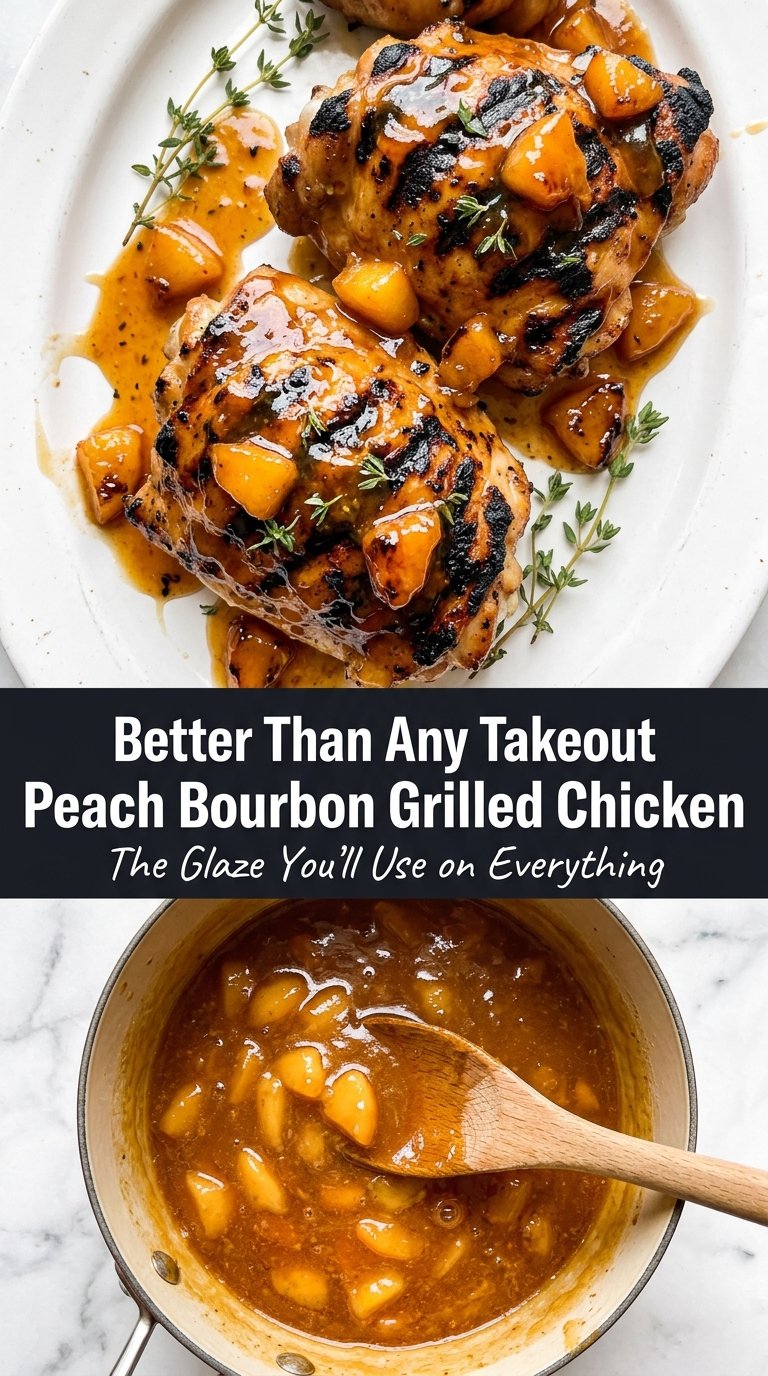
Chicken thighs or breasts — Thighs stay juicier and are a little more forgiving over high heat, which is why they’re my first pick here. Breasts work too, but they dry out faster, so pull them as soon as they hit temperature. Bone-in, skin-on pieces give you better flavor and a sturdier surface for the glaze.
Peaches — Fresh peaches bring the brightest flavor, but frozen peach slices work well when they’re thawed first. You want them diced small so they break down quickly and thicken the glaze instead of staying in big chunks. If your peaches are tart, the brown sugar and bourbon smooth that out.
Bourbon, brown sugar, vinegar, Dijon, and soy sauce — This is the backbone of the glaze. Bourbon adds warmth, brown sugar gives the sticky finish, vinegar keeps it from turning candy-sweet, Dijon helps it emulsify, and soy sauce adds the salty depth that makes the peach taste more savory than jammy. If you need to skip the bourbon, use apple juice with a splash of extra vinegar, but the glaze will lose some of its edge.
Smoked paprika and garlic powder — These season the chicken before it ever hits the grill, and they matter because the glaze alone won’t carry the whole dish. Smoked paprika reinforces the grill flavor, while garlic powder keeps the seasoning even. Fresh garlic on the chicken would scorch faster than you want, so the dried seasoning does a better job here.
Getting the Chicken Grilled Before the Glaze Goes On
Season and Rest the Chicken
Pat the chicken dry before you season it. Moisture on the skin blocks browning, and dry skin is what helps you get those crisp, crackly edges on the grill. Letting it sit at room temperature for about 20 minutes takes the chill off so it cooks more evenly. If you rush straight from the fridge to the fire, the outside overcooks before the center catches up.
Cook the Glaze Until It Clings
Combine the peaches, bourbon, brown sugar, vinegar, Dijon, soy sauce, garlic, and red pepper flakes in a saucepan and bring it to a gentle boil. Then drop the heat and let it simmer until the peaches soften and the mixture turns thick and shiny. Stir occasionally, but don’t keep it at a hard boil or the sugars can scorch around the edges of the pan. The glaze should coat a spoon and slowly fall off in a ribbon.
Grill the Chicken Undisturbed
Preheat the grill to medium-high and oil the grates well before the chicken goes on. Place the thighs skin-side down and leave them alone until the skin releases naturally; if it sticks, it’s not ready to flip. That first side needs time to render the fat and build color. If you keep moving it too soon, the skin tears and you lose the clean charred surface the glaze needs later.
Finish with Heat, Then Shine
Once the chicken is nearly done, brush on the glaze and let it caramelize briefly. Flip once more, glaze the other side, and watch closely for flare-ups, since sugar on an open flame can go from glossy to burnt in seconds. Pull the chicken when it reaches 165°F, then rest it for five minutes so the juices settle. A final brush of warm glaze right before serving gives you that sticky finish that makes the dish look as good as it tastes.
Three Ways to Make This Grill Recipe Work for Your Table
Swap in chicken breasts for a leaner version
Breasts grill beautifully here, but they need a little more attention because they dry out faster than thighs. Keep the heat at medium-high, grill just until they reach 165°F, and pull them promptly. You’ll get a cleaner, lighter bite, though you lose some of the built-in richness thighs bring to the plate.
Make it bourbon-free without losing the glaze
If you don’t want alcohol in the sauce, replace the bourbon with apple juice plus an extra teaspoon of vinegar. The glaze will still thicken and cling, but it’ll taste a little brighter and less deep. That substitution works best if you reduce it patiently so the fruit flavor has time to concentrate.
Use the dairy-free version as written
This recipe is already naturally dairy-free if you use the butter swap I mention below, or you can leave it out entirely. The glaze will be a touch less glossy without the butter, but it still reduces into a sticky finish. If you want the shine back, whisk in a teaspoon of olive oil off the heat.
Make it spicier for a stronger sweet-heat balance
Add another pinch of red pepper flakes or a small splash of hot sauce to the glaze if you want more bite against the peaches. That extra heat keeps the sauce from reading too sweet, especially if your fruit is very ripe. It’s an easy adjustment, and it works well when you’re serving the chicken with rice or grilled corn.
Storage and Reheating
- Refrigerator: Store leftovers in an airtight container for up to 4 days. The glaze may thicken and the skin will soften, but the flavor holds up well.
- Freezer: Freeze the cooked chicken without the final glaze for up to 2 months. The sauce can be frozen separately, though the peach texture softens after thawing.
- Reheating: Warm the chicken covered in a 325°F oven until heated through, then brush with a little reserved glaze at the end. Skip the microwave if you can; it makes the skin rubbery and can turn the glaze sticky in the wrong way.
Answers to the Questions Worth Asking
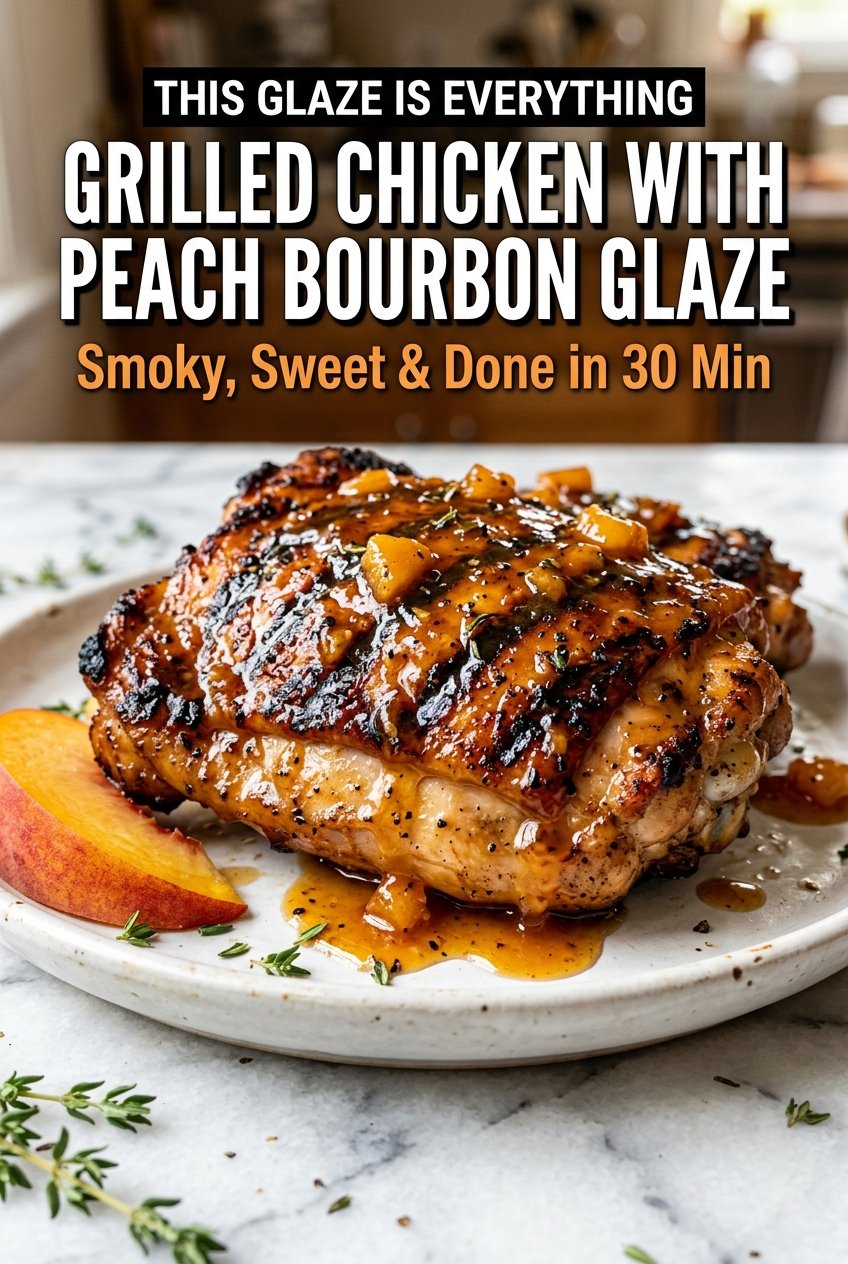
Grilled Chicken with Peach Bourbon Glaze
Ingredients
Equipment
Method
- Pat the chicken dry with paper towels, then rub it all over with olive oil, garlic powder, smoked paprika, onion powder, salt, and black pepper to coat evenly. Lay it out so the seasoning adheres to the skin and surfaces.
- Let the seasoned chicken rest at room temperature for 20 minutes while you make the glaze. This helps the seasoning meld and supports more even cooking.
- In a small saucepan over medium heat, combine diced peaches, bourbon, brown sugar, apple cider vinegar, Dijon mustard, soy sauce, minced garlic, and red pepper flakes, then stir to combine. Bring the mixture to a gentle boil until you see steady bubbling.
- Reduce the heat to low and simmer for 12–15 minutes, stirring occasionally, until the peaches break down and the glaze is thick and glossy. The moment it coats a spoon, it’s ready to finish.
- Stir in the butter at the end, then remove from heat and set aside, because it will thicken further as it cools. Keep the glaze warm enough to brush later.
- Preheat your grill to medium-high heat (400–450°F) and oil the grates well to prevent sticking. Wait until the grates are hot before adding the chicken.
- Place the chicken skin-side down on the grill and cook undisturbed for 6–7 minutes until the skin releases naturally with deep grill marks. If it sticks, it’s not ready to flip.
- Flip the chicken and cook another 5–6 minutes, turning only once during this interval. Watch the color develop toward a caramelized exterior.
- In the last 4 minutes, brush generously with the peach bourbon glaze, flip once more, and glaze the other side. Caramelize slightly while watching for flare-ups from the sugary glaze.
- Continue grilling until the internal temperature reaches 165°F, then remove from the grill. Rest the chicken for 5 minutes so juices settle.
- Brush the chicken with one final layer of warm glaze before serving. Finish by garnishing with sliced fresh peaches and fresh thyme if desired.
