
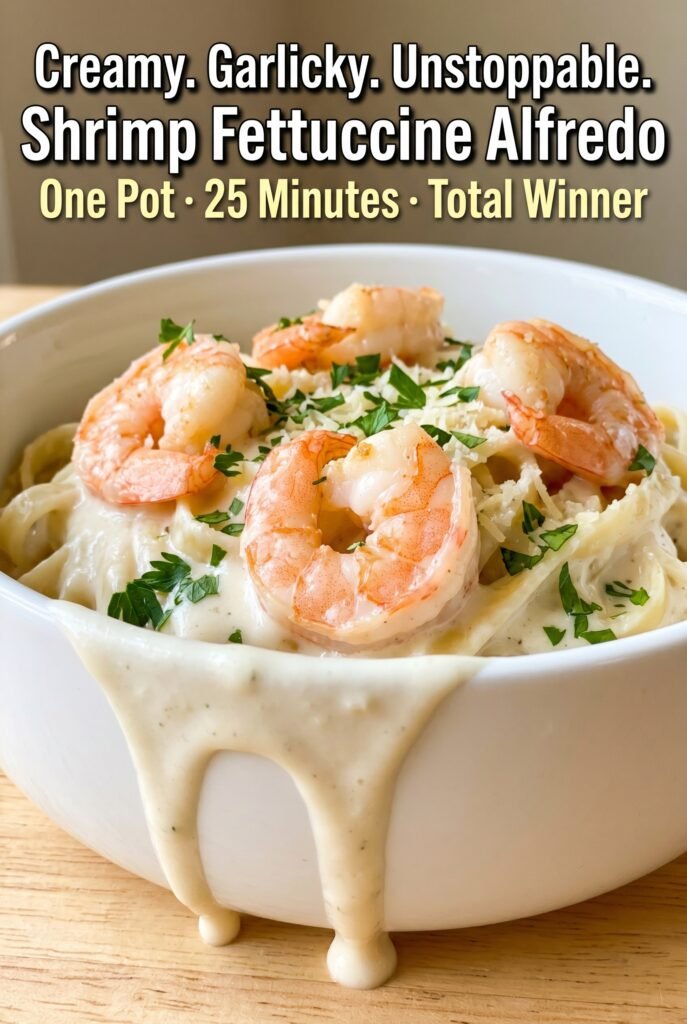
One Pot Shrimp Fettuccine Alfredo
Plump shrimp, silky Parmesan sauce, and fettuccine that cooks right in the pot turn this into the kind of dinner that disappears fast. The pasta pulls in the broth and…
Tip: save now, read later.
Plump shrimp, silky Parmesan sauce, and fettuccine that cooks right in the pot turn this into the kind of dinner that disappears fast. The pasta pulls in the broth and cream as it simmers, so every strand comes out coated instead of sitting under sauce like an afterthought. That one-pot method also means the starch from the noodles helps thicken everything naturally, which gives you a sauce that clings instead of pooling at the bottom of the pan.
The key is cooking the shrimp first, then building the sauce in the same pot without letting the garlic brown or the cream boil hard. Shrimp only need a minute or two per side, and they’ll finish warming through at the end, so they stay tender instead of turning rubbery. Freshly grated Parmesan matters here too; pre-shredded cheese can leave the sauce grainy because it doesn’t melt as cleanly.
Below you’ll find the exact timing that keeps the pasta al dente, plus a few small swaps that still give you that rich Alfredo texture when you need to work with what’s in the kitchen.
The sauce coated the fettuccine perfectly, and the shrimp stayed tender instead of getting chewy. I liked that I didn’t have a separate pot of pasta to drain, and the Parmesan melted into a smooth sauce on the first try.
Save this one-pot shrimp fettuccine Alfredo for the night you want creamy pasta, tender shrimp, and only one pot to wash.
The Trick to One-Pot Alfredo That Stays Creamy Instead of Turning Gluey
One-pot Alfredo sounds simple until the pasta drinks the liquid too fast or the sauce turns tight and pasty. The fix is balance: enough broth for the fettuccine to cook through, enough cream to keep the sauce rich, and enough stirring to keep the starch from sticking to the bottom in clumps. If the heat is too high, the dairy can separate and the Parmesan can seize. If the heat is too low, the pasta just sits there and goes limp before it finishes cooking.
The other place this recipe goes wrong is timing. Shrimp go back in at the end, not at the beginning, because they only need a minute or two in the hot pasta to warm through. By the time the noodles are al dente and the sauce has thickened, the pan still has enough residual heat to finish the shrimp without overcooking them.
- Fettuccine — Long pasta works best because it stirs into the sauce evenly and releases enough starch to help thicken the pan. If you use a thinner noodle, cut the simmer time a little so it doesn’t turn soft before the sauce comes together.
- Heavy cream — This is what gives Alfredo its body and keeps the sauce from turning thin as the pasta finishes cooking. Half-and-half will work in a pinch, but the sauce will be lighter and less stable.
- Freshly grated Parmesan — This melts into the sauce cleanly and gives you that smooth, salty finish. Pre-grated cheese often has anti-caking agents, which can leave the sauce grainy instead of silky.
- Shrimp — Large shrimp hold up better in the pot and stay juicy if you pull them as soon as they turn pink and opaque. Smaller shrimp cook faster and are easier to overdo, so watch them closely if you swap sizes.
Building the Sauce in the Same Pot Without Breaking It
Getting a Quick, Clean Sear on the Shrimp
Heat the olive oil until it shimmers, then lay the shrimp in a single layer so they sear instead of steam. You want the first side to turn pink at the edges and the second side to go just opaque; that usually takes only a couple of minutes total. Pull them as soon as they curl into a loose C-shape. If they form a tight O, they’ve gone too far and will turn firm when you warm them again.
Letting the Garlic Bloom, Not Burn
Melt the butter over medium heat and add the garlic once the foaming settles down a bit. Stir constantly and watch for the smell to shift from sharp to sweet, which usually takes about a minute. If the garlic goes brown, the whole sauce picks up a bitter edge, so don’t rush this part by turning the heat up. The goal is fragrant butter, not toasted garlic.
Cooking the Pasta Through the Sauce
Pour in the broth and cream, then stir in the seasoning before adding the uncooked fettuccine. Press the noodles down so they’re mostly submerged, then cover the pot partially and keep the simmer gentle. Stir every few minutes so the strands don’t glue themselves together on the bottom. If the liquid looks like it’s disappearing too fast before the pasta is tender, add a small splash of broth or water and keep going.
Finishing with Parmesan and Shrimp
Take the pot off the heat before adding the Parmesan and stir until the sauce turns glossy and smooth. That off-heat finish matters because hard boiling can make the cheese seize and turn the sauce grainy. Fold in the shrimp at the end and let the residual heat warm them through for a minute or two. Finish with parsley and an extra shower of cheese while the sauce is still loose enough to cling to the noodles.
What to Change When You Need a Different Version
Dairy-Free Alfredo
Use unsweetened coconut cream or a plain dairy-free cooking cream and swap the butter for olive oil or a plant-based butter. The sauce won’t taste exactly like classic Alfredo, but it will still cling nicely if you keep the heat low and finish with a dairy-free Parmesan-style cheese that melts well.
Gluten-Free Version
Use a sturdy gluten-free fettuccine and watch the simmer closely, because gluten-free pasta can go from firm to soft fast. Start checking a couple of minutes early and stir gently so the noodles don’t break apart while they finish in the sauce.
Chicken Instead of Shrimp
Thin-sliced chicken breast or thighs work well if you want a different protein. Cook the chicken through before building the sauce, then follow the same method; thighs stay juicier, while breast is leaner and can dry out if it sits too long in the pan.
Extra Rich, Low-Carb-Inspired Serving
Skip the pasta and spoon the shrimp Alfredo over steamed zucchini noodles or cauliflower rice for a lighter plate. The sauce stays the same, but you’ll want to reduce the broth slightly since vegetables won’t absorb liquid the way fettuccine does.
Storage and Reheating
- Refrigerator: Store in an airtight container for up to 3 days. The sauce will thicken as it chills, and the pasta will absorb more liquid.
- Freezer: Freezing isn’t ideal. Cream sauces can separate after thawing, and the shrimp can turn rubbery.
- Reheating: Warm gently in a skillet over low heat with a splash of broth, milk, or cream. High heat is the mistake that breaks the sauce and toughens the shrimp, so heat it slowly and stir often.
Questions I Get Asked About This Recipe
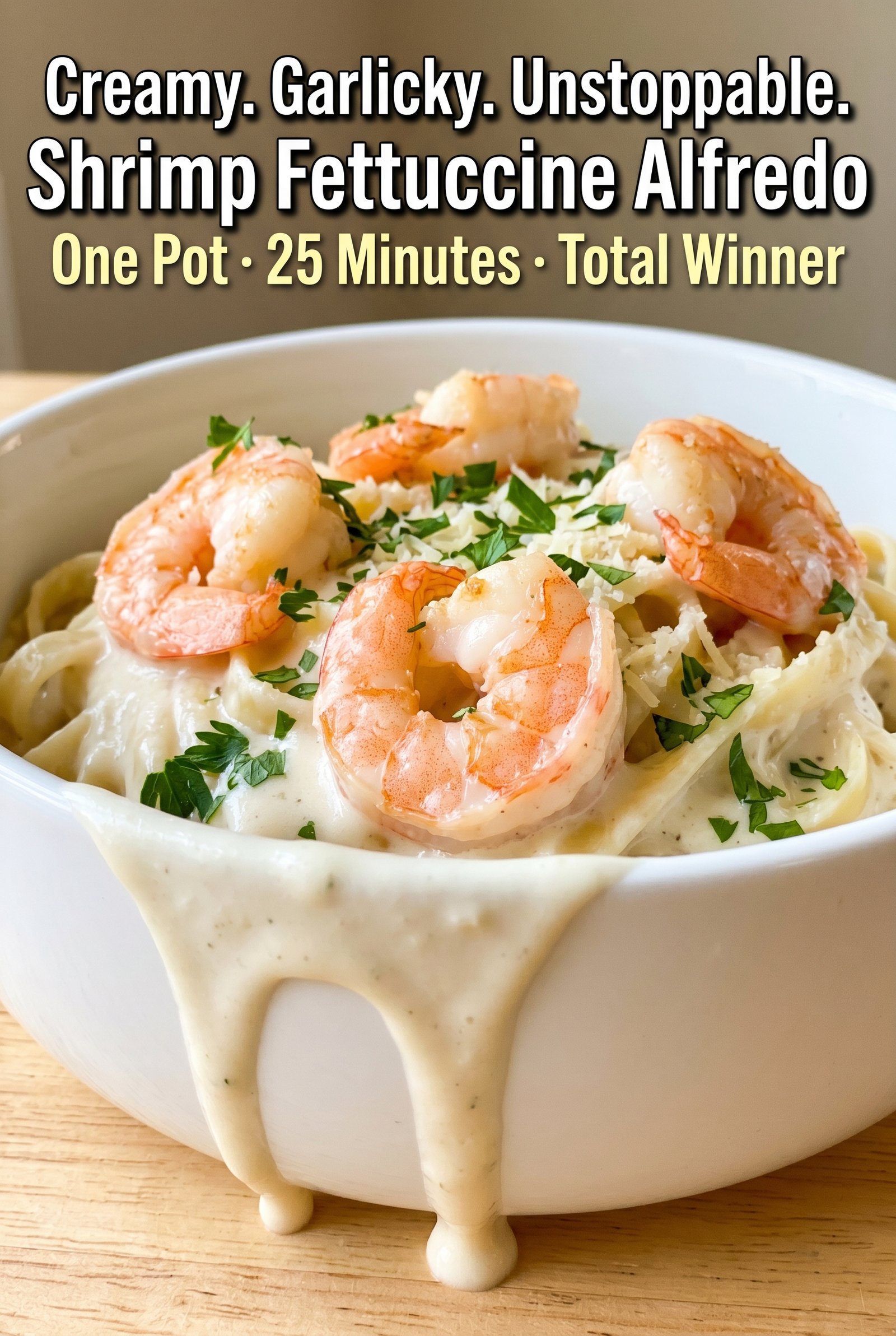
One Pot Shrimp Fettuccine Alfredo
Ingredients
Equipment
Method
- Heat 1 tbsp olive oil in a large deep skillet or wide pot over medium-high heat until shimmering. Season the shrimp with salt and black pepper.
- Add the shrimp in a single layer and cook 1–2 minutes per side until pink and just opaque. Remove the shrimp to a plate or bowl and set aside.
- Melt 4 tbsp unsalted butter over medium heat, stirring as it melts. Add minced garlic and cook for 1 minute until fragrant, stirring constantly so it doesn’t burn.
- Pour in 4 cups chicken broth and 1 cup heavy cream, then stir in Italian seasoning, onion powder, and red pepper flakes. Bring the mixture to a gentle boil.
- Add 12 oz fettuccine and press it into the liquid so most of the pasta is submerged. Reduce heat to medium, cover partially, and cook 10–12 minutes, stirring every 2–3 minutes to prevent sticking, until al dente and most of the liquid is absorbed.
- Turn off the heat, then stir in 1 cup freshly grated Parmesan cheese until the sauce is silky and coats the pasta. Add the cooked shrimp back to the pot.
- Gently fold the shrimp into the pasta and let the pot sit 1–2 minutes to warm the shrimp through. Taste and adjust salt and black pepper, then garnish with fresh parsley and extra Parmesan.
- Serve immediately straight from the pot while the fettuccine Alfredo is creamy. Keep any leftovers refrigerated and reheat gently.
