
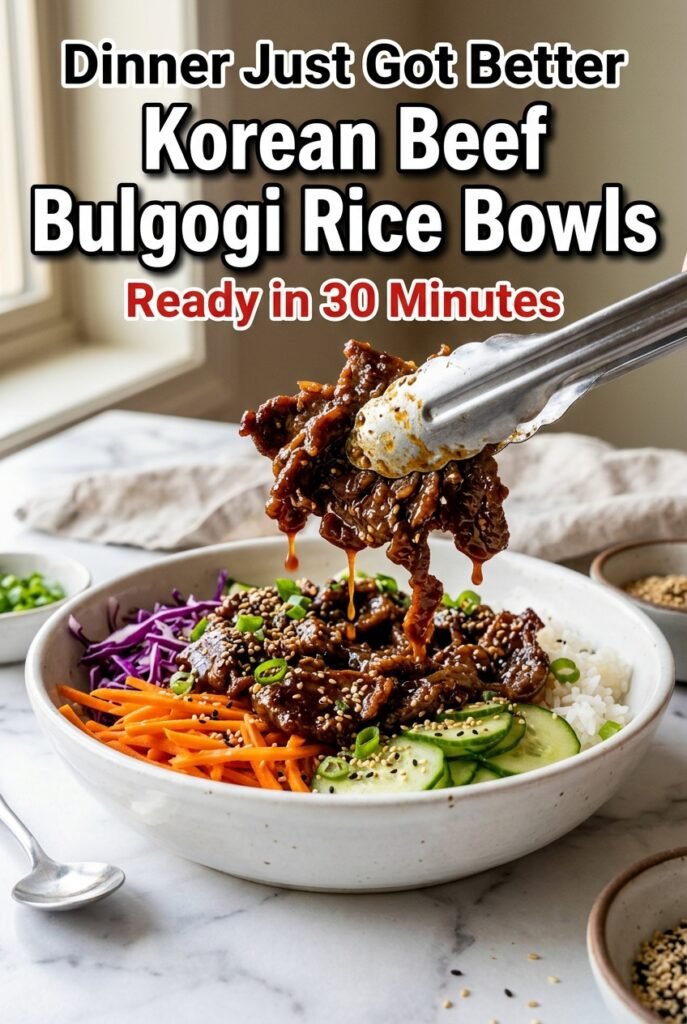
Korean Beef Bulgogi Rice Bowls
Tender slices of beef, lacquered in a soy-sesame marinade and seared until the edges go sticky and caramelized, make these Korean beef bulgogi rice bowls the kind of dinner that…
Tip: save now, read later.
Tender slices of beef, lacquered in a soy-sesame marinade and seared until the edges go sticky and caramelized, make these Korean beef bulgogi rice bowls the kind of dinner that disappears fast. The combination of warm rice, crisp cabbage, cool cucumber, and that glossy gochujang drizzle gives you a little bit of everything in one bowl: savory, sweet, spicy, and fresh.
What makes this version work is the balance. The beef marinates long enough to pick up flavor, but not so long that it loses its texture. Then it hits a very hot pan in batches, which is what gives you those browned edges instead of steamed meat. The sauce drizzle gets whisked separately, so it stays punchy and finishes the bowl instead of getting lost in the pan.
Below you’ll find the small details that matter most here: how thin to slice the beef, why high heat is non-negotiable, and how to keep the rice and toppings from turning the bowl soggy. Once you get the rhythm, this turns into one of those dependable meals that feels bigger than the effort it takes.
The beef got that caramelized edge I was hoping for, and the gochujang drizzle pulled everything together without overpowering the rice. I used short-grain rice and it soaked up the sauce perfectly. Even my picky eater went back for seconds.
Save these Korean beef bulgogi rice bowls for the nights when you want a fast dinner with caramelized beef, crisp vegetables, and a spicy-sweet sauce.
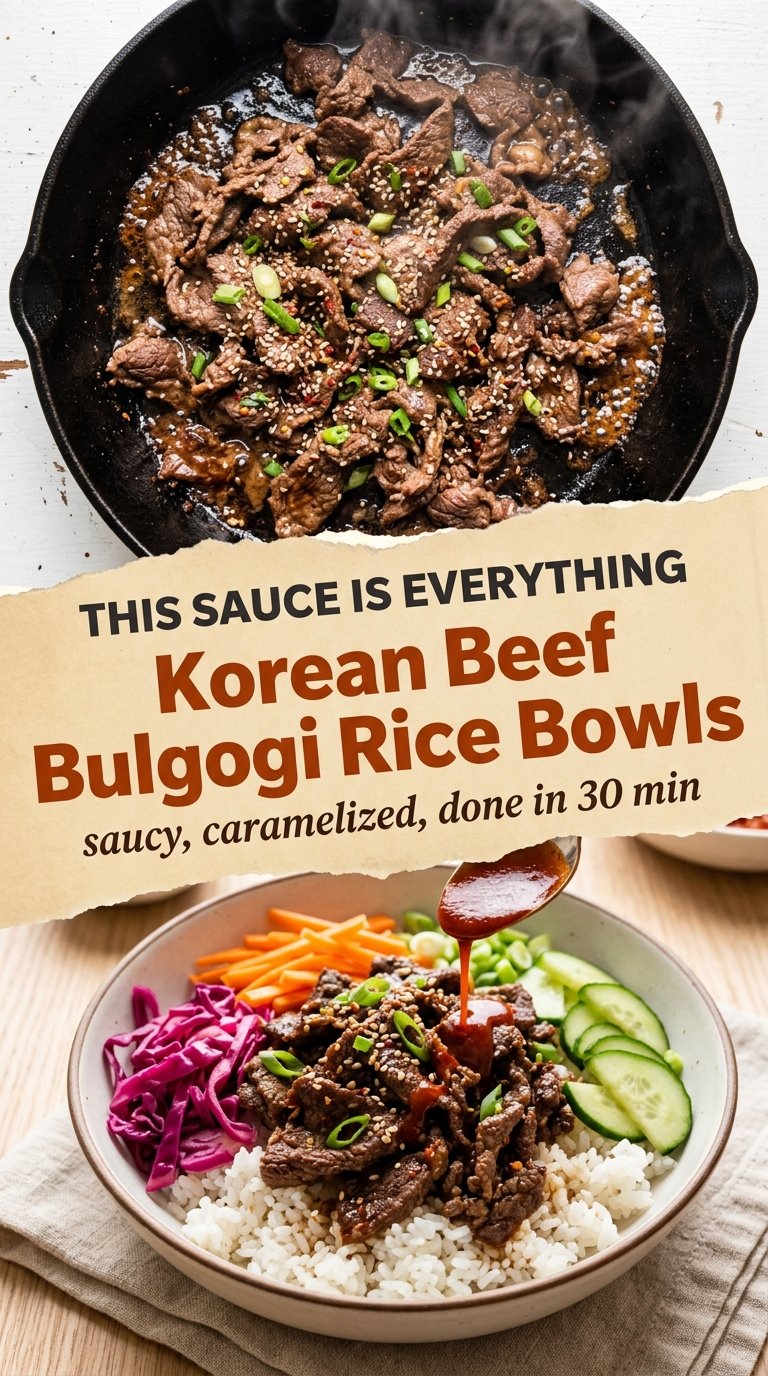
The Thin-Slice-and-Sear Rule That Keeps Bulgogi from Going Soft
Bulgogi can go from glossy to mushy if the pan isn’t hot enough or the slices are too thick. Thin beef needs quick, aggressive heat. That gives you caramelized edges before the meat has time to release too much liquid and steam itself.
The other mistake is crowding the pan. If the slices overlap, the marinade turns watery and the beef loses that seared, sticky finish. Work in batches and leave space between the pieces so the sugar in the marinade can brown instead of burn.
- Beef sirloin or ribeye — Ribeye gives you more richness, while sirloin stays a little leaner and still works well as long as it’s sliced very thinly against the grain. Partially freezing the meat for 20 to 30 minutes makes those thin slices much easier to cut cleanly.
- Soy sauce — This is the backbone of the marinade, so use a standard soy sauce with enough salt to season the beef through. Low-sodium works too if that’s what you keep on hand.
- Gochujang — This brings heat, sweetness, and depth all at once. There’s no exact substitute for the fermented flavor, but in a pinch you can use miso plus chili paste; the result is less sweet and less distinctly Korean, though still good.
- Rice wine vinegar — A small amount brightens the marinade and keeps the beef from tasting flat. If you don’t have it, apple cider vinegar is the closest swap, though a little sharper.
- Jasmine or short-grain rice — Jasmine gives you fluffy grains that stay separate, while short-grain rice clings a little more and soaks up the sauce. Either one works; just keep it warm so it doesn’t stiffen in the bowl.
Building the Bowl in the Right Order
Whisking the Marinade
Stir the soy sauce, sesame oil, brown sugar, gochujang, vinegar, garlic, ginger, green onions, and black pepper until the sugar dissolves and the mixture looks smooth, not grainy. If the sugar stays undissolved, it can sit at the bottom and scorch in the pan instead of glazing the beef. Once the beef goes in, every slice should be coated from edge to edge.
Letting the Beef Take on Flavor
Twenty minutes gives you a good weeknight result, and two hours pushes the flavor deeper without changing the texture too much. Don’t leave it overnight unless the slices are very thick; the vinegar and salt can start to soften the meat in a way that works against the final sear. While it marinates, whisk the gochujang drizzle so it has time to thicken slightly.
Getting the Pan Hot Enough
Use a cast iron skillet or another heavy pan and let it get properly hot before the oil goes in. The beef should sizzle the second it touches the surface. If the pan is only warm, the marinade leaks out before it browns, and you’ll end up with gray, steamed slices instead of glossy bulgogi.
Finishing the Bowls
Layer warm rice first, then beef, then the crisp vegetables so the toppings stay fresh against the heat. Drizzle the sauce over the top just before serving so the cabbage and cucumber keep their crunch. A final pinch of sesame seeds and a light sesame oil drizzle add the last bit of aroma that makes the bowl taste complete.
What to Change When You Want a Different Kind of Bowl
Make It Gluten-Free
Swap in gluten-free tamari for the soy sauce and check that your gochujang is certified gluten-free, since some brands contain wheat. The bowl keeps the same savory-sweet balance, and nobody will miss the gluten if the beef is properly seared.
Make It Lower-Carb
Serve the bulgogi over cauliflower rice or shredded cabbage instead of white rice. You still get the sauce and the crisp toppings, but the bowl eats lighter and lets the beef stay center stage.
Use Chicken Thighs Instead
Thin-sliced boneless chicken thighs work well with the same marinade, though they need a little longer in the pan to cook through. The result is a touch less rich than beef, but still juicy and full of that sweet-salty glaze.
Storage and Reheating
- Refrigerator: Store the beef, rice, and toppings separately for up to 3 days. The vegetables will stay crisp longer that way.
- Freezer: The cooked beef freezes well for up to 2 months. Freeze it flat in a sealed bag, then thaw in the fridge before reheating.
- Reheating: Reheat the beef in a skillet over medium heat with a splash of water to loosen the glaze. Microwave the rice covered with a damp paper towel so it doesn’t dry out.
Answers to the Questions Worth Asking
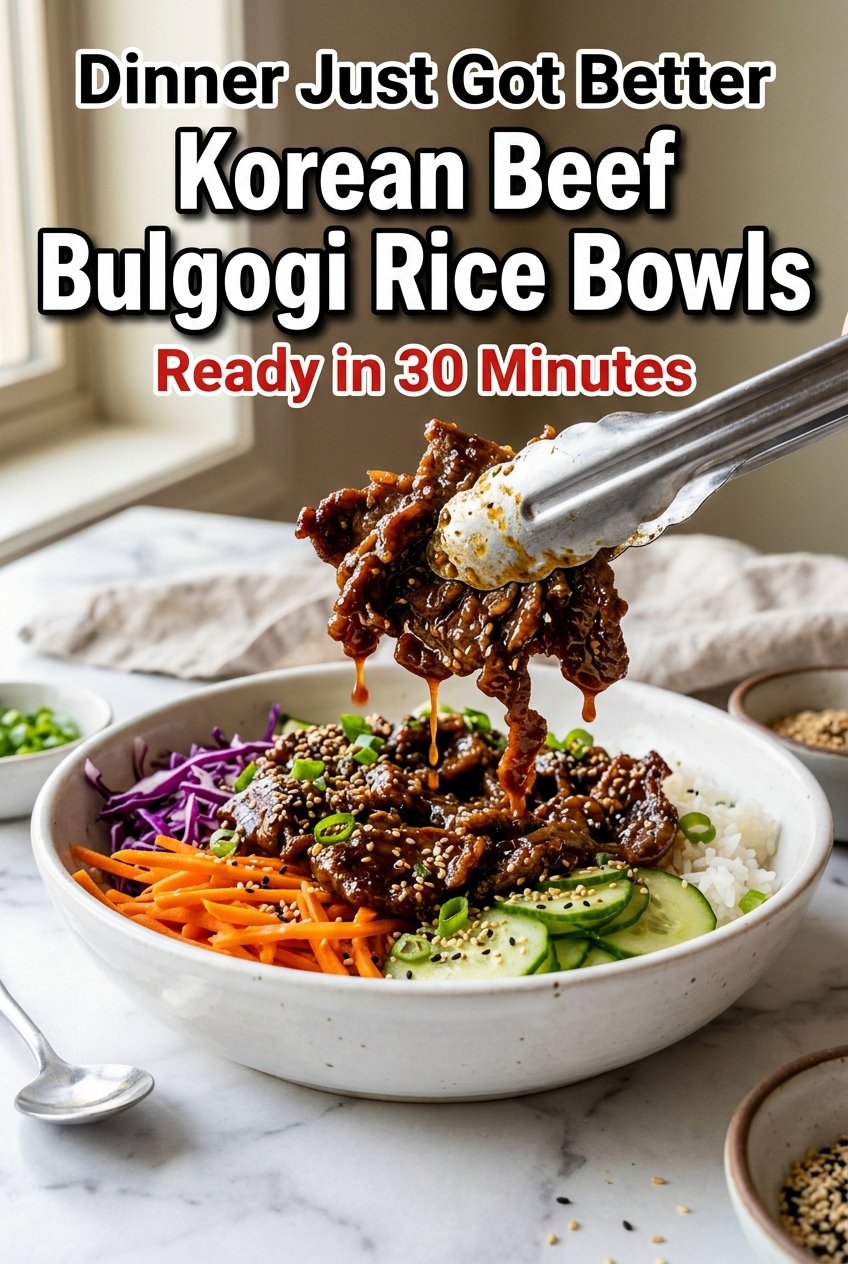
Korean Beef Bulgogi Rice Bowls
Ingredients
Equipment
Method
- In a large bowl, whisk together soy sauce, sesame oil, brown sugar, gochujang, rice wine vinegar, minced garlic, grated ginger, sliced green onions, and black pepper until the sugar is fully dissolved.
- Add the thinly sliced beef to the marinade and toss well to coat every piece.
- Cover and refrigerate for at least 20 minutes, up to 2 hours for deeper flavor.
- In a small bowl, whisk together gochujang, honey, rice wine vinegar, sesame oil, and warm water until smooth.
- Taste and adjust honey or vinegar to your liking, then set aside.
- Cook the rice according to package instructions, then keep it warm with the lid on.
- Heat a large cast iron skillet over high heat until very hot.
- Add a thin layer of neutral oil to the skillet.
- Working in batches (don’t overcrowd), sear the marinated beef slices for 1–2 minutes per side until caramelized and glossy, with edges charred slightly.
- Pour any remaining marinade into the pan with the last batch and let it reduce and coat the beef for 30 seconds.
- Divide warm rice into bowls.
- Top each bowl with shredded purple cabbage, julienned carrots, and cucumber slices.
- Add the seared bulgogi beef on top.
- Drizzle the gochujang sauce generously over the top.
- Finish with sliced green onions, toasted sesame seeds, and a light drizzle of sesame oil.
- Serve immediately while the beef is hot and the rice is steaming.
