Ingredients
Equipment
Method
Make the marinade & marinate the beef
- In a large bowl, whisk together soy sauce, sesame oil, brown sugar, gochujang, rice wine vinegar, minced garlic, grated ginger, sliced green onions, and black pepper until the sugar is fully dissolved.
- Add the thinly sliced beef to the marinade and toss well to coat every piece.
- Cover and refrigerate for at least 20 minutes, up to 2 hours for deeper flavor.
Mix the gochujang drizzle sauce
- In a small bowl, whisk together gochujang, honey, rice wine vinegar, sesame oil, and warm water until smooth.
- Taste and adjust honey or vinegar to your liking, then set aside.
Cook the rice
- Cook the rice according to package instructions, then keep it warm with the lid on.
Sear the bulgogi beef
- Heat a large cast iron skillet over high heat until very hot.
- Add a thin layer of neutral oil to the skillet.
- Working in batches (don’t overcrowd), sear the marinated beef slices for 1–2 minutes per side until caramelized and glossy, with edges charred slightly.
- Pour any remaining marinade into the pan with the last batch and let it reduce and coat the beef for 30 seconds.
Assemble & serve
- Divide warm rice into bowls.
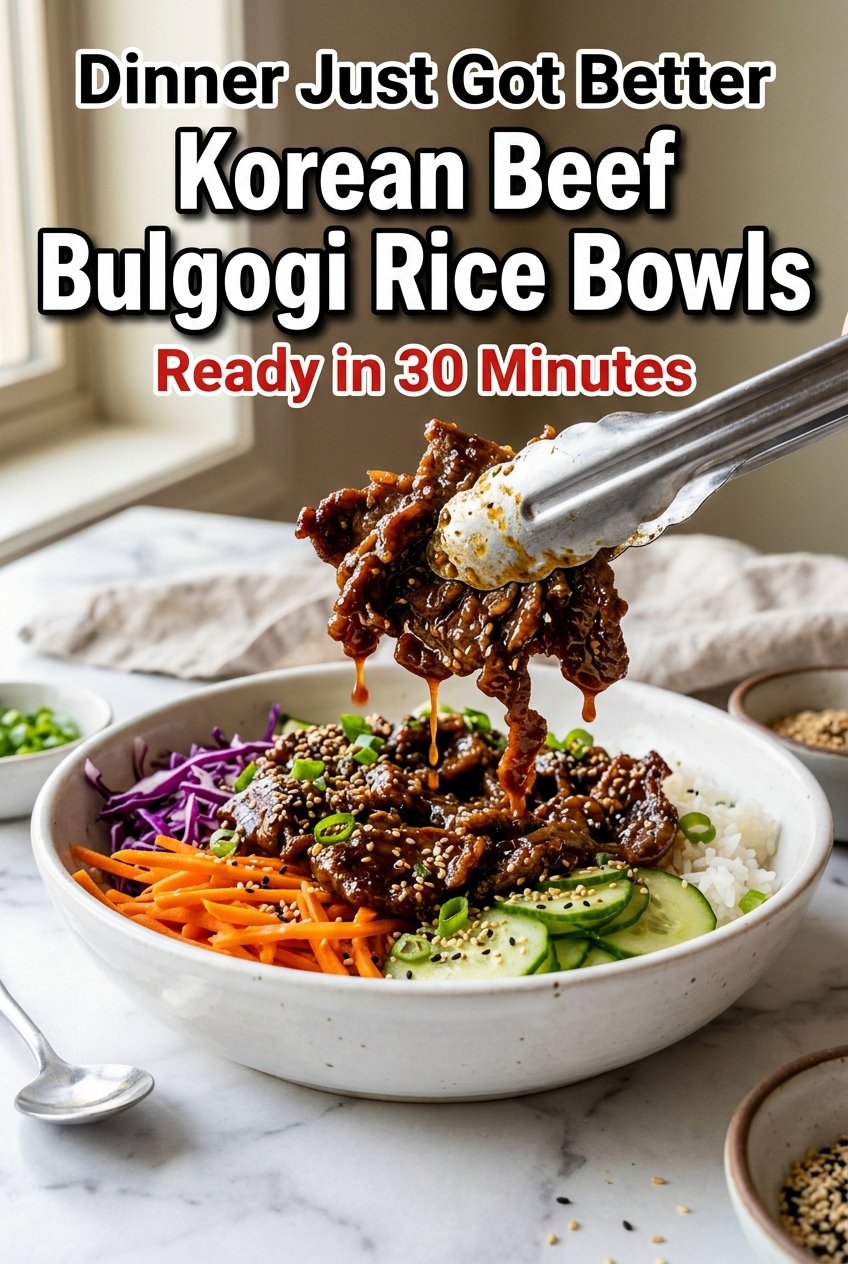
- Top each bowl with shredded purple cabbage, julienned carrots, and cucumber slices.
- Add the seared bulgogi beef on top.
- Drizzle the gochujang sauce generously over the top.
- Finish with sliced green onions, toasted sesame seeds, and a light drizzle of sesame oil.
- Serve immediately while the beef is hot and the rice is steaming.
Notes
Pro tip: slice the beef thinly against the grain so it stays tender after fast searing, and don’t overcrowd the pan—batches help you get glossy caramelization. Refrigerate leftovers in a sealed container up to 3 days; reheat beef and rice separately for best texture (up to 3–4 days total). Freezing: freeze cooked beef only for up to 2 months, then rewarm gently. Dietary swap: use tamari (gluten-free soy sauce) to make the marinade and drizzle gluten-free.