
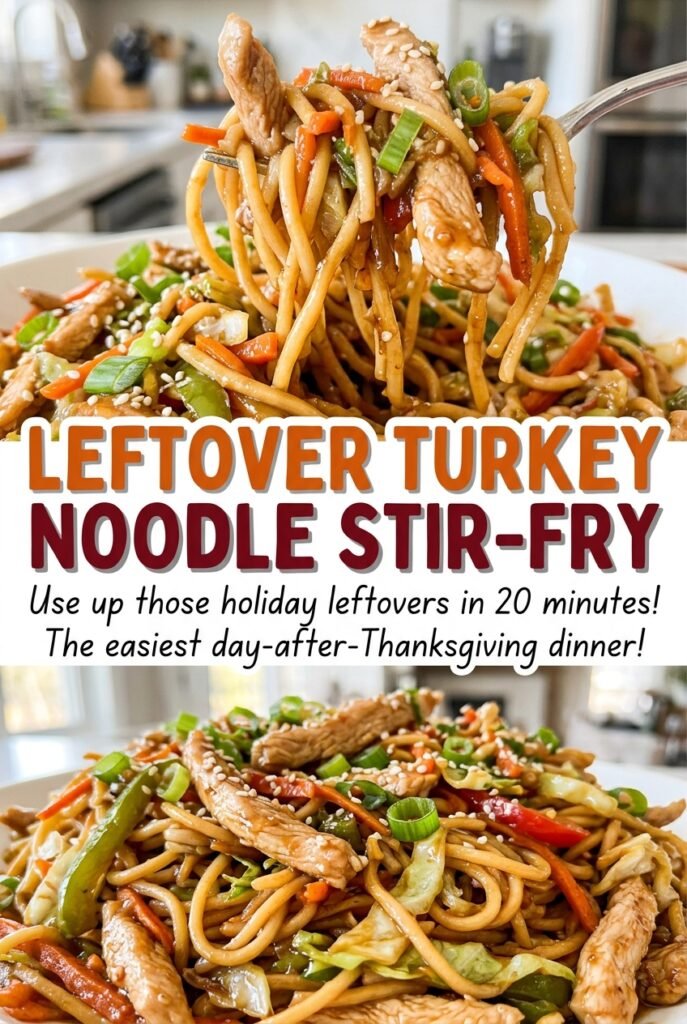
Leftover Turkey Noodle Stir-Fry
The first toss is where this stir-fry comes together: the sauce goes from thin to glossy as it coats the hot noodles and turkey. Leftover Turkey Noodle Stir-Fry turns cooked…
Tip: save now, read later.
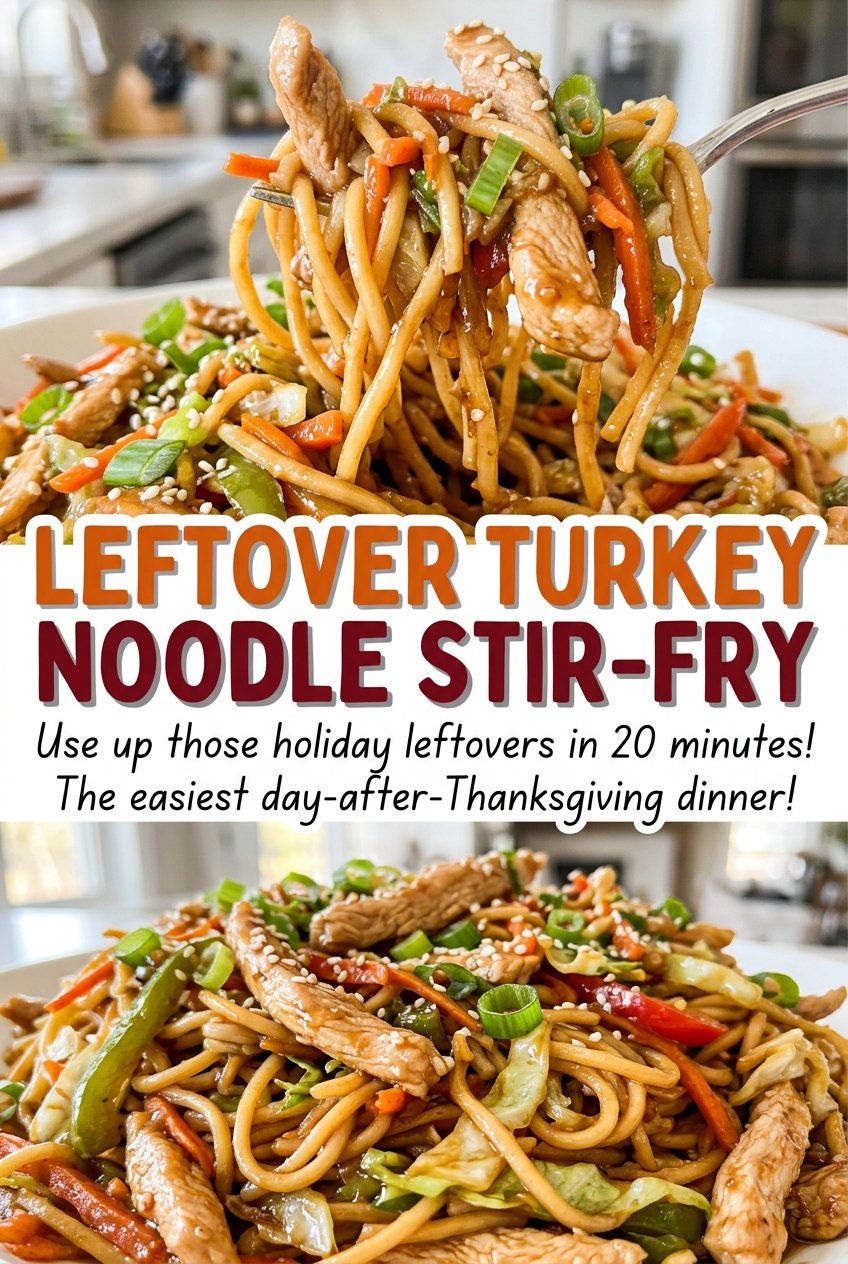
The first toss is where this stir-fry comes together: the sauce goes from thin to glossy as it coats the hot noodles and turkey. Leftover Turkey Noodle Stir-Fry turns cooked turkey into a full skillet meal, with crisp-tender vegetables and familiar lo mein noodles carrying a sweet-savory sauce. It’s a useful way to make the most of turkey without serving the same plate twice.
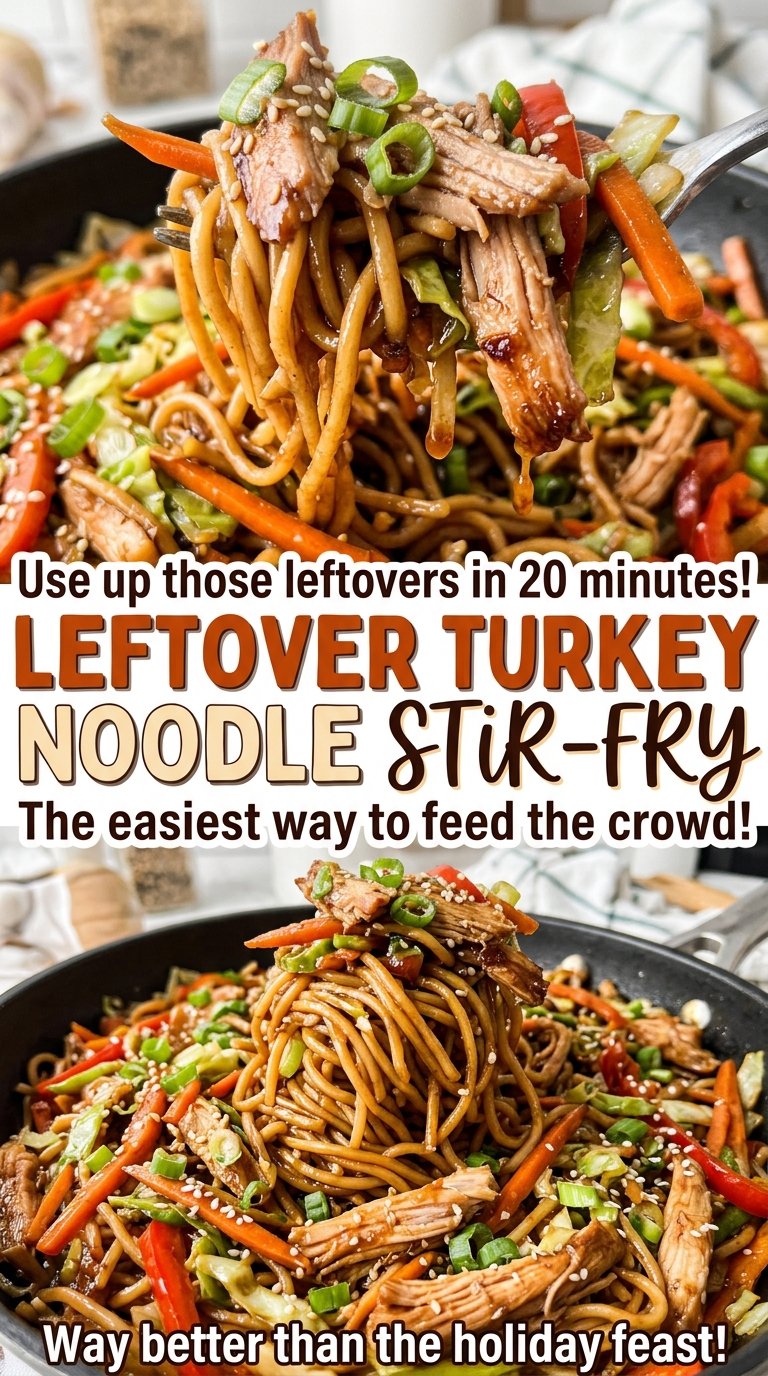
I like that the vegetables stay in the pan just long enough to soften at the edges but keep some bite. The turkey is already cooked, so it only needs time in the sauce to heat through; the noodles and vegetables do the rest of the work. A little fresh ginger and garlic make the whole skillet smell lively, and scallion greens stirred in at the end keep the finish bright. Each forkful has tender noodles, juicy turkey, and a bit of crunch.
Kitchen Note
Add the scallion greens after you take the skillet off the heat. They stay fresh and lightly crisp instead of wilting into the noodles.
Save Leftover Turkey Noodle Stir-Fry for a quick skillet dinner with glossy noodles, crisp cabbage, and a smart use for cooked turkey.
Why the Sauce Thickens in the Skillet, Not in a Separate Pan
This sauce doesn’t need to be cooked down on its own. The cornstarch is whisked into the cool liquid first, then thickens when the sauce reaches the hot skillet. That gives it enough body to cling to the noodles and turkey instead of pooling at the bottom of the plate. Since the turkey is already cooked, the short finish is about warming it through while the sauce comes together.
There are two details that make that quick finish work. First, dissolve the cornstarch before it goes into the pan; dry pockets won’t thicken evenly. Second, have the drained noodles and chopped turkey ready before you pour in the sauce. Once it hits the skillet, toss constantly for three to five minutes. You’ll see the sauce turn from watery to lightly glossy and coat the noodles; stop when the turkey reaches 165°F. If the noodles sit while you’re prepping the other ingredients, they can stick together, so set everything out before you start stir-frying.
What Gives This Turkey Stir-Fry Its Savory-Sweet Balance
- Low-sodium soy sauce — It brings the deep, salty backbone without making the finished sauce too assertive. A standard grocery-store bottle works well. Tamari is the most useful swap when you need a gluten-free option; it keeps a similar savory character.
- Chicken broth — Broth gives the sauce a softer, rounder base than soy sauce alone. A basic carton is fine here, and vegetable broth works as a direct alternative if that’s what you have on hand.
- Rice vinegar — Its gentle acidity cuts through the honey and soy without making the sauce taste sharply sour. Unseasoned rice vinegar is the best fit; apple cider vinegar can stand in, though it tastes a little more pronounced.
- Honey — Honey balances the salty sauce and helps it taste rounded rather than one-note. Maple syrup works in its place and brings a faint woodsy sweetness.
- Cornstarch — This is what gives the sauce its cling. Arrowroot starch can thicken it too, but the finish may look a little clearer and glossier; whichever starch you use, whisk it into the cool sauce before it reaches the skillet.
- Toasted sesame oil — A small amount supplies a nutty aroma that neutral oil can’t copy. Use a fresh bottle if yours smells flat, or leave it out for a milder sauce rather than replacing it with more cooking oil.
- Dried lo mein noodles — Their springy chew stands up to the turkey and vegetables. Buy the package that’s easy to find, and use its cooking directions; dried spaghetti can work if lo mein is unavailable, though the texture will be firmer.
- Neutral oil — Canola is a good choice because it handles the hot skillet without adding a strong flavor. Any neutral cooking oil you already use for stir-frying is suitable.
- Red bell pepper and green cabbage — Together they bring sweetness and crunch, and both are easy to find fresh. Green cabbage holds its texture nicely in the quick cook; slice it thinly so it softens on time.
- Scallions, garlic, and fresh ginger — The scallion whites join the garlic and ginger in the pan for a fragrant base, while the greens make a fresher finish. Fresh garlic and ginger have the clearest aroma here, so mince and grate them just before cooking.
- Cooked turkey — Chopped leftover turkey turns the noodles into a substantial meal. Use pieces of breast or dark meat, and cut them into similar-sized bites so they warm evenly in the sauce.
How to Keep the Noodles Coated and the Cabbage Crisp
Whisk the Sauce Until Smooth
Combine the soy sauce, chicken broth, rice vinegar, honey, cornstarch, and toasted sesame oil in a small bowl. Whisk until you can’t see any dry cornstarch at the bottom or along the sides. The sauce will still be thin at this point; it thickens in the skillet. Keep the bowl close by so it’s ready when the noodles and turkey go in.
Cook and Drain the Lo Mein
Cook the dried noodles according to the package directions, then drain them well. Check the texture before draining: the noodles should be cooked through but still have enough chew to hold up when tossed with the sauce. Leave them ready beside the stove. If they’re left sitting for a long stretch, they’re more likely to clump.
Stir-Fry the Vegetables, Then the Aromatics
Heat the neutral oil in a 12-inch skillet over medium-high heat. Add the thinly sliced bell pepper and cabbage, and stir-fry for three to four minutes, until the vegetables are crisp-tender rather than limp. Add the scallion whites, minced garlic, and grated ginger, then stir for 30 seconds. The garlic and ginger should smell fragrant; don’t leave them sitting in one spot long enough to scorch.
Toss Until the Sauce Clings
Add the chopped turkey, drained noodles, and prepared sauce to the skillet. Toss constantly for three to five minutes, lifting and turning the noodles so the sauce reaches everything and the turkey heats evenly. The sauce should thicken and coat the noodles rather than run freely across the pan. Take the skillet off the heat and toss in the scallion greens.
Three Practical Swaps for Leftover Turkey Noodle Stir-Fry
Make It Gluten-Free
Use rice noodles in place of the lo mein, tamari instead of soy sauce, and gluten-free chicken broth. Cook the rice noodles according to their package directions and drain them well; they’ll be softer and less springy than wheat noodles, so toss gently as the sauce thickens.
Use Cooked Chicken Instead
Chopped cooked chicken can take the place of the turkey in the same way. Breast meat keeps the stir-fry lean, while thigh meat gives it a richer bite; either works as long as it’s already cooked before it goes into the skillet.
Sweeten It with Maple
Swap the honey for maple syrup if that’s what’s in your pantry. The sauce keeps its balance, with a slightly deeper sweetness and a faint maple note; whisk it into the other sauce ingredients before adding the cornstarch mixture to the skillet.
Storage and Reheating
- Refrigerator: Refrigerate within two hours and keep for three to four days. The noodles soften as they absorb some of the sauce.
- Freezer: Freeze airtight in individual portions for up to two months. Thaw in the refrigerator overnight; the cabbage and noodles will be softer after thawing.
- Reheating: Warm in a skillet over medium-low heat with a small splash of chicken broth, tossing until hot throughout. Avoid high heat or a long reheat, which can make the noodles soft and sticky.
Questions That Come Up When Stir-Frying Leftover Turkey
Leftover Turkey Noodle Stir-Fry
Ingredients
Equipment
Method
- Whisk the soy sauce, chicken broth, rice vinegar, honey, cornstarch, and sesame oil in a small bowl until the cornstarch is dissolved.
- Cook the lo mein noodles according to the package directions, then drain them.
- Heat the oil in a 12-inch skillet over medium-high heat, then add the bell pepper and cabbage and stir-fry for 3 to 4 minutes, until crisp-tender.
- Add the scallion whites, garlic, and ginger and stir-fry for 30 seconds, until fragrant.
- Add the turkey, drained noodles, and sauce, then toss constantly for 3 to 5 minutes, until the sauce thickens and the turkey reaches 165°F.
- Remove the skillet from the heat and toss in the scallion greens.
