
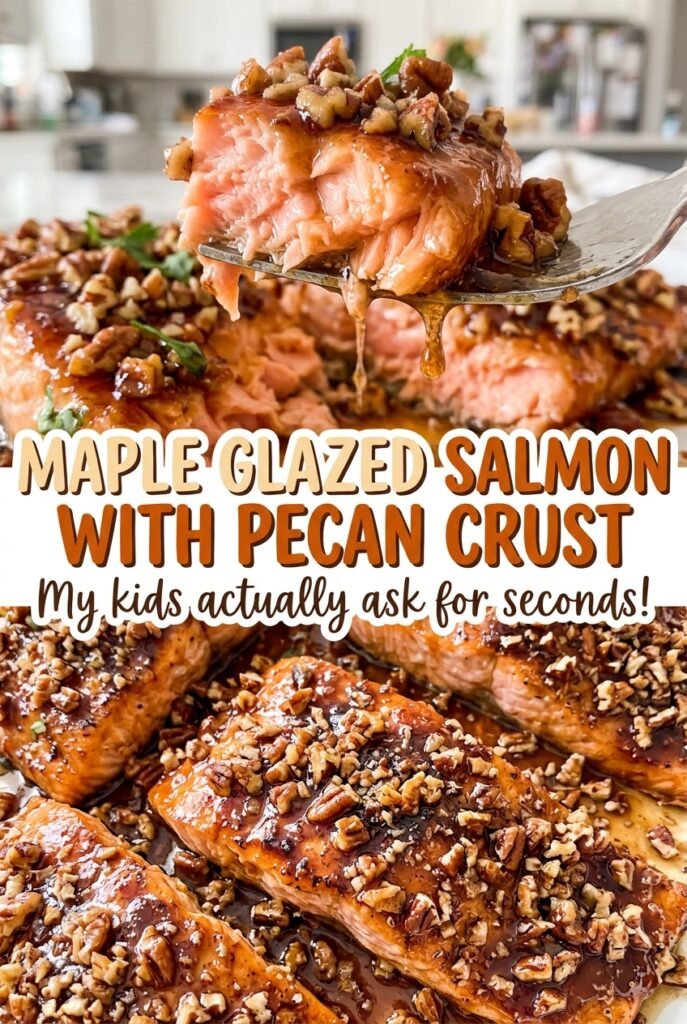
Maple Glazed Salmon with Pecan Crust
As the pecan topping turns golden in the oven, the maple glaze underneath gets glossy and the salmon stays tender. That contrast is what I wanted from Maple Glazed Salmon…
Tip: save now, read later.
As the pecan topping turns golden in the oven, the maple glaze underneath gets glossy and the salmon stays tender. That contrast is what I wanted from Maple Glazed Salmon with Pecan Crust: a sweet-savory coating with enough crunch to make each fillet feel special, without a separate sauce to fuss over at the table.
The method is straightforward, but the order matters. I brush the glaze onto the salmon first so the buttery pecan-and-panko mixture has something to cling to, then bake everything on one parchment-lined pan. Dijon and lemon keep the maple from tasting too sweet, while the crust gives the fish a crisp, toasted top. It’s a good recipe to keep in mind when you want salmon with a little more texture and a short, manageable prep.
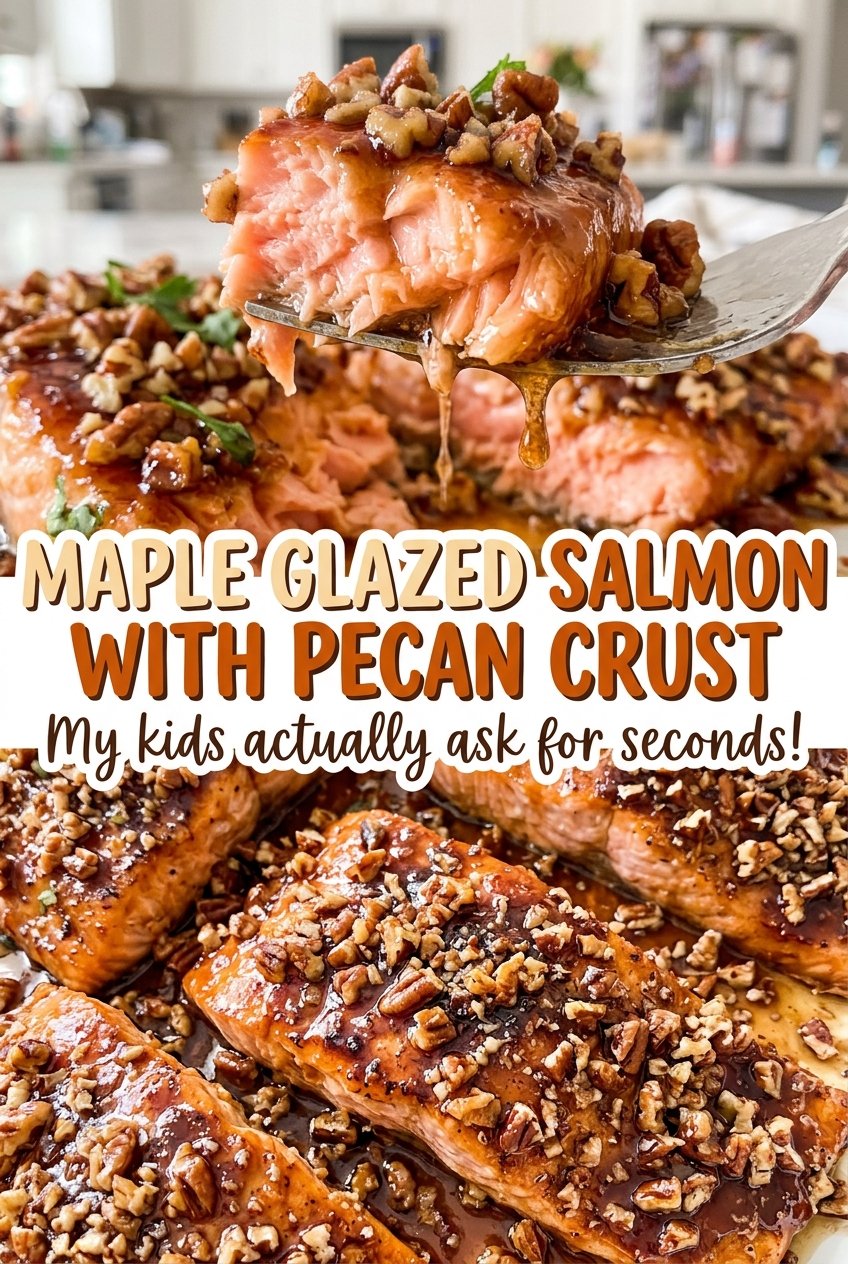
Kitchen Note
Let the salmon rest on the baking sheet for the full 3 minutes before you move it. The topping settles against the glaze, and the fillets are easier to lift without scattering the crust.
Save this maple glazed salmon with pecan crust for a weeknight when you want tender fish and a crisp, sweet-savory topping.
Why the Maple Glaze Needs Both Dijon and Lemon
Maple syrup brings sweetness and helps the surface brown, but on its own it can make a fish topping taste more like dessert than dinner. Dijon adds a sharp, savory edge that keeps the sweetness in check. Lemon juice gives the glaze a little lift, so it doesn’t sit heavily against the rich salmon and buttery crust.
Those ingredients also do different jobs as the salmon bakes. The glaze gives the chopped pecans and panko a sticky layer to hold onto, while its sweetness complements the toasted nuts. Keep the glaze balanced rather than adding extra syrup: too much sweetness can take over the mild flavor of the fish. A quick whisk is all it needs; you’re looking for a smooth mixture with no streaks of mustard before brushing it over the fillets.
What the Pecans, Panko, and Maple Each Bring to the Crust
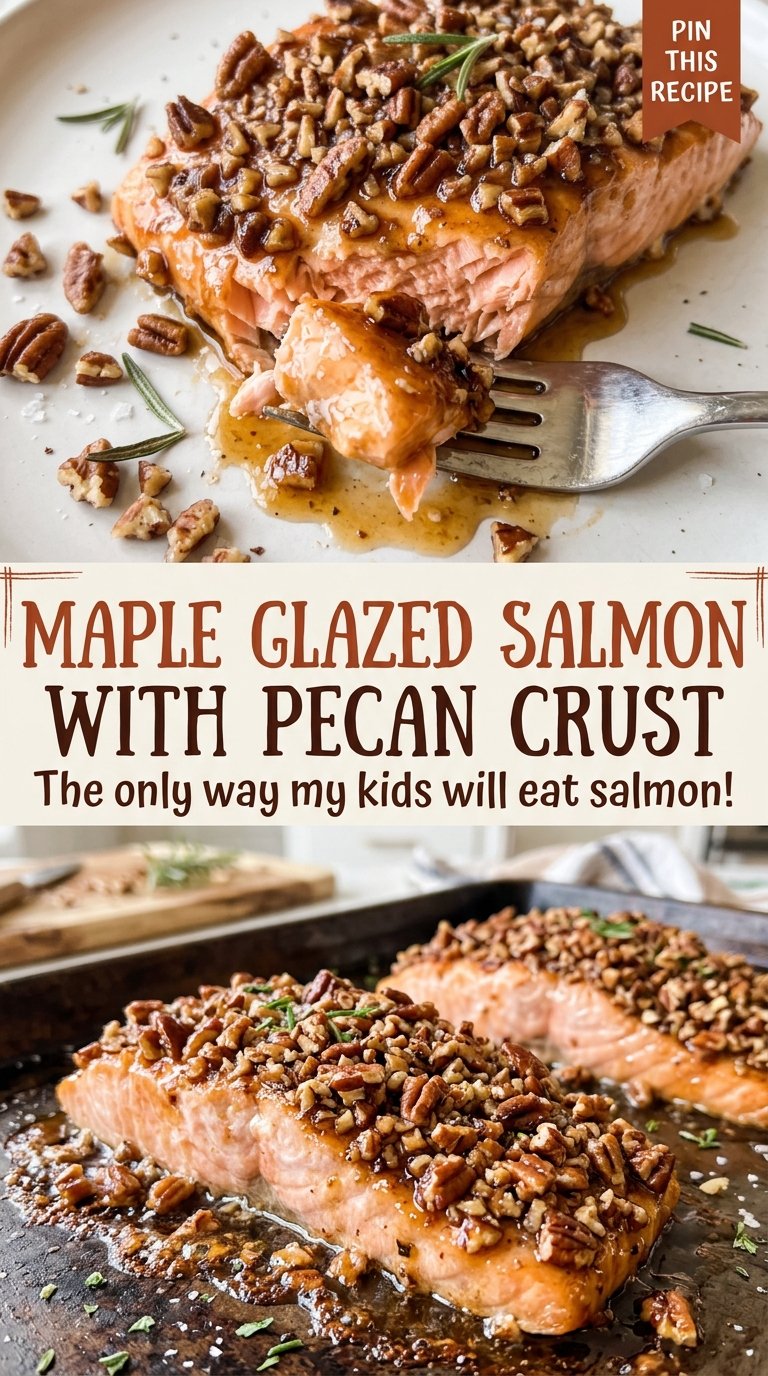
- Pecans — Finely chopped pecans give the crust its nutty flavor and toasted crunch. Fresh pecans matter here because stale nuts can taste flat; if you need a substitution, chopped walnuts work in the same amount, though their flavor is earthier and less buttery.
- Panko breadcrumbs — Panko keeps the topping lighter and more crisp than a fine, dense breadcrumb. For a gluten-free version, use gluten-free panko in the same amount; the crust keeps its airy crunch, though the exact browning can vary by brand.
- Pure maple syrup — Use real maple syrup rather than pancake syrup, which is usually sweeter and thicker and can make the glaze taste different. Grade or color is less important than choosing a maple syrup you enjoy; its flavor comes through clearly in the finished coating.
- Dijon mustard and lemon juice — Dijon contributes a savory tang, and lemon keeps the glaze bright. Bottled lemon juice works in a pinch, though fresh juice tends to taste cleaner; yellow mustard is milder and sweeter, so it won’t give the same sharp balance.
- Unsalted butter — Melted butter coats the pecans and panko so they toast together instead of staying dry and crumbly. A standard store-brand butter works well; there’s no need for a specialty butter in this crust.
- Skinless salmon fillets — Choose fillets that are similar in size so they cook at roughly the same pace. Since the topping goes on the exposed surface, skinless fillets let you season and coat each piece without adjusting how it sits on the pan.
How to Layer the Glaze and Pecan Crust Before Baking
Whisk a Smooth, Balanced Glaze
Whisk the maple syrup, Dijon mustard, and lemon juice together in a small bowl until the mixture looks even. The mustard should be fully blended through the syrup, not sitting in little streaks. Set the bowl aside while you prepare the crust. A smooth glaze brushes over the salmon more evenly than one that hasn’t been combined.
Moisten the Pecan-Panko Mixture
Stir the finely chopped pecans and panko with the melted butter in a medium bowl. Keep stirring until the crumbs are evenly moistened, with no dry pockets of panko hiding underneath. The mixture should look crumbly rather than like a paste. That even coating helps the topping toast across the surface.
Season and Coat the Fillets
Heat the oven to 400°F and line a rimmed baking sheet with parchment paper. Arrange the skinless fillets on the pan, then season them evenly with kosher salt and black pepper. Brush maple glaze over the tops, then press the pecan mixture onto the glazed surfaces so it covers each fillet. Don’t pile all the crumbs in the center; spread them over the top for more even browning.
Bake Until the Crust Is Golden
Bake for 12 to 15 minutes, watching for a golden pecan topping and checking the thickest part of each fillet for 145°F. Fillets can vary in thickness, so use the temperature as your doneness check rather than relying on color alone. The topping should look toasted, not pale, when the salmon is ready. Let the fish rest on the baking sheet for 3 minutes before serving.
Two Easy Ways to Adapt the Pecan Crust
Make the Crust Gluten-Free
Replace the regular panko with the same amount of gluten-free panko. Keep the pecans and melted butter unchanged, then mix and press the topping on the same way; the result is still crisp, though the crumbs may brown a little differently.
Trade the Pecans for Walnuts
Use an equal amount of finely chopped walnuts in place of the pecans. They toast into a sturdy crust but bring a slightly earthier, less sweet nut flavor, which works especially well with the maple and Dijon.
Storage and Reheating
- Refrigerator: Refrigerate leftovers within 2 hours and keep them covered for 3 to 4 days. The pecan crust softens in storage, while the salmon stays flavorful.
- Freezer: Freeze cooked portions in an airtight container for up to 2 to 3 months. The salmon freezes well, but the crust loses some crunch after thawing.
- Reheating: Warm covered in a 275°F oven until heated through, checking that leftovers reach 165°F. Gentle heat helps keep the fish moist; high heat can dry the salmon before the center warms.
Questions That Come Up When Baking Salmon with a Nut Crust
Maple Glazed Salmon with Pecan Crust
Ingredients
Equipment
Method
- Whisk the pure maple syrup, Dijon mustard, and lemon juice in a small bowl until combined.
- Stir the finely chopped pecans, panko breadcrumbs, and melted unsalted butter together in a medium bowl until the crumbs are evenly moistened.
- Heat the oven to 400°F.
- Line a rimmed baking sheet with parchment paper.
- Arrange the skinless salmon fillets on the prepared baking sheet.
- Season the fillets evenly with the kosher salt and black pepper.
- Brush the tops of the fillets with the maple glaze.
- Press the pecan mixture onto the glazed tops.
- Bake for 12 to 15 minutes, until the pecan topping is golden and the thickest part of each fillet reaches 145°F.
- Let the salmon rest on the baking sheet for 3 minutes before serving.
