
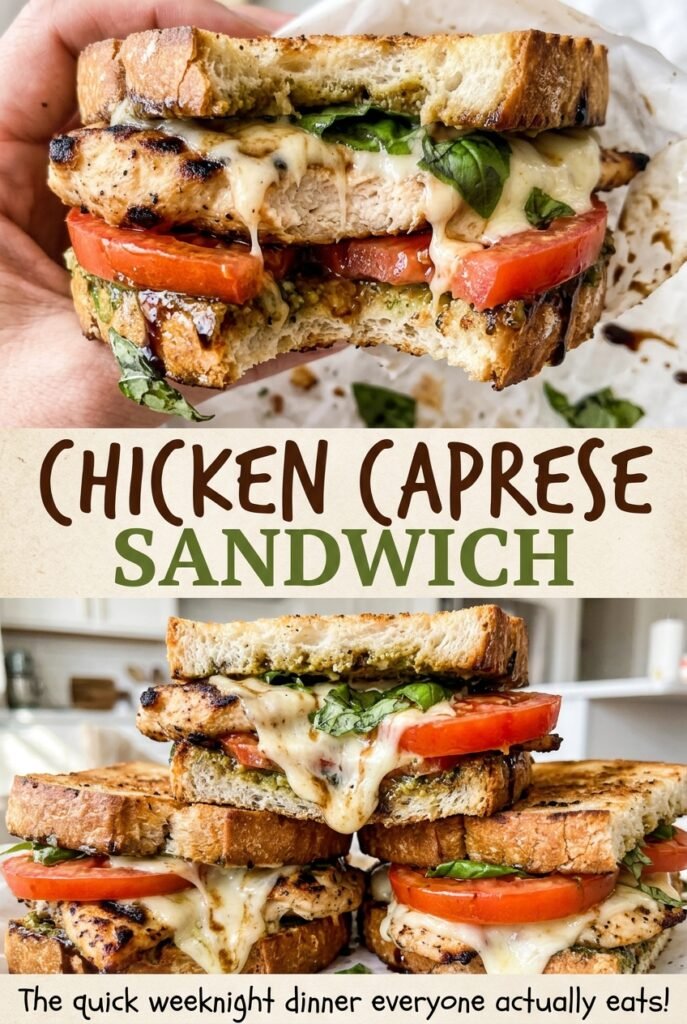
Chicken Caprese Sandwich
The mozzarella goes from firm slices to soft, glossy layers under the skillet lid, and that quick melt is what makes this sandwich feel pulled together. I keep the chicken…
Tip: save now, read later.
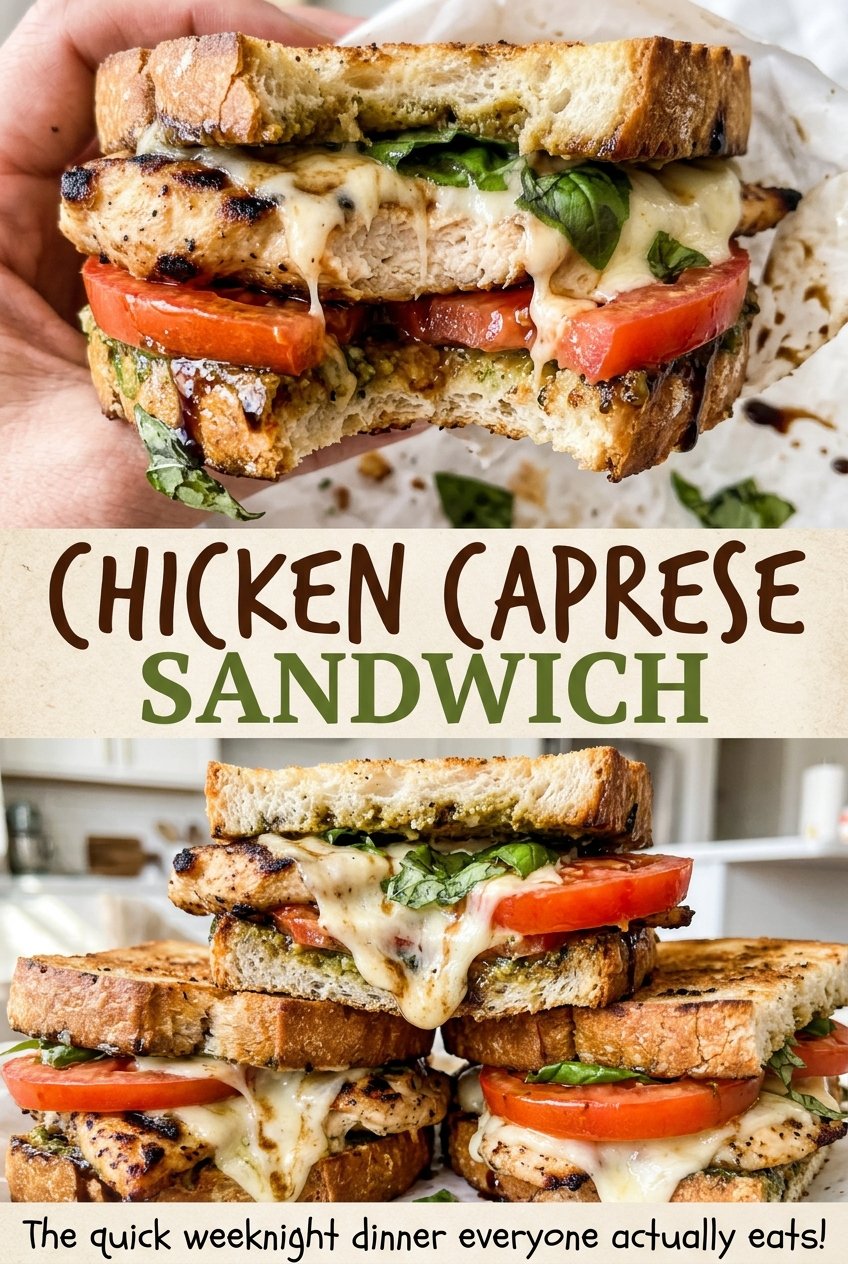
The mozzarella goes from firm slices to soft, glossy layers under the skillet lid, and that quick melt is what makes this sandwich feel pulled together. I keep the chicken cutlets about a half inch thick so they cook quickly and sit neatly on the rolls. These Chicken Caprese Sandwiches bring together juicy chicken, ripe tomato, fresh basil, and balsamic glaze on ciabatta that’s toasted right in the same skillet.
Cooking the chicken in two batches gives each cutlet room in the pan instead of crowding them together. The mozzarella gets its own brief covered moment, then the rolls go cut-side down in the olive oil left behind. That order keeps the bread golden and gives every bite a warm, tender center with a little crispness underneath.
Kitchen Note
Fresh mozzarella turns soft and glossy under the lid; it doesn’t need to bubble or brown. If you wait for browned cheese, the cutlets will spend too long in the hot skillet.
Save these Chicken Caprese Sandwiches for a fresh, skillet-toasted lunch with tender chicken, melted mozzarella, and balsamic glaze.
Why Half-Inch Cutlets Make a Better Sandwich
A thick, whole chicken breast is awkward between ciabatta halves: it takes longer to cook through, and the bread-to-chicken balance can feel off. Cutlets about a half inch thick cook in the short skillet window this sandwich needs, so the chicken stays easy to bite through rather than pushing the toppings out with every bite.
Even thickness matters more than getting a deep sear here. Thin spots can dry out before thicker parts reach the right temperature, so start with cutlets of a similar thickness. If the package contains larger chicken breasts instead, slice them horizontally into cutlets before seasoning. The pieces will cook more evenly and fit the rolls without needing extra time in the pan.
There’s also a practical advantage to the quick cook: the chicken can go straight from skillet to sandwich while it’s warm. The tomato and basil stay fresh and cool against the melted mozzarella, rather than turning into a cooked topping. That contrast is what keeps each bite feeling like a Caprese sandwich instead of a hot chicken roll with toppings.
What Fresh Mozzarella, Basil, and Glaze Bring to the Sandwich
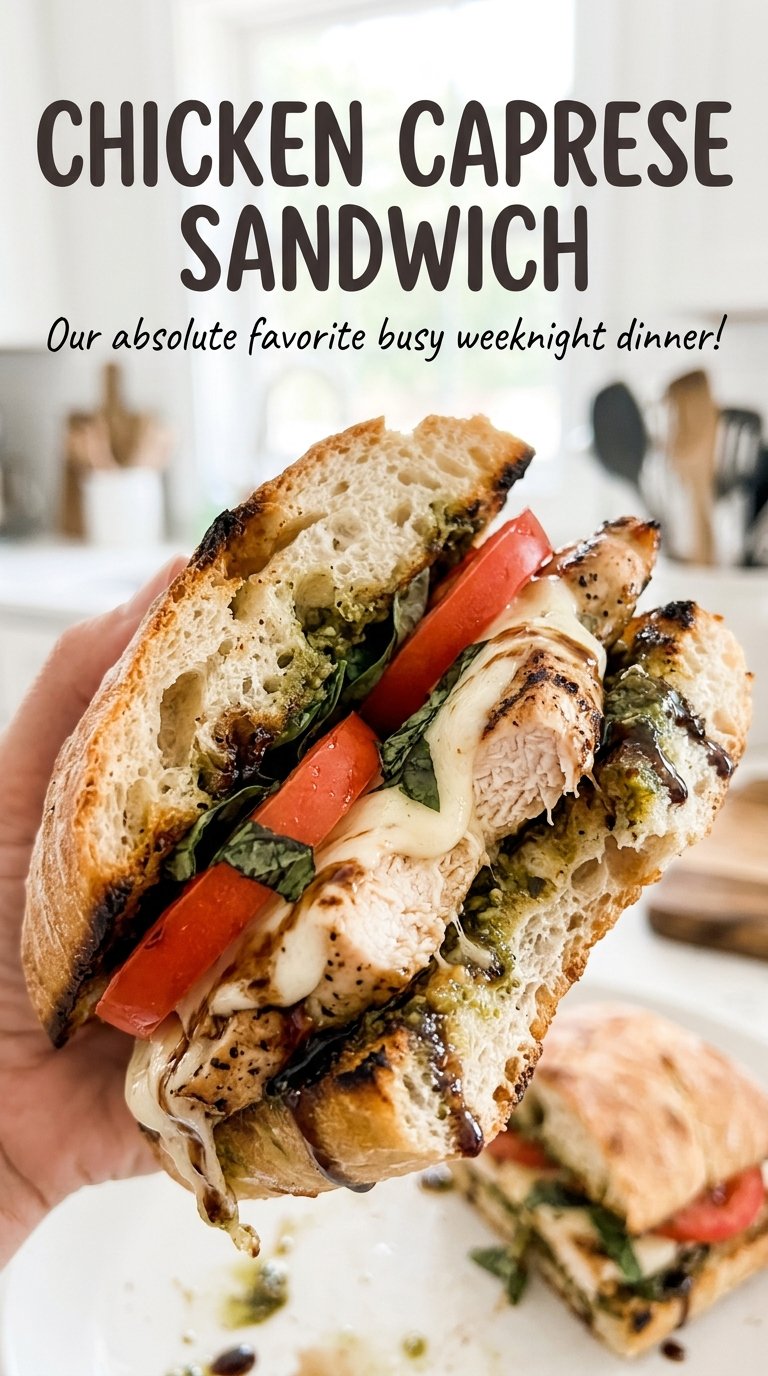
- Chicken breast cutlets — Cutlets of a similar thickness are the best fit for this quick skillet method. If you’re cutting them from whole chicken breasts, slice horizontally to about a half inch so they cook evenly; uneven pieces can leave you with dry thin edges and a thicker center.
- Fresh mozzarella — Sliced fresh mozzarella gives the sandwich a tender, milky layer that melts softly over the chicken. If you can’t find it, sliced low-moisture mozzarella works in its place, though it melts into a firmer, less delicate topping. Fresh mozzarella’s moisture varies by brand, so keep the slices on the chicken rather than letting them sit directly on the bread.
- Ciabatta rolls — Their open, sturdy crumb holds the chicken and tomato while the cut sides toast to a crisp edge. A gluten-free ciabatta-style roll is the closest dietary swap; choose a sturdy one because some gluten-free rolls are more fragile once warmed.
- Tomatoes — Choose ripe tomatoes that still feel firm enough to slice cleanly. Very soft tomatoes release more juice, which can make the bread damp before you finish eating.
- Fresh basil — Fresh leaves bring a fragrant, peppery note that dried basil can’t reproduce in this uncooked topping. Keep the leaves whole so they stay bright and easy to taste against the tomato.
- Balsamic glaze — Glaze clings to the toppings and adds a sweet-tart finish without running freely through the bread. Regular balsamic vinegar is much thinner, so it isn’t a one-for-one replacement here.
- Italian seasoning and olive oil — The seasoning gives the chicken a savory, herb-forward base, while the divided olive oil cooks the cutlets and then toasts the rolls. No specialty oil is needed; use a good everyday olive oil.
From Skillet-Seared Chicken to Crisp Ciabatta
Season Cutlets That Are Dry to the Touch
Pat the chicken dry before seasoning both sides with kosher salt, black pepper, and Italian seasoning. A dry surface helps the seasoning stay put and gives the chicken a better chance to brown in the skillet. Keep similarly thick pieces together so they cook at a similar pace. Set the seasoned cutlets near the stove before heating the pan.
Cook the Chicken in Two Batches
Heat one tablespoon of olive oil in a 12-inch skillet over medium-high heat. Cook the chicken in two batches for 4 to 5 minutes per side, checking the thickest part of a cutlet for 165°F. Don’t crowd the skillet; room around the pieces helps them cook evenly instead of releasing moisture into a packed pan. Top each batch with mozzarella, cover the skillet for 1 to 2 minutes until the cheese melts, then transfer the chicken to a plate.
Toast the Cut Sides in the Remaining Oil
Add the remaining tablespoon of olive oil to the skillet, keeping the browned bits in place. Set the rolls cut-side down in batches and toast them for 1 to 2 minutes, until their cut faces are golden. Watch closely near the end, since the bread can go from toasted to too dark quickly in a hot skillet. A golden face gives the toppings a sturdy, crisp base.
Layer the Fresh Toppings Last
Place one piece of chicken on each roll, then add tomato slices and fresh basil leaves. Drizzle the balsamic glaze over the top so it reaches the chicken and tomato without soaking the bread. Serve the sandwiches once assembled, while the chicken is warm and the toasted rolls still have their crisp edges. The fresh toppings need no cooking in the skillet.
Two Useful Ways to Adapt the Sandwich
Make It Gluten-Free with Gluten-Free Ciabatta Rolls
Replace the ciabatta rolls with four sturdy gluten-free ciabatta-style rolls and use the same cut-side-down skillet toast. The filling stays the same, while the bread may be a little more delicate, so lift the rolls carefully when you assemble the sandwiches.
Serve It Open-Faced
Use one toasted half of each roll as the base and layer the chicken, tomato, basil, and glaze over it. You’ll keep the same toppings and flavors but have less bread in each serving; eat it with a fork and knife so the warm chicken doesn’t slide off.
Storage and Reheating
- Refrigerator: Refrigerate leftover chicken within 2 hours and use it within 3 to 4 days. Store it apart from the rolls and fresh toppings so the bread doesn’t turn soggy.
- Freezer: Freeze cooked chicken in an airtight freezer-safe container for up to 2 to 3 months. Freeze the chicken without the tomato, basil, rolls, or assembled sandwich; those fresh components lose their texture when thawed.
- Reheating: Reheat the chicken separately in a skillet or microwave until it reaches 165°F, then build the sandwich with fresh toppings. Reheating the assembled sandwich tends to soften the ciabatta and warm the basil and tomato.
Questions That Come Up Before the First Bite
Chicken Caprese Sandwich
Ingredients
Equipment
Method
- Pat the chicken dry and season both sides with the salt, pepper, and Italian seasoning.
- Heat 1 tablespoon of the olive oil in a 12-inch skillet over medium-high heat.
- Cook the chicken in two batches for 4 to 5 minutes per side, until the thickest part reaches 165°F.
- Top each batch with mozzarella, cover for 1 to 2 minutes until melted, then transfer to a plate.
- Add the remaining 1 tablespoon olive oil to the skillet and toast the rolls cut-side down in batches for 1 to 2 minutes, until golden.
- Place a piece of chicken on each roll and top with tomato slices, basil leaves, and balsamic glaze.
