
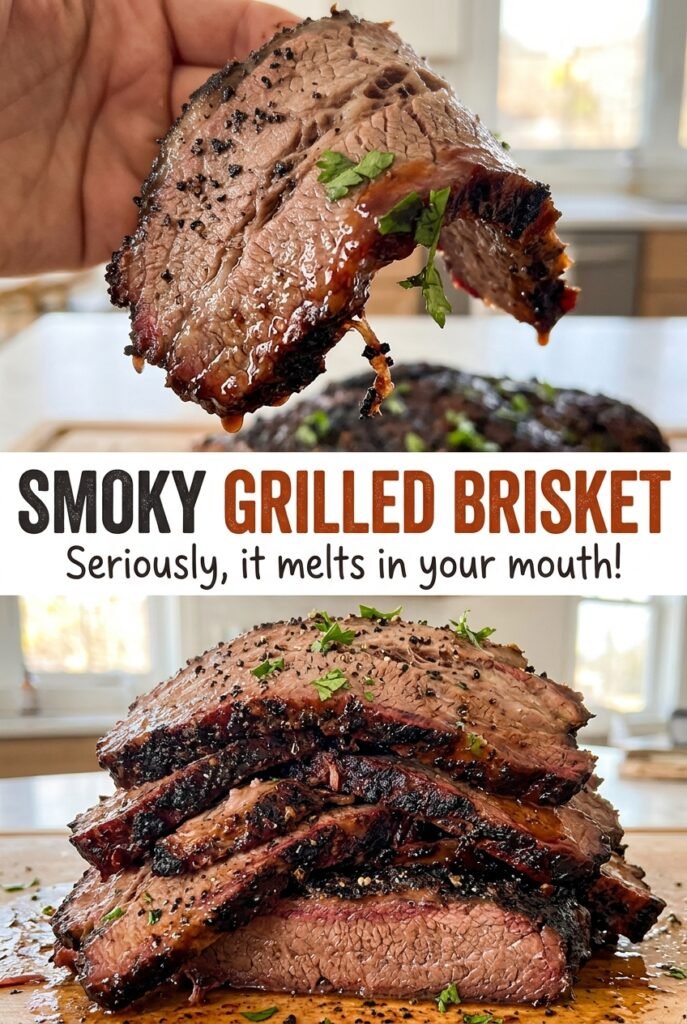
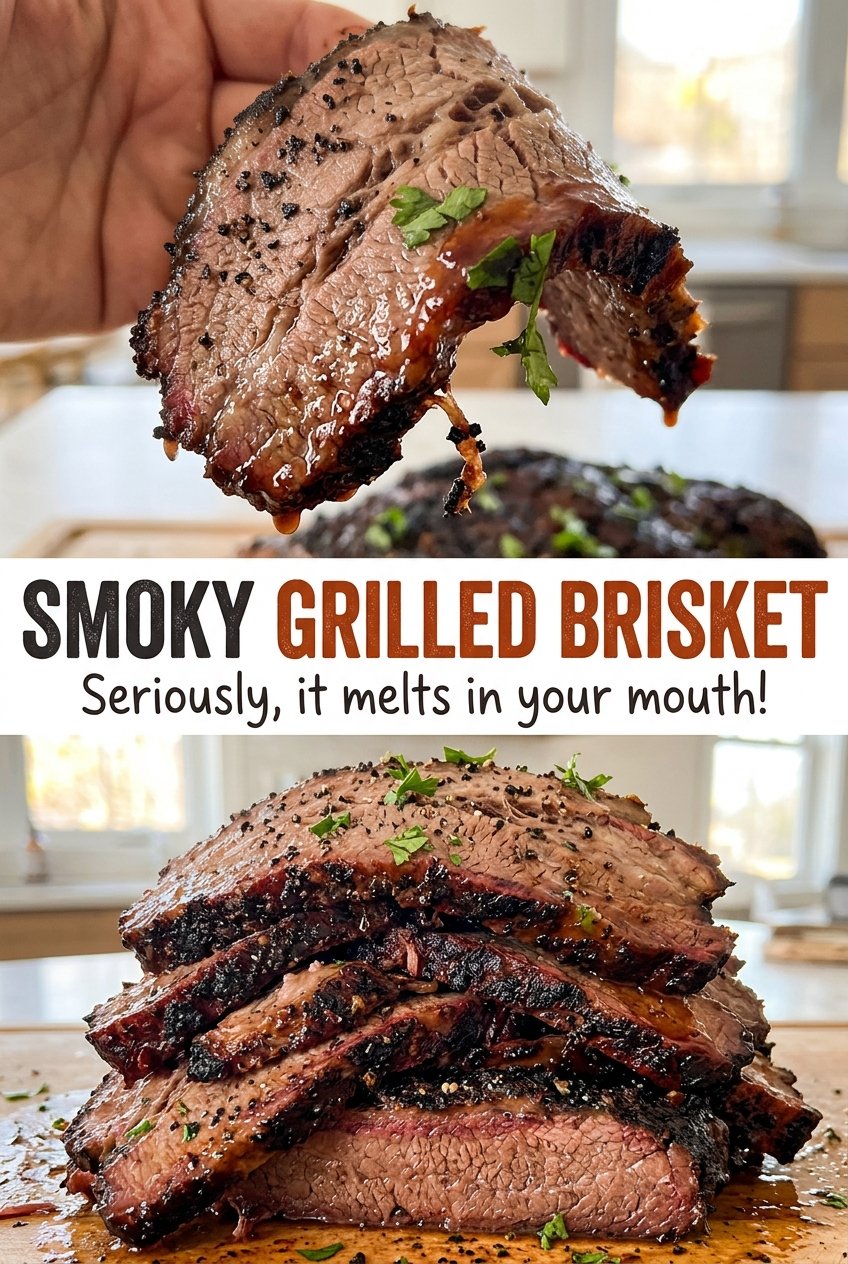
Smoky Grilled Brisket
The grill can be holding steady while the brisket seems to do nothing at all; then the surface darkens and the temperature starts climbing again. That slow middle stretch is…
Tip: save now, read later.
The grill can be holding steady while the brisket seems to do nothing at all; then the surface darkens and the temperature starts climbing again. That slow middle stretch is where I used to watch the clock too closely. With this smoky grilled brisket, the bark and thermometer—not a fixed hour—tell me when to wrap the flat, so it gets time in the smoke without staying exposed until it dries out.
I keep the setup straightforward: a 22-inch charcoal grill, coals on one side, and a drip pan on the other. The fat cap stays at a quarter inch, and the rub brings coarse pepper forward with smoked paprika and garlic powder behind the salt. Once the bark is dark and the thickest part reaches 165°F to 175°F, two layers of heavy-duty foil carry the brisket through the final stretch. After its wrapped rest, this 4- to 5-pound flat slices across the grain into six servings with a smoky crust and tender center.
Kitchen Note
Put the lid vent over the brisket, not over the coals. That placement draws the smoke across the meat on its way out, rather than letting it escape before it reaches the flat.
Save this smoky grilled brisket for its peppery bark, slow charcoal smoke, and tender slices across the grain.
Why the Wrap Starts When the Bark Is Ready, Not When the Clock Says So
A brisket flat is leaner than a whole packer, so keeping it over the coals until it feels tender would leave the outside exposed for a long time. The first cook has a different job: build a dark bark and let smoke settle into the surface. That is why the wrap point uses two cues together. The bark should be dark, and the thickest part should be between 165°F and 175°F.
Time helps you plan, but it can’t tell you exactly when those cues will arrive. Expect the first stage to take about 3 to 5 hours, then check the brisket rather than wrapping just because a certain hour has passed. Foil changes the second stage: the brisket is enclosed instead of exposed to the grill, and it can keep cooking until the center reaches 200°F to 205°F. Temperature gets you close, but tenderness matters too. A probe should slide into the thickest part with little resistance before you take the brisket off to rest.
What the Flat, Pepper Rub, and Smoke Each Bring to the Grill
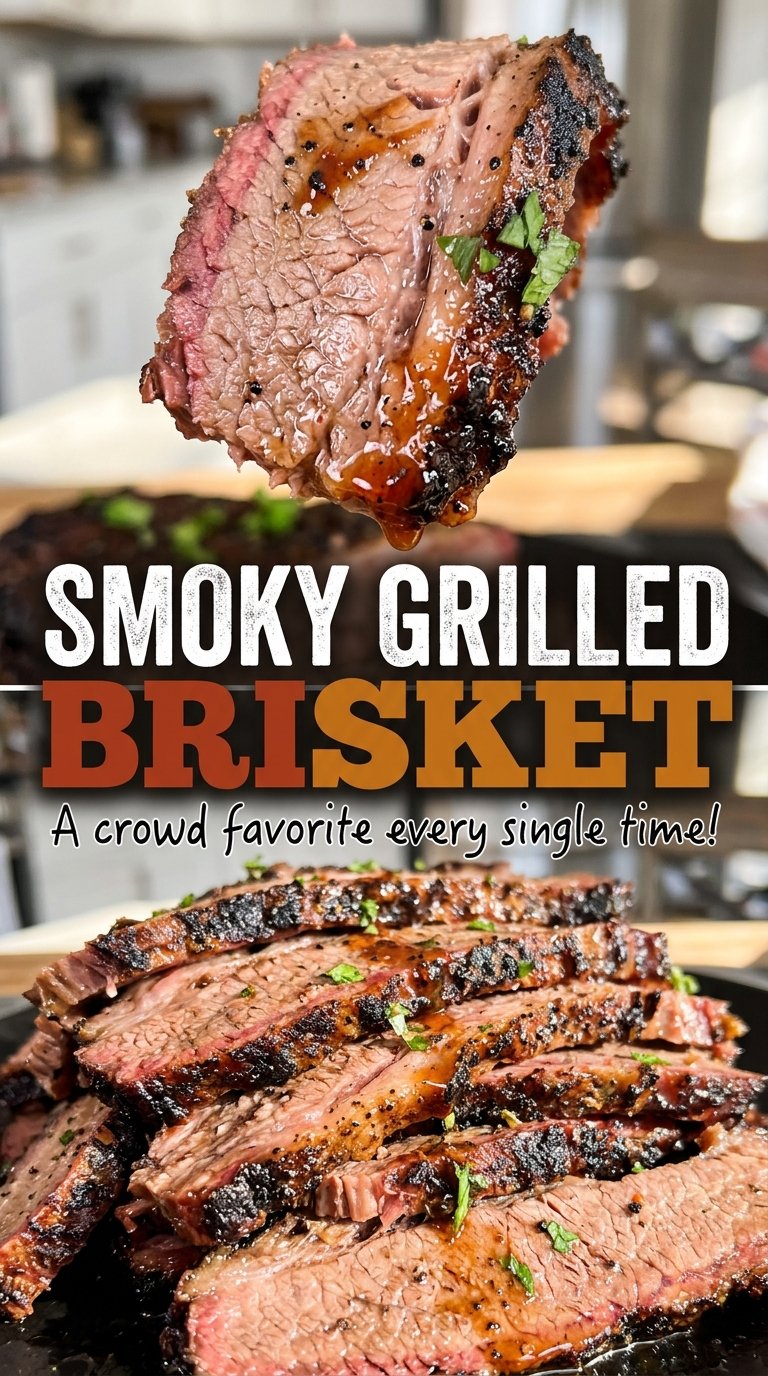
- Brisket flat — This cut has a fairly even shape, which makes it practical to cook as one piece, but it doesn’t have as much internal fat as a point. Keep the thin fat cap in place after trimming away hard fat; switching to a point changes the cut and the cooking behavior. Look for a flat with an even thickness so one end isn’t far ahead of the other.
- Kosher salt and coarse black pepper — Salt seasons the beef while coarse pepper gives the bark its noticeable texture. Use kosher salt rather than swapping in fine table salt by the same spoon measure; the finer crystals pack more densely. Coarsely ground pepper is the right choice here, and a fresh container matters more for its aroma than an expensive brand.
- Smoked paprika and garlic powder — These dry seasonings spread evenly over the brisket and add a savory layer beneath the pepper. They don’t need to be premium; just avoid jars that have been open so long the spices smell faint. Keep the garlic in powdered form so the rub stays dry and easy to distribute over every side.
- Hardwood chunks — Oak and hickory are both suitable choices for the charcoal grill. Oak gives a gentler smoke, while hickory is more assertive; choose between them based on how prominent you want the wood smoke to be. Use hardwood chunks rather than treating the wood choice as another seasoning in the rub.
Build the Fire, Set the Bark, and Finish the Flat in Foil
Trim and season the brisket evenly
Pat the brisket dry first, then trim away any hard fat while leaving a quarter-inch fat cap. The thin layer stays in place as the meat cooks; don’t trim it down to bare beef. Mix the kosher salt, coarse black pepper, smoked paprika, and garlic powder, then rub the mixture over all sides. A dry surface helps the seasoning cling instead of sliding off as you move the brisket to the grill.
Set up the charcoal for indirect heat
On a 22-inch charcoal grill, place the lit coals on one side and the drip pan on the other. Stabilize the grill at 250°F before adding the hardwood chunks to the coals. Set the lid vent over the brisket side so the smoke travels past the meat. This arrangement keeps the brisket away from direct heat; if it’s sitting over the lit coals, move it over the drip pan before cooking.
Cook until the bark and temperature line up
Set the brisket fat-side up over the drip pan and close the lid. Keep the grill between 225°F and 275°F, adding lit charcoal as needed to maintain that range. The first stage usually takes about 3 to 5 hours, but use the bark and a thermometer reading rather than the clock alone. When the bark is dark and the thickest part reaches 165°F to 175°F, take the brisket off the direct grill surface so you can wrap it.
Wrap, cook until tender, then rest
Wrap the brisket tightly in two layers of heavy-duty foil and return it to the grill. Hold the grill between 225°F and 275°F while the brisket cooks for about 2 to 4 hours, until it reaches 200°F to 205°F. Check the thickest part with a thermometer probe; it should slide in with little resistance, not meet a firm push. Rest the brisket, still wrapped, for 1 hour, then unwrap and slice across the grain.
Choose Oak or Hickory for the Smoke You Want
A gentler oak-smoked brisket
Choose oak chunks for a steadier, milder wood note that lets the pepper and beef stay prominent. Keep the same indirect charcoal setup and use the same number of chunks; only the wood changes.
A more assertive hickory smoke
Use hickory chunks when you want the smoke to come through more strongly against the peppery bark. The cooking method stays the same, but the wood makes the finished brisket taste more smoke-forward.
Storage and Reheating
- Refrigerator: Refrigerate within 2 hours and keep leftovers in an airtight container for 3 to 4 days. The bark softens as the brisket chills.
- Freezer: Freeze sliced or unsliced brisket tightly wrapped, then place it in a freezer-safe container or bag for up to 2 to 3 months. Thaw it in the refrigerator before reheating.
- Reheating: Keep the brisket covered with foil in a 300°F oven until the center reaches 165°F. Reheating it uncovered can dry the edges before the middle is hot.
Questions That Come Up With a Charcoal-Grilled Brisket
Smoky Grilled Brisket
Ingredients
Equipment
Method
- Pat the brisket dry and trim away any hard fat, leaving a 1/4-inch fat cap.
- Mix the salt, black pepper, smoked paprika, and garlic powder.
- Rub the mixture over all sides of the brisket.
- Set up a 22-inch charcoal grill for indirect cooking, with the lit coals on one side and a drip pan on the other.
- Stabilize the grill at 250°F, add the hardwood chunks to the coals, and position the lid vent over the brisket side.
- Place the brisket fat-side up over the drip pan and close the lid.
- Maintain 225°F to 275°F, adding lit charcoal as needed, and cook until the bark is dark and the thickest part reaches 165°F to 175°F, about 3 to 5 hours.
- Wrap the brisket tightly in two layers of heavy-duty foil and return it to the grill.
- Cook at 225°F to 275°F until it reaches 200°F to 205°F and a thermometer probe slides into the thickest part with little resistance, about 2 to 4 hours.
- Rest the brisket, still wrapped, for 1 hour.
- Unwrap and slice across the grain.
