
Old-Fashioned Southern Peach Cobbler
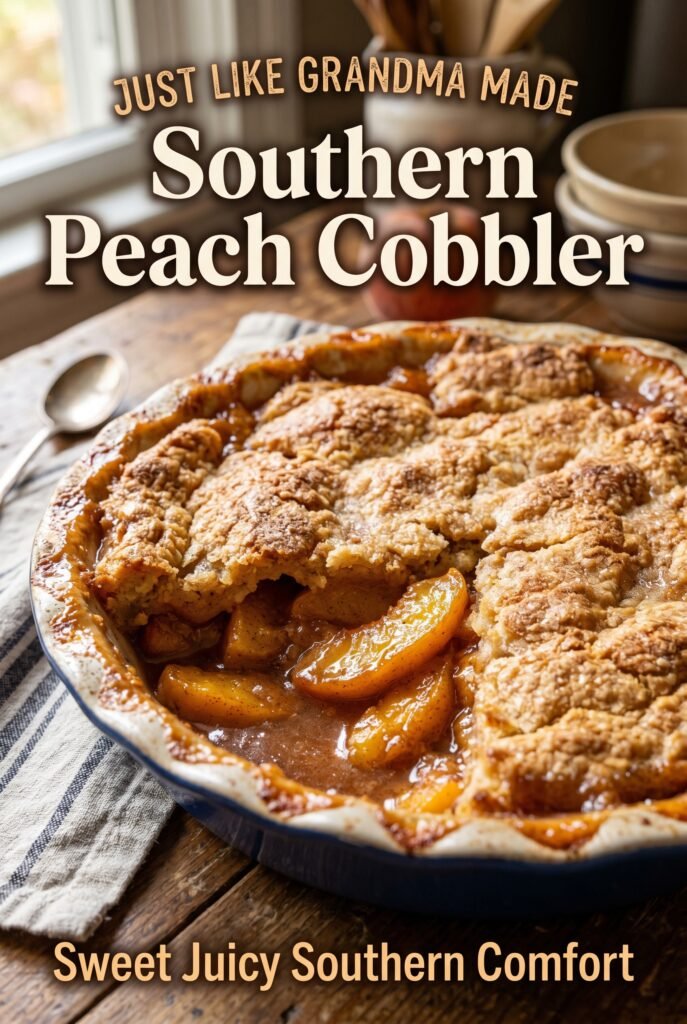
Juicy peaches, a buttery golden crust, and bubbling syrup around the edges are what keep old-fashioned Southern peach cobbler in the rotation. The magic is in the contrast: tender fruit…
Tip: save now, read later.
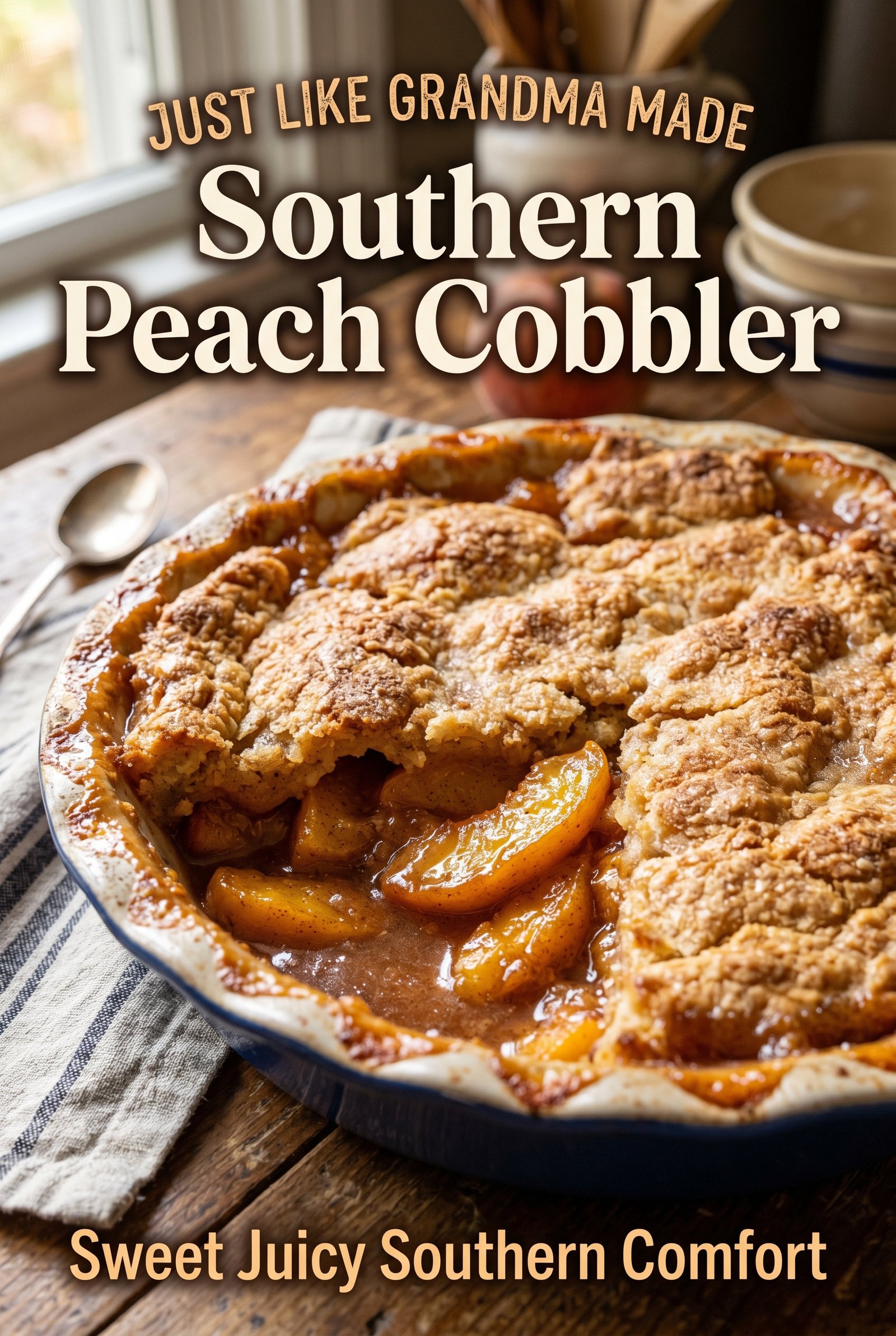
Juicy peaches, a buttery golden crust, and bubbling syrup around the edges are what keep old-fashioned Southern peach cobbler in the rotation. The magic is in the contrast: tender fruit underneath and a soft, cake-like topping that bakes up with crisp, bronzed edges where it meets the melted butter. It’s the kind of dessert that lands on the table still warm and draws a quiet line of spoons straight to the pan.
This version works because the peaches are lightly thickened before baking, so the filling turns glossy instead of watery. Brown sugar adds a deeper caramel note, while a little cinnamon and nutmeg give the fruit enough warmth without burying the peach flavor. The batter is mixed just until smooth and poured over the butter without stirring, which gives you that classic cobbler texture as the oven does the work.
Below, I’ve included the one detail that keeps the crust from turning soggy, plus a few smart swaps if your peaches are extra ripe or you’re working with frozen fruit. If you’ve had cobbler come out too runny or too cakey before, this version will help you land in the middle where it should be.
The filling thickened up beautifully and the topping baked into those crisp buttery edges I was hoping for. I used ripe peaches and it still held together perfectly after cooling a few minutes.
Save this old-fashioned Southern peach cobbler for the nights when you want bubbling peaches and a buttery crust without a fussy dessert.
The crust only works when the butter stays separate
A lot of cobblers go wrong because the batter and butter get stirred together, which blurs the layers and leaves you with a dense, uniform top instead of a cobbler. Here, the melted butter goes into the dish first, and the batter gets poured over it untouched. That separation is what helps the topping rise around the fruit and bake into a crust with crisp edges and a tender center.
The other common problem is a watery filling. Peaches release a lot of juice as they bake, and if you don’t give that liquid something to cling to, the whole dessert loosens up and turns soupy at the bottom. Cornstarch handles that job here, but it needs the oven heat to activate, which is why the cobbler has to bake long enough for the filling to bubble all the way through.
What each ingredient is doing in the pan

- Peaches — Fresh ripe peaches give the best flavor and the cleanest slices, but frozen peaches work if they’re thawed and drained first. If you use frozen fruit straight from the bag, the filling usually turns too loose before the cornstarch gets a chance to thicken it.
- Cornstarch — This is what turns the peach juices into a glossy syrup instead of a thin puddle. Flour can work in a pinch, but it makes the filling cloudier and needs more time in the oven to fully lose its raw taste.
- Brown sugar — A little brown sugar deepens the peach flavor and gives the filling a caramel edge that plain white sugar can’t match. If you only have white sugar, the cobbler will still work, but the flavor will be brighter and less rounded.
- Whole milk — Whole milk keeps the batter tender and rich without making it heavy. Lower-fat milk works, but the topping bakes up a little less soft in the middle.
- Butter — Melted butter creates that classic cobbler bottom and helps the topping brown at the edges. Use real butter here; anything lighter will cost you flavor and won’t give the same crisp finish.
The part of the bake that decides whether the filling sets
Mix the peaches first
Combine the sliced peaches with the sugars, cornstarch, lemon juice, vanilla, cinnamon, and nutmeg until the fruit is evenly coated. You want the peaches glossy and a little syrupy before they go into the dish. If the mixture looks dry, the fruit wasn’t ripe enough yet; if it looks soupy right away, let it sit for a few minutes so the sugar can start pulling out the juices.
Build the base without stirring
Pour the melted butter into the baking dish, then spoon the batter over it in an even layer. Don’t swirl or mix the two. The batter will float and spread on its own as it bakes, and that’s what gives you the soft cobbler top with those browned, buttery edges.
Finish with the fruit and bake until bubbling
Spoon the peach mixture and all those juices over the batter, then slide the dish into the oven. The cobbler is done when the top is deeply golden and the peach filling is bubbling through the edges and in the center, not just around the sides. If you pull it too early, the cornstarch won’t fully thicken and the middle will stay loose.
Let it rest before serving
Give the cobbler a short cooling time before you dig in. That resting period lets the filling settle and thicken enough to spoon cleanly. Straight from the oven, it’ll still be loose and hot enough to burn your tongue, so a few minutes of patience pays off.
How to adapt this cobbler when the peaches aren’t perfect
Using frozen peaches
Thaw the peaches first and drain off excess liquid before mixing them with the sugars and cornstarch. Frozen peaches release more water than fresh ones, so skipping this step usually gives you a thinner filling and a softer bottom.
Making it dairy-free
Use a good plant-based butter and an unsweetened non-dairy milk with some body, like oat milk. The texture stays close to the original, though the topping won’t brown quite as deeply and the flavor will be a little less rich.
Reducing the sweetness
Cut back each sugar by a few tablespoons if your peaches are very ripe and sweet. Don’t remove the sugar entirely; it does more than sweeten. It helps the peaches release juice and gives the filling its spoonable syrup.
Storing leftover cobbler
Refrigerator: Store covered for up to 4 days. The topping softens as it sits, but the flavor holds well. Freezer: Freeze baked cobbler in portions for up to 2 months, though the crust will be softer after thawing. Reheating: Warm in a 325°F oven until hot through; the microwave works, but it makes the top lose its edges and the filling can turn unevenly hot.
Answers to the questions worth asking
Old-Fashioned Southern Peach Cobbler
Ingredients
Equipment
Method
- Preheat your oven to 350°F (175°C). This gets the heat ready so the cobbler bakes through without waiting.
- Grease a 9×13-inch baking dish. Make sure the bottom and corners are coated so the peach juices don’t stick.
- In a large bowl, combine fresh peaches, granulated sugar, brown sugar, cornstarch, lemon juice, vanilla extract, ground cinnamon, and nutmeg. Toss until the peaches are evenly coated and the cornstarch is distributed.
- Spread the peach mixture into the baking dish. Level it into an even layer so the fruit bakes uniformly.
- In another bowl, whisk together all-purpose flour, granulated sugar, baking powder, and salt. Keep whisking until the dry ingredients are evenly blended.
- Stir in whole milk until smooth. The batter should look pourable with no dry flour pockets.
- Pour the melted butter into the baking dish over the peaches. Small puddles are fine—this helps create the golden cobbler texture.
- Pour the batter evenly over the butter without stirring. Aim for an even coverage so the top sets into a crust.
- Spoon the peaches and juices evenly over the batter. Scatter them across the surface so every bite has fruit and bubbling juices.
- Bake at 350°F (175°C) for 45–55 minutes, until golden brown and bubbling. Look for active bubbling around the edges as a visual cue the filling has thickened.
- Allow the cobbler to cool slightly before serving. Resting briefly helps the juices set so slices stay intact.
- Serve warm with vanilla ice cream. Add it right before eating for the best contrast of warm crust and cold cream.
