
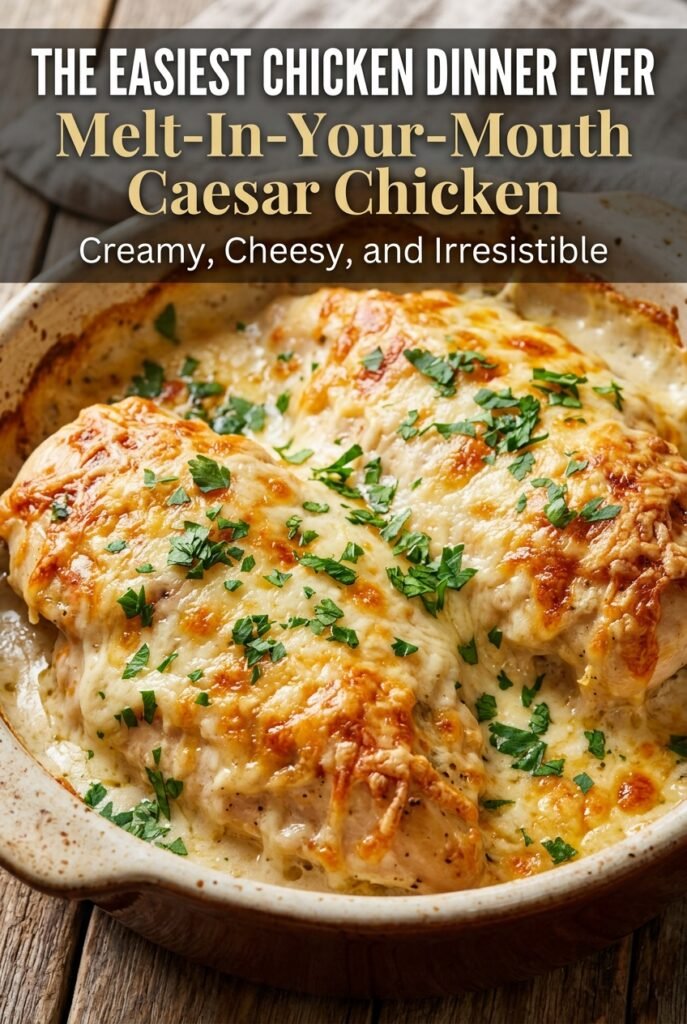
Melt-In-Your-Mouth Caesar Chicken
Juicy chicken breasts baked under a creamy Caesar-Parmesan topping come out tender, savory, and browned at the edges in a way that makes them feel much fancier than the effort…
Tip: save now, read later.
Juicy chicken breasts baked under a creamy Caesar-Parmesan topping come out tender, savory, and browned at the edges in a way that makes them feel much fancier than the effort required. The sauce settles into the chicken as it bakes, and the top turns lightly golden while the center stays moist instead of drying out. It’s the kind of dinner that disappears fast because every bite has that salty, garlicky, cheesy pull people keep going back for.
What makes this version work is the balance of Caesar dressing and sour cream. The Caesar brings the bold, briny punch, while the sour cream softens it and keeps the topping thick enough to cling to the chicken instead of sliding off into the pan. Freshly grated Parmesan matters here because it melts more smoothly and gives the topping a sharper, less dusty finish than the pre-shredded kind.
Below, I’ve laid out the part that matters most: how to keep the chicken juicy, how to judge the bake so it doesn’t go from tender to dry, and a few easy ways to change it up when you want the same comfort-food payoff with a different spin.
The topping browned beautifully and the chicken stayed so juicy. I used the broiler for just 2 minutes and it gave the whole dish that restaurant-style finish without drying anything out.
Creamy Caesar Chicken with a golden Parmesan top belongs in your dinner rotation — pin it for the night you want something rich, easy, and oven-baked.
The Reason This Chicken Stays Juicy Instead of Turning Stringy
The biggest mistake with baked chicken breast is treating it like it needs a long, aggressive roast. It doesn’t. The creamy Caesar topping acts like a shield, but only if the chicken goes into the oven in a single layer and cooks at a steady temperature. Crowding the dish or baking it too long pulls moisture out fast, and once that happens the Parmesan can’t hide it.
The other thing that matters is thickness. If one breast is much thicker than the others, pound them lightly so they finish together. Otherwise the thin pieces dry out while the thickest one is still catching up. That’s the difference between tender slices and a pan of chicken that eats like leftovers on day one.
- If the chicken is uneven, flatten the thicker end slightly so the whole breast bakes at the same pace.
- Keep the topping spread in an even layer; thick clumps can brown before the chicken is cooked through.
- Use a thermometer if you have one. Pull the chicken when it hits 165°F in the thickest part, not when the topping just looks done.
What the Caesar Dressing and Sour Cream Are Each Doing Here

- Caesar dressing — This is the backbone of the flavor. It brings salt, garlic, anchovy depth, and a tangy richness that plain mayo or cream won’t match. Use a brand you already like on salad, because the flavor concentrates as it bakes.
- Sour cream — This softens the Caesar dressing and gives the topping a thicker, more spoonable texture. Full-fat sour cream is best because it stays creamy under heat; low-fat versions can turn thinner and a little sharp.
- Parmesan cheese — Freshly grated Parmesan melts into the sauce and adds the savory finish that makes the chicken taste complete. Pre-grated cheese works in a pinch, but it won’t melt as smoothly and can leave the topping a little grainy.
- Mozzarella — Optional, but useful if you want a more melty, stretchy top. It doesn’t add much sharp flavor, so think of it as a texture boost rather than a main ingredient.
- Garlic powder and onion powder — These round out the sauce without adding extra moisture. Fresh garlic can burn a little under the broiler, which is why the powder version is the safer choice here.
How to Build the Topping So It Bakes, Browns, and Stays Put
Mix the sauce until it’s thick and smooth
Stir the Caesar dressing, sour cream, Parmesan, garlic powder, onion powder, and pepper until the mixture looks creamy and evenly speckled. It should hold its shape on a spoon rather than running like a salad dressing. If it looks loose, the cheese hasn’t fully blended yet, and that’s the version that slips off the chicken while it bakes.
Spread it over the chicken in one even layer
Lay the chicken in a greased baking dish with a little space between pieces, then spread the topping all the way to the edges. The layer should cover the surface without burying the chicken under a thick mound. If you pile it too heavily in the center, the top can brown before the middle has a chance to heat through.
Bake until the chicken is just done
Slide the dish into a 375°F oven and bake until the chicken reaches 165°F in the thickest part, usually 30 to 35 minutes depending on size. The topping should look set with browned spots around the edges, and the chicken juices should run clear when pierced. If your breasts are especially large, start checking early so you don’t miss the window.
Broil only for a short finish
If you want a deeper golden top, broil for 2 to 3 minutes at the end. Stay close, because the line between browned and burnt is short under a broiler. The goal is a lightly blistered top with some toasted Parmesan edges, not a blackened crust.
Three Ways to Make It Fit the Night You’re Cooking For
Gluten-Free Dinner That Still Feels Rich
This recipe is naturally gluten-free if your Caesar dressing is, too. Check the label because some brands use thickeners or crouton-derived seasoning. The finished dish keeps the same creamy texture and doesn’t lose anything by skipping breading entirely.
Lighter Version Without Losing the Creamy Top
Use Greek yogurt in place of the sour cream if you want a tangier, lighter topping. It bakes up a little firmer and slightly sharper, so the flavor leans brighter and less mellow. Keep the Parmesan the same so the sauce still tastes rich enough to carry the chicken.
Extra-Browned Finish for Cheese Lovers
Add the mozzarella on top before baking if you want a softer, meltier layer over the Caesar-Parmesan sauce. It won’t taste exactly like the base recipe, but it gives you a more decadent top and helps seal in moisture. Use it sparingly if you still want the Caesar flavor to stay front and center.
Make It Work With Chicken Thighs
Boneless skinless thighs work well if you prefer darker meat, and they stay even juicier than breasts. They usually need a few extra minutes in the oven, so use temperature rather than the clock. The flavor gets a little richer, which pairs nicely with the salty Caesar topping.
Storage and Reheating
- Refrigerator: Store leftovers in an airtight container for up to 3 days. The topping stays creamy, though the chicken firms up a little as it chills.
- Freezer: It freezes, but the sour cream base can separate slightly after thawing. If you freeze it, wrap portions well and expect a softer texture when reheated.
- Reheating: Warm in a 325°F oven, covered loosely with foil, until heated through. Microwaving works for a quick lunch, but use low power so the sauce doesn’t split and the chicken doesn’t turn rubbery.
Questions I Get Asked About This Dish
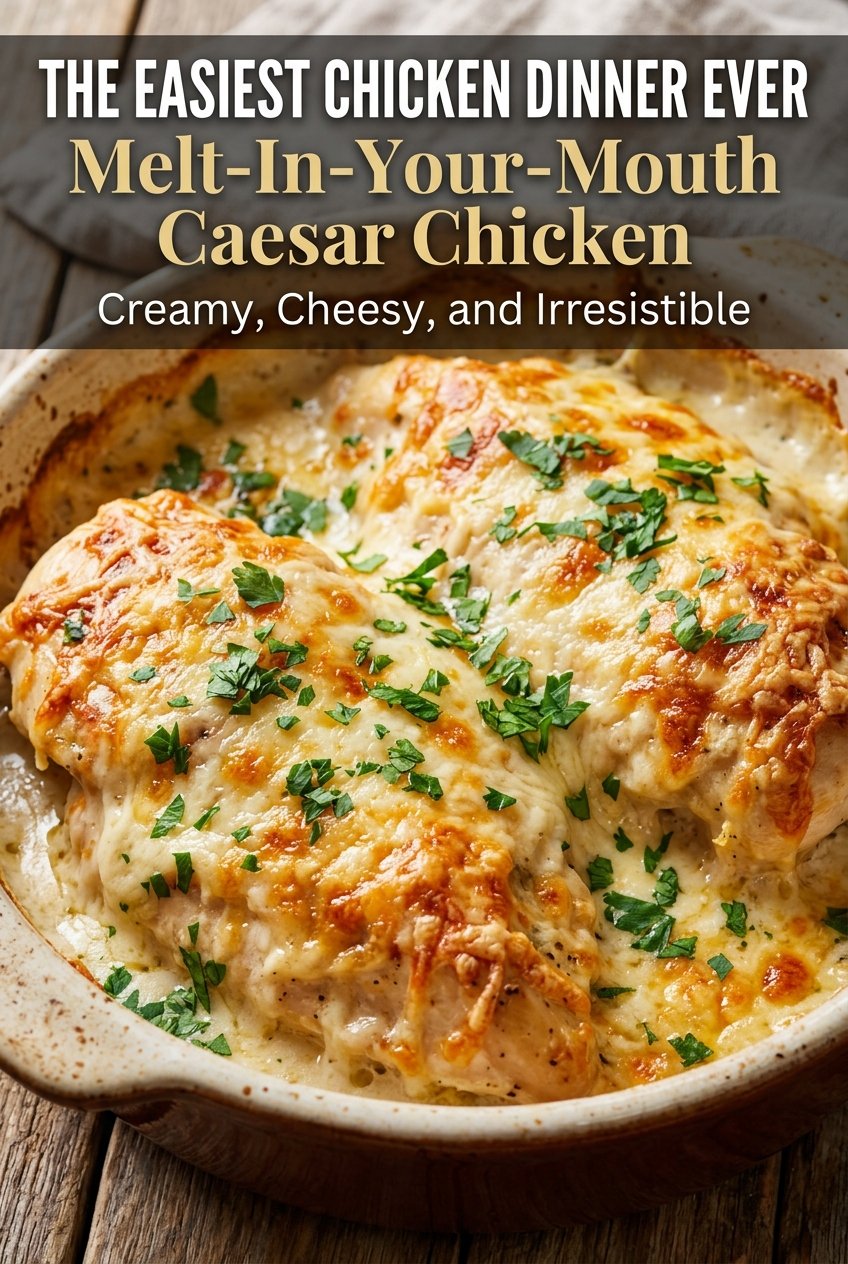
Melt-In-Your-Mouth Caesar Chicken
Ingredients
Equipment
Method
- Preheat the oven to 375°F (190°C) and set an oven rack to the middle position, then lightly grease a 9×13-inch baking dish.
- Arrange the boneless skinless chicken breasts in the baking dish in a single layer.
- In a bowl, combine the Caesar dressing, sour cream, Parmesan cheese, garlic powder, onion powder, and black pepper until smooth.
- Spread the Caesar mixture evenly over the chicken so each breast is well coated.
- Sprinkle shredded mozzarella cheese on top if using for a melty, browned finish.
- Bake uncovered for 30–35 minutes, until the chicken reaches 165°F (74°C) and the topping is bubbling.
- Broil for 2–3 minutes if desired to develop a golden top with light browning.
- Garnish with chopped parsley right before serving for a fresh green finish.
- Serve the chicken with vegetables, pasta, or a fresh salad.
