
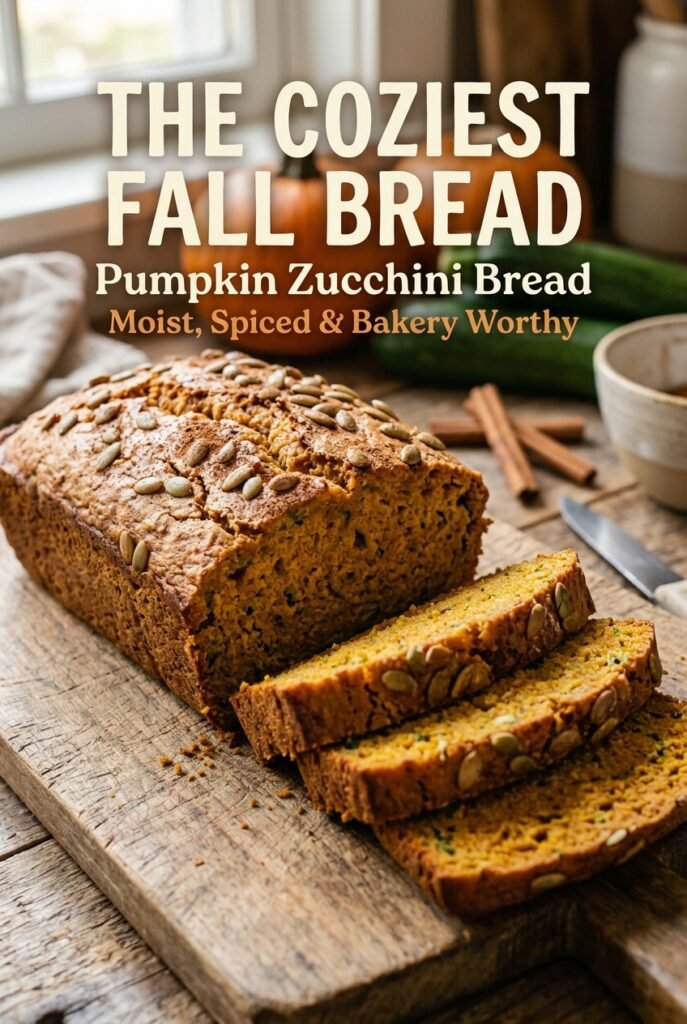
Pumpkin Zucchini Bread
Pumpkin zucchini bread earns its keep because it stays soft for days without turning gummy, and the flavor lands in that sweet spot between cozy spice cake and a breakfast…
Tip: save now, read later.
Pumpkin zucchini bread earns its keep because it stays soft for days without turning gummy, and the flavor lands in that sweet spot between cozy spice cake and a breakfast loaf you can justify with coffee. The pumpkin brings depth and moisture, the zucchini disappears into the crumb, and the top bakes into a tender, lightly cracked lid that slices cleanly once it cools.
The trick is in the balance. Pumpkin purée gives the loaf its earthy sweetness, but zucchini keeps it from feeling heavy, and sour cream adds just enough tang and richness to keep the texture plush. I also lean on both brown sugar and granulated sugar here: brown sugar adds warmth and a little chew, while granulated sugar helps the crumb stay light instead of dense.
Below, you’ll find the small things that matter most with this loaf — how to squeeze the zucchini without drying it out, why the batter should stay just barely mixed, and the easiest way to tell when the center is baked through without overbaking the edges.
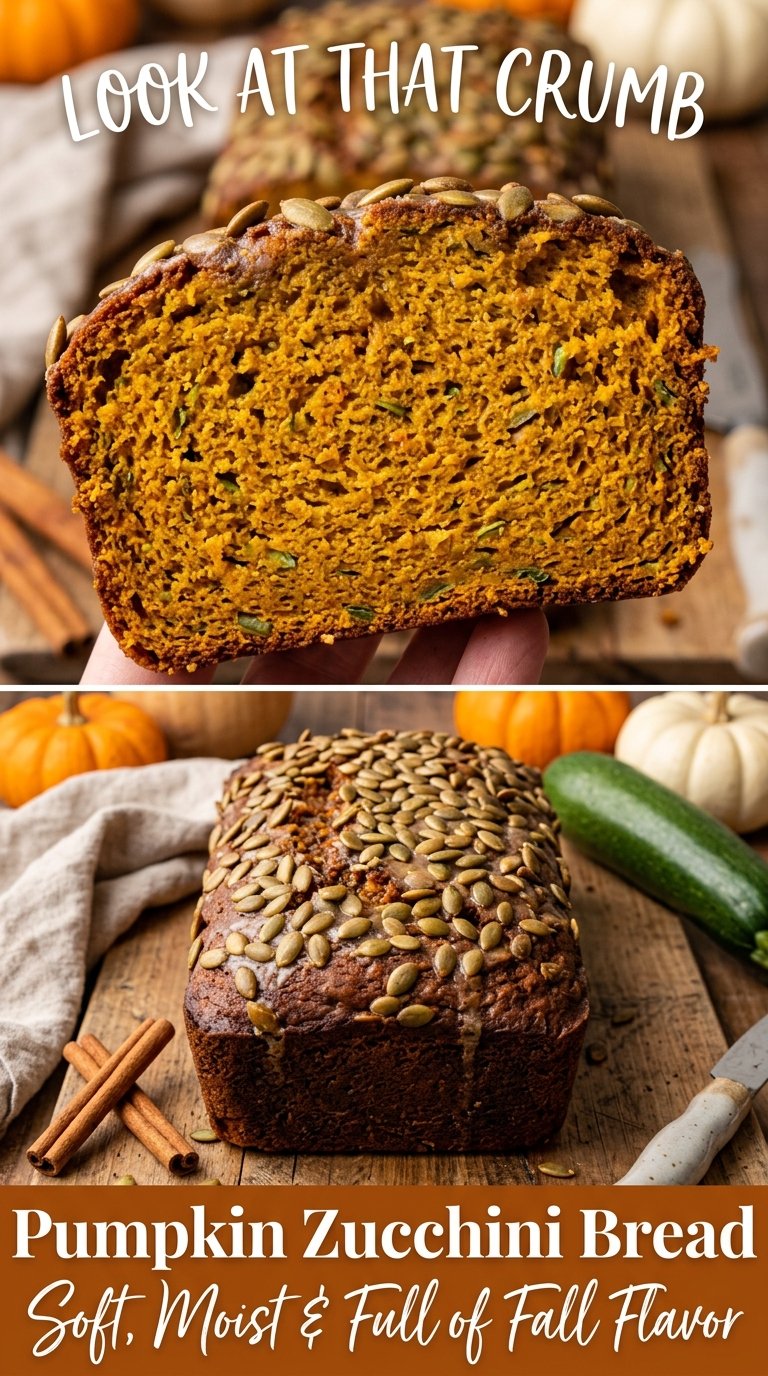
The loaf came out so moist and the zucchini disappeared completely, but the pumpkin spice still came through in every slice. I baked mine for 58 minutes and the center set up perfectly without drying out.
Pin this pumpkin zucchini bread for a loaf that stays soft, spiced, and sliceable from the first day to the last.
The Reason This Loaf Stays Moist Without Turning Dense
Pumpkin zucchini bread has one common failure point: too much moisture in the batter, which gives you a heavy loaf with a damp center and a tight crumb. That usually happens when the zucchini is added wet, the batter is overmixed, or the loaf is pulled before the middle has had time to set. This version avoids all three problems by squeezing the zucchini first, keeping the mixing gentle, and baking until the center springs back instead of sinking when you touch it.
The other thing that matters here is the balance of wet ingredients. Pumpkin purée is thicker than people expect, and it behaves differently from mashed fruit or applesauce, so the batter needs enough structure from the flour and eggs to hold that moisture without collapsing. If your loaf often comes out gummy, the fix is usually not more flour. It is less handling and a little more patience in the oven.
- Shredded zucchini — This adds moisture, but only if you wring it out after shredding. Leave too much water in it and the loaf steams instead of baking.
- Pumpkin purée — Use plain pumpkin purée, not pumpkin pie filling. Pie filling brings sugar and spice that throw off both flavor and texture.
- Sour cream — This is the ingredient that keeps the crumb tender. Plain Greek yogurt works in a pinch, but the loaf will taste a little tangier and bake up slightly firmer.
- Pumpkin pie spice and cinnamon — Pumpkin pie spice gives the broad warm spice base, while cinnamon keeps the flavor from tasting flat. Fresh spice matters here more than in a frosted dessert because the loaf is lightly sweetened.
What Each Ingredient Is Actually Doing in This Loaf
- All-purpose flour — This gives the loaf enough structure to hold the pumpkin and zucchini without sinking. Bread flour makes it chewier than it should be.
- Oil — Oil keeps the crumb soft even after the loaf has cooled. Butter would add flavor, but it also firms up more once chilled.
- Brown sugar and granulated sugar — Brown sugar brings a deeper molasses note and a softer crumb, while granulated sugar helps the top rise and set cleanly.
- Eggs — These bind the batter and help the loaf rise evenly. Don’t add extra eggs for moisture; that usually leads to a custardy center.
- Vanilla — This rounds out the pumpkin and spice so the loaf tastes full, not one-note.
- Pecans or walnuts — Optional, but they add a good contrast to the soft crumb. Toast them first if you want a stronger nutty flavor.
- Pumpkin seeds — These are mostly for texture on top. They also give the loaf a finished look without needing frosting.
Building the Batter So the Crumb Stays Tender
Mix the dry ingredients first
Whisk the flour, baking soda, baking powder, salt, and spices together until the color looks even. That step keeps the spice from clumping in one bite and prevents a bitter pocket of baking soda. If the dry ingredients are uneven, the loaf can rise lopsided or taste patchy.
Whisk the wet ingredients until smooth
Combine the oil, sugars, eggs, vanilla, pumpkin purée, and sour cream until the mixture looks glossy and uniform. You should not see streaks of egg white or little lumps of sour cream. If the batter looks broken at this stage, keep whisking before you add the flour; once the flour goes in, overmixing becomes the problem.
Fold, don’t beat, once the flour goes in
Add the dry mixture in stages and stir just until the flour disappears. A few streaks are fine, because they finish hydrating in the oven. Overworking the batter is what turns a tender loaf into something tight and bready, especially with all the moisture from pumpkin and zucchini.
Test the center, not the edge
Bake until a toothpick in the center comes out clean or with a few moist crumbs, and the top springs back lightly when touched. The edges will color before the middle is done, so don’t trust the crust alone. If the top is getting too dark before the center sets, tent it loosely with foil for the last 10 to 15 minutes.
Three Ways to Adjust This Loaf Without Losing the Texture
Dairy-Free Version
Swap the sour cream for an equal amount of plain unsweetened dairy-free yogurt. You’ll keep the tender crumb and a little tang, though the loaf may bake up a touch lighter in flavor. Choose a thick yogurt so the batter doesn’t become loose.
Nut-Free Loaf
Leave out the pecans or walnuts entirely, or replace them with extra pumpkin seeds on top. The texture stays soft and the loaf still slices cleanly. If you want crunch without nuts, toasted sunflower seeds work well.
Gluten-Free Adaptation
Use a 1:1 gluten-free baking blend that includes xanthan gum. The loaf will still be moist, but it may need a few extra minutes in the oven and should cool fully before slicing so the crumb can set.
Make It More Dessert-Like
Add a handful of chocolate chips in place of some of the nuts. The loaf gets sweeter and more dessert-forward, but it also softens the spice a little, so keep the cinnamon and pumpkin pie spice as written.
Storage and Reheating
- Refrigerator: Store covered for up to 5 days. The crumb stays moist, but the loaf firms up a bit once chilled.
- Freezer: This freezes well. Wrap slices individually, then store in a freezer bag for up to 3 months.
- Reheating: Warm slices in a toaster oven or microwave just until soft and steamy. Heat gently, because too much time will dry out the edges before the center warms through.
Answers to the Questions Worth Asking
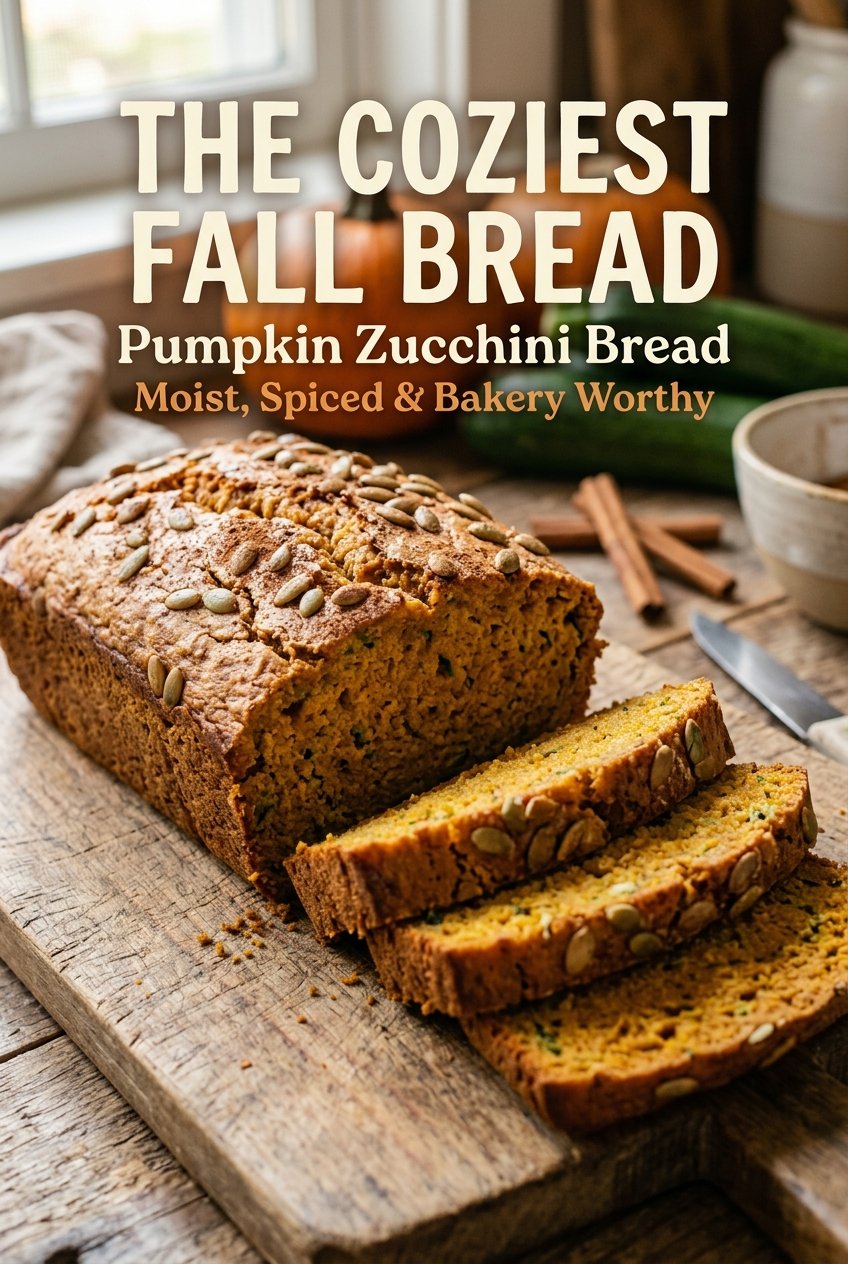
Pumpkin Zucchini Bread
Ingredients
Equipment
Method
- Preheat the oven to 350°F (175°C). Use the middle rack for even baking.
- Grease and line a 9×5-inch loaf pan with parchment paper. Leave a little overhang so the loaf lifts out cleanly.
- In a large bowl, whisk together the all-purpose flour, baking soda, baking powder, salt, pumpkin pie spice, ground cinnamon, and ground nutmeg. Whisk until evenly tinted and no clumps remain.
- In another bowl, whisk together the vegetable oil, light brown sugar, granulated sugar, eggs, vanilla extract, pumpkin purée, and sour cream. Whisk until smooth and glossy.
- Fold in the shredded zucchini until evenly distributed. Keep folding gently so the batter stays thick and cohesive.
- Gradually stir the dry ingredients into the wet ingredients until just combined. Stop as soon as no dry streaks remain.
- Fold in the chopped pecans or walnuts if using. Distribute them through the batter without overmixing.
- Pour the batter into the prepared loaf pan. Smooth the top with a spatula if needed.
- Sprinkle the top with pumpkin seeds (pepitas) if desired. Press them lightly so they adhere.
- Bake for 55–65 minutes, until a toothpick inserted into the center comes out clean. The loaf should spring back slightly when touched.
- Cool for 15 minutes before removing from the pan. This helps the crumb set so it slices cleanly.
- Slice and serve warm with butter or maple butter. Let it rest 5 minutes after slicing for the best texture.
