
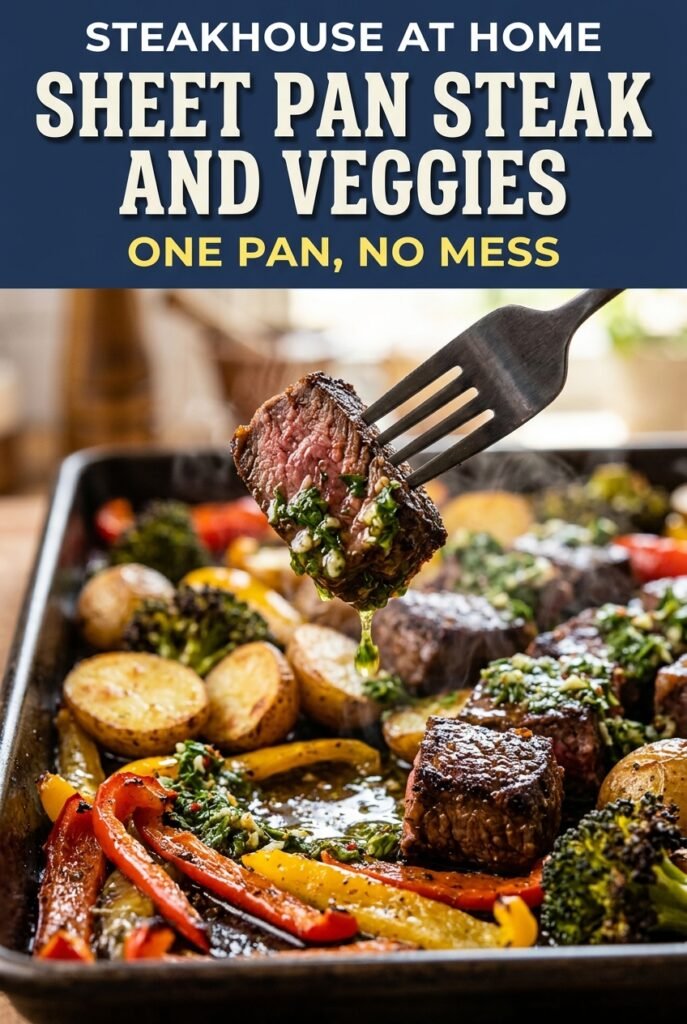
Sheet Pan Steak and Veggies with Fresh Chimichurri
Steak and vegetables on one sheet pan can go either way: browned, juicy, and deeply savory, or pale and a little tired from crowding. This version stays on the right…
Tip: save now, read later.
Steak and vegetables on one sheet pan can go either way: browned, juicy, and deeply savory, or pale and a little tired from crowding. This version stays on the right side of that line because the potatoes get a head start on a hot pan, the steak goes in spaced out, and the vegetables roast at high heat until their edges char instead of softening into steam. The result tastes like a full dinner with almost no cleanup.
The chimichurri is what ties it all together. Fresh parsley and cilantro carry the sauce, but the garlic, red wine vinegar, and red pepper flakes keep it sharp enough to cut through the richness of the steak. It takes five minutes, and that little bowl of green sauce is doing a lot of work here.
Below, I’ve laid out the one step that matters most for keeping everything browned, plus the ingredient swaps that still give you a solid result if you need to adapt the pan.
The potatoes got those crisp, browned edges I never seem to get on sheet pan dinners, and the chimichurri made the steak taste like it came from a steakhouse. My husband kept going back for more of the onions and peppers too.
Save this sheet pan steak dinner with fresh chimichurri for a fast, high-heat meal with crisp vegetables and a bright finish.
The High-Heat Trick That Keeps the Vegetables Roasted, Not Soggy
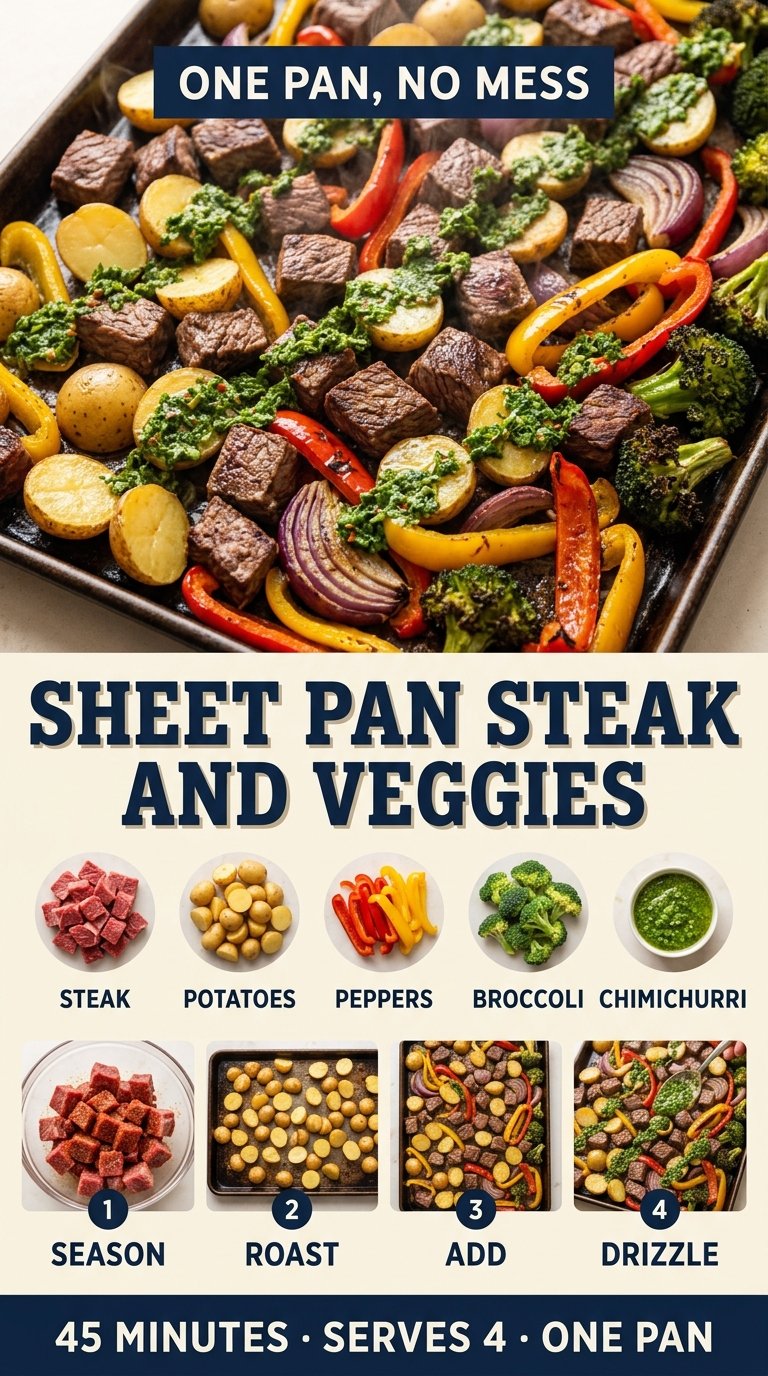
The biggest mistake with sheet pan dinners is crowding the pan from the start. Potatoes, peppers, onion, broccoli, and steak all have different moisture levels and different timing needs, so if they go in together, the pan turns into a steam bath before anything has a chance to brown. The fix is simple: give the potatoes a head start on a hot pan, then add everything else once they’ve begun to soften and color.
That preheated sheet pan matters more than people think. When the potatoes hit the hot metal, their cut sides start to sear immediately, which gives you crisp edges instead of waxy centers. Then, when the steak and vegetables go in later, they get enough direct heat to caramelize before the pan cools down.
- Sirloin or strip steak — Both hold up well to high heat and stay tender when cut into 1½-inch cubes. Use a well-marbled strip if you want a richer bite; sirloin is a little leaner but still works well here.
- Baby potatoes — These need the head start. Halving them creates more surface area, which is what gives you that browned, crisp cut side. Yukon golds are the best swap if that’s what you have.
- Bell peppers, red onion, and broccoli — This mix gives you sweetness, bite, and a little char. Cut the vegetables thick enough that they hold their shape at 425°F; thin slices will collapse before the steak is done.
- Red wine vinegar in the chimichurri — This is what keeps the sauce bright. Lemon works in a pinch, but red wine vinegar gives the classic sharpness that cuts through the steak’s richness without turning the sauce citrusy.
- Fresh parsley and cilantro — The fresh herbs are the point of the sauce. Dried herbs won’t give you the same texture or clean, grassy flavor, so use fresh here if you can.
Building the Pan in the Right Order
Preheating the Sheet Pan
Set the oven to 425°F and put the sheet pan in while it heats. A hot pan gives the potatoes immediate contact heat, which starts browning before they release much moisture. If you skip this, the potatoes spend their first minutes sitting in their own steam and the whole tray loses momentum.
Giving the Potatoes a Head Start
Toss the potatoes with a little oil and salt, then add them carefully to the hot pan in a single layer. Roast them alone for 15 minutes, until the cut sides start to color and the edges look slightly dry and golden. If they’re still pale at this point, they won’t have enough structure to finish with the steak in the second roast.
Seasoning and Spacing the Steak
Toss the steak with oil, salt, pepper, smoked paprika, and garlic powder while the potatoes roast. The paprika adds color and a little depth, but it doesn’t replace the browning you get from actual high heat. When you add the steak to the pan, keep the pieces separate; if they touch, they’ll steam where they meet and you’ll lose the crust.
Finishing the Roast and Resting the Meat
Add the peppers, onion, broccoli, and steak after the potatoes have started to brown, then roast just until the steak is browned outside and still pink in the middle. Twelve to 15 minutes is the window, but start checking early if your cubes are smaller. Let the pan rest for 5 minutes before serving so the juices settle back into the meat instead of running across the pan when you cut into it.
How to Adapt This Pan Dinner Without Losing What Makes It Work
Make It Dairy-Free Without Changing a Thing
This recipe is naturally dairy-free, which is part of why it works so well for mixed-diet dinners. The chimichurri gives you the richness and punch that butter or cream would normally add, so you don’t lose anything by leaving dairy out.
Swap the Steak for Chicken Thighs
Boneless thighs work well if you want a lower-cost version, but they need to be cut into even pieces and cooked a little longer than steak cubes. They’ll be juicier, with less of that browned beefy bite, so expect a softer texture and a lighter overall flavor.
Use Cauliflower Instead of Potatoes for a Lower-Carb Pan
If you want a lower-carb version, swap the potatoes for cauliflower florets, but add them later than the potatoes since they cook much faster. You’ll lose the crisp, starchy base, but you’ll gain a lighter pan that still soaks up the chimichurri nicely.
Storage and Reheating
- Refrigerator: Store leftovers in an airtight container for up to 4 days. The vegetables soften a bit, but the flavor holds up well.
- Freezer: The steak and vegetables can be frozen, but the potatoes and peppers won’t keep their best texture. Freeze for up to 2 months if needed, then thaw overnight in the fridge.
- Reheating: Warm leftovers in a 350°F oven until heated through, or use a skillet over medium heat. The biggest mistake is microwaving it too long, which turns the steak chewy and the vegetables limp before the center is even hot.
Questions I Get Asked About This Recipe
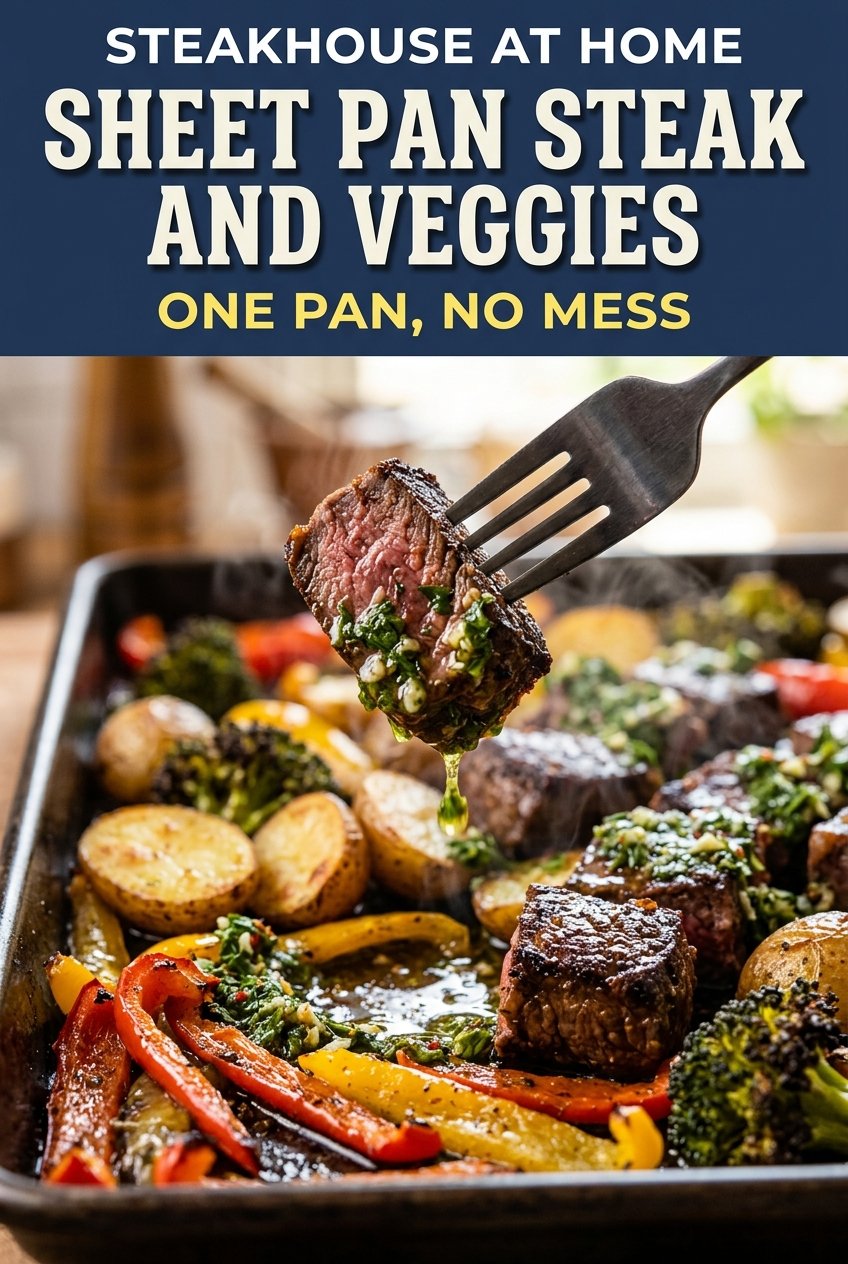
Sheet Pan Steak and Veggies with Fresh Chimichurri
Ingredients
Equipment
Method
- Heat the oven to 425°F and place a large sheet pan inside while it preheats so the pan is hot when you start roasting.
- Toss the baby potatoes with 1 tbsp olive oil and a pinch of salt, then carefully add them to the hot sheet pan in a single layer and roast for 15 minutes.
- While the potatoes roast, toss the sirloin or strip steak cubes with 1 tbsp olive oil, salt, black pepper, smoked paprika, and garlic powder.
- Toss the bell peppers, red onion, and broccoli florets separately with the remaining 1 tbsp olive oil so each vegetable gets evenly coated.
- Make the chimichurri by stirring together fresh parsley, fresh cilantro, minced garlic, red wine vinegar, olive oil, red pepper flakes, dried oregano, and salt in a bowl, then set aside.
- Pull the sheet pan out, push the potatoes to one side, and add the steak and vegetables in a single layer, spacing the steak pieces apart for browning.
- Roast at 425°F for 12 to 15 minutes, until the steak is browned outside and medium-rare within and the vegetable edges are charred, adding 3 to 4 minutes for medium.
- Rest the pan for 5 minutes before cutting or serving so the juices settle.
- Spoon the chimichurri generously over the entire sheet pan and serve directly from it.
