

Garlic Butter Salmon Bites in One Pan
Golden-edged salmon bites with a glossy garlic butter finish are the kind of dinner that disappears fast. Cutting the fillet into cubes gives you more of the crust everyone fights…
Tip: save now, read later.
Golden-edged salmon bites with a glossy garlic butter finish are the kind of dinner that disappears fast. Cutting the fillet into cubes gives you more of the crust everyone fights over, and the quick toss in lemon, honey, and parsley keeps each piece bright instead of heavy. It tastes restaurant-level, but it stays grounded in a single skillet and a very short cook time.
The trick is starting with salmon that’s dry enough to sear properly and a pan that’s hot enough to reward patience. If the fish goes into a lukewarm skillet, it’ll steam and stick before the surface has a chance to caramelize. Once those bites have a deep golden edge, the garlic butter sauce comes together in the same pan and picks up every browned bit left behind.
Below, you’ll find the exact point where the salmon should come off the heat, plus a few ways to serve it if you want to turn it into a full meal instead of just a quick pan dinner.
The salmon got that crispy edge I never seem to get at home, and the garlic butter sauce coated every piece without turning greasy. I served it over rice and even the leftovers held up the next day.
Save these garlic butter salmon bites for a fast one-pan dinner with a crisp sear and a lemony pan sauce.
The Seared Edge Is What Makes These Salmon Bites Worth It
Salmon bites work because they expose more surface area to the pan. That means more caramelization, more seasoning on every side, and less of the soft, uniform texture that can make a whole fillet feel one-note. The goal here isn’t to cook the salmon all the way through in the skillet. It’s to build a crust first, then finish it gently in the sauce so the fish stays tender.
The biggest mistake is crowding the pan. When the pieces sit too close together, the surface moisture has nowhere to go and the salmon starts steaming instead of searing. Give the cubes space, let them sit untouched long enough to release on their own, and you’ll get that deep golden crust that makes the whole dish work.
What Each Ingredient Is Actually Doing in This Dish
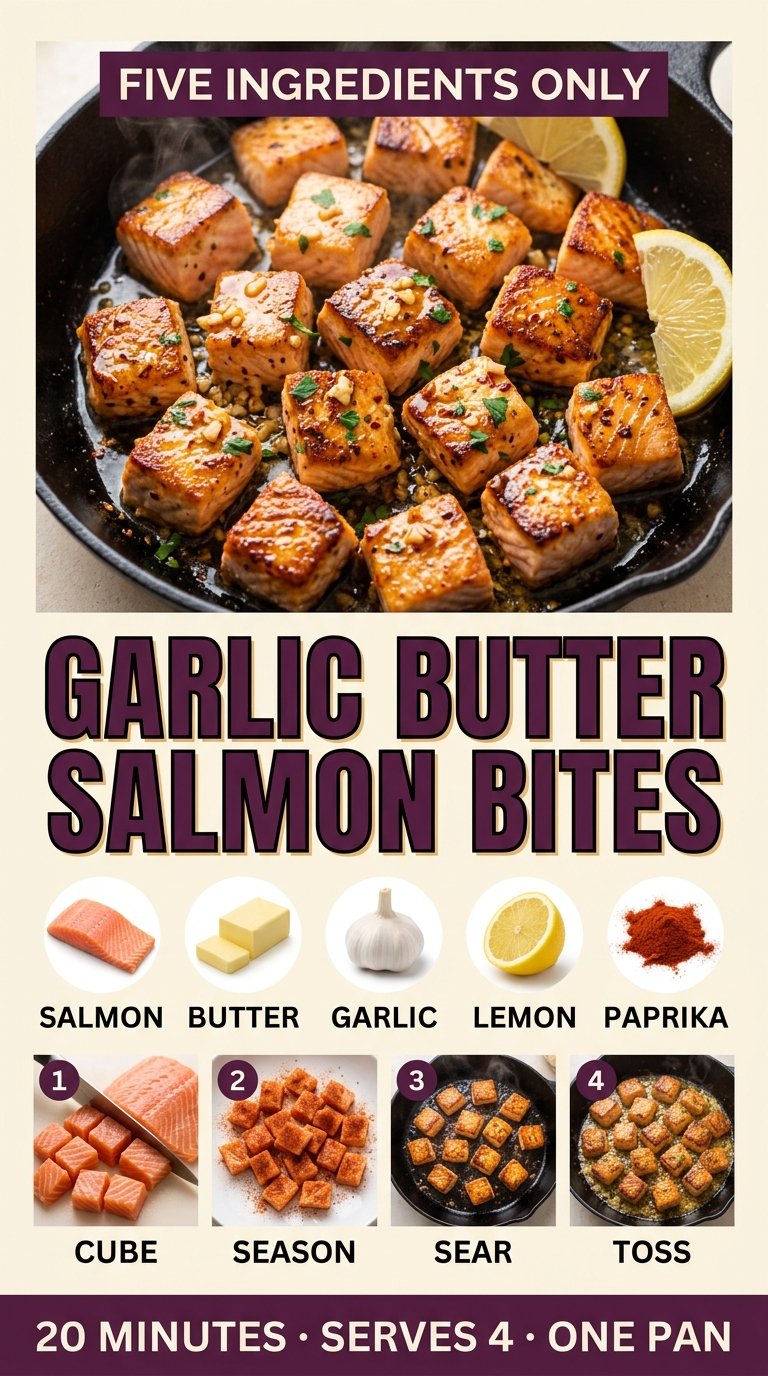
- Skinless salmon fillet — Skinless pieces sear more evenly here, and cubing the fish gives you those crisp edges on multiple sides. If you only have skin-on salmon, remove the skin after cutting or cook the skin separately; it won’t give you the same bite-sized crust.
- Smoked paprika — This adds a subtle savory depth and helps the surface color up fast. Regular paprika works in a pinch, but smoked paprika gives the bites that little extra warmth.
- Garlic powder and onion powder — These season the fish itself so the flavor goes all the way through the crust. Fresh garlic alone won’t do the same job in the seasoning step, because it can burn before the salmon finishes.
- Butter, garlic, lemon, and honey — This is the sauce. Butter carries the garlic, lemon sharpens the richness, and honey rounds the edges so the sauce clings to the salmon instead of tasting flat. If you skip the honey, the sauce is still good, but it loses that glossy balance.
- Fresh parsley — Add it off the heat so it stays bright. Dried parsley won’t give you the same clean finish at the end.
How to Sear the Salmon First, Then Turn It into a Sauce Dinner
Dry the Fish Until It Feels Slightly Tacky, Not Wet
Pat the salmon cubes dry with paper towels before anything else. If there’s water on the surface, the heat has to evaporate that moisture before browning can start, and that steals the crust. The fish should look matte and feel just barely tacky after seasoning. That’s the point where it’s ready for the pan.
Let the Pan Get Hot Enough to Leave a Mark
Heat the skillet over medium-high until a drop of oil shimmers right away. Add the salmon in a single layer and leave it alone until the first side lifts cleanly with a deep golden edge. If it sticks, it needs another minute; forcing it too early tears off the crust you worked for. The center can still be a little translucent at this stage because it finishes in the sauce.
Build the Garlic Butter in the Same Skillet
Lower the heat before the butter goes in. Garlic burns quickly, and burnt garlic turns bitter in a way that can’t be fixed later. Stir it just until fragrant, then add the honey, lemon juice, and red pepper flakes so the browned bits dissolve into the sauce. That is where the flavor lives.
Finish Gently So the Salmon Stays Tender
Return the salmon to the pan for just a minute and toss it carefully until every piece is glossy. The sauce should coat, not drown, the fish. Kill the heat as soon as the salmon turns opaque and the sauce clings in a thin sheen. If you keep cooking past that point, the edges go dry and the glaze starts to reduce too far.
What to Change When You Want a Different Version of These Salmon Bites
Dairy-Free Garlic Salmon Bites
Swap the butter for olive oil or a good plant-based butter. Olive oil gives you a lighter, cleaner finish and won’t foam the same way, while plant-based butter keeps more of that rich, round flavor. The sauce will be a little less silky than the original, but it still clings well if you add it off the heat.
Low-Carb Serving Ideas
Serve the salmon over cauliflower rice, sautéed zucchini, or a simple green salad instead of regular rice or pasta. The sauce is rich enough to carry plain vegetables, and the lemon keeps the dish from feeling heavy. This version still tastes complete without leaning on starch.
Make It Spicier
Increase the red pepper flakes or add a pinch of cayenne to the salmon seasoning. The heat lands best in the butter sauce, where it spreads across every bite instead of sitting in isolated spots. Too much spice in the dry rub can taste harsh against the fish, so the sauce is the better place to push it.
Storage and Reheating
- Refrigerator: Store leftovers in an airtight container for up to 2 days. The crust softens a little, but the flavor stays good.
- Freezer: Salmon freezes, but the texture changes after thawing, so I don’t recommend freezing the finished bites in sauce.
- Reheating: Warm gently in a skillet over low heat with a splash of water or broth. High heat dries the fish out fast and makes the garlic taste harsh.
Answers to the Questions Worth Asking
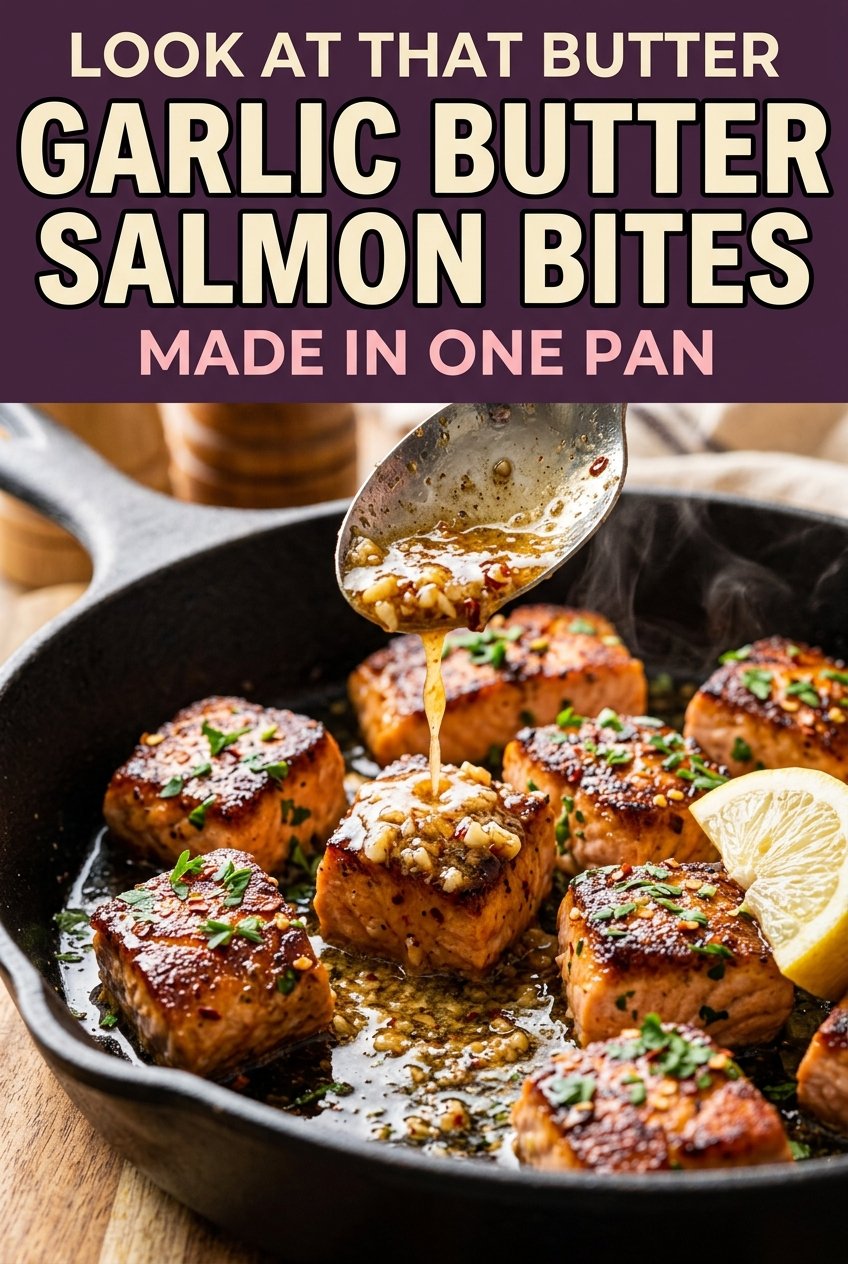
Garlic Butter Salmon Bites in One Pan
Ingredients
Equipment
Method
- Pat the salmon cubes completely dry with paper towels to prevent steaming and help the crust form.
- Toss the cubes with olive oil, smoked paprika, garlic powder, onion powder, salt, and black pepper until evenly coated.
- Heat a large skillet over medium-high until genuinely hot, then add the salmon in a single layer with space between pieces.
- Sear the salmon undisturbed for 2 to 3 minutes until a deep golden crust forms.
- Flip each piece and sear for 2 minutes more, until just opaque in the center, then transfer to a plate while it finishes in the sauce.
- Lower the heat to medium, then add butter and minced garlic to the same pan and cook for 45 seconds, stirring constantly, until fragrant but not browned.
- Stir in the honey, lemon juice, and red pepper flakes, scraping up the browned bits from the bottom of the pan.
- Return the salmon to the skillet and toss gently for 1 minute until every piece is glossy and coated.
- Kill the heat, scatter the parsley over the top, and serve straight from the pan with lemon wedges.
