
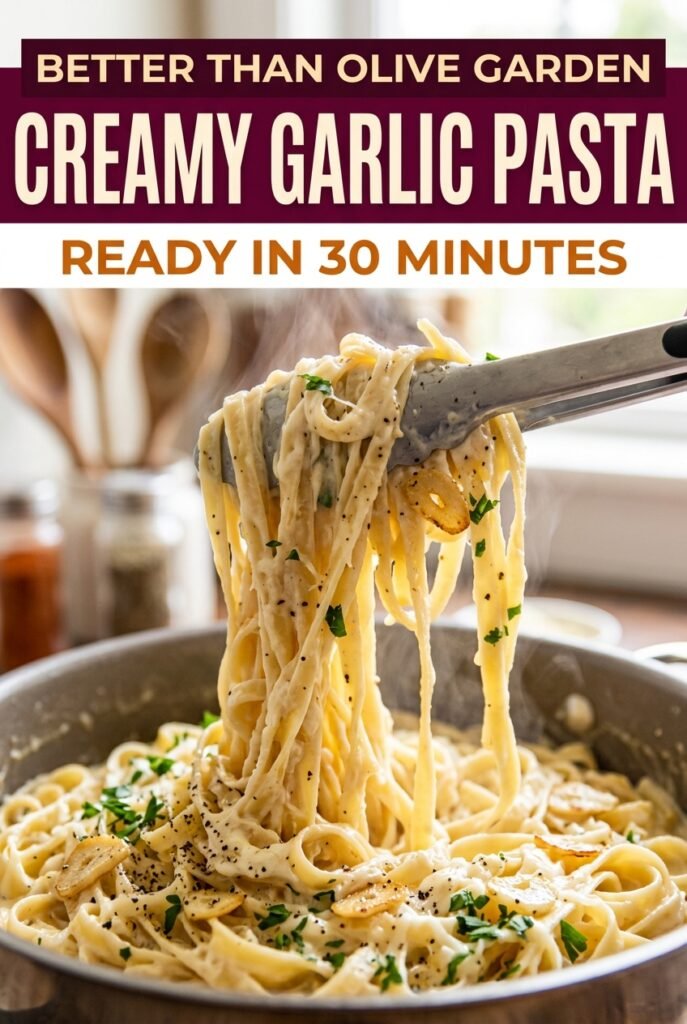
One-Pot Creamy Garlic Pasta with Parmesan
Silky, garlicky pasta with a parmesan sauce that clings to every strand is the kind of dinner that disappears fast. The pasta cooks right in the broth, so the starch…
Tip: save now, read later.
Silky, garlicky pasta with a parmesan sauce that clings to every strand is the kind of dinner that disappears fast. The pasta cooks right in the broth, so the starch thickens the sauce naturally and you get that glossy, restaurant-style finish without flour, a separate roux, or a sink full of extra pans. The garlic goes soft and sweet in butter first, which gives the whole pot a mellow base instead of a sharp bite.
The trick here is timing and heat control. The broth needs to simmer steadily so the pasta cooks evenly and releases enough starch, but the cream and parmesan go in lower so the sauce stays smooth. If you’ve ever had a cheese sauce turn grainy, it was probably cooked too hot; this one avoids that by letting the cheese melt into a hot but calm pot. Give it the last few minutes to rest and it thickens into something that coats the noodles properly.
Below you’ll find the exact points where this recipe can wobble and how to keep it on track. There’s also a simple way to loosen it if it tightens too much, plus a few swaps that still keep the sauce rich and spoonable.
The sauce turned out so silky and the garlic stayed mellow instead of sharp. I loved that the pasta cooked right in the pot — it saved time and the parmesan melted in without clumping.
Love how the noodles cook right in the broth? Save this creamy garlic parmesan pasta for nights when you want a rich one-pot dinner with no draining.
The Part That Stops Parmesan Sauce From Turning Grainy
The biggest mistake with a one-pot cream sauce is treating the cheese like it can take the same heat as the pasta water. It can’t. Parmesan melts cleanly when the sauce is hot, not boiling hard, and the difference between smooth and sandy usually comes down to that last stretch on the stove. Pulling the heat back before the cream and cheese go in keeps the fat and dairy from separating.
The other thing people miss is the pasta water effect. Because the noodles cook in the broth, they release starch directly into the pot, and that starch gives the cream something to cling to. If the liquid looks thin near the end, don’t panic. The sauce tightens as it sits, especially once the parmesan and resting time do their work.
What Each Ingredient Is Actually Doing in This Dish
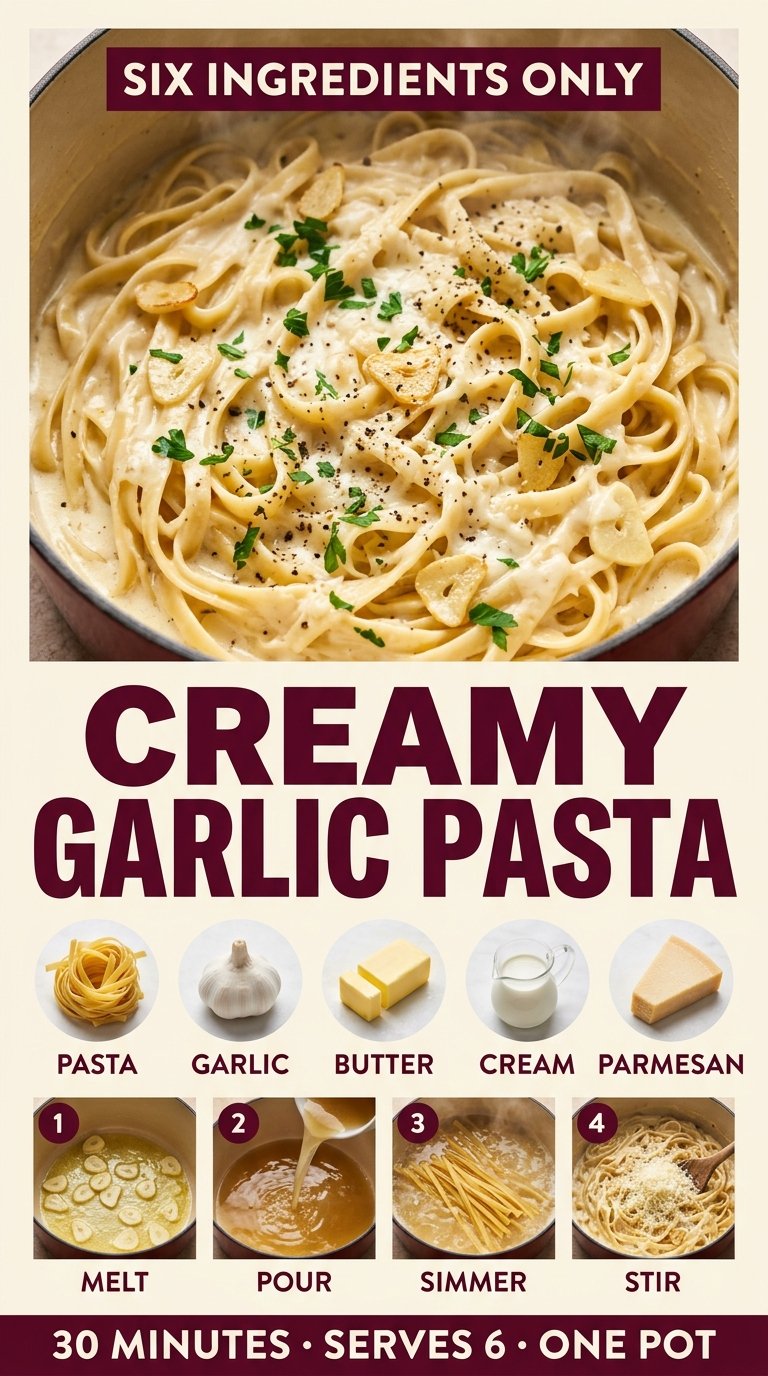
- Fettuccine or linguine — Long noodles hold the sauce better than short pasta here. They also cook evenly in the broth as long as you keep them submerged and stir every couple of minutes. If you swap in a thicker pasta shape, expect to add a little more broth and a few extra minutes.
- Unsalted butter — This is the base for the garlic, and it matters because butter gives the sauce a rounder finish than oil. Unsalted butter lets you control the salt once the broth and parmesan come in. If you only have salted butter, cut back the added salt until the end.
- Garlic — Thin slices cook down into soft, sweet pieces that perfume the sauce without turning harsh. Don’t rush this part. If the garlic browns deeply, the whole pot will taste bitter, and there’s no fixing that later.
- Broth — Chicken broth gives the richest result, but vegetable broth works well if that’s what you have. It’s not just a cooking liquid; it seasons the pasta from the inside as it simmers. Use a broth you’d actually drink, because the flavor concentrates as the liquid reduces.
- Heavy cream — This adds body and helps the sauce turn glossy once the parmesan goes in. Half-and-half can work in a pinch, but the sauce will be thinner and less stable. If you use it, keep the heat low and don’t boil after adding it.
- Freshly grated parmesan — This is one place where quality matters. Pre-shredded parmesan often has anti-caking starches that can make the sauce clump instead of melt smooth. Grate it finely so it disappears into the pot in handfuls.
The 20 Minutes That Matter Most
Softening the Garlic Without Browning It
Melt the butter over medium-low and let the garlic cook slowly until it smells sweet and looks pale gold. You want soft edges, not color. Once garlic goes deep brown, it gets sharp and bitter, and that bitterness carries through the whole sauce. Keep the pan moving so the slices don’t sit on one hot spot long enough to scorch.
Letting the Pasta Cook in the Broth
Pour in the broth, season it, then add the dry pasta and press it under the liquid. The noodles should be mostly submerged from the start; if they’re sticking out, they won’t soften evenly. Stir every couple of minutes so the starch doesn’t glue them to the bottom. By the end, the liquid should look slightly thickened and reduced, with the pasta al dente and still loose in the pot.
Finishing with Cream and Parmesan
Lower the heat before the cream goes in, then stir until the sauce turns glossy. Add the parmesan in small handfuls, stirring constantly so each addition melts before the next goes in. If you dump it all at once, it can clump into strings. Let the pot rest off the heat for five minutes at the end; that final pause is what turns a loose sauce into one that coats the noodles properly.
How to Adapt This for Dairy-Free, Vegetarian, or a Bigger Pot
Dairy-Free Version
Use olive oil instead of butter, swap in unsweetened plain oat cream or cashew cream for the heavy cream, and finish with a dairy-free parmesan-style topping if you like. The sauce won’t have the exact same richness, but it still gets silky if you keep the heat low and use a thick plant-based cream.
Vegetarian Version
Use vegetable broth instead of chicken broth and keep everything else the same. A good vegetable broth matters here because it becomes part of the sauce, not just the cooking liquid. If your broth is weak, the finished pasta will taste flat no matter how much parmesan you add.
Lighter Cream Sauce
Replace half the heavy cream with more broth for a lighter finish. The sauce won’t be as lush, but the pasta starch still gives it body. Keep the simmer gentle or the reduced dairy can look slightly separated instead of smooth.
Storage and Reheating
- Refrigerator: Store in an airtight container for up to 3 days. The sauce will thicken and the pasta will drink up some of the liquid.
- Freezer: I don’t recommend freezing this one. Cream sauces and cooked pasta both change texture after thawing, and the sauce can turn grainy.
- Reheating: Reheat gently on the stove or in the microwave with a splash of broth or cream. Warm it slowly and stir often; high heat is what makes the sauce split and the pasta turn gummy.
Answers to the Questions Worth Asking
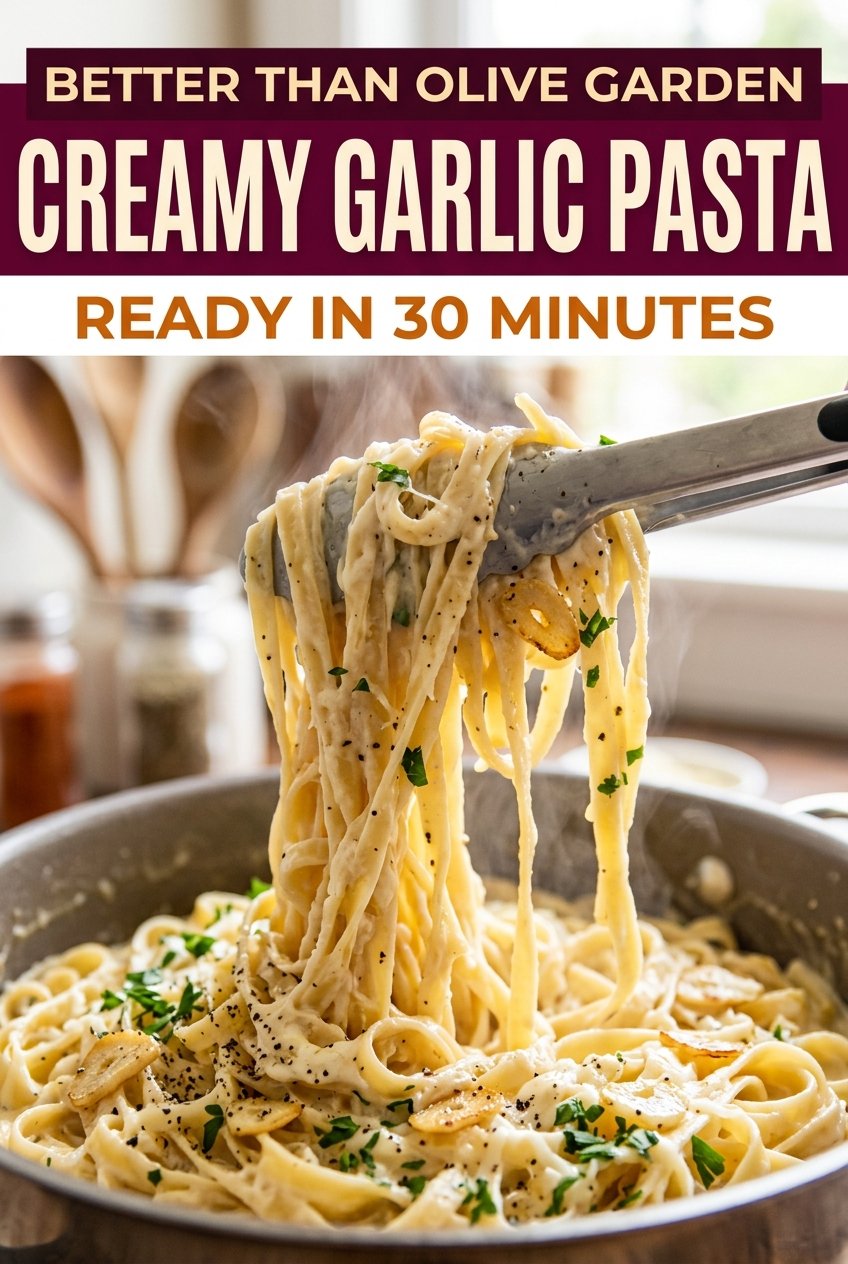
One-Pot Creamy Garlic Pasta with Parmesan
Ingredients
Equipment
Method
- Melt the butter in a large deep pot over medium-low heat. Add the sliced garlic and cook 4 to 5 minutes, stirring often, until soft, fragrant, and pale gold—do not let it brown.
- Pour in the broth, add the salt and pepper, and bring to a steady simmer over medium-high heat. Keep the bubbles consistent before adding pasta.
- Add the uncooked pasta, pressing it down until fully submerged. Simmer uncovered 10 to 12 minutes, stirring every couple of minutes, until al dente and most of the liquid has reduced.
- Lower the heat and pour in the heavy cream, stirring until the sauce comes back together and turns glossy. Keep the heat low enough to prevent the sauce from breaking.
- Add the parmesan a handful at a time, stirring constantly so it melts smoothly instead of clumping. Look for a uniform, thick, creamy texture.
- Simmer 2 minutes more until the sauce coats the back of a spoon. If it tightens too much, loosen with a splash of broth.
- Take it off the heat and let it rest 5 minutes. The sauce will thicken noticeably as it sits.
- Fold in the parsley and serve straight from the pot with extra parmesan and cracked pepper. The final sauce should look smooth and glossy.
