
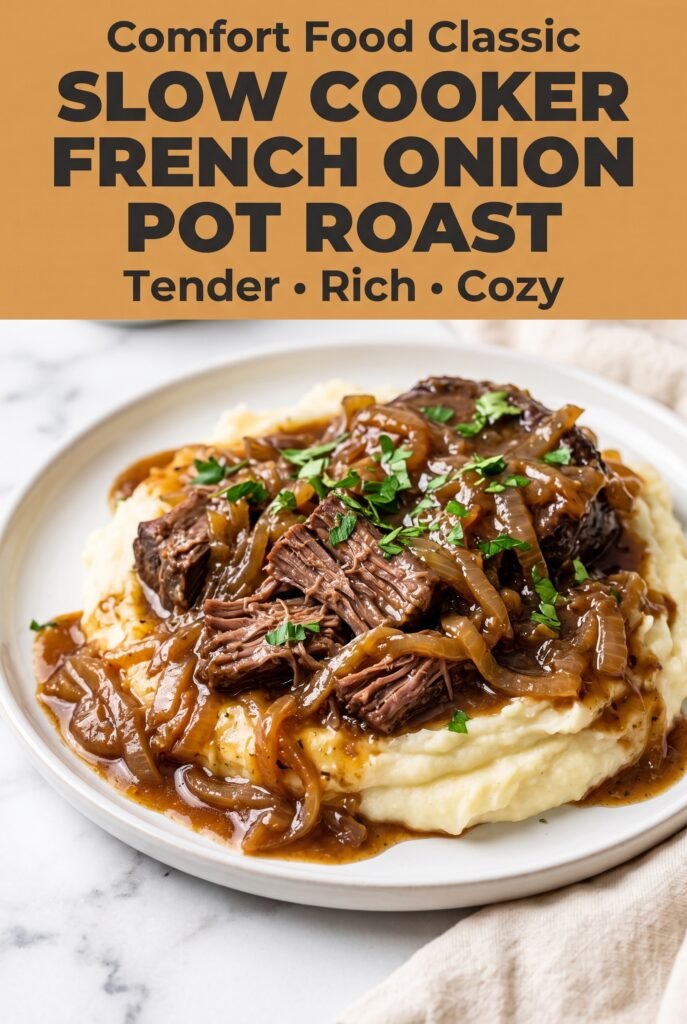
Slow Cooker French Onion Pot Roast
Melt-in-your-mouth pot roast starts with a deep sear, but the real magic happens in the slow cooker, where sweet onions soften into the broth and turn it into a rich,…
Tip: save now, read later.
Melt-in-your-mouth pot roast starts with a deep sear, but the real magic happens in the slow cooker, where sweet onions soften into the broth and turn it into a rich, savory gravy. This version leans into classic French onion flavor without making you babysit a pan for an hour, and the chuck roast comes out tender enough to pull apart with a spoon. The onions keep their character, the beef stays beefy, and the whole pot tastes like it spent all day being cared for.
The trick is building enough flavor before the lid goes on. Browning the roast gives the gravy a darker, more roasted backbone, and a little Worcestershire plus Dijon keeps the broth from tasting flat. The cornstarch goes in at the end, not at the start, so the sauce thickens into a proper gravy instead of turning gluey while the beef cooks.
Below, you’ll find the small details that matter most: how to get the onions to soften without burning, when to thicken the juices, and the best way to serve it so every bite gets that French onion gravy.
The onions melted down into the gravy and the roast was fall-apart tender at 8 hours on low. I served it over egg noodles and my husband said the sauce tasted like restaurant French onion soup.
Save this Slow Cooker French Onion Pot Roast for the nights when you want tender beef, caramelized onion gravy, and almost no work.
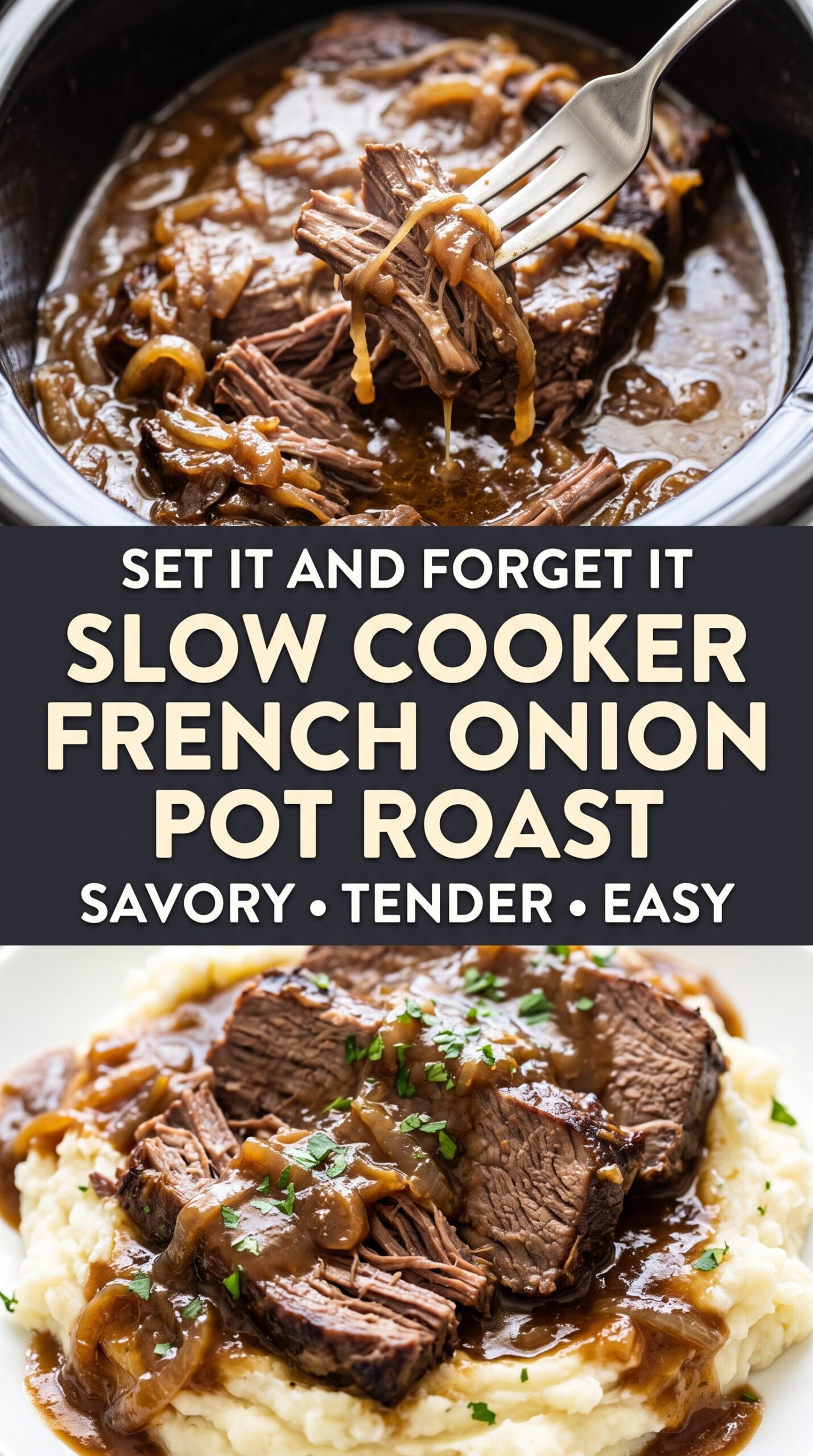
The part that makes the gravy taste slow-cooked, not just salty
French onion flavor can go flat fast if you rely only on soup mix. What gives this roast depth is the combination of browned meat, softened onions, and a little mustard in the broth. The mustard doesn’t make it taste sharp; it brightens the beef and keeps the gravy from tasting one-note.
The onions matter more than most people think. Sliced thin, they break down into the cooking liquid and help give the gravy body even before you thicken it. If you chop them too thick, they stay stringy instead of melting into that silky, spoonable sauce everyone wants.
- Chuck roast — This is the cut you want. It has enough fat and connective tissue to turn tender in the slow cooker instead of drying out. A lean roast won’t give you the same silky texture.
- Yellow onions — Their sweetness is what makes this taste like French onion instead of just beef broth. White onions work in a pinch, but they stay a little sharper.
- French onion soup mix — This is the shortcut seasoning backbone. It brings concentrated onion and savory notes that are hard to replicate with just salt and dried herbs.
- Worcestershire sauce — It adds the deep, browned flavor that makes the gravy taste like it’s been simmering much longer than it has. If you don’t have it, soy sauce is the closest substitute, but use a little less because it’s saltier.
- Dijon mustard — Just a tablespoon is enough to sharpen the whole pot. Yellow mustard is harsher and can take over, so stick with Dijon if you can.
- Cornstarch slurry — This thickens the juices at the end without muddying the flavor. Stir it in only after the roast is done, because long cooking can break down starches and make the gravy thin again.
How to keep the onions from disappearing before the roast is done
Searing the beef first
Pat the roast dry before it touches the skillet. Moisture is the enemy of browning, and if the surface is wet, you’ll steam the meat instead of building that dark crust that gives the gravy its backbone. Sear until each side is deeply browned and you can smell the caramelized beef bits on the pan.
Building the slow cooker base
Layer the sliced onions and garlic around the roast, then pour the broth mixture over the top. The butter on top helps carry the onion flavor through the liquid as it cooks. If the liquid looks thin at this stage, that’s fine — it should. It will concentrate slowly, and the onions will help thicken it naturally.
Knowing when it’s actually done
Cook on low until the beef gives way easily when you press it with a fork. If it still fights back, it needs more time; pot roast is not a recipe to rush. The meat should shred in big, moist pieces, not slice like a steak. That texture means the connective tissue has broken down properly.
Turning the juices into gravy
Move the roast out first, then whisk the cornstarch with cold water before adding it to the hot liquid. If you dump dry cornstarch straight in, you’ll get lumps that never fully dissolve. Let the gravy bubble and thicken for a few minutes, and it will turn glossy instead of cloudy.
Make it dairy-free without losing richness
Swap the butter for olive oil or a plant-based butter. You still get a rich gravy because the onions, beef, and Worcestershire do the heavy lifting; the fat is there for roundness, not the main flavor.
Gluten-free version
Use a gluten-free French onion soup mix and serve it over mashed potatoes or gluten-free noodles. The cornstarch slurry already works beautifully here, so you don’t need any flour to thicken the gravy.
Turn it into a deeper onion gravy
If you have time, cook the onions in a skillet with the butter until they start to turn golden before they go into the slow cooker. That extra step adds a sweeter, more layered onion flavor and gives the finished gravy a darker color.
Stretch it for a bigger crowd
Add another 1 to 1½ pounds of chuck roast and increase the broth just enough to mostly cover the meat. Don’t double the soup mix blindly; the seasoning can get aggressively salty. Taste the gravy at the end and adjust from there.
Storage and Reheating
- Refrigerator: Store in an airtight container for up to 4 days. The gravy may thicken in the fridge, which is normal.
- Freezer: This freezes well for up to 3 months. Freeze the roast with plenty of gravy so it doesn’t dry out when thawed.
- Reheating: Warm gently on the stove over low heat or in a covered dish in the oven. Add a splash of broth if the gravy looks too tight, and avoid boiling it hard or the beef will turn stringy.
Answers to the things people usually wonder before they start
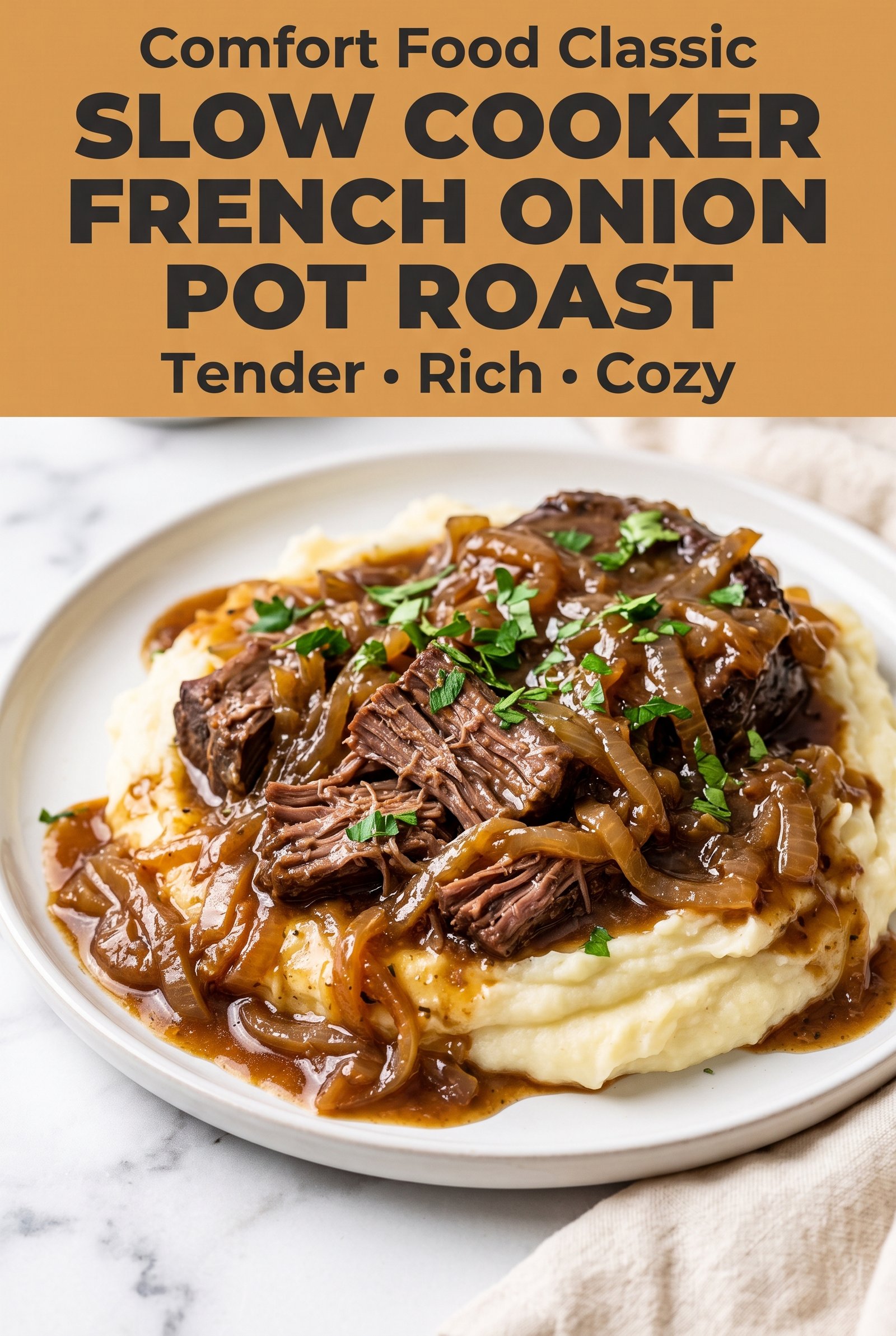
Slow Cooker French Onion Pot Roast
Ingredients
Equipment
Method
- Pat the chuck roast dry with paper towels, then season all sides with the kosher salt, black pepper, garlic powder, and dried thyme.
- Heat the olive oil in a large skillet over medium-high heat and sear the roast for 3–4 minutes per side until deeply browned.
- Transfer the seared roast to the slow cooker.
- Nestle the sliced yellow onions and minced garlic around the roast in the slow cooker.
- Whisk together the low-sodium beef broth, French onion soup mix, Worcestershire sauce, and Dijon mustard, then pour it over the roast and top with the butter.
- Cover and cook on Low for 8–9 hours (or on High for 5–6 hours) until the beef is fork-tender and easily shreds.
- Transfer the roast to a serving platter and cover loosely with foil.
- Whisk the cornstarch and cold water together, then stir the slurry into the slow cooker juices.
- Cover and cook on High for 10–15 minutes until the gravy thickens.
- Spoon the French onion gravy over the roast, garnish with chopped fresh parsley, and serve with mashed potatoes or buttered egg noodles.
