
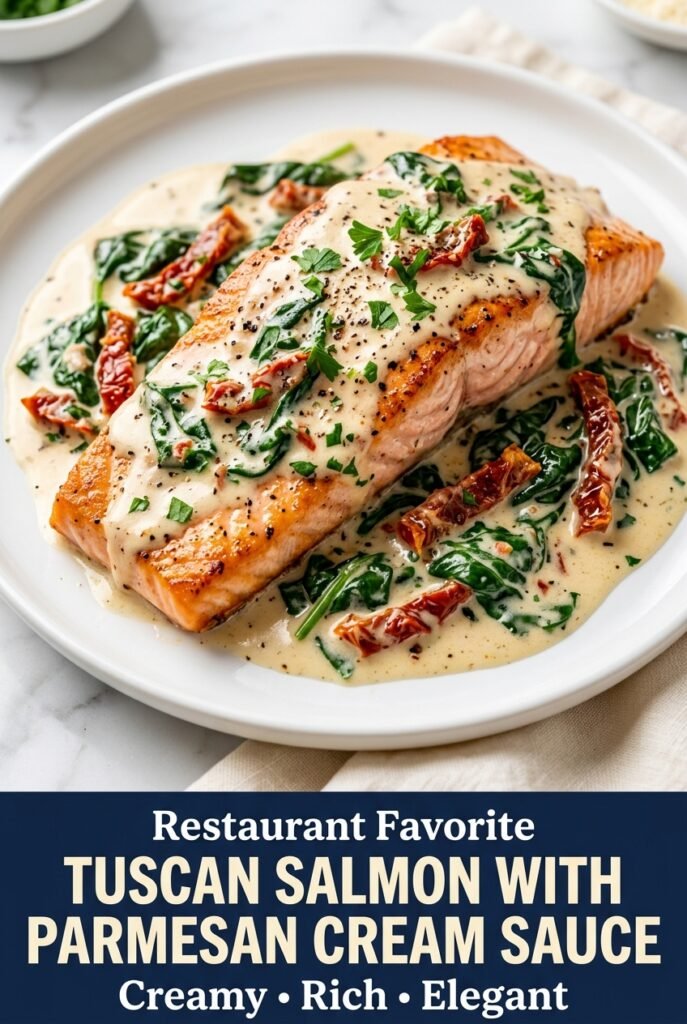
Tuscan Salmon with Parmesan Cream Sauce
Seared salmon and a silky Parmesan cream sauce make this one of those skillet dinners that lands on the table looking restaurant-level without asking much from you. The salmon stays…
Tip: save now, read later.
Seared salmon and a silky Parmesan cream sauce make this one of those skillet dinners that lands on the table looking restaurant-level without asking much from you. The salmon stays flaky and tender, the sauce turns rich and glossy, and the sun-dried tomatoes bring just enough sweet-tart depth to keep every bite from feeling heavy. Spinach folds in at the end and softens into the sauce instead of disappearing into it, which is exactly what you want here.
The part that makes this recipe work is the order. Salmon gets its crust first, then the same pan builds the sauce so all those browned bits stay in play. Parmesan goes in over a gentle simmer, not a rolling boil, which keeps the sauce smooth instead of grainy. A small squeeze of lemon at the end cuts through the cream and wakes everything up.
Below, I’ll walk through the small details that matter most: how to get a clean sear on the salmon, when to add the cheese, and what to do if you want to make the dish a little lighter or swap ingredients based on what’s in your kitchen.
The salmon stayed flaky, and the sauce thickened up beautifully without getting greasy. I used the lemon at the end like suggested, and it kept the Parmesan cream from feeling too heavy.
Creamy Tuscan salmon with Parmesan sauce is the kind of skillet dinner worth saving for the nights you want something rich, fast, and full of garlic, spinach, and sun-dried tomatoes.
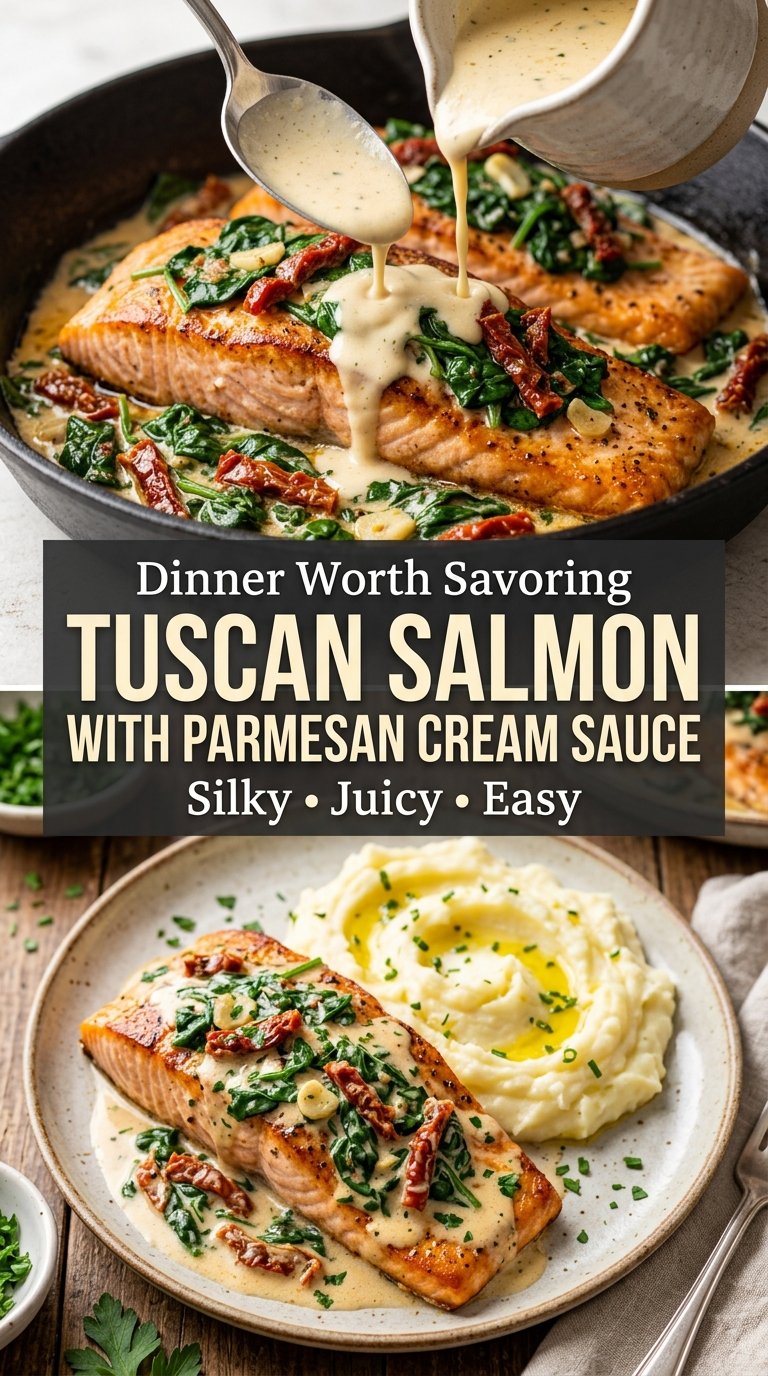
The Seared Salmon That Holds Up Under Cream Sauce
The biggest mistake with salmon in a cream sauce is adding fish that’s only half-cooked or cooking it all the way through before it ever meets the pan sauce. Salmon keeps cooking after it leaves the heat, and if you push it to the point of dryness in the first sear, the sauce can’t hide that. Here, the fillets get a deep golden crust first, then they finish gently in the sauce for just a couple of minutes.
The other thing that matters is the skillet. A hot pan gives you color fast, which keeps the fish from sticking and helps the surface caramelize before the flesh overcooks. If the salmon tears when you try to flip it, it’s not ready yet. Let it release on its own.
- Salmon fillets — Skin-on or skinless both work, but fillets that are similar in thickness cook more evenly. If one end is much thinner, tuck that thin edge under slightly in the pan so it doesn’t dry out before the center finishes.
- Sun-dried tomatoes — Drain them well, then chop them small enough to distribute through the sauce. Oil-packed tomatoes bring the best texture and a deeper, sweeter flavor, but dry-packed can work if you soak them briefly in warm water and then chop them.
- Heavy cream — This is what gives the sauce its body and lets it simmer without breaking. Half-and-half can be used in a pinch, but the sauce will be thinner and needs a little extra reduction time.
- Parmesan cheese — Freshly grated Parmesan melts far better than the shelf-stable kind. Pre-grated cheese often carries anti-caking agents, which is how you end up with a sauce that turns gritty instead of glossy.
Building the Sauce Without Turning It Grainy
Patting and Seasoning the Salmon
Dry the fillets well before they hit the pan. Moisture on the surface is the enemy of browning, and browning is what gives the salmon enough flavor to stand up to the cream sauce. Season both sides evenly so the fish tastes seasoned through the sauce, not just on top. If the fillets look wet after you season them, blot them again before they go in.
Getting the Sear
Heat the oil until it shimmers, then lay the salmon down away from you so hot oil doesn’t splatter back. You want to hear a steady sizzle right away. If the pan is too cool, the fish will stick and steam instead of crusting. Leave it alone until the crust forms and the salmon releases cleanly, then flip it once.
Building the Garlic Parmesan Base
After the salmon comes out, lower the heat before the butter and garlic go in. Garlic burns fast in a hot skillet, and once it turns bitter, the whole sauce tastes harsh. Stir in the sun-dried tomatoes first so they can soften and give the butter a little of their flavor. Then add the cream and let it come to a gentle simmer, not a boil.
Finishing the Sauce and Returning the Salmon
Add the Parmesan gradually and stir until it melts fully before adding more. If the sauce looks tight, give it another minute over low heat; if it looks broken, the heat was too high. Fold in the spinach last so it wilts without losing its color. Return the salmon only after the sauce is smooth, then spoon the sauce over the top and let everything warm together for a minute or two.
Three Ways to Adjust This Skillet Dinner Without Losing the Balance
Dairy-Free Version
Use full-fat coconut cream instead of heavy cream and a dairy-free Parmesan-style substitute that melts well. The sauce will taste a little different and lose some of the sharpness of real Parmesan, but the texture still stays lush if you keep the heat low and add the cheese substitute gradually.
Lower-Carb Serving Ideas
This recipe already fits a low-carb style as written, so the main adjustment is what you serve under it. Spoon it over cauliflower mash, sautéed zucchini, or a bed of wilted greens instead of pasta or rice. That keeps the sauce front and center without changing the dish itself.
What to Use If You Don’t Have Sun-Dried Tomatoes
Use a handful of halved cherry tomatoes and cook them a little longer in the butter so they soften and release some juice. You won’t get the same concentrated sweetness, but you’ll still have the bright tomato note that keeps the sauce from tasting flat.
Making It for a Crowd
Sear the salmon in batches and hold it on a warm plate while you build the sauce. Don’t crowd the skillet, or the fish steams and loses that golden crust. When serving more people, the sauce scales up well, but keep the final simmer gentle so the Parmesan stays smooth.
Storage and Reheating
- Refrigerator: Store leftovers in an airtight container for up to 2 days. The sauce will thicken as it chills.
- Freezer: Not ideal. Cream sauces can split after freezing and the salmon texture softens too much.
- Reheating: Warm gently in a covered skillet over low heat with a splash of cream or broth. High heat is what breaks the sauce and dries out the fish.
Answers to the Questions Worth Asking
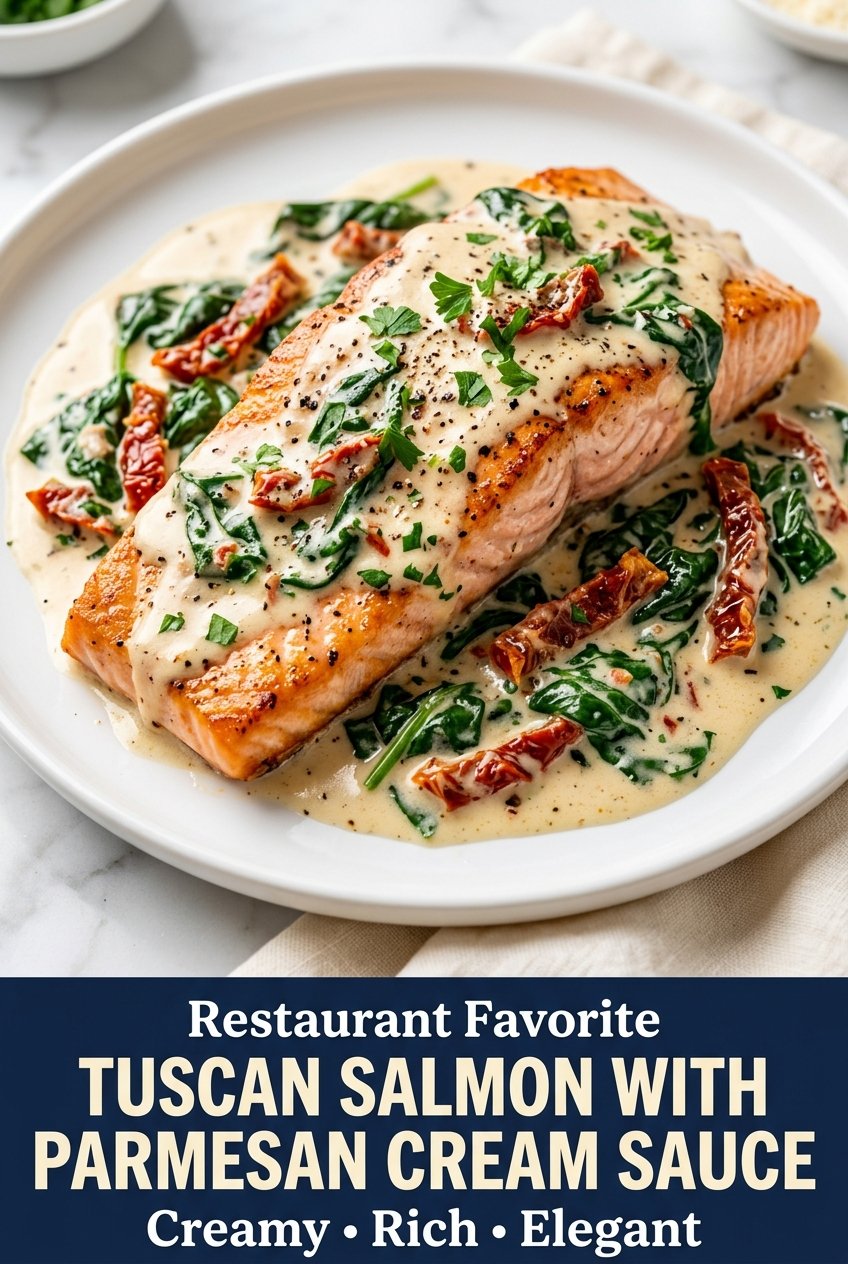
Tuscan Salmon with Parmesan Cream Sauce
Ingredients
Equipment
Method
- Pat the salmon fillets dry with paper towels, then season both sides with kosher salt, black pepper, garlic powder, and Italian seasoning.
- Heat olive oil in a large skillet over medium-high heat until shimmering, then sear the salmon for 4–5 minutes per side until golden and the internal temperature reaches 145°F.
- Transfer the salmon to a plate to rest briefly while you make the sauce.
- Reduce the heat to medium and melt unsalted butter in the same skillet.
- Sauté minced garlic for about 30 seconds until fragrant, scraping up any browned bits from the pan.
- Stir in the chopped sun-dried tomatoes and cook for 1 minute.
- Pour in the heavy cream and bring it to a gentle simmer.
- Add Parmesan cheese and stir until fully melted and the sauce turns smooth and creamy, about 2–3 minutes.
- Fold in baby spinach and crushed red pepper flakes (if using) and cook until the spinach wilts.
- Stir in fresh lemon juice.
- Return the salmon to the skillet and spoon the Parmesan cream sauce over each fillet.
- Simmer for 2 minutes until heated through, then garnish with fresh parsley and serve immediately.
