
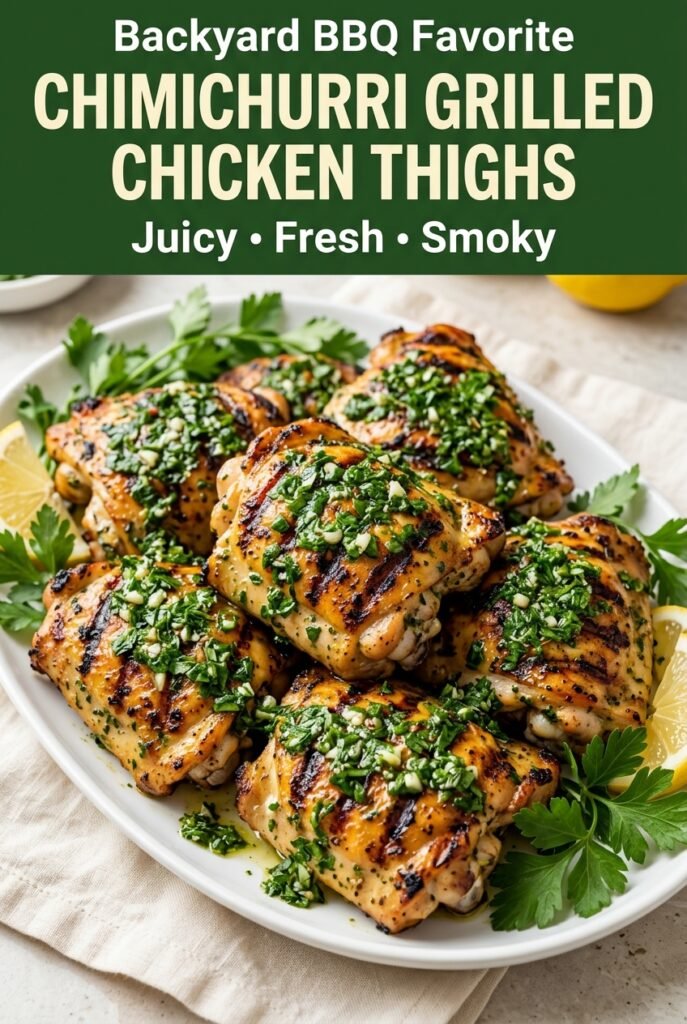
Chimichurri Grilled Chicken Thighs
Juicy chicken thighs and a sharp, herb-packed chimichurri are a hard combination to beat when you want dinner to taste like more than the sum of its parts. The chicken…
Tip: save now, read later.
Juicy chicken thighs and a sharp, herb-packed chimichurri are a hard combination to beat when you want dinner to taste like more than the sum of its parts. The chicken gets a smoky grill char and stays tender underneath, while the sauce cuts through the richness with garlic, vinegar, parsley, and just enough heat to keep each bite lively. That contrast is what makes this dish stick around in the rotation.
The marinade does a few important jobs here. Olive oil helps the spices cling, lemon juice brightens the meat, and smoked paprika gives you that grilled depth even before the chicken hits the fire. Chimichurri is best when the herbs are chopped small, not puréed, so the sauce stays loose and spoonable instead of turning muddy. Let it sit while the chicken marinates and the garlic and vinegar settle into each other.
Below you’ll find the timing that keeps the chicken juicy, the one grill habit that prevents sticking, and a few smart ways to adapt the sauce if you’re working with what you have on hand.
The chimichurri stayed bright and the chicken came off the grill with those perfect charred edges. I used the full 30-minute marinade and it was juicy all the way through.
Save these chimichurri grilled chicken thighs for the nights when you want smoky grill marks and a fresh herb sauce in the same dinner.
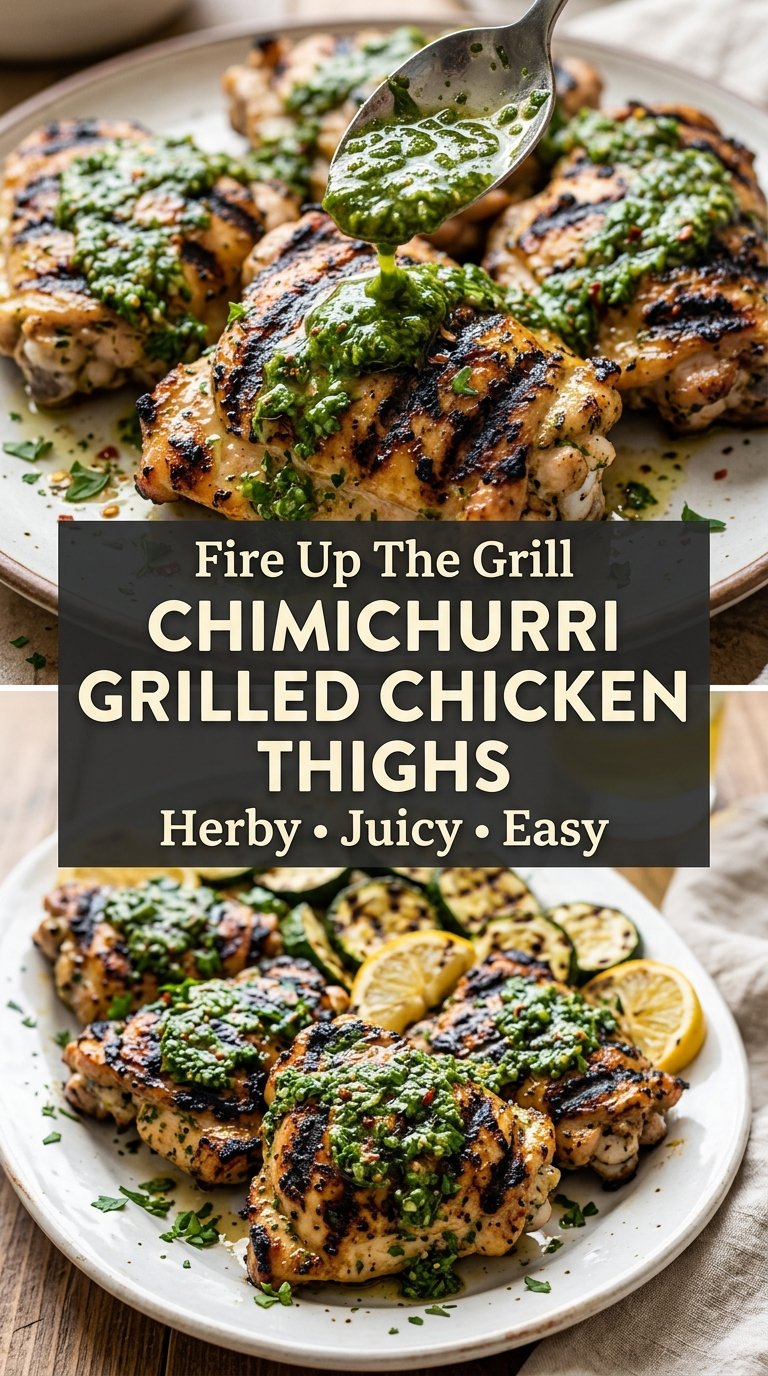
The Part Most People Miss: Chimichurri Needs Rest, Not Blending
Chimichurri sounds simple until it turns into a paste or tastes flat. The fix is in the texture and the timing. Chop the herbs finely enough that the sauce clings to the chicken, but don’t process them into a puree. You want flecks of parsley and cilantro suspended in oil and vinegar, not a green sauce that eats like pesto.
The other mistake is tasting it the second it comes together and assuming it’s done. Right after mixing, the garlic can taste sharp and the vinegar can feel harsh. Give it a short rest while the chicken cooks and the edges of the garlic soften. That pause is what turns the sauce from loud to balanced.
- Chicken thighs — Boneless, skinless thighs stay juicy on a hot grill and forgive a little overcooking better than breasts do. If you swap in chicken breasts, pound them to an even thickness and pull them at 160°F so they don’t dry out while resting.
- Smoked paprika — This gives the marinade a deep charred note that tastes like it spent more time over the coals than it really did. Regular paprika will work, but you’ll lose some of that smoky backbone.
- Fresh parsley and cilantro — These are the heart of the chimichurri. Use fresh herbs here; dried herbs won’t give you the same bright bite or color. If cilantro tastes soapy to you, replace it with more parsley and a small handful of fresh basil.
- Red wine vinegar — This keeps the sauce sharp enough to cut through the richness of the chicken. White wine vinegar can stand in if that’s what you have, but balsamic will push the sauce in a sweeter direction that doesn’t fit as well.
- Extra virgin olive oil — A good olive oil carries the herbs and garlic, and this is one place where it matters. You don’t need the most expensive bottle, but avoid one that tastes flat or stale because the sauce is mostly oil, herbs, and acid.
Getting the Grill Marks Without Drying Out the Chicken
Marinate for flavor, not for tenderness alone
Coat the chicken evenly and let it sit long enough for the spices and lemon juice to settle in. Thirty minutes gives you a clear flavor boost, while a few hours adds more depth. Past eight hours, the acid can start to make the surface a little soft, which works against the texture you want on the grill.
Use a hot, clean grate
Preheat the grill to medium-high so the chicken sears instead of steaming. Oil the grates lightly after they’re hot, not before, or the oil can burn off before the chicken goes on. If the thighs stick when you try to turn them, give them another minute; they usually release once a crust forms.
Pull the chicken at the right moment
Grill the thighs until they hit 165°F in the thickest part and the juices run clear. The surface should have deep brown grill marks and some charred edges, but the meat underneath should still look plump, not tightened and shrunken. Resting for five minutes matters because it keeps the juices in the chicken instead of spilling onto the cutting board.
Spoon the sauce on at the end
Add the chimichurri just before serving so the herbs stay fresh and the oil doesn’t cook down into the chicken. If you pour it on too early, the bright garlic and vinegar notes dull out. A generous spoonful right before the first bite is what gives this dish its snap.
How to Adapt These Chimichurri Grilled Chicken Thighs for Different Kitchens
Dairy-Free and Naturally Gluten-Free
This recipe already fits both of those needs without extra changes, which is part of why it works so well for mixed dinner tables. Just keep an eye on what you serve alongside it; rice, potatoes, grilled vegetables, or a simple salad all keep the meal gluten-free and let the sauce stay front and center.
No Grill? Use a Cast Iron Pan
A heavy skillet gives you a strong sear and a little crust, even if you won’t get the same smoke. Heat the pan until it’s hot enough that the chicken sizzles immediately, then cook in batches so the pieces don’t crowd and steam. Finish with the chimichurri the same way.
Swap the Herbs Based on What You Have
If you can’t get enough parsley, use more cilantro or add a little flat-leaf basil for another fresh note. The sauce will change character, but it will still do the same job: cut through the grilled chicken with acid, herbs, and garlic. Just don’t replace the fresh herbs with dried versions and expect the same brightness.
Storage and Reheating
- Refrigerator: Store cooked chicken and chimichurri separately for up to 4 days. The sauce will darken a little, but it stays usable and flavorful.
- Freezer: The chicken freezes well for up to 2 months. Chimichurri is best made fresh, since the herbs lose their bright texture after freezing.
- Reheating: Warm the chicken gently in a covered skillet over low heat or in a 300°F oven until just heated through. High heat dries out the thighs and makes the edges tough before the center is warm.
Answers to the Questions Worth Asking
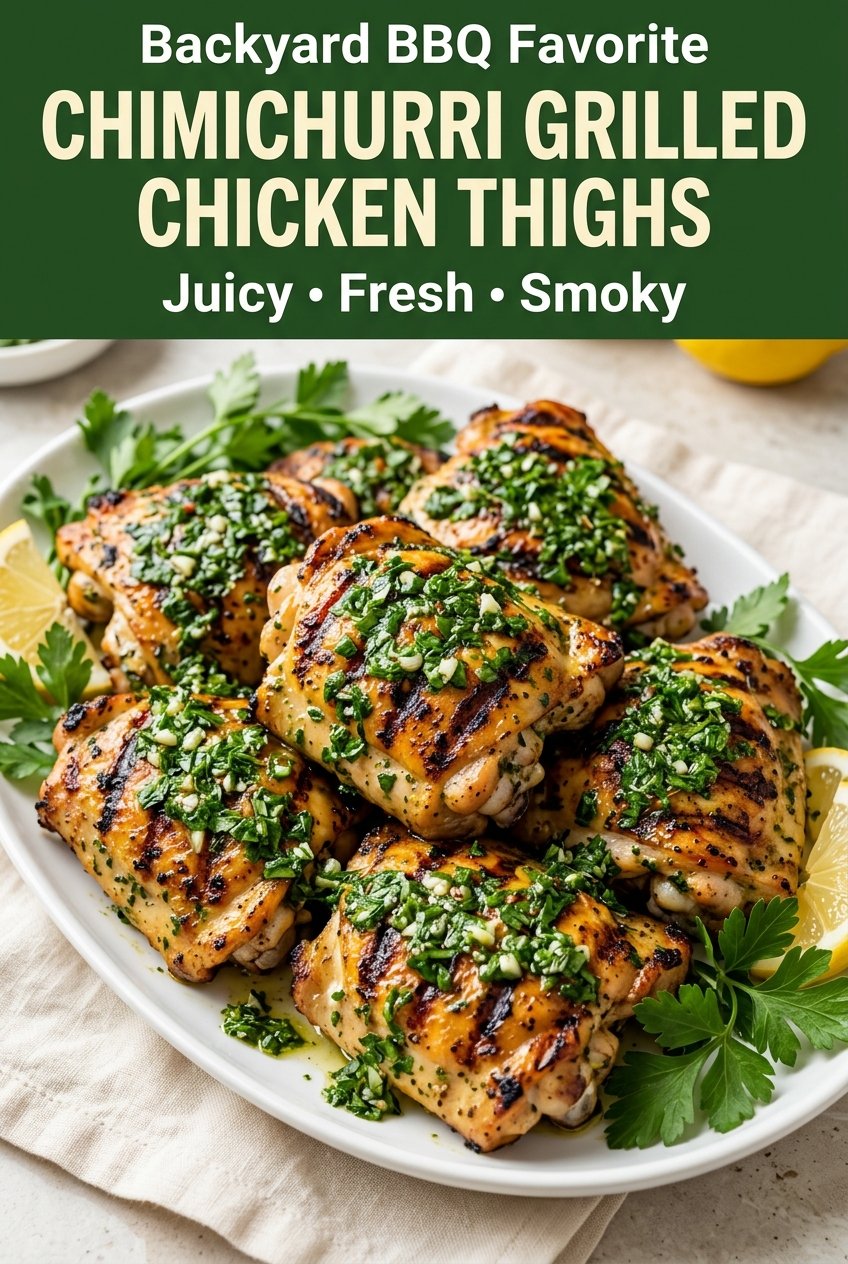
Chimichurri Grilled Chicken Thighs
Ingredients
Equipment
Method
- Pat the chicken thighs dry with paper towels to help them brown and char.
- Toss the chicken with olive oil, kosher salt, black pepper, smoked paprika, garlic powder, onion powder, dried oregano, and fresh lemon juice.
- Cover the chicken and marinate for at least 30 minutes or up to 8 hours in the refrigerator, until coated and fragrant.
- Combine the parsley, cilantro, garlic, fresh oregano, crushed red pepper flakes, red wine vinegar, extra virgin olive oil, kosher salt, and black pepper in a bowl.
- Stir until well blended, then let it rest while the chicken marinates so the flavors mingle.
- Preheat the grill to medium-high heat (about 400–425°F) and lightly oil the grill grates to prevent sticking.
- Grill the chicken for 5–7 minutes per side, turning once, until nicely charred and browned.
- Continue grilling until the internal temperature reaches 165°F in the thickest part of a thigh.
- Transfer the chicken to a serving platter, then let it rest for 5 minutes so the juices redistribute.
- Spoon a generous amount of chimichurri over the grilled chicken just before serving for a fresh herb pop.
