
Slow Cooker Jamaican Jerk Chicken
When I lift the slow-cooker lid, the chicken is tender and the jerk paste has turned into a dark, fragrant coating. The skin, though, is still soft. That’s expected: a…
Tip: save now, read later.
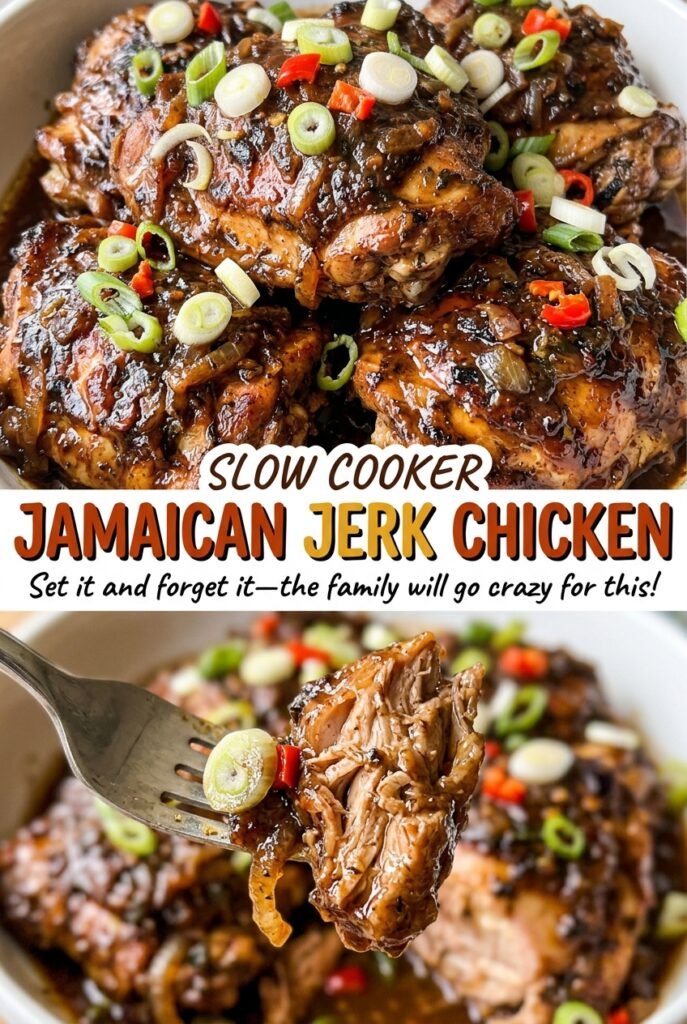
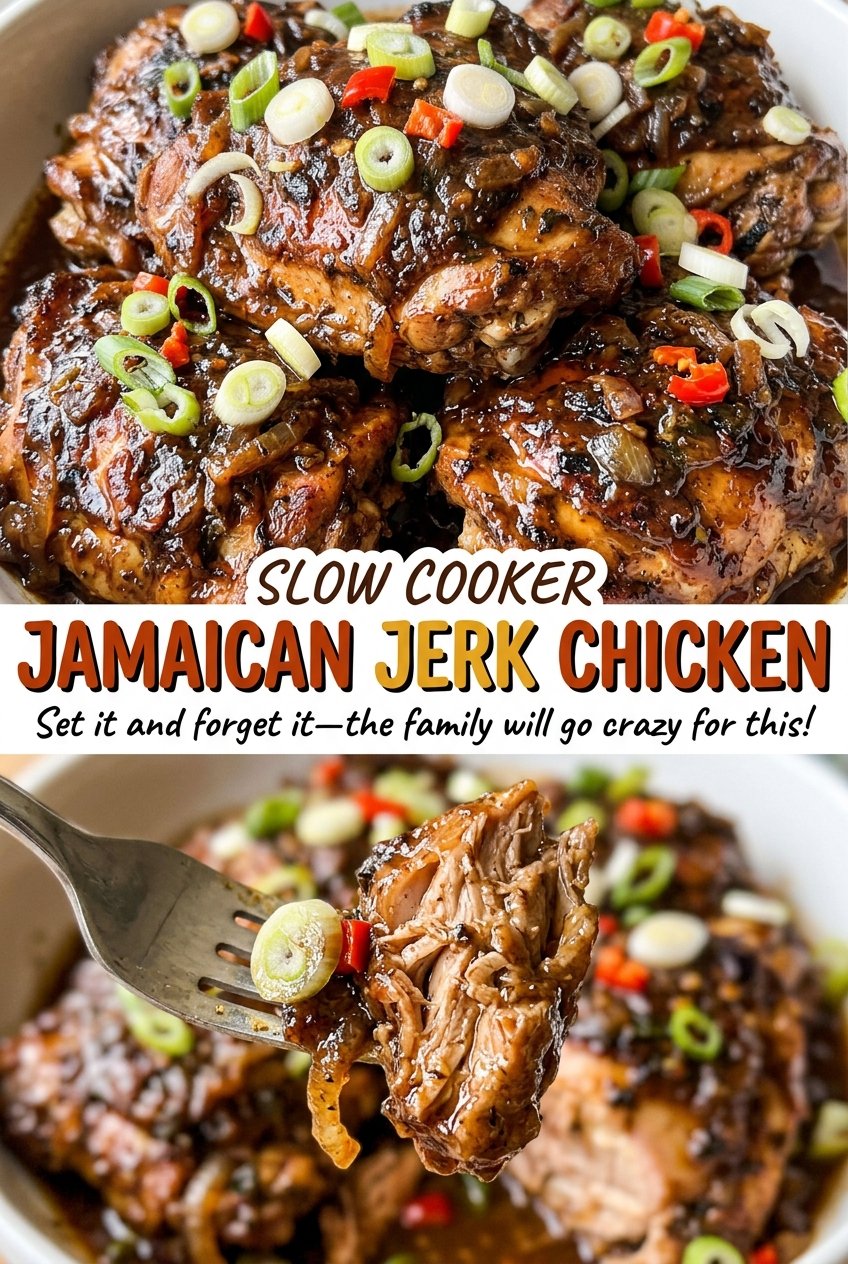
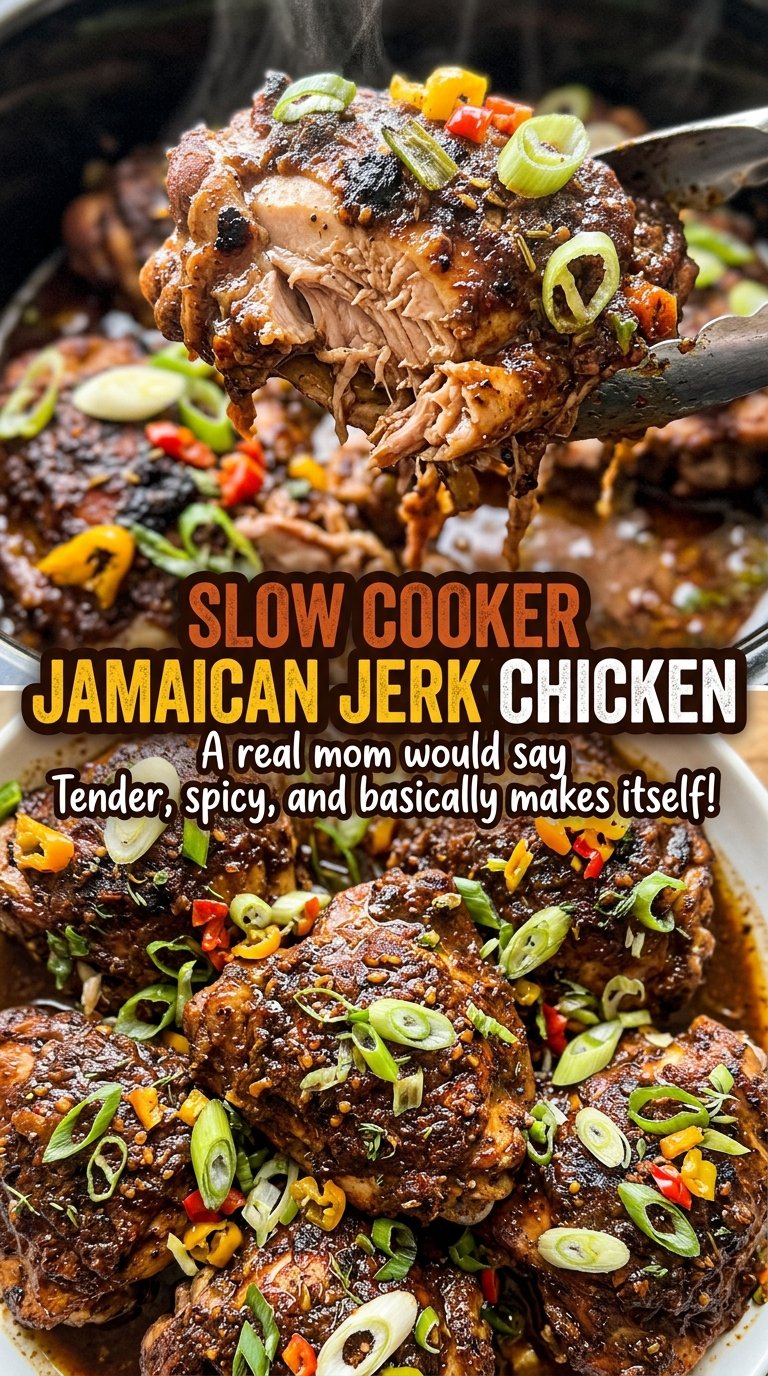
When I lift the slow-cooker lid, the chicken is tender and the jerk paste has turned into a dark, fragrant coating. The skin, though, is still soft. That’s expected: a covered slow cooker gives you juicy thighs, not crisp skin, so I finish them under the broiler for a few minutes. These slow cooker Jamaican jerk chicken thighs come out with warm spice, a little sweetness, and a Scotch bonnet kick.
The paste is blended before it goes into the cooker, which lets the scallions, garlic, ginger, lime, and spices coat the chicken evenly. I keep the thighs skin side up, then move them to a baking sheet for the quick broil. That last burst of direct heat adds browned spots without asking the slow cooker to do a job it can’t do.
Kitchen Note
A seeded Scotch bonnet still has plenty of heat. I use gloves when I chop it, and wash my hands well before touching my face or eyes.
Save this slow cooker Jamaican jerk chicken for tender thighs with a browned, lightly charred finish and a lively Scotch bonnet kick.
Why Slow-Cooker Jerk Chicken Needs Two Kinds of Heat
A slow cooker traps moisture, so the chicken cooks gently in its own juices and the jerk coating. That’s exactly what helps bone-in thighs turn tender, but it also means the skin can’t dry and crisp the way it would in an uncovered oven. Keeping the chicken skin side up helps the paste stay on the surface, where the broiler can reach it later.
The broiler supplies the direct, intense heat the slow cooker can’t. It browns the skin and catches the brown sugar in the paste, giving you lightly charred spots and a deeper roasted flavor. The change happens quickly, so stay nearby and watch the surface instead of stepping away to do another task. You’re looking for browned patches, not a uniformly black coating; the sugar can go from dark and toasty to scorched in moments.
Think of the slow cooker and broiler as separate stages with different jobs: one makes the meat tender, and the other finishes the outside. Skipping the broiler still leaves you with cooked chicken, but you’ll miss the browned finish that makes this version feel like jerk chicken rather than simply saucy chicken.
How Scotch Bonnet, Allspice, and Lime Shape the Jerk Paste
- Scotch bonnet and fresh aromatics — The pepper brings fruity heat, while scallions, garlic, and fresh ginger give the paste its sharp, savory base. Fresh ginger and garlic have a brighter bite than dried versions; if you want less heat, use half a seeded Scotch bonnet rather than relying on removing the seeds alone.
- Soy sauce, lime, and brown sugar — Soy sauce seasons the chicken and adds savory depth, lime keeps the paste from tasting heavy, and brown sugar balances the pepper while helping the surface brown under the broiler. Fresh lime juice has a cleaner, livelier taste than bottled juice. For a gluten-free version, use tamari in place of the soy sauce.
- Allspice and the supporting spices — Ground allspice supplies the warm, distinctive center of the seasoning; thyme, cinnamon, and nutmeg round it out rather than replacing it. Pantry spices are fine, but old, faded jars won’t give the paste the same fragrance. Don’t substitute cinnamon alone for allspice; the flavor would turn one-note.
- Bone-in, skin-on chicken thighs — The bone helps the thighs stay juicy through the slow cook, and the skin gives the broiler a surface to brown. Choose thighs of similar size so they cook at a similar pace. Boneless or skinless pieces need different timing and won’t give you the same finish.
From Blended Paste to Tender, Broiled Thighs
Blend Until the Paste Clings
Add the scallions, Scotch bonnet, soy sauce, lime juice, brown sugar, oil, garlic, ginger, allspice, thyme, cinnamon, nutmeg, salt, and pepper to a blender or food processor. Blend until the mixture becomes a thick paste, scraping down the sides as needed so no large pieces of scallion or garlic stay trapped above the blades. It should look cohesive and spoonable, not like a thin dressing. If the machine stalls, scrape the sides down before blending again rather than adding extra liquid.
Coat the Chicken in the Cooker
Arrange the thawed chicken thighs skin side up in a 6-quart slow cooker. Spread the jerk paste over the chicken so the pieces are coated, keeping the skin facing up. There’s no need to turn the thighs during cooking; leaving them in place keeps the coating on top for the broiler finish. The paste may settle and loosen as the chicken releases moisture.
Cook Until the Thickest Part Is Ready
Cover and cook on LOW for 4 to 5 hours, or on HIGH for 2 1/2 to 3 1/2 hours. Check the thickest part of each thigh with an instant-read thermometer, keeping the tip away from the bone; each one should reach at least 165°F. Thighs can vary in size, so use the temperature as your final cue rather than relying only on the clock. If one piece needs more time, leave the others in the cooker while it finishes.
Broil for Color, Then Rest
Transfer the chicken skin side up to a foil-lined rimmed baking sheet. Broil on high about 6 inches from the heat for 3 to 5 minutes, watching closely until the skin is browned and lightly charred in spots. The paste contains brown sugar, so don’t leave the oven unattended during this short finish. Rest the chicken for 5 minutes before serving.
Two Smart Ways to Adjust the Heat and Ingredients
Make It Gluten-Free with Tamari
Replace the soy sauce with the same amount of certified gluten-free tamari. The paste keeps its savory, salty base, though tamari usually tastes a little rounder and less sharp.
Turn Down the Scotch Bonnet Heat
For a milder paste, use one seeded jalapeño instead of the Scotch bonnet. You’ll still get a fresh pepper flavor, but you’ll lose some of the Scotch bonnet’s fruity aroma and intense heat.
Storage and Reheating
- Refrigerator: Store leftovers in an airtight container for 3 to 4 days. The skin softens once chilled.
- Freezer: Freeze the chicken with some of its cooking juices in a freezer-safe airtight container for up to 3 months for best quality.
- Reheating: Warm covered in the microwave in short bursts or in a covered 325°F oven until hot throughout. The skin won’t stay crisp when reheated, so avoid a long, uncovered reheat that can dry out the meat.
Questions That Come Up When Making Jerk Chicken in a Slow Cooker
Slow Cooker Jamaican Jerk Chicken
Ingredients
Equipment
Method
- Add the scallions, Scotch bonnet pepper, soy sauce, fresh lime juice, packed light brown sugar, neutral oil, garlic, fresh ginger, ground allspice, dried thyme, ground cinnamon, ground nutmeg, kosher salt, and black pepper to a blender or food processor.
- Blend into a thick paste, scraping down the sides as needed.
- Arrange the chicken skin side up in a 6-quart slow cooker.
- Spread the jerk paste over the chicken.
- Cover and cook on LOW for 4 to 5 hours or HIGH for 2 1/2 to 3 1/2 hours, until the thickest part of each thigh reaches at least 165°F without touching the bone.
- Transfer the chicken skin side up to a foil-lined rimmed baking sheet.
- Broil on high, about 6 inches from the heat, for 3 to 5 minutes, watching closely, until the skin is browned and lightly charred in spots.
- Rest the chicken for 5 minutes before serving.
