
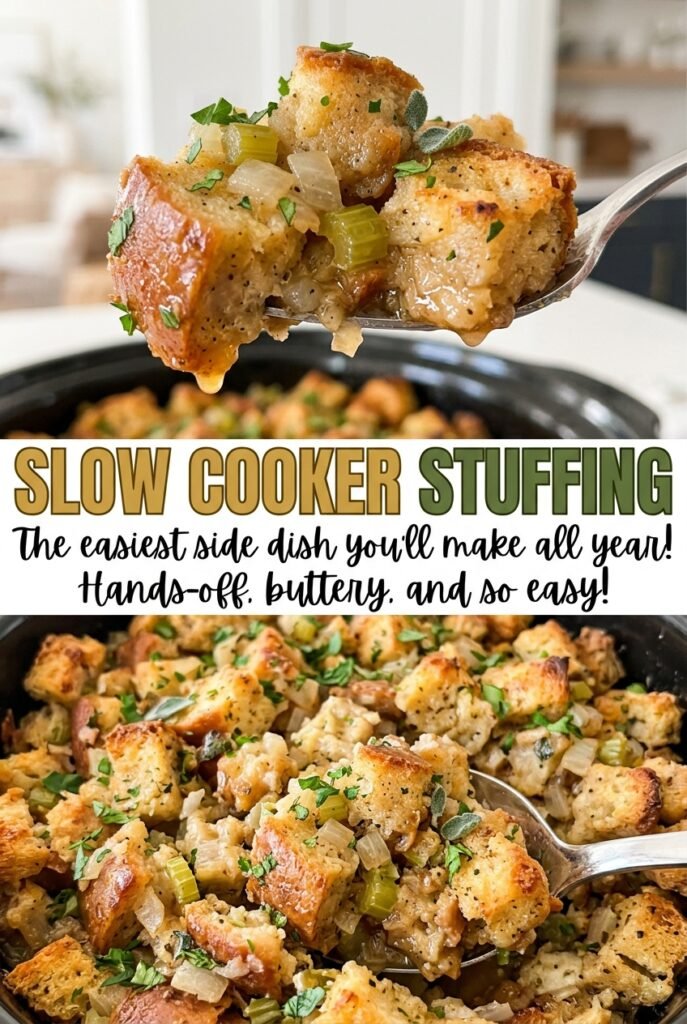
Slow Cooker Stuffing
As the butter melts around the onion and celery, the kitchen starts to smell like the beginning of a holiday meal, even on an ordinary day. Those vegetables need time…
Tip: save now, read later.
As the butter melts around the onion and celery, the kitchen starts to smell like the beginning of a holiday meal, even on an ordinary day. Those vegetables need time to soften in the skillet before they join the bread; rushed, they stay firm while the rest of the stuffing turns tender. Slow Cooker Stuffing takes that familiar buttery, herby mixture off the oven schedule and lets it cook gently while you tend to the rest of dinner.
I use dried bread cubes because they have room to take in the broth without collapsing into paste. The vegetables and melted butter coat the cubes first, then the broth-and-egg mixture gets tossed through until the bread is evenly moistened. That balance gives you a tender center with enough structure to spoon neatly, and the sage and thyme make each bite taste unmistakably like stuffing.
Kitchen Note
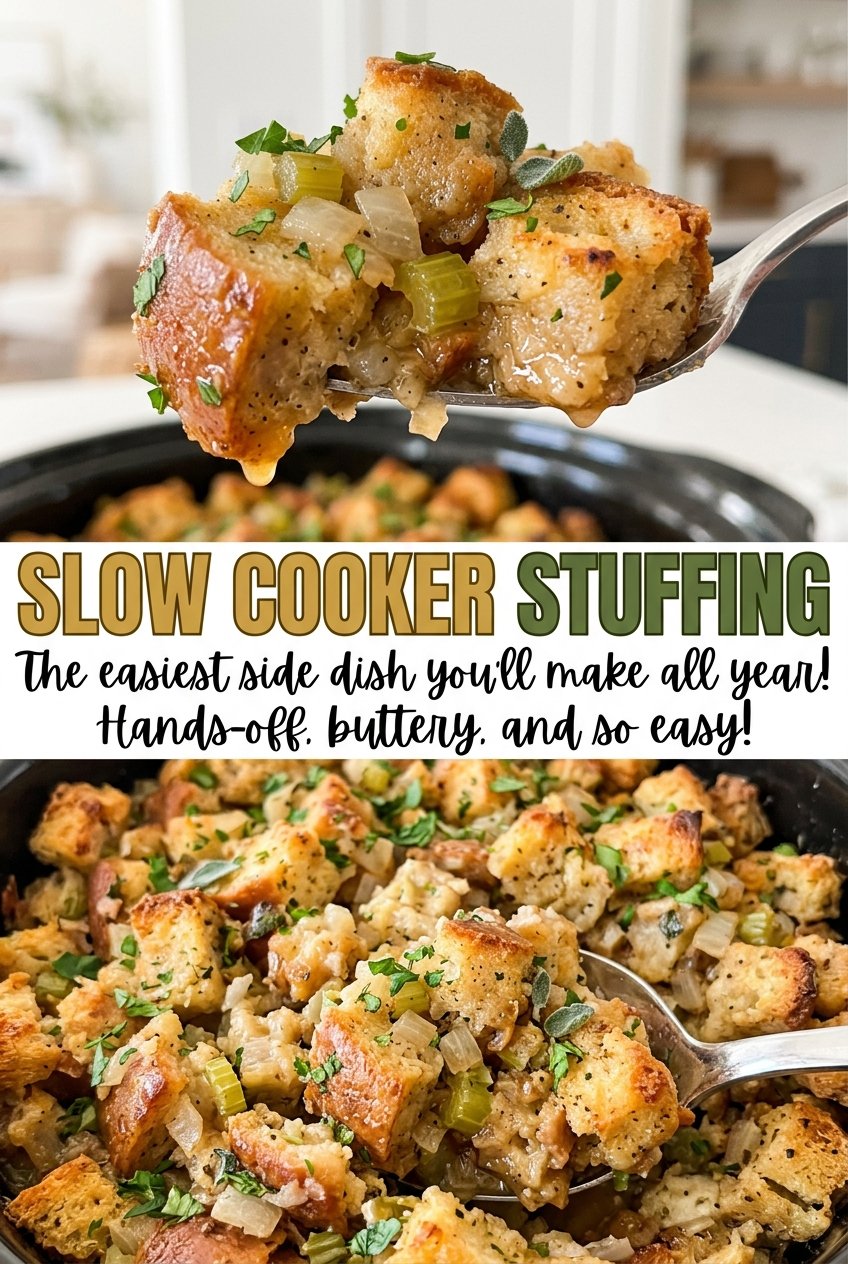
Let the finished stuffing sit covered for 10 minutes before serving. That short rest helps the center settle, so it scoops more cleanly instead of falling apart as soon as you lift the lid.
Save this Slow Cooker Stuffing for an easier dinner prep: tender bread cubes, buttery vegetables, and classic sage and thyme flavor.
Why Dried Bread Cubes Matter More Than Extra Broth
Stuffing that turns heavy and pasty usually has too much moisture for the bread to hold. Dried bread cubes start out firm and thirsty, so they can absorb the broth and egg mixture while keeping some shape. Fresh, soft bread doesn’t behave the same way in this slow cooker method; it can go limp before the center has finished cooking.
There are two different jobs happening in the bowl. The melted butter and softened vegetables coat the cubes and bring savory flavor into the bread, while the broth adds the moisture that makes the finished stuffing tender. Toss the dry cubes with the vegetables first, then add the broth whisked with the eggs. Once the bread looks evenly moistened, stop tossing; you want the cubes coated, not crushed.
A covered slow cooker holds in moisture rather than drying the surface like an uncovered oven. This gives the stuffing a soft, cohesive texture throughout, not a crisp top. Starting with dried cubes and using the measured broth keeps that texture tender without leaving the mixture swimming in liquid.
What the Bread, Broth, and Eggs Each Bring to the Bowl
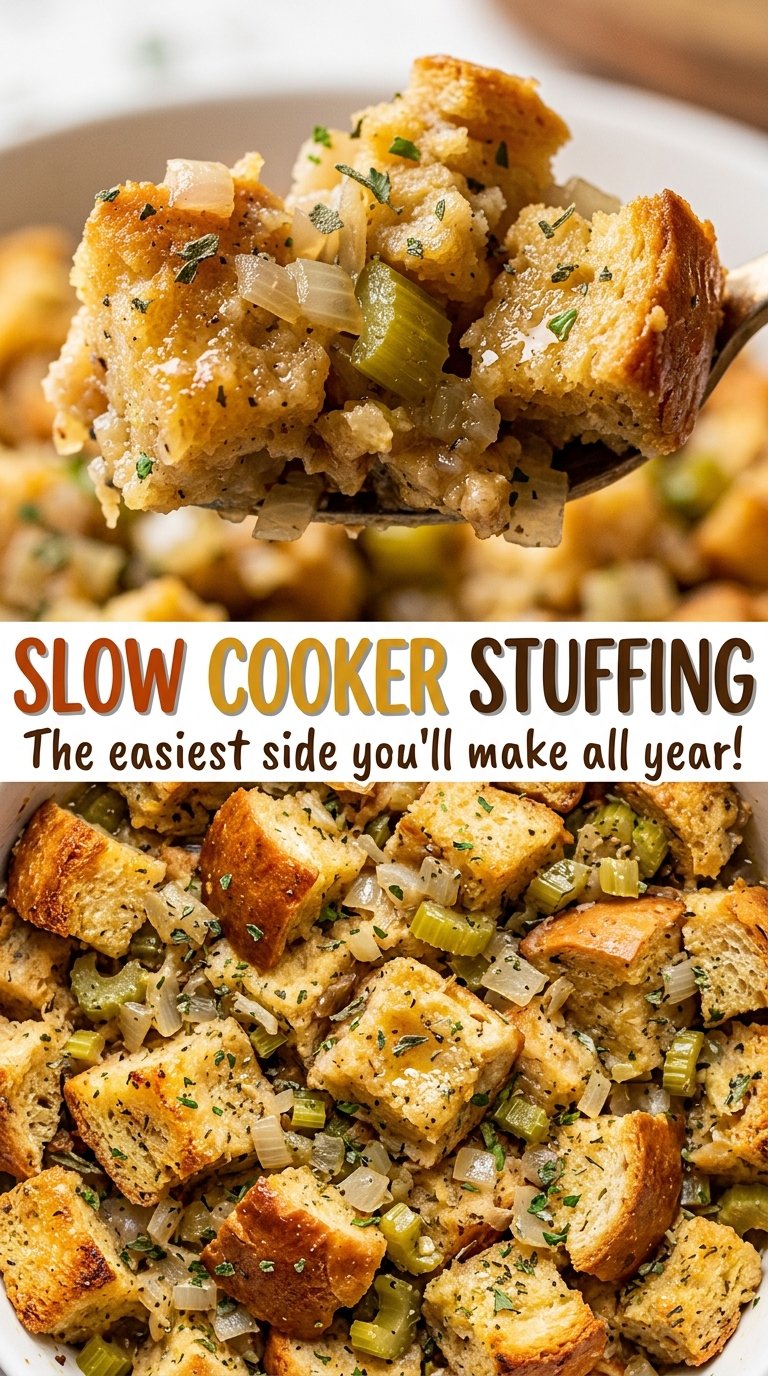
- Dried bread cubes — These form the body of the stuffing and absorb the seasoned liquid without immediately losing their shape. Store-bought dried cubes are a practical choice; homemade cubes work too if they’re thoroughly dried. The dry texture matters more here than the bread’s particular style.
- Unsalted butter — Butter carries the onion and celery flavor through the bread and gives the mixture its rich, savory base. Unsalted butter lets you control the seasoning more closely than salted butter, and there’s no need for a premium brand in this cooked mixture.
- Yellow onion and celery — They bring the familiar aromatic base and soften in the butter before they meet the bread. Chop them into small, similar-sized pieces so they soften at the same pace and distribute throughout the cubes.
- Low-sodium chicken broth — This moistens the bread while keeping the salt level manageable, since the mixture also includes kosher salt. Low-sodium broth is useful here because it gives you more control over the final seasoning.
- Eggs — Whisked into the broth, they help the stuffing hold together as it cooks. Whisk until the yolks and whites are fully blended so the liquid coats the bread evenly.
- Parsley, rubbed sage, and dried thyme — Sage gives the stuffing its classic earthy note, while thyme and parsley fill out the seasoning. Rubbed sage disperses easily through the bread mixture; check that your dried herbs still smell fragrant before using them.
Building the Stuffing Before It Goes Into the Slow Cooker
Soften the onion and celery in butter
Coat the inside of a 6-quart slow cooker with nonstick cooking spray before you start assembling. Melt the butter in a large skillet over medium heat, then add the chopped onion and celery. Cook for 8 to 10 minutes, stirring occasionally, until the vegetables are softened. If they still feel firm when you stir, give them the full cooking time; they won’t soften as evenly once buried in the bread.
Coat the dried cubes with the vegetables
Put the bread cubes in a large bowl and add the cooked vegetables and melted butter. Add the chopped fresh parsley, rubbed sage, dried thyme, kosher salt, and black pepper, then toss until the herbs and vegetables are spread through the cubes. Use a large bowl so you can turn the mixture without crushing the bread. The butter should lightly coat the cubes rather than pool at the bottom.
Whisk the broth and eggs together
In a medium bowl, whisk the low-sodium chicken broth with the eggs until combined. Pour this mixture over the bread and toss gently until the cubes look evenly moistened. Check the bottom of the bowl as you toss; dry cubes often settle there and can be missed. Stop once the liquid is distributed, since vigorous mixing breaks down the bread.
Cook until the center is set
Transfer the moistened mixture to the prepared slow cooker and cover it. Cook on LOW for 4 to 5 hours or on HIGH for 2 to 3 hours, until the center reaches 160°F. Check the middle rather than judging by the edges, which heat first. Let the stuffing rest, covered, for 10 minutes before serving.
Easy Changes for Dietary Needs and a Different Herb Balance
Make it vegetarian with vegetable broth
Replace the chicken broth with vegetable broth and keep the rest of the ingredients and method the same. Choose a low-sodium vegetable broth so the seasoning stays balanced; the result keeps the buttery herb-and-bread character without the chicken flavor.
Use dried gluten-free bread cubes
Swap in dried gluten-free bread cubes for the regular dried cubes, using the same volume. Gluten-free breads vary in how quickly they absorb liquid, so toss gently and check that the cubes are evenly moistened before transferring the mixture to the cooker.
Make the thyme more prominent
Leave out the rubbed sage for a gentler, less earthy flavor, letting the thyme and parsley stand out more. The stuffing will still taste savory and herby, but it won’t have the classic strong sage note.
Storage and Reheating
- Refrigerator: Refrigerate leftovers within 2 hours and keep them in an airtight container for 3 to 4 days. The bread will soften more as it sits.
- Freezer: Freeze cooled portions in an airtight freezer-safe container for up to 1 month for best texture. Thaw in the refrigerator before reheating.
- Reheating: Reheat covered in a 325°F oven until the center reaches 165°F. Keep it covered so the edges don’t dry out before the middle is hot.
Questions That Come Up When Making Slow Cooker Stuffing
Slow Cooker Stuffing
Ingredients
Equipment
Method
- Coat the inside of a 6-quart slow cooker with nonstick cooking spray.
- Melt the butter in a large skillet over medium heat, add the onion and celery, and cook for 8 to 10 minutes, stirring occasionally, until softened.
- Put the bread cubes in a large bowl, add the cooked vegetables and butter, parsley, sage, thyme, salt, and pepper, and toss to combine.
- Whisk the chicken broth and eggs in a medium bowl, pour over the bread mixture, and toss until evenly moistened.
- Transfer the mixture to the slow cooker, cover, and cook on LOW for 4 to 5 hours or HIGH for 2 to 3 hours, until the center reaches 160°F.
- Let the stuffing rest, covered, for 10 minutes before serving.
