
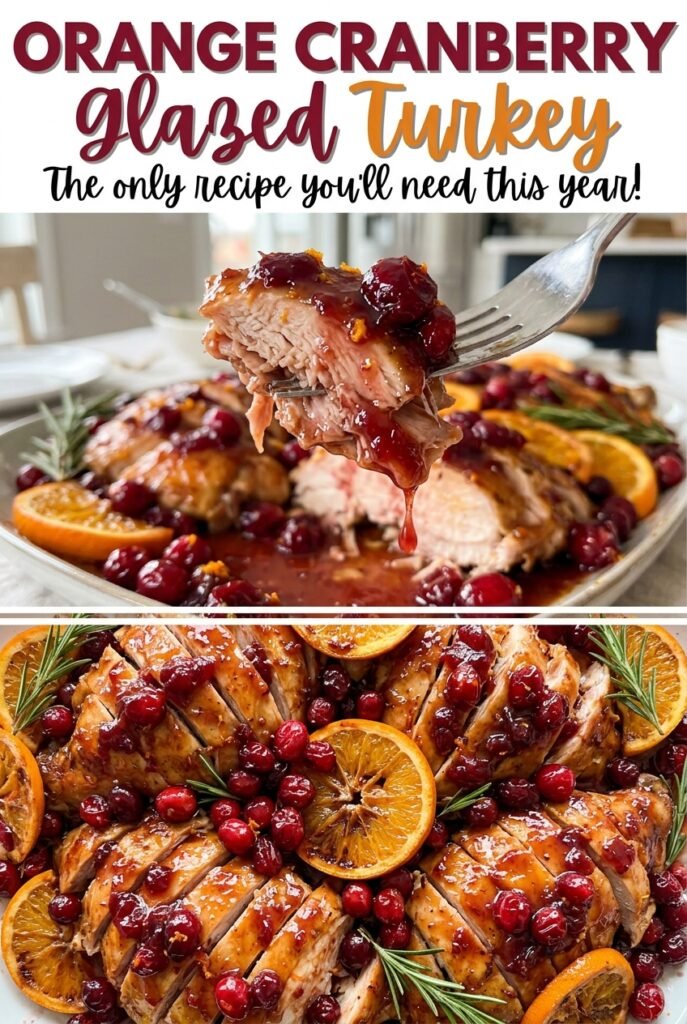
Orange Cranberry Glazed Turkey
When cranberry glaze meets hot turkey skin, it bubbles at the edges and turns glossy, with a sharp orange scent that cuts through the richness of the roast. I brush…
Tip: save now, read later.
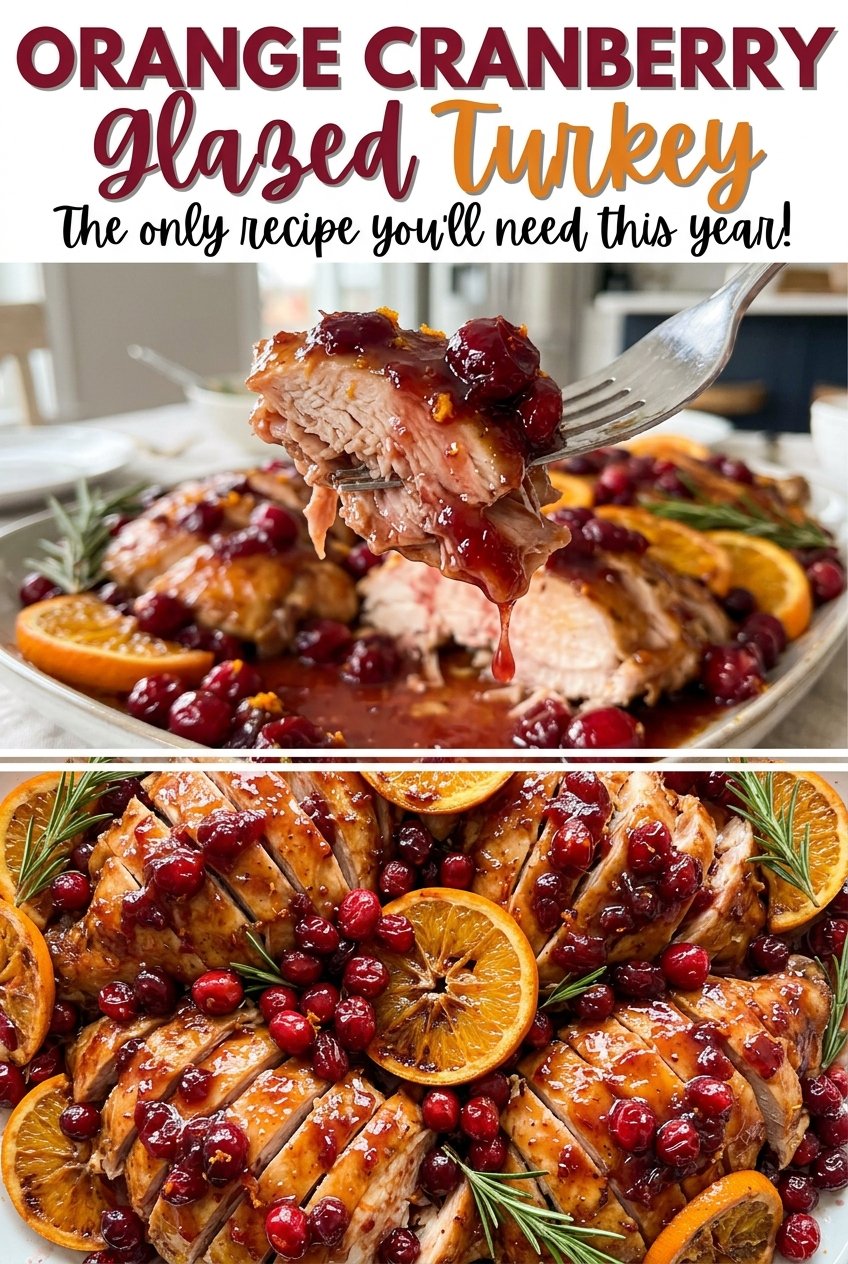
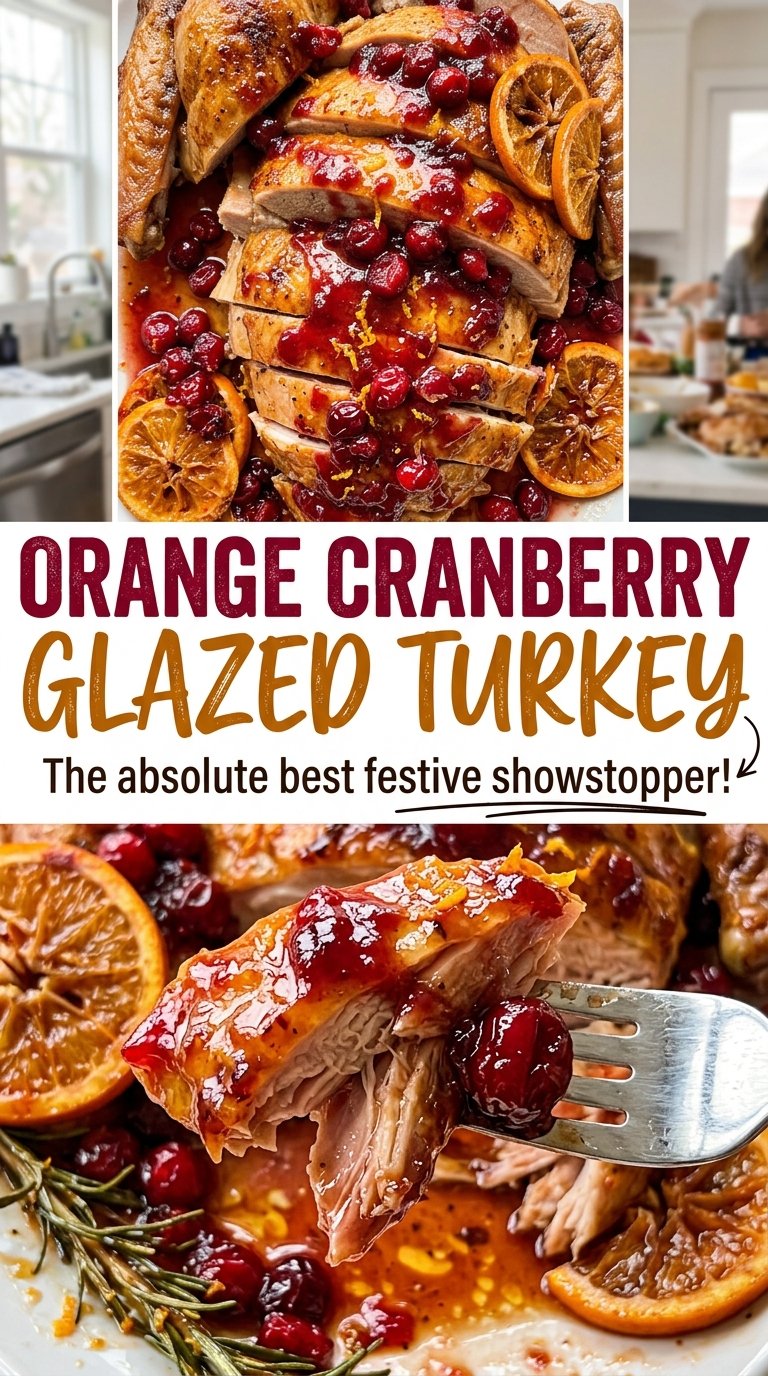
When cranberry glaze meets hot turkey skin, it bubbles at the edges and turns glossy, with a sharp orange scent that cuts through the richness of the roast. I brush it on late in the cooking, once the turkey is already well on its way, so the brown sugar has time to cling without sitting in the oven for hours. That timing gives this Orange Cranberry Glazed Turkey its bright, ruby-red finish and keeps the glaze from darkening too quickly.
Under the skin, softened butter helps the breast and thighs stay succulent while the turkey roasts. Onion, orange, and thyme tucked into the cavity add a gentle aromatic note without crowding the bird with stuffing. The cranberry sauce thickens on the stove while the turkey cooks, so the final stretch is just brushing, checking the temperature, and letting the roast rest before carving. The result is tender turkey with a tart-sweet glaze that catches on every slice.
Kitchen Note
Loosen the skin with your fingers slowly, working over the breast and thighs without pulling hard at one spot. If it feels tight, ease your hand farther under the skin before spreading the butter.
Save this Orange Cranberry Glazed Turkey for a centerpiece with juicy meat and a tart, glossy cranberry finish.
Why the Cranberry Glaze Goes on Near the End
Cranberries bring tartness, but the glaze also contains brown sugar. If that sweet coating spends the whole roast in a hot oven, it can get too dark before the turkey is ready. Brushing it on once the breast is around 145°F gives the glaze a shorter window to set and shine while the meat finishes cooking.
That timing also gives you a useful visual check: the turkey should already be roasting steadily before the first layer goes on. Brush another layer on every 15 minutes during the final stretch, watching the color as you go. If it darkens faster than you want, a loose foil tent shields the surface while the breast and innermost thigh finish roasting. You get a cranberry coating that tastes bright rather than scorched, and you don’t have to choose between a finished bird and a good-looking glaze.
What the Cranberries, Orange, and Dijon Each Bring
- Turkey — A fully thawed whole bird in the specified size range roasts on a predictable schedule and leaves room for the glaze to finish without rushing. Choose a bird that fits comfortably in your roasting pan with space for air to circulate around it. A larger or smaller bird changes the timing, so don’t assume the same roast schedule will apply.
- Fresh or frozen cranberries — Either works in the glaze. Fresh berries tend to look firm when they go into the saucepan; frozen ones are a practical option when fresh berries aren’t available. The useful cue is that the berries burst as they simmer and the mixture thickens.
- Orange juice and orange — Orange juice gives the glaze its citrus base, while the quartered orange adds aroma inside the cavity. Use juice that tastes bright and clean; an overly sweet juice can make the finished glaze taste flatter. Freshly squeezed juice can stand in for packaged orange juice, while the orange quarters still go into the cavity.
- Brown sugar and Dijon mustard — Brown sugar rounds the cranberries’ sharp edge and helps the glaze cling; Dijon brings a little savory tang. Keep the mustard in the mix rather than swapping in a sweeter condiment, which would push the glaze further toward candy-sweet. Packed light brown sugar gives the intended balance and consistency.
- Softened unsalted butter — Soft butter spreads in an even layer under the skin, where it bastes the meat as it roasts. Unsalted butter lets the seasoning stay balanced with the salt already used on the turkey. If dairy is a concern, use an unsalted, stick-style dairy-free butter softened to the same spreadable texture.
- Onion and thyme — These aromatics give the cavity a savory, herbal fragrance as the bird roasts. Fresh thyme sprigs are useful here because they can be placed right in the cavity with the quartered onion and orange; dried thyme won’t give the same fresh, gently woody aroma.
From a Dry Bird to a Glazed, Rested Roast
Season and butter beneath the skin
Heat the oven to 325°F and set a rack in a large roasting pan. Remove the neck and giblets, then pat the turkey dry inside and out before seasoning the cavity and skin with salt and pepper. Loosen the skin over the breast and thighs and spread the softened butter underneath it as evenly as you can. Keeping the butter beneath the skin puts it in contact with the meat instead of letting it slide off the outside.
Add the cavity aromatics and start roasting
Place the quartered onion, quartered orange, and thyme sprigs inside the cavity, then set the turkey breast-side up on the rack. Roast for 2 1/2 hours before checking its temperature. The bird should be well into its roast before the glaze goes on; don’t start brushing it just because the skin has begun to color. That wait keeps the sugar in the glaze from taking on too much heat too early.
Simmer the cranberry glaze
While the turkey roasts, combine the cranberries, orange juice, brown sugar, and Dijon mustard in a medium saucepan. Bring the mixture to a boil over medium-high heat, then lower it to a simmer for 12 to 15 minutes, stirring occasionally. The berries should burst and the glaze should thicken enough to coat a spoon. If it still looks thin, give it the full simmering time rather than turning up the heat and risking a scorched bottom.
Brush, finish, and let the turkey rest
Check the thickest part of the breast; when it’s about 145°F, brush on the glaze and return the turkey to the oven. Continue roasting for about 20 to 45 minutes, brushing with more glaze every 15 minutes, until the breast and innermost thigh reach 165°F; total roasting time is usually 3 to 3 3/4 hours. If the glaze darkens too quickly, loosely tent the turkey with foil. Transfer the finished turkey to a cutting board and leave it to rest for 30 minutes before carving.
Two Ways to Adjust the Glaze and Butter
Make the glaze smoother
For a less chunky finish, press the burst cranberries against the side of the saucepan with the back of a spoon as the glaze simmers. You’ll keep the same sweet-tart flavor but get a more even coating when you brush it onto the turkey.
Make it dairy-free
Replace the unsalted butter with the same amount of unsalted, stick-style dairy-free butter. Soften it before spreading it beneath the skin; tub spreads are often softer and can be harder to distribute evenly. The turkey will still get the buttery layer, though the flavor may be a little less rich.
Storage and Reheating
- Refrigerator: Refrigerate carved leftovers within 2 hours and use them within 3 to 4 days. The skin will soften after chilling.
- Freezer: Freeze sliced turkey in an airtight freezer container for 2 to 6 months for best quality. Freeze leftover glaze separately if you’d like to keep it with the meat.
- Reheating: Warm sliced turkey in a covered baking dish at 325°F until hot throughout. Keep it covered so the meat doesn’t dry out; reheating uncovered can leave the edges tough.
Questions That Come Up Before the Turkey Goes in the Oven
Orange Cranberry Glazed Turkey
Ingredients
Equipment
Method
- Preheat the oven to 325°F and set a rack in a large roasting pan.
- Remove the turkey neck and giblets, then pat the turkey dry inside and out.
- Season the cavity and skin with the salt and pepper.
- Loosen the skin over the breast and thighs and spread all the butter evenly underneath.
- Place the onion, orange, and thyme inside the cavity.
- Set the turkey breast-side up on the rack.
- Roast for 2 1/2 hours.
- While the turkey roasts, combine the cranberries, orange juice, brown sugar, and Dijon mustard in a medium saucepan.
- Bring to a boil over medium-high heat, then simmer for 12 to 15 minutes, stirring occasionally, until the cranberries burst and the glaze thickens.
- Check the turkey’s temperature; when the thickest part of the breast is about 145°F, brush the turkey with glaze.
- Return it to the oven and roast for about 20 to 45 minutes, brushing with glaze every 15 minutes, until the breast and innermost thigh reach 165°F; total roasting time is usually 3 to 3 3/4 hours.
- If the glaze darkens too quickly, loosely tent the turkey with foil.
- Transfer the turkey to a cutting board and rest for 30 minutes before carving.
