
Smash Burgers with Caramelized Onions
Crispy-edged smash burgers and sweet, jammy caramelized onions make a burger that feels far bigger than the sum of its parts. The thin patty gives you that crusty, lacy edge…
Tip: save now, read later.
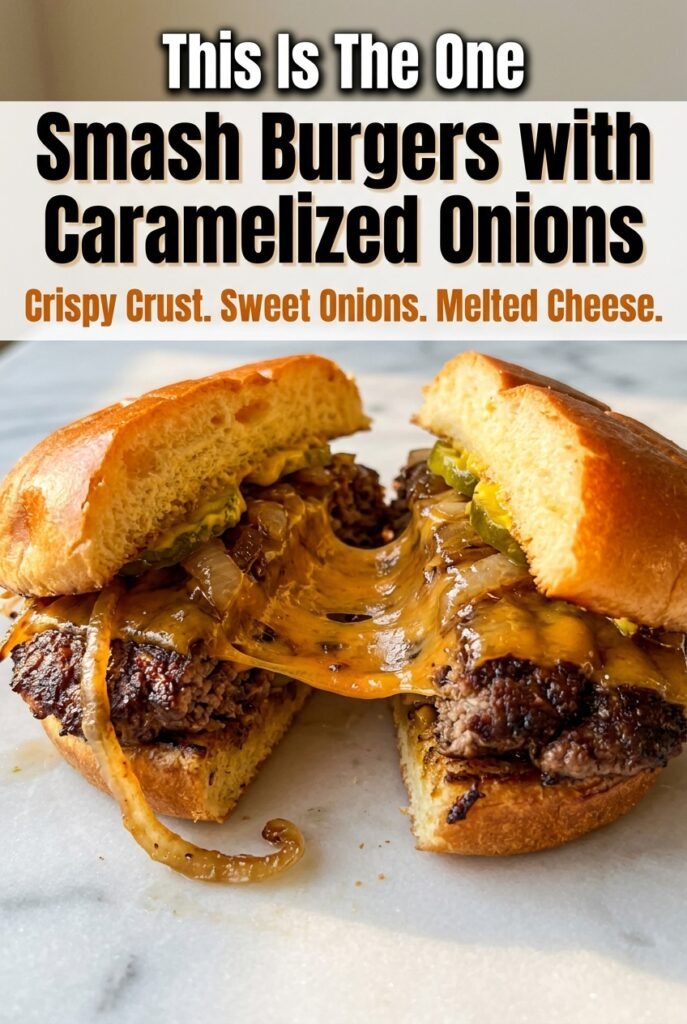
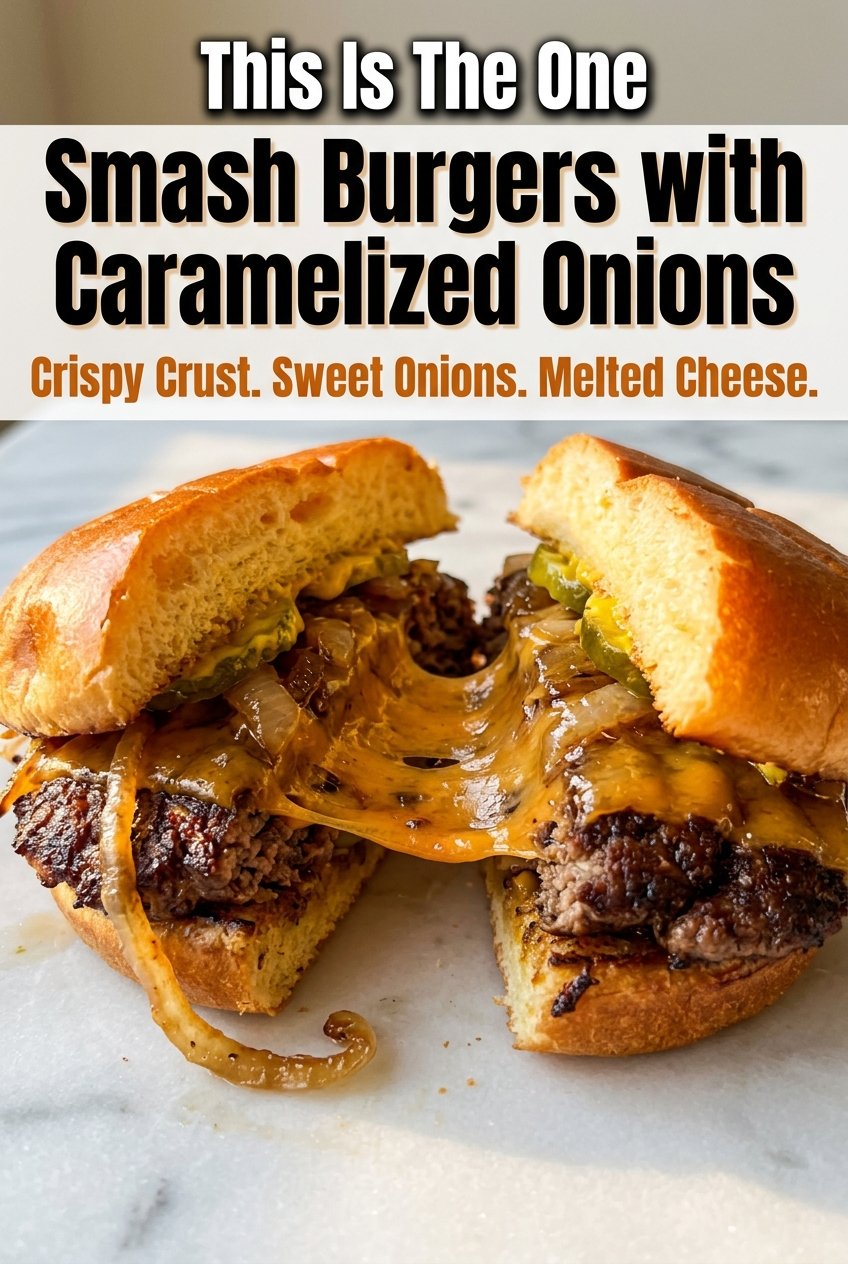
Crispy-edged smash burgers and sweet, jammy caramelized onions make a burger that feels far bigger than the sum of its parts. The thin patty gives you that crusty, lacy edge you only get from hard contact with a hot pan, while the onions bring a slow-cooked richness that balances the salt, cheese, and mustard without turning the whole thing heavy. It’s the kind of burger that disappears fast, with people going back for “just one more bite” until the buns are gone.
The trick is treating the onions and the beef like two separate jobs, each with its own heat level. Onions need patience and a little fat so they soften, then caramelize instead of scorching. The burgers need a ripping-hot skillet and loose beef balls so they smash into thin patties that sear fast before the meat has time to tighten up. Use 80/20 beef if you can, because that fat is what keeps a thin patty juicy after it’s pressed flat.
Below, I’ll walk you through the part that matters most: how to get both the crust and the onions right without overcomplicating the process. There’s also a variation worth trying if you want to swap the cheese or make these a little lighter without losing the good parts.
The onions got that deep sweet edge without turning mushy, and the burgers came off the skillet with the crispiest crust I’ve made at home. My husband said it tasted like a diner burger, only better.
Save these smash burgers with caramelized onions for the nights when you want a crispy crust, melty cheese, and sweet onions all in one bite.
The Secret to a Smash Burger Crust That Actually Stays Crisp
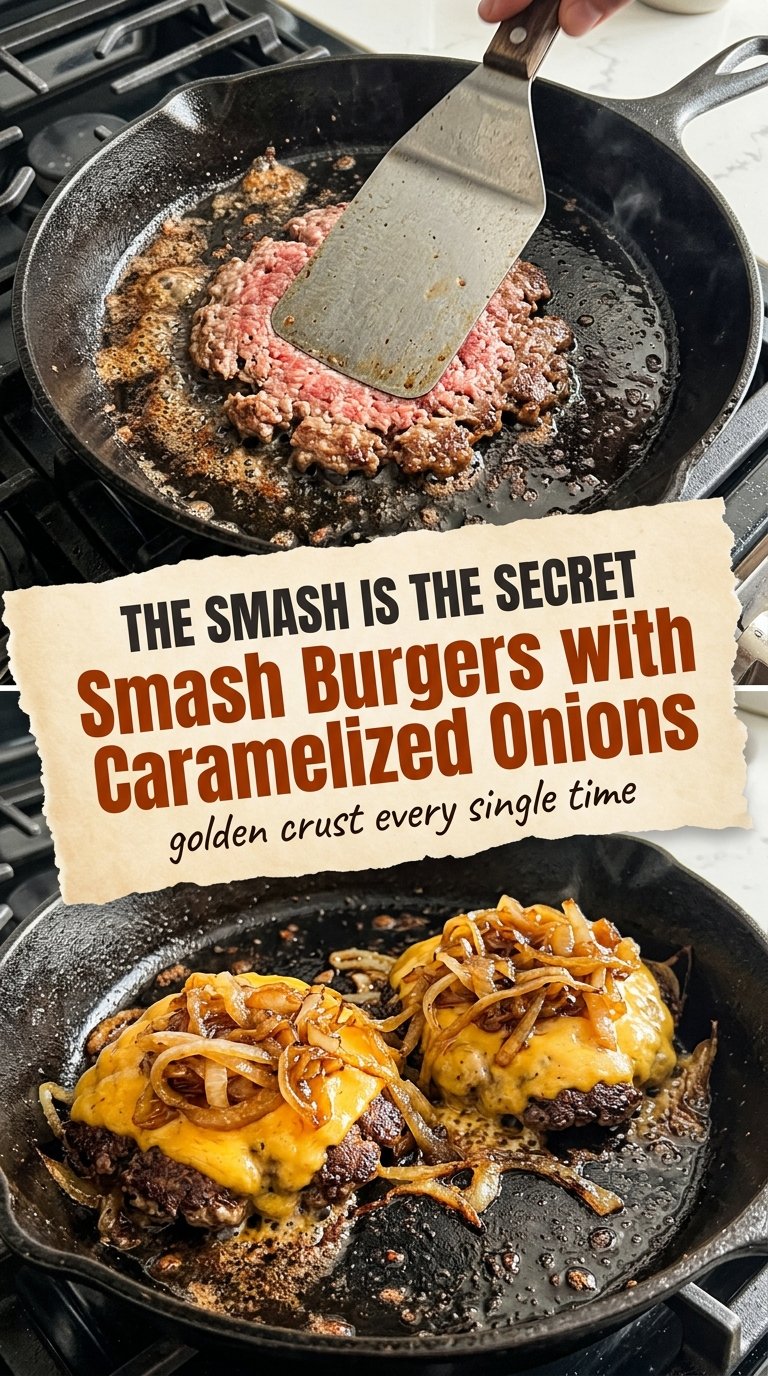
A smash burger only works if the beef hits a hot surface as a loose ball and gets pressed immediately. If you shape the patties ahead of time, you lose some of the edge irregularity that creates that lacy, deeply browned crust. The other mistake is moving them too soon. That crust forms because the meat stays in full contact with the pan long enough for browning to happen before the juices start flooding the surface.
The onions need the opposite approach. People rush caramelized onions by cranking the heat, then wonder why they end up with scorched edges and a bitter finish instead of something sweet and jammy. Medium-low heat gives the onions time to release their moisture, soften, and slowly turn golden. Once they start sticking, that’s not a failure — that’s the fond building the flavor. Just loosen it with a little stir and keep going.
- 80/20 ground beef — The fat keeps a thin patty juicy after it’s smashed. Lean beef dries out before the crust has time to form.
- Brioche buns — These bring a soft, slightly rich finish that stands up to the onions and mustard. Plain sandwich buns work in a pinch, but they won’t toast as deeply or hold together as well.
- American cheese — It melts cleanly and fast, which matters when the burger is only on the second side for a short time. Cheddar works too, but shred it or slice it thin so it softens before the patty overcooks.
- Yellow onions — They caramelize into sweetness better than red onions here. Slice them evenly so they cook at the same pace instead of some pieces burning while others are still sharp.
- Balsamic vinegar — Optional, but a small splash at the end gives the onions a darker, more rounded finish. Add it only after they’re already soft and golden, or the acidity can slow the browning early on.
Building the Crust, Melting the Cheese, and Stacking Fast
Caramelizing the onions first
Start the onions in butter and olive oil over medium-low heat and let them cook slowly until they turn soft, glossy, and deep golden. Stir every few minutes, then more often near the end as the sugars concentrate and the pan starts to darken. If the onions begin to brown too fast, lower the heat right away; dark edges are fine, but burnt bits will carry a bitter taste through the whole burger. They’re done when they look jammy and the pan smells sweet, not sharp.
Smashing the beef while the pan is screaming hot
Heat a cast iron skillet or griddle until it’s just smoking, then drop in the beef balls and smash them hard with a flat spatula. Press for about 10 seconds so the meat makes full contact with the pan. If you wait too long before smashing, the bottom starts to set and you lose the thin, crisp edge that defines this burger. Don’t move the patties after that first press; let the crust build undisturbed.
Flipping once and melting the cheese fast
When the edges look deeply browned and the top has turned from red to grey halfway up, flip once. The crust should release cleanly with a solid scrape; if it sticks, it needs another 20 to 30 seconds. Lay the cheese on immediately after the flip and let the residual heat finish the job. The burger is thin enough that 30 to 45 seconds is enough — any longer and you lose the juicy center.
Toasting and assembling without letting the buns go soft
Butter the buns and toast them in the same skillet until the cut sides are golden. That quick toast gives the buns structure, which matters because the onions are moist and the cheese melts into everything underneath. Assemble in this order: mustard, pickles, cheeseburger, onions, lettuce, tomato, top bun. Build fast and serve right away while the crust is still crisp and the cheese is soft.
Three Ways to Bend These Burgers to Your Kitchen
Dairy-Free Version
Swap the butter in the onions and for toasting the buns with olive oil or a dairy-free butter. You’ll lose a little richness, but the onions still caramelize beautifully because the real work is coming from the slow heat and the natural sugars in the onions.
Cheddar Instead of American
Use thin-sliced cheddar if you want a sharper bite, but expect it to melt a little less smoothly than American cheese. It works best if the patty is still hot when you add it and you cover the pan briefly so the steam helps the cheese loosen.
Lighter Bun, Same Burger
Rye rolls, potato buns, or even lettuce wraps all work depending on what you want from the meal. Lettuce wraps cut the carbs, but they won’t hold the onions as neatly, so keep the filling a little tighter and skip extra tomato slices.
Storage and Reheating
- Refrigerator: Store cooked patties and onions separately for up to 3 days. The buns will soften, so keep them at room temperature and toast again when serving.
- Freezer: The caramelized onions freeze well for up to 2 months in a sealed container. Cooked smash patties are best fresh, but they can be frozen in a single layer and reheated gently if needed.
- Reheating: Warm the patties in a skillet over medium-low heat until hot through, then add a splash of water and cover briefly to loosen the cheese if needed. Don’t microwave the burger assembled, or the buns turn gummy and the crust goes soft.
Answers to the Questions Worth Asking
Smash Burgers with Caramelized Onions
Ingredients
Equipment
Method
- Heat the unsalted butter and olive oil in a wide skillet over medium-low heat. Add the thinly sliced yellow onions, sugar, and salt, then stir to coat.
- Cook the onions, stirring every 5–7 minutes, for 35–45 minutes until deeply golden, jammy, and sweet. Keep the heat at medium-low so the onions caramelize without scorching.
- Add the balsamic vinegar in the last 5 minutes if using. Stir until absorbed, then set the onions aside.
- Divide the 80/20 ground beef into 6 oz loose balls, without overworking or packing them. Season lightly on all sides with garlic powder, onion powder, salt, and black pepper.
- Heat a cast iron skillet or flat griddle over high heat until just smoking. Arrange the surface so you can smash immediately once the balls hit the pan.
- Place one beef ball on the hot surface and immediately press down firmly with a flat spatula (or burger press) to smash it thin, about 1/4 inch thick. Press hard for 10 seconds.
- Season the top of the smashed patty with salt and black pepper. Let it cook undisturbed on the first side for 2–3 minutes until the edges are deeply browned and crispy and the top looks grey/cooked halfway up.
- Flip the patty so you see a deep-brown crust. Immediately lay American cheese on top and cook for 30–45 more seconds until the cheese is melted, then remove from the heat.
- Butter the cut sides of the brioche burger buns. Toast on the same skillet for 1–2 minutes until golden.
- Spread yellow mustard on the bottom bun and layer dill pickle slices on top. Add the smash patty with melted cheese, then pile on caramelized onions, followed by shredded iceberg lettuce and sliced tomato.
- Crown with the top bun and serve immediately. Repeat for the remaining patties so the crust stays crisp.
