

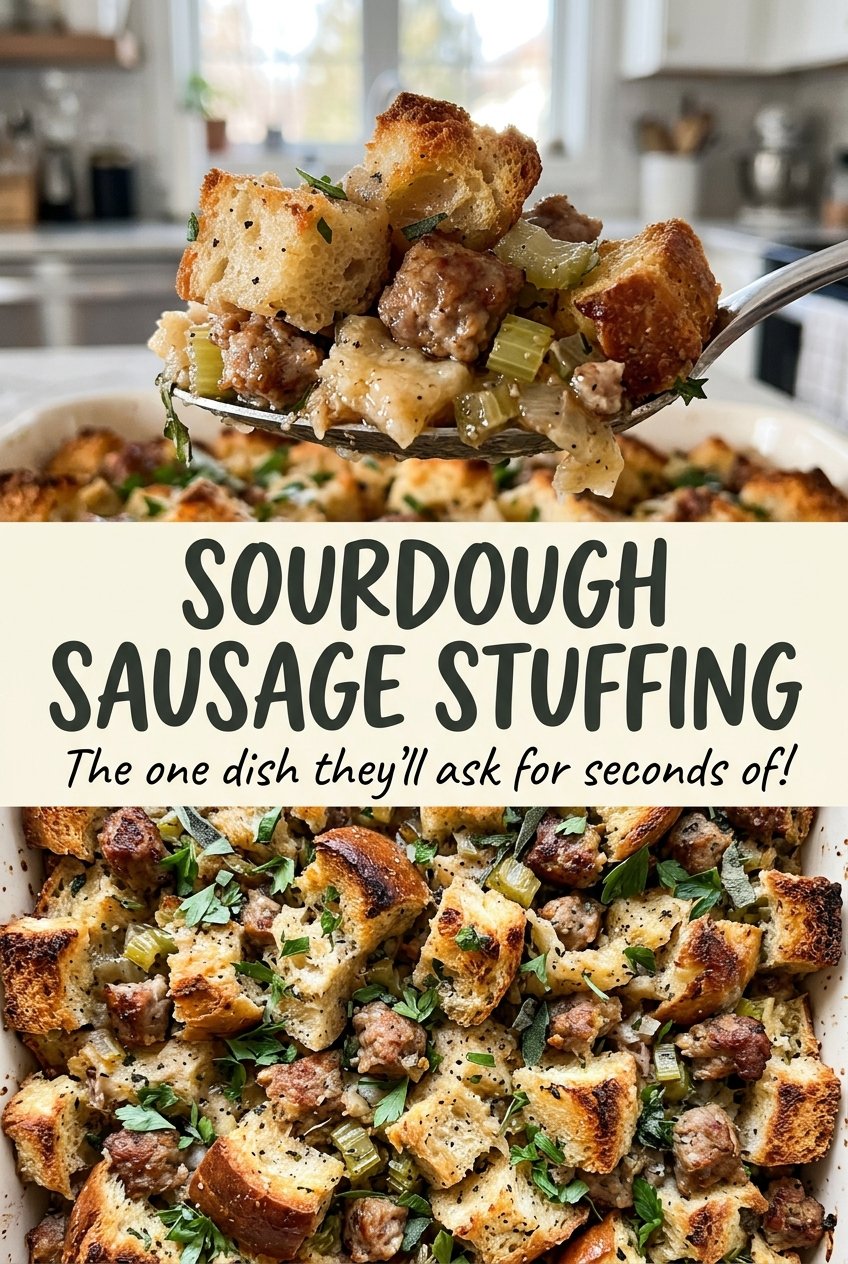
Sourdough Sausage Stuffing
The bread cubes should feel dry and crisp before they ever meet the broth; otherwise, the middle of a pan of stuffing can turn soft and heavy while the top…
Tip: save now, read later.
The bread cubes should feel dry and crisp before they ever meet the broth; otherwise, the middle of a pan of stuffing can turn soft and heavy while the top browns. I watch for that dry, lightly toasted texture as I stir the cubes on the baking sheets. It gives this Sourdough Sausage Stuffing the structure to hold onto the savory sausage and broth without collapsing into a soggy bake.
Here, the bread gets a head start in a low oven, and the sausage and vegetables are cooked separately before everything is tossed together. That order lets the bread absorb the seasoned broth and eggs evenly, while the butter-softened onion and celery bring moisture without making the mixture wet. The finished pan has a tender center, a crisp golden top, and enough sourdough tang to stand up to the sausage.
Kitchen Note
Give the pan the full 10-minute rest before serving. The center is hot and soft when it comes out of the oven, and that pause helps it settle so each scoop holds together instead of falling apart.
Save Sourdough Sausage Stuffing for a holiday table or Sunday dinner: tangy bread, savory sausage, and a crisp golden top.
Why Dry Bread Cubes Make a Better Sourdough Stuffing
Fresh bread may seem like a shortcut, but it can soak up broth unevenly. The outside softens first while the center of each cube stays dense, so the baked stuffing can feel wet in some bites and chewy in others. Drying the cubes first gives the bread a firm, porous surface that can take in the broth and egg mixture more evenly.
Sourdough brings a pleasantly tangy note, but its sturdy crumb is what makes it especially useful here. Once the cubes are crisp and dry, they soften during baking without losing all their shape. You want the mixture moistened throughout, not pooled with liquid at the bottom of the bowl. If the bread still feels pliable after toasting, give it more time in the oven before mixing; the texture of the bread at this stage sets up the whole pan.
What the Sourdough, Sausage, and Eggs Each Bring to the Pan

- Sourdough bread — A sturdy loaf gives the cubes enough structure to absorb the broth without disappearing into a paste. Cut them into even cubes so they dry at roughly the same rate. A loaf with a pleasantly tangy flavor is a good fit; avoid very soft, squishy bread that won’t hold its shape as well.
- Bulk pork sausage — Bulk sausage is easy to break into small pieces, so you get savory crumbles throughout rather than large slices. Its browned bits and drippings build flavor in the skillet. If you buy sausage in links instead, remove the casings before cooking so you can crumble the meat.
- Butter, onion, and celery — Butter carries the flavor of the softened vegetables and dried herbs into the bread. Unsalted butter gives you better control over seasoning alongside the sausage and broth. Dice the onion and celery fairly evenly; smaller pieces soften into the stuffing rather than staying crunchy.
- Rubbed sage and dried thyme — These dried herbs give the dish its familiar savory, woodsy character. Stirring them briefly into the warm butter and vegetables releases their aroma before they meet the bread. Rubbed sage has a softer texture than whole dried leaves, so it distributes well through the mixture.
- Chicken broth and eggs — Low-sodium broth moistens the bread without adding too much salt, while the eggs help the baked stuffing hold together. Whisk them together before pouring so the egg is spread evenly instead of landing in one spot.
- Fresh parsley — Chopped parsley adds a fresh, green note against the rich sausage and butter. Fold it in with the broth mixture so it stays distributed throughout the pan.
Build the Stuffing in Stages for an Even Bake
Dry the Cubes Until Crisp
Heat the oven to 300°F and spread the bread cubes in a single layer across two rimmed baking sheets. Bake for 30 to 40 minutes, stirring once, until the cubes feel dry and crisp rather than soft in the middle. If the sheets are crowded, the cubes won’t dry as evenly, so spread them out across both pans. Transfer the toasted bread to a large bowl.
Brown the Sausage and Soften the Vegetables
Cook the sausage in a 12-inch skillet over medium heat for 8 to 10 minutes, breaking it into small pieces as it browns. Once it’s cooked through, transfer it to the bowl and leave about 1 tablespoon of drippings in the skillet. Add the butter, onion, and celery, then cook over medium heat for 6 to 8 minutes, stirring occasionally, until the vegetables have softened. Stir in the sage, thyme, salt, and pepper for 30 seconds, then add the mixture to the bread.
Moisten Without Drenching the Bread
Heat the oven to 350°F and grease a 9×13-inch baking dish. Whisk the broth and eggs in a medium bowl, then pour the mixture over the bread and sausage. Add the parsley and toss until the cubes look evenly moistened; check the bottom of the bowl for liquid collecting in one spot. Transfer the mixture to the prepared dish and spread it out evenly.
Bake Covered, Then Brown the Top
Cover the dish tightly with foil and bake for 30 minutes. Remove the foil and bake for 20 to 25 minutes more, until the top is golden and the center reaches 160°F. The uncovered finish lets the surface dry and brown while the covered bake warms the middle. Rest the stuffing for 10 minutes before serving.
Two Easy Ways to Adapt the Sausage Stuffing
Give It a Little More Heat
Use hot bulk pork sausage in place of mild bulk sausage and keep the rest of the ingredients the same. The peppery sausage gives each bite more warmth without changing the bread’s texture or the baking method. Hot sausage can also bring more salt, so taste a cooked crumble before adding extra seasoning.
Make a Vegetarian Pan
Replace the pork sausage with a plant-based bulk sausage that browns in a skillet, and use low-sodium vegetable broth instead of chicken broth. Follow the package’s cooking cue for the sausage, since plant-based products vary. The stuffing keeps its savory, herby character, though it won’t have the same pork drippings in the vegetable base.
Storage and Reheating
- Refrigerator: Store leftovers in an airtight container for 3 to 4 days. The crisp top softens as it sits, while the center stays tender.
- Freezer: Freeze cooled portions in an airtight, freezer-safe container for up to 3 months. Thaw overnight in the refrigerator for more even reheating.
- Reheating: Warm covered in a 325°F oven until the center reaches 165°F, then uncover briefly if you’d like to crisp the top again. Leaving it uncovered the whole time can dry the bread before the middle is hot.
Questions I Get Asked About This Stuffing
Sourdough Sausage Stuffing
Ingredients
Equipment
Method
- Heat the oven to 300°F.
- Spread the bread cubes in a single layer on 2 rimmed baking sheets.
- Bake for 30 to 40 minutes, stirring once, until dry and crisp.
- Transfer the bread cubes to a large bowl.
- Cook the sausage in a 12-inch skillet over medium heat for 8 to 10 minutes, breaking it into small pieces, until browned and cooked through.
- Transfer the sausage to the bowl of bread, leaving about 1 tablespoon of drippings in the skillet.
- Add the butter, onion, and celery to the skillet and cook over medium heat for 6 to 8 minutes, stirring occasionally, until softened.
- Stir in the sage, thyme, salt, and pepper for 30 seconds.
- Add the butter and vegetable mixture to the bread.
- Heat the oven to 350°F.
- Grease a 9x13-inch baking dish.
- Whisk the broth and eggs in a medium bowl.
- Pour the broth and egg mixture over the bread mixture.
- Add the parsley and toss until evenly moistened.
- Transfer the stuffing to the prepared dish and cover tightly with foil.
- Bake for 30 minutes.
- Uncover and bake for 20 to 25 minutes more, until golden on top and the center reaches 160°F.
- Rest the stuffing for 10 minutes before serving.
