

Spiced Pear Dutch Baby Pancake
The butter foams quickly in a hot skillet, and the batter starts climbing almost as soon as it hits the oven. That sudden lift is the fun part of a…
Tip: save now, read later.
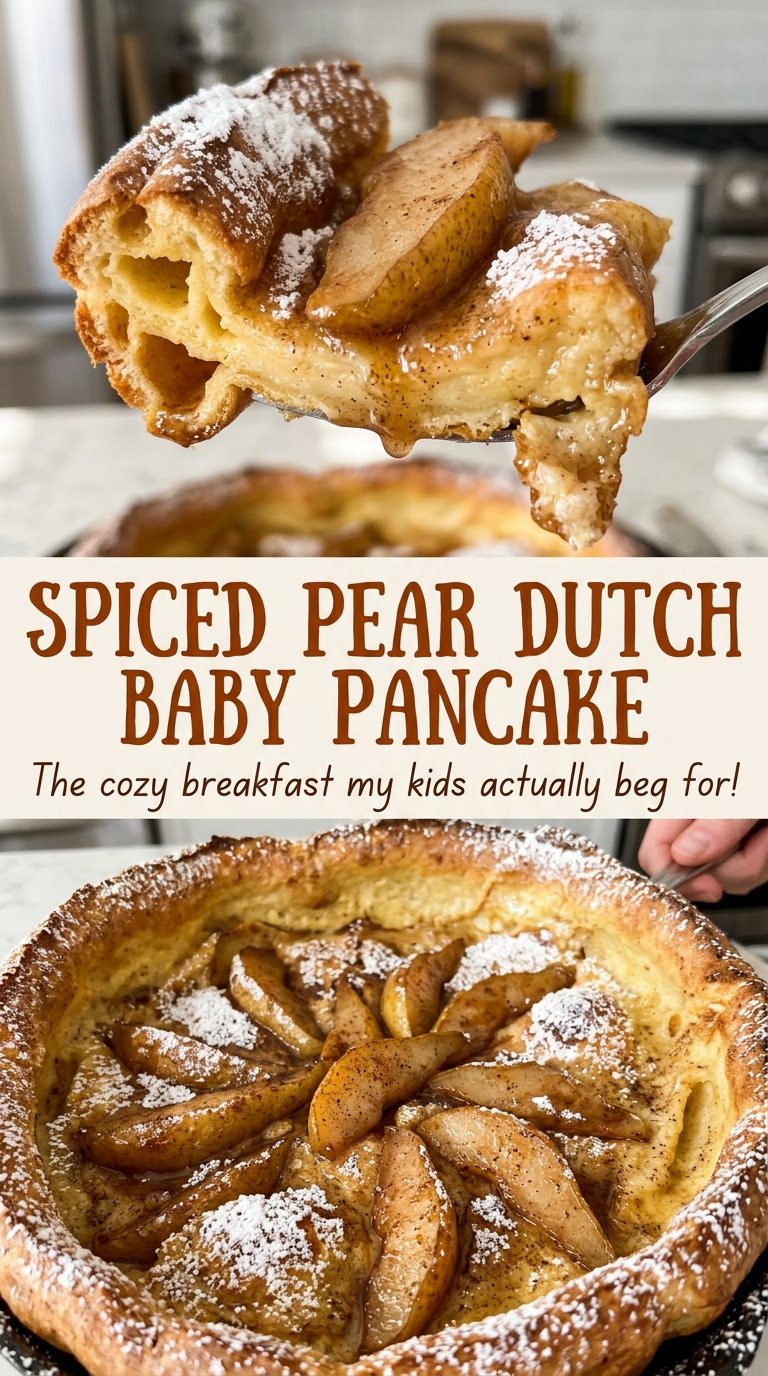
The butter foams quickly in a hot skillet, and the batter starts climbing almost as soon as it hits the oven. That sudden lift is the fun part of a Dutch baby, but the deep golden edges matter just as much: they give the pancake enough structure to hold a warm spoonful of spiced pears. I make this Spiced Pear Dutch Baby Pancake when I want a skillet breakfast that feels special without asking me to stand over the stove flipping batches.
The batter comes together in a blender, then rests at room temperature while the oven and skillet heat. That short pause lets me get the pears ready without rushing, and the preheated skillet gives the batter an immediate burst of heat. The pears cook separately until tender but still intact, with a glossy cinnamon-ginger syrup that settles into the pancake’s soft center. Serve it straight from the oven, while the edges are still high and crisp.

Kitchen Note
Blend the batter until it’s smooth, about 20 seconds, then let it sit at room temperature while the oven heats. That little pause gives me time to prep the pears without leaving the batter cold when it goes into the skillet.
Save this Spiced Pear Dutch Baby Pancake for a puffed, golden breakfast topped with warm pears and cinnamon-ginger syrup.
Why a Dutch Baby Falls After It Puffs—and Why That’s Fine
A Dutch baby’s dramatic rise comes from steam expanding the batter in the hot oven. The edges climb first and turn deep golden, while the center stays softer. Once the skillet leaves the oven, the pancake begins to settle as it cools. That’s expected, not a sign that the batter failed or that you should put it back in to chase the original height.
What you’re aiming for is a tall, well-browned rim around a tender middle. The hot skillet and oven give the batter its lift; baking until it’s deep golden gives the outer structure time to set. If you pull it while the top is still pale, it won’t have the same browned edges, and the center may feel more eggy and soft. If it settles while you’re spooning on the pears, serve it anyway. The contrast between the airy rim and the warm, syrupy fruit is exactly what makes this style of pancake work.
There’s a practical reason to have the pears ready by the time the Dutch baby comes out: the pancake is best served immediately. The pears can be cooked on the stove while the batter bakes, so there’s no need to hold the pancake warm or wait for a second component to finish.
What Each Ingredient Brings to the Pancake and Pears
- Eggs and whole milk — These make the batter rich and fluid, and room-temperature ingredients blend smoothly. Cold ingredients can leave the batter less uniform, so bring both to room temperature before blending.
- All-purpose flour — Flour gives the pancake enough structure to rise and form browned edges around its soft center. It isn’t a good place for an untested flour swap; a different flour can change how the batter sets.
- Unsalted butter — Butter coats the hot skillet and gives the pancake’s edges their rich, browned finish. The remaining butter goes into the pear pan, where it carries the brown sugar and spices into a glossy syrup.
- Light brown sugar — Its molasses notes give the pear topping a rounder, deeper sweetness than plain sugar would. Pack it when measuring so the syrup has the intended balance.
- Ripe but firm pears — The fruit should be ripe enough to taste sweet but firm enough to keep its shape in the saucepan. Cutting the pears into even slices helps them cook at the same pace.
- Cinnamon and ginger — Cinnamon gives the pears a familiar warmth, while ginger adds a drier, lightly sharp note that keeps the topping from tasting one-dimensional. Freshly opened ground spices have a clearer aroma, though older spices still work if they smell fragrant.
- Vanilla, granulated sugar, and kosher salt — These season the pancake batter itself. The small amount of sugar supports a lightly sweet base, and the salt keeps the batter from tasting flat; vanilla adds aroma without turning the pancake into a dessert cake.
The Hot-Skillet Timing That Gives the Batter Its Lift
Blend the Batter While the Oven Heats
Blend the eggs, milk, flour, granulated sugar, vanilla, and salt until the batter is smooth, about 20 seconds. Let it stand at room temperature while the oven heats. Set the oven to 425°F with a 10-inch ovenproof skillet inside for at least 15 minutes. The pan needs that full preheat; a merely warm skillet won’t give the batter the same quick start.
Pour into the Buttered Skillet Without Pausing
Carefully take the hot skillet out of the oven and add 2 tablespoons of butter, swirling to coat the bottom. The butter will melt quickly against the hot metal. Pour in the batter immediately rather than letting the butter sit and brown or the skillet cool. Return the pan to the oven and bake for 18–22 minutes, until the pancake is dramatically puffed and deep golden brown.
Cook the Pears to a Glossy, Tender Finish
While the pancake bakes, melt the remaining tablespoon of butter in a 2-quart saucepan over medium heat. Add the sliced pears, packed light brown sugar, cinnamon, and ginger, then cook for 5–7 minutes, stirring occasionally. The pears are ready when they’re tender but still hold their shape and the syrup looks glossy. Spoon the warm fruit over the Dutch baby and serve immediately.
Two Pear Choices for a Slightly Different Topping
Choose Bosc Pears for Slices That Hold Their Shape
Use ripe but firm Bosc pears for a topping with distinct slices and a slightly firmer bite. Keep the same slicing and cooking method; the main difference is that the fruit tends to stay visibly intact in the finished syrup.
Use Anjou Pears for a Softer, Juicier Topping
Ripe but firm Anjou pears make a softer, juicy topping while still working in the same skillet method. Keep an eye on their texture as they cook and stop once they’re tender but still holding their shape.
Storage and Reheating
- Refrigerator: Refrigerate leftovers promptly in an airtight container and use within 3–4 days. The pancake will lose its crisp edges, and the pears will soften as they sit.
- Freezer: Freezing the assembled pancake isn’t recommended; the airy texture turns soft after thawing, and the pear topping gets mushier.
- Reheating: Reheat a portion in the microwave in short bursts until steaming throughout. The center will soften further, so avoid heating it longer than needed.
Questions That Come Up When Making a Dutch Baby
Spiced Pear Dutch Baby Pancake
Ingredients
Equipment
Method
- Blend the eggs, milk, flour, granulated sugar, vanilla, and salt until smooth, about 20 seconds.
- Let the batter stand at room temperature while the oven heats.
- Heat the oven to 425°F with a 10-inch ovenproof skillet inside for at least 15 minutes.
- Carefully remove the hot skillet, add 2 tablespoons of the butter, and swirl to coat.
- Immediately pour in the batter and bake for 18–22 minutes, until dramatically puffed and deep golden brown.
- While the Dutch baby bakes, melt the remaining 1 tablespoon butter in a 2-quart saucepan over medium heat.
- Add the pears, brown sugar, cinnamon, and ginger; cook, stirring occasionally, for 5–7 minutes, until the pears are tender but still hold their shape and the syrup is glossy.
- Spoon the warm spiced pears over the Dutch baby and serve immediately.
