
Sugared Cranberries
A saucepan of syrup can go from quiet to rolling bubbles in a blink, and that’s not what these cranberries need. The first time I let it boil hard, some…
Tip: save now, read later.
A saucepan of syrup can go from quiet to rolling bubbles in a blink, and that’s not what these cranberries need. The first time I let it boil hard, some berries split during their long soak. Now I keep the heat moderate and watch for a gentle simmer, which gives the cranberries time to take on the syrup without roughing them up.
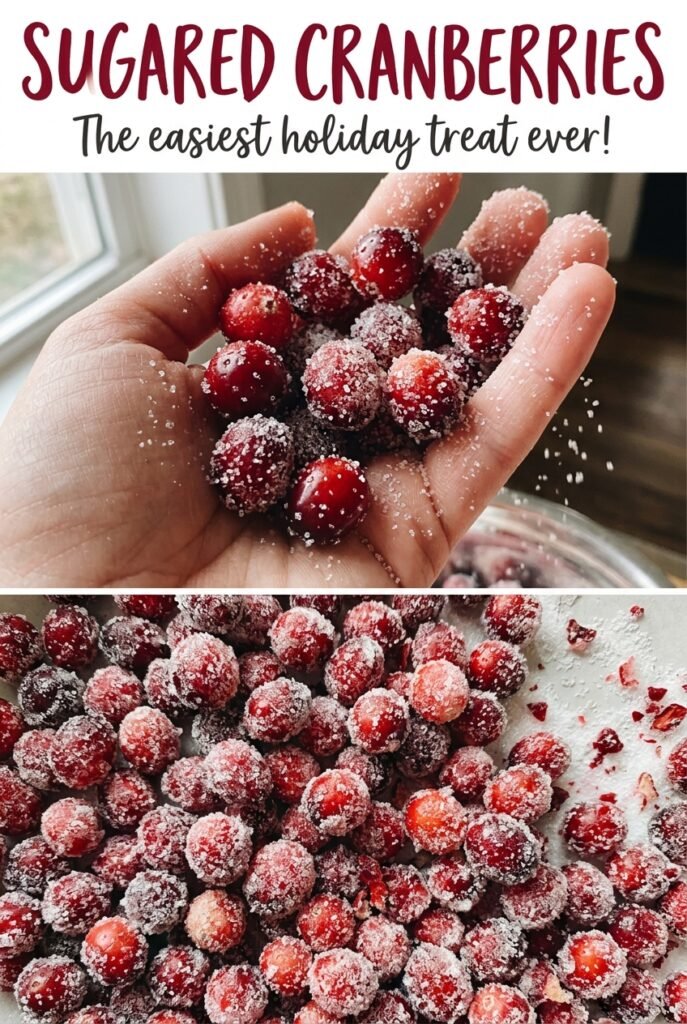
Sugared cranberries are crisp little bursts of tart fruit under a sparkling sugar shell. They’re made with fresh cranberries, a simple syrup, and a patient overnight rest; there’s no complicated candy thermometer work or special equipment involved. The part that takes attention comes after the soak: the berries need to dry until tacky before they go into the last cup of sugar.
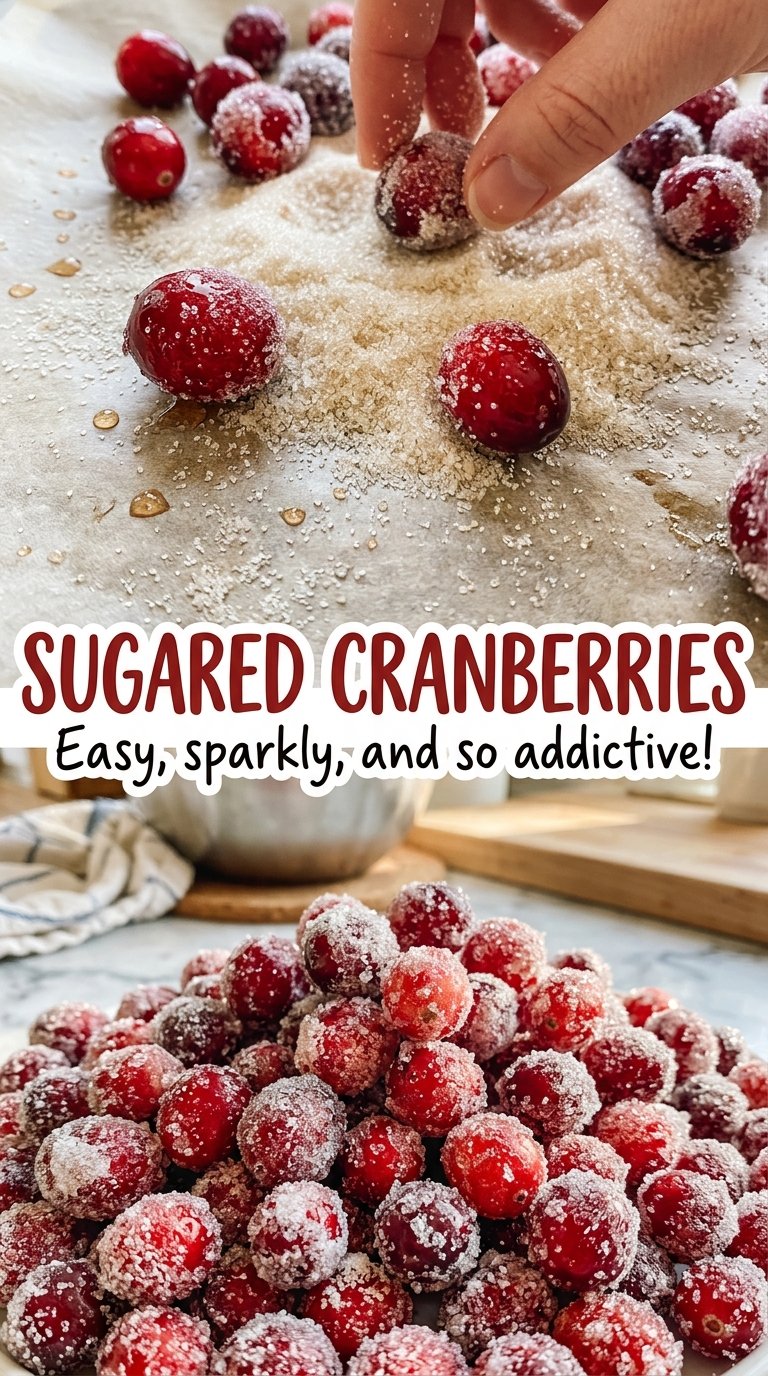
I like how the finished coating catches the light while the fruit inside stays pleasantly sharp. Give the berries enough time at each stage, and you’ll have a pretty, sweet-tart bite with a clean crunch of sugar.
Kitchen Note
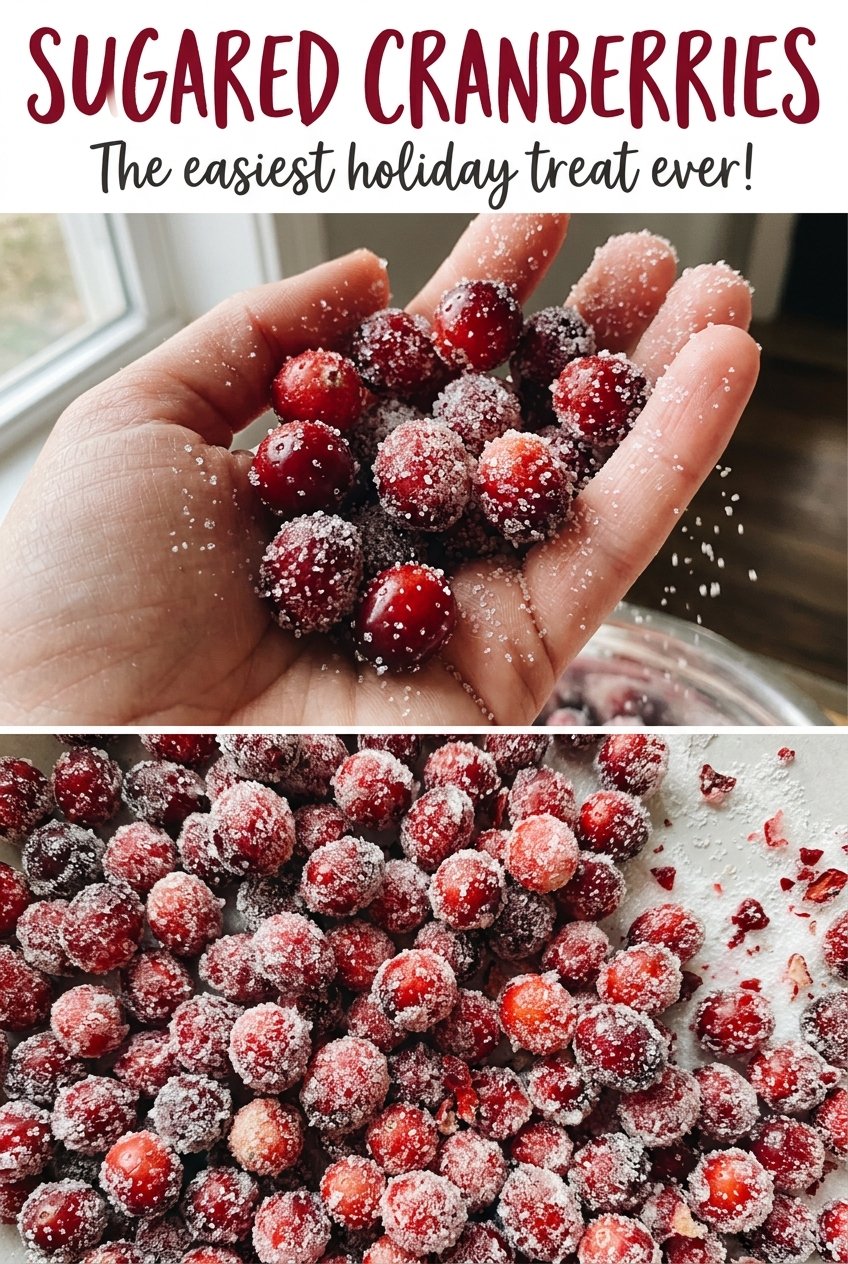
After draining, give the cranberries the full hour on the rack before rolling them in sugar. They should feel tacky, not wet; if syrup is still beading on the skins, the coating can turn lumpy instead of sparkling.
Save these sugared cranberries for a sparkling, tart-sweet garnish you can prepare the day before serving.
Why a Rolling Boil Can Leave Sugared Cranberries Split
The syrup doesn’t need to boil to do its job. Sugar dissolves in the water over medium heat, and a gentle simmer for two minutes is enough to make a smooth syrup that can coat the berries. A vigorous boil pushes the syrup hotter and bubbles it aggressively; that extra heat can cause fresh cranberries to split or soften during the long soak.
That matters because the berries sit in the syrup for at least eight hours, not just a quick dip. They need time to absorb sweetness while still holding their shape. Keep the pan at a calm simmer, with small bubbles rather than a rolling, foamy surface, and take it off the heat if it starts boiling hard. The warm syrup goes over the cranberries, then the covered bowl goes into the refrigerator for the long rest. This slow soak is what gives the fruit a sweetened outside without cooking it into a sauce.
Fresh cranberries vary a little in size, so check that the syrup covers them when you pour it over. A heatproof bowl that isn’t much wider than the berries helps keep them together in the syrup rather than spread across a broad surface.
Why Granulated Sugar Works Twice in This Cranberry Recipe
- Granulated sugar — It dissolves cleanly into the water for the syrup, then makes the dry, sparkling outside. Use regular white granulated sugar; brown sugar brings molasses and moisture that change the clean finish, while powdered sugar doesn’t give you the same distinct crystals. Store-brand granulated sugar works well here.
- Fresh cranberries — Firm berries hold their shape through the overnight soak and stay easy to roll in sugar. Pick through the bag and remove any berries that are shriveled, soft, or damaged. Frozen cranberries aren’t a good stand-in for this method: thawing softens them, and they’re more likely to split in the syrup.
- Water — Water dissolves the first portion of sugar into a pourable syrup. Tap water is fine; there’s no need for anything special, and the syrup’s brief simmer does not reduce it into a thick caramel.
The Overnight Soak, Drying Rack, and Sparkling Finish
Make a gentle syrup
Combine one cup of the sugar with the water in a small saucepan over medium heat, stirring until the sugar dissolves. Bring the mixture to a gentle simmer and keep it there for two minutes without letting it boil. The syrup should look clear and fluid, not thick or aggressively bubbling. If it starts to roll, lower the heat so the cranberries won’t meet a hard boil when the syrup is poured over them.
Let the berries soak cold
Put the picked-over cranberries in a heatproof bowl, then pour the warm syrup over them and check that they’re submerged. Cover the bowl and refrigerate it for at least eight hours or overnight. Don’t shorten this into a quick coating: the extended rest gives the syrup time to settle around the fruit. The cranberries should still look like whole berries when they come out.
Drain and dry to a tacky finish
Set a wire rack over a rimmed baking sheet, drain the cranberries, and spread them in a single layer. Leave them for about an hour. The surface should feel tacky but not wet, with no visible puddles of syrup clinging to the fruit. If the berries are crowded or touching in a heap, they won’t dry as evenly, so spread them out across the rack.
Roll on the sugar shell
Spread the remaining cup of sugar on a plate and roll the cranberries through it until they’re evenly coated. Work in small batches so each berry gets contact with the sugar instead of pushing a pile of fruit around the plate. Return the coated cranberries to the rack and let them stand for about an hour, until the sugar coating is dry. The finished berries should look crystalline rather than wet or syrupy.
Two Ways to Change the Sugar Finish Without Changing the Ingredients
A lighter sugar veil
For a less-sweet bite, roll the tacky berries through the remaining sugar just until they have a fine, thin coating rather than a thick layer. The cranberries will taste tarter, and the outside won’t have as heavy a crunch. Keep the sugar on the plate and coat only what clings to the fruit.
A crushed cranberry garnish
For a looser garnish, lightly crush a few fully coated cranberries just before serving and leave the rest whole. The crushed pieces bring tart fruit and sugar crystals to each bite, but they lose the neat, jewel-like look of whole berries. Keep the whole berries intact until you’re ready to use the crushed portion.
Make-Ahead and Storage
- Refrigerator: Refrigerate leftovers in a covered container for up to 2 days. The sugar coating may soften or turn damp as it sits.
- Freezer: Freezing isn’t recommended; thawing softens the berries and the sugar coating won’t stay crisp.
- Reheating: These are served cold or at room temperature, not reheated. Don’t warm them, since heat makes the sugar shell wet and sticky.
Questions About Making Sugared Cranberries
Sugared Cranberries
Ingredients
Equipment
Method
- Combine 1 cup of the sugar and the water in a small saucepan over medium heat, stirring until the sugar dissolves; bring to a gentle simmer for 2 minutes without letting it boil.
- Put the cranberries in a heatproof bowl and pour the warm syrup over them, making sure they are submerged.
- Cover and refrigerate for at least 8 hours or overnight.
- Set a wire rack over a rimmed baking sheet, drain the cranberries, and spread them on the rack in a single layer.
- Let them dry for about 1 hour, until tacky but not wet.
- Spread the remaining 1 cup sugar on a plate and roll the cranberries in it until evenly coated.
- Return them to the rack and let stand for about 1 hour, until the sugar coating is dry.
