

Sweet Potato Casserole with Pecan Topping
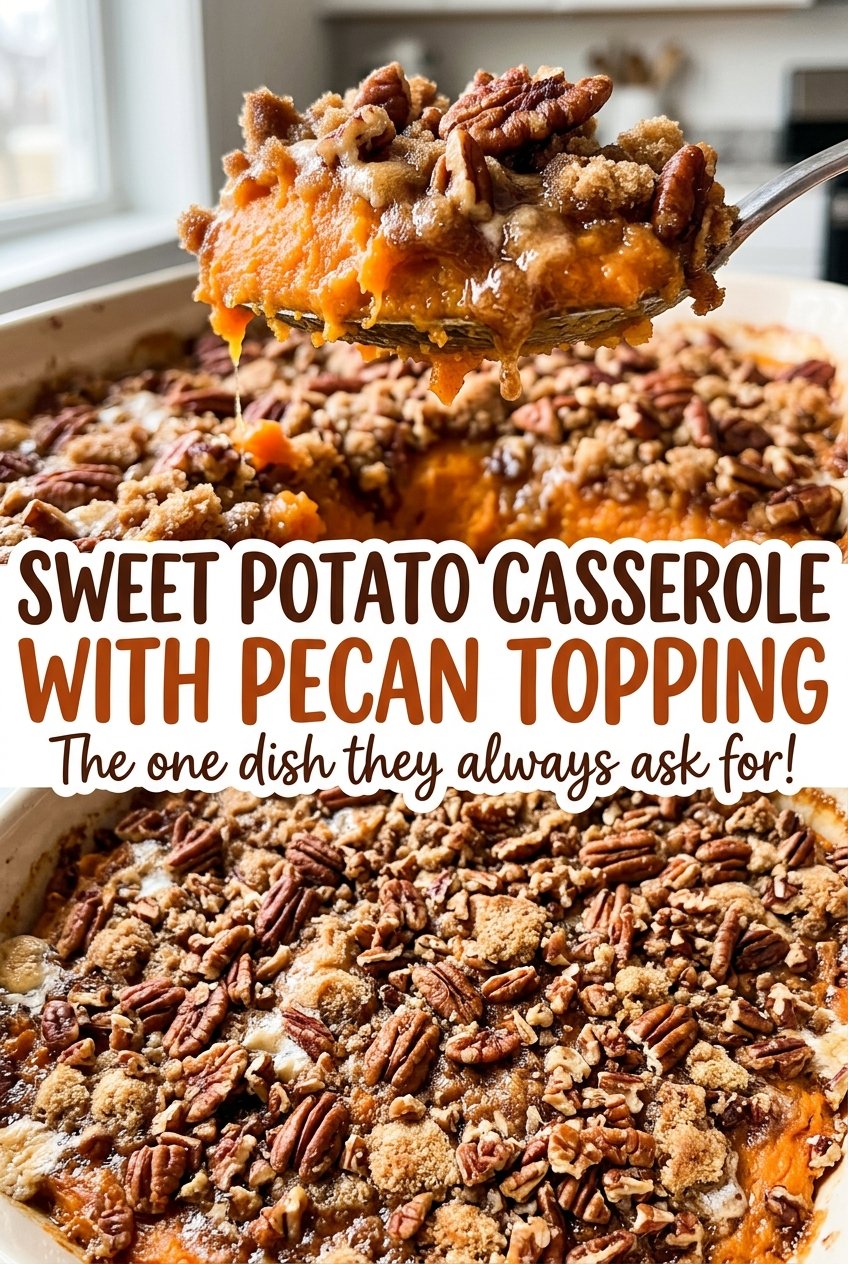
The pecan topping is the first thing I watch as this casserole bakes: it starts as pale, loose crumbs and turns golden while the sweet potato layer sets underneath. Sweet…
Tip: save now, read later.
The pecan topping is the first thing I watch as this casserole bakes: it starts as pale, loose crumbs and turns golden while the sweet potato layer sets underneath. Sweet Potato Casserole with Pecan Topping is rich without being heavy, with a soft, gently sweet center and a buttery crunch on top.
I boil the sweet potatoes until a fork slides through easily, then drain them well before mashing. That little bit of care matters because the potatoes carry enough moisture on their own; extra water can leave the filling loose instead of creamy.
Brown sugar goes into both layers, but the textures stay distinct: smooth in the mash, crumbly around the pecans. After a short rest out of the oven, each scoop holds its shape with a tender middle and a crisp, nutty top.
Kitchen Note
Let the mashed sweet potatoes cool for the full five minutes before stirring in the eggs. The pause lets the first rush of heat escape, so the eggs blend into the filling instead of cooking in little flecks.
Save this sweet potato casserole for its soft brown-sugar filling and golden pecan crumb topping.
Why Draining the Sweet Potatoes Matters More Than Mashing Them Smooth
Boiled sweet potatoes hold on to a surprising amount of water. If that cooking water goes into the mash, the filling can turn loose and wet, even after it has spent time in the oven. The brown sugar, milk, and eggs add softness and richness already, so the potatoes need to be drained well before anything else is stirred in.
Look for a mash that feels thick and spoonable, not glossy with liquid pooling around it. A little texture is fine; a few small pieces won’t keep the casserole from setting. What you want to avoid is a watery base that sinks beneath the pecan layer and stays slack when you serve it. Thorough draining gives the filling a chance to bake up tender and cohesive rather than soupy, while leaving the topping exposed to the dry heat it needs to brown.
This is also why I don’t rush the draining step just because the potatoes are fork-tender. Getting rid of that excess water does more for the final texture than trying to beat every last lump out of the mash.
What the Sweet Potato Filling and Pecan Crumbs Each Need
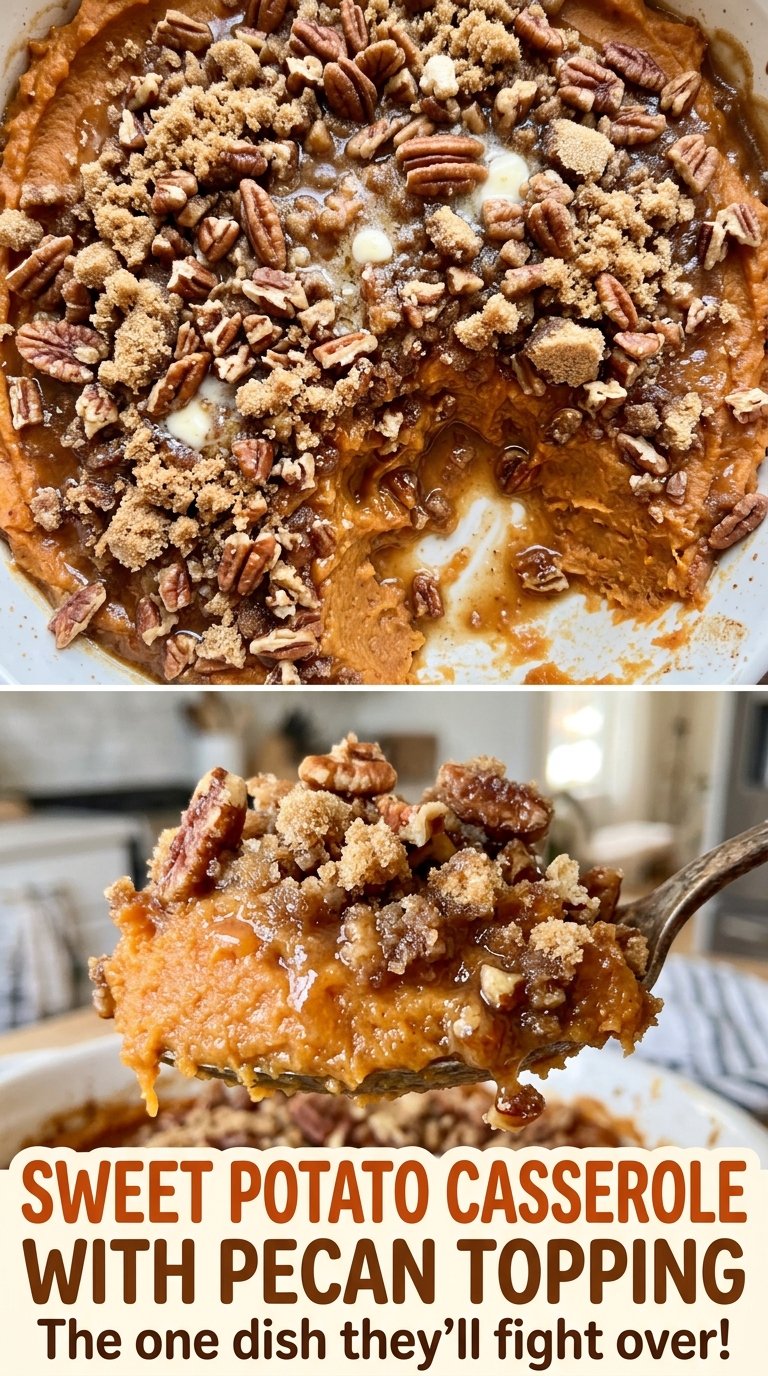
- Sweet potatoes — Choose firm potatoes without soft or damaged spots. Fresh sweet potatoes give you control over how tender they get and how much water remains after boiling; ordinary grocery-store ones work well.
- Butter — The melted portion enriches the filling, while the cold diced portion helps make the topping into coarse crumbs. Keep those jobs separate; melted butter in the topping won’t give you the same crumbly texture.
- Light brown sugar — Its soft, moist texture dissolves readily into the mash and gives the topping a warm caramel note. Pack it when measuring, and keep the filling and topping portions separate so the sweetness is balanced through both layers.
- Whole milk and eggs — Milk loosens the mashed potatoes into a creamy filling, while the eggs help it set as it bakes. Large eggs and whole milk are the right fit here; lower-fat milk will make the filling less rich, and leaving out the eggs changes how firmly it holds together.
- Pecans and flour — Chopped pecans provide the crisp, nutty texture, and flour helps the brown sugar and butter form a crumb topping rather than a layer of melted sugar. Fresh-tasting pecans matter more than an expensive brand. If you need to avoid pecans, leave them out; the topping will be less crunchy and more flour-forward.
From Fork-Tender Potatoes to a Golden Pecan Top
Boil the Sweet Potatoes Until Tender
Heat the oven to 350°F and grease a 9×13-inch baking dish. Put the peeled, 1-inch sweet potato chunks and 8 cups of water in a 6-quart pot, bring the water to a boil over high heat, then reduce the heat and simmer for 15–20 minutes. The potatoes are ready when a fork slips into a chunk without resistance. Drain them well before returning to the pot.
Build the Smooth Filling
Mash the drained potatoes in the pot, then give them five minutes to cool. Stir in the melted butter, half of the brown sugar, whole milk, lightly beaten eggs, vanilla, and kosher salt until the mixture is combined. The filling should look creamy and hold a soft mound on a spoon, rather than run like a puree. Stop once the ingredients are blended; there’s no need to keep beating it.
Rub the Butter Into the Pecan Mixture
In a medium bowl, stir together the flour, the remaining brown sugar, and chopped pecans. Add the cold diced butter and work it in with your fingers until coarse crumbs form. Aim for uneven pieces, from small crumbs to pea-sized bits, rather than a uniform paste. If the mixture starts feeling greasy, pause instead of pressing it together; you want the butter distributed through the dry ingredients.
Bake Until the Center Sets and the Crumbs Turn Golden
Spread the filling in the prepared dish and sprinkle the pecan mixture evenly over it. Bake for 30–35 minutes, until the topping is golden and the center reaches 160°F. If the top is still pale at the end of the usual baking window, judge it by its color and the center temperature rather than removing it early. Let the casserole rest for 10 minutes before serving so the filling has time to settle.
Two Ways to Change the Texture or Leave Out the Pecans
Leave Out the Pecans
For a pecan-free version, omit the chopped pecans and make the topping with the flour, brown sugar, and cold butter. It will still form a sweet crumb, but it won’t have the same nutty crunch. If you’re avoiding pecans because of an allergy, use clean equipment and confirm the other ingredients haven’t had cross-contact.
Keep a Little Texture in the Mash
For a more rustic filling, stop mashing while a few small pieces of sweet potato remain. The casserole will feel less custard-smooth and more like a soft mash beneath the topping. Keep the pieces small so they don’t interrupt the even layer in the baking dish.
Storage and Reheating
- Refrigerator: Refrigerate leftovers within 2 hours and keep them covered for 3–4 days. The pecan topping will soften as it sits.
- Freezer: Freeze the baked casserole, cooled and tightly wrapped, for up to 2–3 months. The filling holds up well, though the topping won’t be as crisp after thawing.
- Reheating: Reheat covered in a 325°F oven until the center reaches 165°F, uncovering near the end if you want to dry the topping a little. Avoid reheating uncovered for the full time, which can dry the sweet potato layer.
Questions I Get Asked About This Sweet Potato Casserole
Sweet Potato Casserole with Pecan Topping
Ingredients
Equipment
Method
- Heat the oven to 350°F.
- Grease a 9x13-inch baking dish.
- Put the sweet potatoes and water in a 6-quart pot and bring to a boil over high heat.
- Reduce the heat and simmer for 15–20 minutes, until the potatoes are fork-tender.
- Drain the sweet potatoes well.
- Mash the potatoes in the pot.
- Let them cool for 5 minutes.
- Stir in the melted butter, 1/2 cup brown sugar, milk, eggs, vanilla, and salt until combined.
- In a medium bowl, stir together the flour, remaining 1/2 cup brown sugar, and pecans.
- Work in the cold diced butter with your fingers until the mixture forms coarse crumbs.
- Spread the sweet potato mixture in the prepared baking dish.
- Sprinkle the pecan mixture evenly over the top.
- Bake for 30–35 minutes, until the topping is golden and the center reaches 160°F.
- Let the casserole rest for 10 minutes before serving.
