
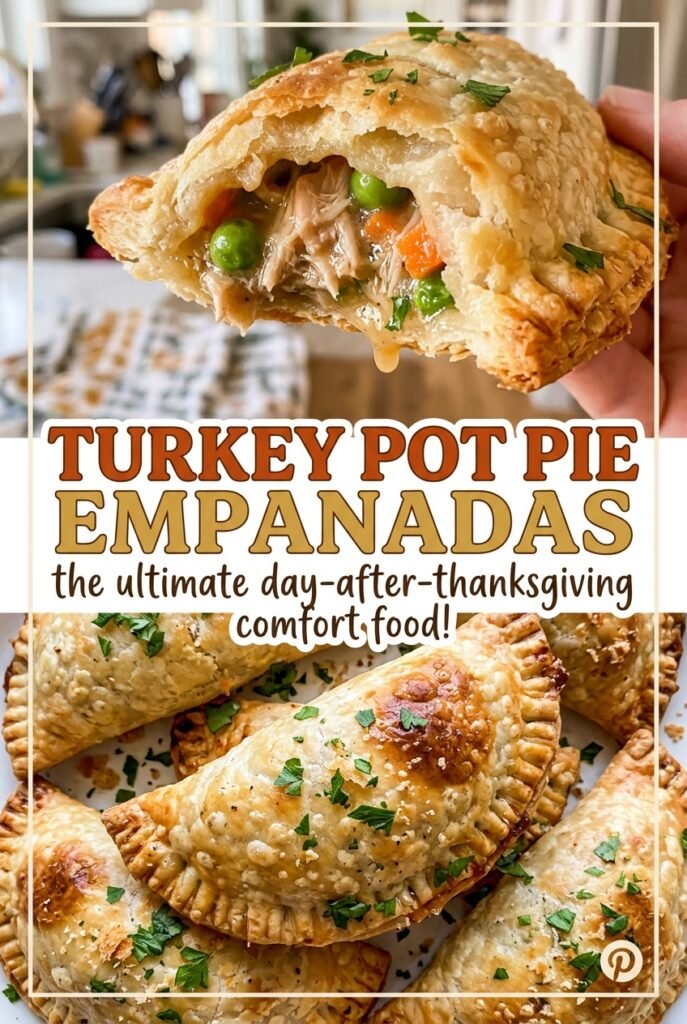
Turkey Pot Pie Empanadas
The first sign that the filling is ready is a sauce thick enough to cling to the turkey instead of pooling around it. That matters more than it might seem:…
Tip: save now, read later.
The first sign that the filling is ready is a sauce thick enough to cling to the turkey instead of pooling around it. That matters more than it might seem: a loose filling can run toward the edge while you fold, making the pastry hard to seal. I chill the filling until it’s cold before it goes anywhere near the dough, which makes these Turkey Pot Pie Empanadas easier to shape and keeps the layers neat.
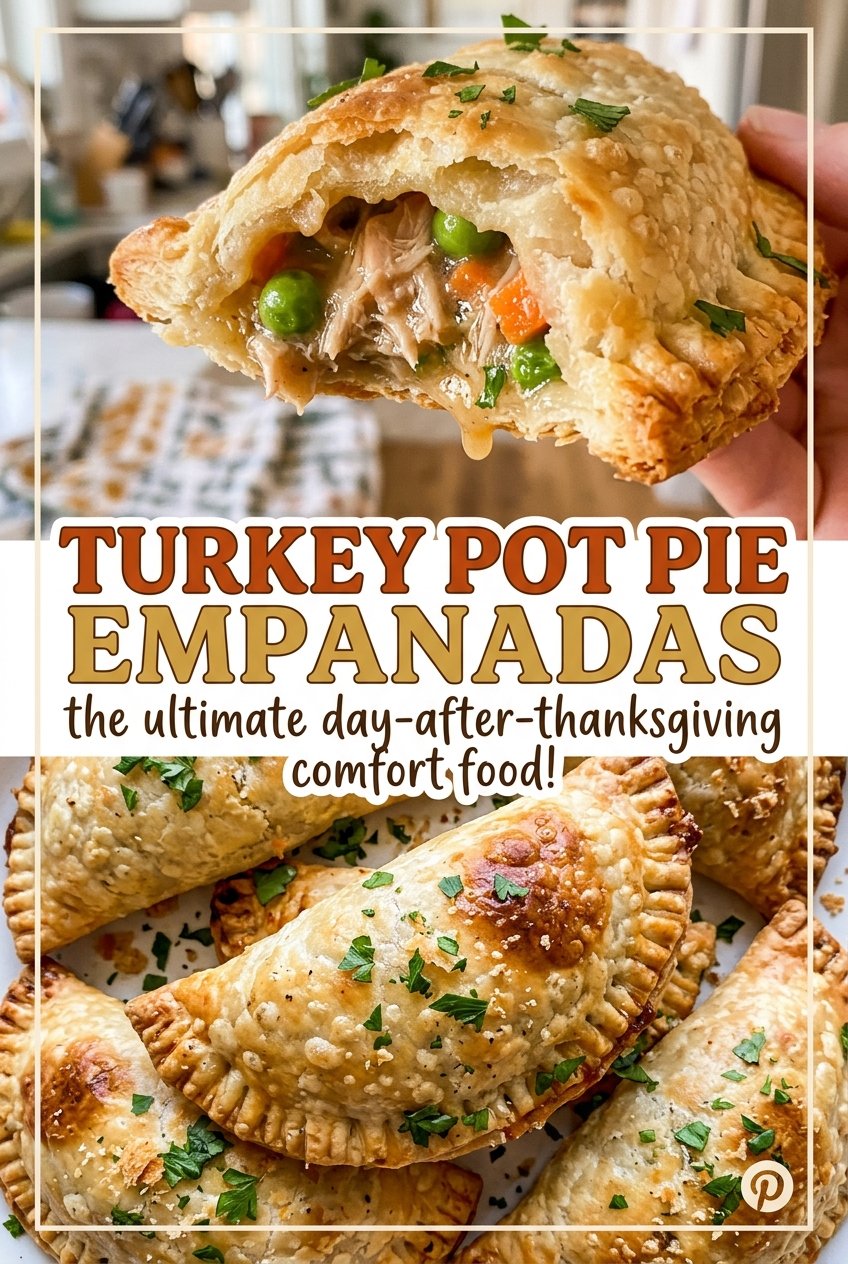
The dough is made with cold vegetable shortening, so it comes together into a tender, easy-to-roll crust without needing much handling. I cut the rounds, add the filling to one side, then fold and crimp each one shut. In the oven, the tops turn golden while the turkey and vegetables heat through inside. You get the familiar comfort of pot pie in a hand-held pastry, with a flaky shell that’s sturdy enough to pick up.
Kitchen Note
Stop kneading as soon as the dough comes together, even if the surface still looks a little rough. Working it longer develops the dough and can leave the baked crust tougher than you want.
Save these Turkey Pot Pie Empanadas for a cozy make-ahead meal, with creamy turkey filling tucked inside flaky pastry.
Why a Thick, Cold Filling Matters More Than a Perfect Crimp
Empanadas have a small opening for filling, so a sauce that’s even a little runny can make assembly frustrating. It can slide toward the edge as you fold the round, and moisture on the dough makes the seam harder to close. The sauce here starts with butter-softened onion and a little flour, then broth and milk are whisked in and simmered until thick. That flour-thickened base coats the chopped turkey and vegetables instead of leaving them loose in liquid.
Cooling the filling does a different job from thickening it. Warm filling softens the shortening in the dough before the empanadas reach the oven, making the pastry harder to handle. Once cold, the filling sits in a tidy mound and is easier to portion consistently. Keep it centered on one half of each round, leaving a clear edge for sealing. A neat crimp helps, but a thick, cold filling gives the seam a much better chance from the start.
What the Shortening, Roux, and Turkey Each Bring to the Crust and Filling

- All-purpose flour — Flour has two jobs here: a small portion thickens the filling, while the rest forms the pastry. Spoon it into the measuring cup and level it rather than packing it down; too much flour can make the dough dry and difficult to roll. Regular store-brand all-purpose flour works well.
- Vegetable shortening — Cold shortening makes the crust tender and gives it a different texture from an all-butter pastry. Keep it cold until you cut it into the flour, and stop when you see pea-size pieces rather than blending it completely smooth. Chilled unsalted butter can stand in, but the crust will taste more buttery and may be less tender.
- Eggs — One egg binds the dough with the ice water, and the other makes the golden top. Divide them before you start so the egg for brushing doesn’t accidentally go into the dough. Beating the second egg before brushing helps it spread in an even coat.
- Chicken broth and whole milk — Together, these make a savory, creamy base without burying the turkey flavor. Low-sodium broth leaves more room to season the filling with the measured kosher salt. For a dairy-free version, use dairy-free butter and plain, unsweetened oat milk; the sauce will be a little less rich.
- Cooked turkey — Finely chopped turkey distributes across each bite and is easier to enclose than large chunks. Leftover white or dark meat both work; trim away any skin or gristle before chopping. The turkey should be cooked before it goes into the filling.
- Peas, carrots, and thyme — Thawed frozen peas and carrots are convenient and sized to mix evenly with the turkey. Dried thyme gives the filling its familiar savory note without adding moisture. If your vegetables are still icy, let them thaw before mixing them in.
Building a Filling and Pastry That Are Easy to Seal
Thicken the Turkey Filling Before It Cools
Melt the butter in a medium saucepan over medium heat, then cook the finely diced onion for 3 to 4 minutes, until softened. Stir in the smaller portion of flour and cook for 1 minute so it blends with the butter. Whisk in the broth and milk slowly; keep whisking until the sauce is smooth, then simmer it for 2 to 3 minutes until thickened. Stir in the chopped turkey, thawed peas and carrots, thyme, pepper, and part of the salt, then transfer the filling to a shallow bowl and refrigerate until cold, about 30 minutes.
Bring the Dough Together Without Overworking It
Whisk the remaining flour with the remaining salt in a large bowl. Cut in the cold shortening until the mixture has pieces about the size of peas; if you work it until smooth, you lose the small pockets that help make a tender crust. Beat one egg with the ice water and stir it into the flour mixture until a dough forms. Knead gently just until combined, shape the dough into a disk, wrap it, and refrigerate for 1 hour.
Roll Even Rounds and Leave Room to Crimp
Heat the oven to 400°F and line an 18×13-inch half-sheet pan with parchment paper. Let the dough stand at room temperature for 5 minutes, then roll it on a lightly floured surface to about 1/8 inch thick. Cut ten 5 1/2-inch rounds, rerolling the scraps as needed. Put 1/4 cup of cold filling on one half of each round, fold the other half over, and press and crimp the edges closed without trapping filling in the seam.
Bake Until Golden, Then Let the Pastry Set
Arrange the empanadas on the prepared pan with space between them. Beat the remaining egg and brush it over the tops for an even golden finish. Bake for 25 to 30 minutes, until the pastry is golden brown and the filling reaches 165°F when checked with an instant-read thermometer. Rest them on the pan for 5 minutes before serving; the brief pause gives the hot filling time to settle inside the crust.
Three Flavor Swaps That Still Fit the Empanada Format
Use cooked chicken instead of turkey
Finely chopped cooked chicken works in the same amount as the turkey and keeps the filling’s texture close to the original. It makes these taste more like classic chicken pot pie, while the same peas, carrots, and thyme still fit naturally.
Make the filling dairy-free
Replace the butter with dairy-free butter and the whole milk with plain, unsweetened oat milk. The sauce will be a touch less rich, but it still thickens around the turkey. The pastry contains shortening rather than butter, though the egg in the dough and egg wash means this version isn’t egg-free.
Trade thyme for sage
Use the same amount of dried sage in place of the dried thyme for a more pronounced, woodsy pot-pie flavor. Sage can take over if you add extra, so keep the quantity level with the thyme in the original filling.
Storage and Reheating
- Refrigerator: Store cooled empanadas in an airtight container for 3 to 4 days. The pastry softens as it sits.
- Freezer: Freeze cooled empanadas in a single layer until firm, then transfer them to an airtight freezer bag for up to 2 months.
- Reheating: Warm them on a baking sheet in a 350°F oven until hot throughout and crisp again. A microwave heats the filling, but it softens the pastry.
Questions That Come Up When Making Turkey Pot Pie Empanadas
Turkey Pot Pie Empanadas
Ingredients
Equipment
Method
- Melt the butter in a medium saucepan over medium heat.
- Add the finely diced onion and cook for 3 to 4 minutes until softened.
- Stir in 2 tablespoons of the flour and cook for 1 minute.
- Slowly whisk in the broth and milk until smooth.
- Simmer for 2 to 3 minutes until thickened.
- Stir in the turkey, peas and carrots, thyme, pepper, and 1/4 teaspoon salt.
- Transfer the filling to a shallow bowl and refrigerate until cold, about 30 minutes.
- In a large bowl, whisk the remaining 3 cups flour with the remaining 1 teaspoon salt.
- Cut in the cold shortening until the mixture has pea-size pieces.
- Beat 1 egg with the ice water.
- Stir the egg mixture into the flour mixture until a dough forms, and gently knead just until combined.
- Shape the dough into a disk, wrap, and refrigerate for 1 hour.
- Heat the oven to 400°F.
- Line an 18x13-inch half-sheet pan with parchment paper.
- Let the dough stand at room temperature for 5 minutes.
- Roll the dough on a lightly floured surface to about 1/8 inch thick.
- Cut ten 5 1/2-inch rounds, rerolling scraps as needed.
- Place 1/4 cup cold filling on one half of each round.
- Fold the dough over and press and crimp the edges to seal.
- Arrange the empanadas on the prepared pan.
- Beat the remaining egg and brush it over the tops.
- Bake for 25 to 30 minutes until golden brown and the filling reaches 165°F when checked with an instant-read thermometer.
- Rest the empanadas on the pan for 5 minutes before serving.
