
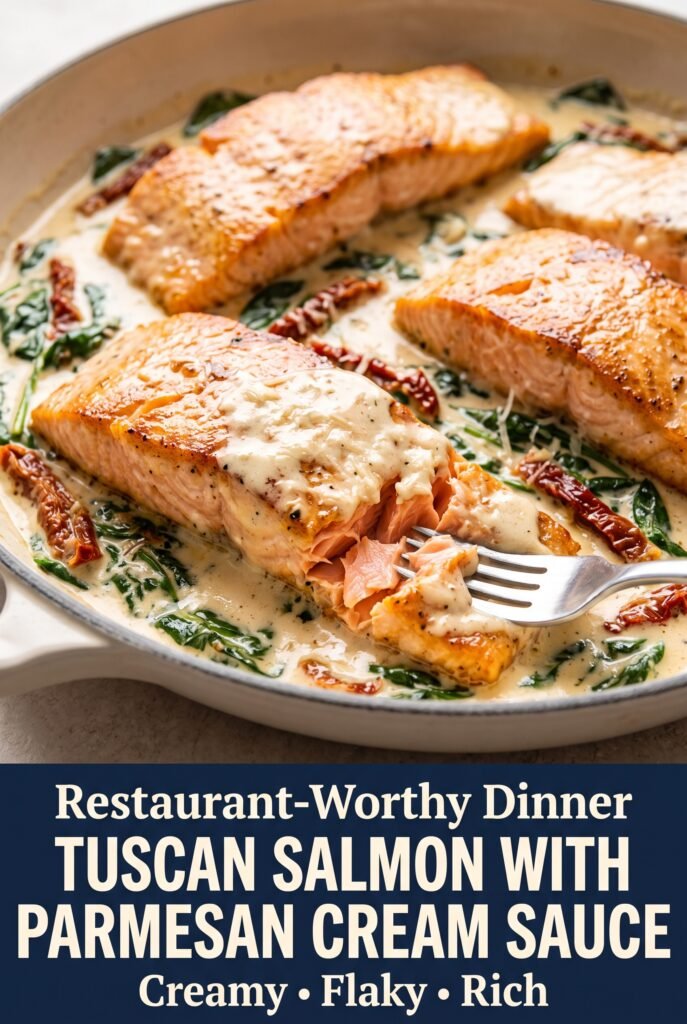
Tuscan Salmon with Parmesan Cream Sauce
Pan-seared salmon gets even better when it lands in a silky Parmesan cream sauce with sun-dried tomatoes and spinach. The fish stays tender and flaky, the sauce turns glossy and…
Tip: save now, read later.
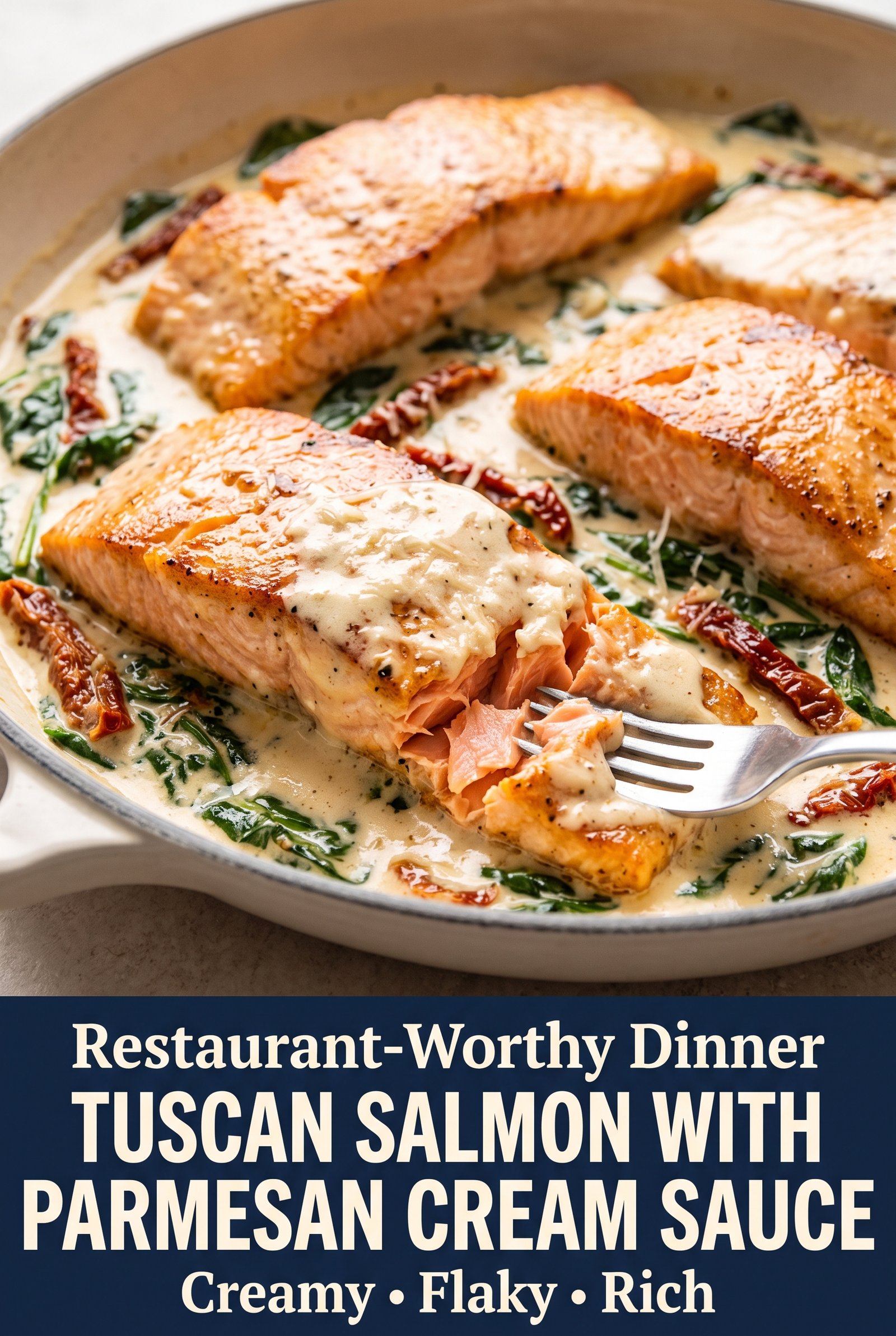
Pan-seared salmon gets even better when it lands in a silky Parmesan cream sauce with sun-dried tomatoes and spinach. The fish stays tender and flaky, the sauce turns glossy and rich, and the whole skillet tastes like something that took far more effort than it actually did. What makes this version worth keeping is the balance: enough cream to feel luxurious, enough broth to keep it from turning heavy, and just enough garlic and basil to keep every bite bright.
The salmon is seared first so the outside picks up color before it finishes in the sauce. That matters. If you cook the fish all the way through in cream from the start, you lose the crust and the sauce never gets the same depth. I also prefer freshly grated Parmesan here because pre-shredded cheese can make the sauce grainy instead of smooth. Add it slowly, off a hard boil, and it melts into the cream without clumping.
Below, I’ve laid out the timing that keeps the salmon moist, the reason the sauce stays silky, and a few smart swaps if you need to adapt the pan sauce for what you have on hand.
The sauce thickened up beautifully and didn’t break when I added the Parmesan slowly. My husband said the salmon tasted like a restaurant dinner, and the spinach held up perfectly instead of turning mushy.
Tuscan Salmon with Parmesan Cream Sauce deserves a Pinterest save for the nights when you want a silky skillet dinner with a golden sear and no complicated cleanup.
The Salmon Crust Has to Happen Before the Sauce Does
The biggest mistake with a creamy salmon skillet is crowding too much into the pan too early. Once the fish goes into the sauce, the surface stops searing and starts steaming, which leaves you with pale salmon and a sauce that tastes flat. The first high-heat sear gives you color, a better texture, and those browned bits in the pan that turn into the best part of the sauce.
Don’t rush the flip. When the salmon is ready, it will release more easily from the skillet and the top edge will look opaque about halfway up the fillet. If it sticks, it needs another minute. Pull it out while the center still looks slightly translucent because it finishes gently in the sauce and stays moist instead of drying out.
What Each Ingredient Is Actually Doing in This Dish
- Salmon fillets — Choose fillets that are similar in thickness so they finish at the same time. Skin-on or skinless both work, but skin-on gives you a little extra protection during the sear. If you use frozen salmon, thaw it fully and dry it well or the surface won’t brown.
- Heavy cream — This is what gives the sauce its body and keeps it from splitting when the Parmesan goes in. Half-and-half can work in a pinch, but the sauce will be thinner and a little less stable. Keep the heat at a low simmer once the cream is in.
- Freshly grated Parmesan — This is one place where the quality matters. Fresh cheese melts smoothly into the sauce, while pre-grated Parmesan often contains anti-caking starches that can make the sauce gritty. Add it gradually and stir until each addition disappears before adding more.
- Sun-dried tomatoes — These bring concentrated sweetness and acidity, which keeps the sauce from tasting heavy. Drain them well so the oil doesn’t make the sauce greasy. If yours are packed dry, soak them briefly in warm water and slice them before using.
- Spinach and basil — The spinach wilts into the sauce and adds color without taking over. The basil goes in at the end for freshness, not cooking power, so add it right before serving.
The 20 Minutes That Matter Most
Building a Strong Sear
Pat the salmon dry before it ever touches the pan. Moisture is the enemy of browning, and wet fish will steam instead of sear. Season it well, then lay it in the hot oil and leave it alone until the first side releases with a crisp, golden crust. If the pan is too cool, you’ll get gray fish and limp skin instead of that clean, restaurant-style finish.
Starting the Sauce in the Same Skillet
Use the same pan you cooked the salmon in. Those browned bits at the bottom carry flavor into the sauce, and butter helps loosen them without scorching the garlic. Keep the heat at medium once the garlic goes in because burnt garlic turns the whole sauce bitter. The sun-dried tomatoes go in here too, so they can soften slightly and give the cream a deeper color and more concentrated tomato flavor.
Melting the Parmesan Without Graininess
Pour in the cream and broth, then let the mixture come to a gentle simmer before the cheese goes in. If the sauce is boiling hard, the Parmesan can seize and turn sandy. Add it in handfuls while stirring, and wait for each addition to melt fully before adding the next. When the sauce turns glossy and lightly coats the back of a spoon, it’s ready for the spinach.
Finishing the Salmon Gently
Slide the salmon back into the skillet and spoon sauce over the top. The fish only needs a short finish in the sauce, just long enough to warm through and absorb some of the flavor. Overcooking this part dries out the salmon and can make the sauce reduce too far, so keep the simmer gentle. Finish with basil right before serving so the herbs stay fresh and bright.
How to Adapt This for Different Kitchens and Diets
Dairy-Free Version With a Silky Finish
Use full-fat coconut cream instead of heavy cream and skip the Parmesan, then stir in a little nutritional yeast or a dairy-free Parmesan substitute for a savory edge. The sauce will taste a little different, with a softer and slightly sweeter finish, but it still clings well to the salmon.
Lighter Sauce Without Losing the Creamy Texture
Swap half the cream for more chicken broth if you want a lighter pan sauce. It won’t be as thick, but it still tastes rich because the Parmesan and salmon fat carry a lot of the flavor. Keep the heat low so the reduced dairy doesn’t separate.
Gluten-Free by Default
This recipe is naturally gluten-free as written, which makes it an easy main dish for mixed tables. Just check your broth and sun-dried tomatoes if you’re using packaged versions, since a few brands add thickeners or flavoring additives.
What to Serve It With for a Bigger Meal
This skillet is rich enough to stand on its own, but it also works well over mashed potatoes, rice, or buttered pasta. A simple side that can soak up the sauce is the smartest move, since the cream sauce is the part people always want to finish.
Storage and Reheating
- Refrigerator: Store leftovers in an airtight container for up to 3 days. The sauce thickens as it chills, and the salmon stays best before it starts to dry out.
- Freezer: I don’t recommend freezing this dish. Cream sauces can separate after thawing, and the salmon texture turns soft.
- Reheating: Reheat gently in a skillet over low heat with a splash of broth or cream. High heat can break the sauce and overcook the salmon, so take your time and stop as soon as it’s warmed through.
Answers to the Questions Worth Asking
Tuscan Salmon with Parmesan Cream Sauce
Ingredients
Equipment
Method
- Pat the salmon fillets dry, then season both sides with kosher salt, black pepper, and Italian seasoning.
- Heat the olive oil in a large skillet over medium-high heat until shimmering.
- Sear the salmon for 4–5 minutes on the first side, until the surface is browned.
- Flip the salmon and cook for another 2–4 minutes, until cooked through and opaque in the center.
- Transfer the salmon to a plate and set aside while you make the sauce.
- Reduce the heat to medium, then add the butter, garlic, and sun-dried tomatoes to the same skillet and cook for about 1 minute.
- Pour in the heavy cream and chicken broth, stir gently, and bring the mixture to a low simmer.
- Add the Parmesan gradually while stirring, then cook for 2–3 minutes until the sauce turns smooth and creamy.
- Stir in the remaining Italian seasoning, spinach, and red pepper flakes, and cook until the spinach wilts.
- Return the salmon to the skillet and spoon the Parmesan cream sauce over each fillet.
- Simmer gently for 2–3 minutes, until the salmon is cooked through and the sauce coats the fish.
- Finish with fresh basil and additional Parmesan if desired, then serve immediately.
