

Best Homemade Buttermilk Biscuits
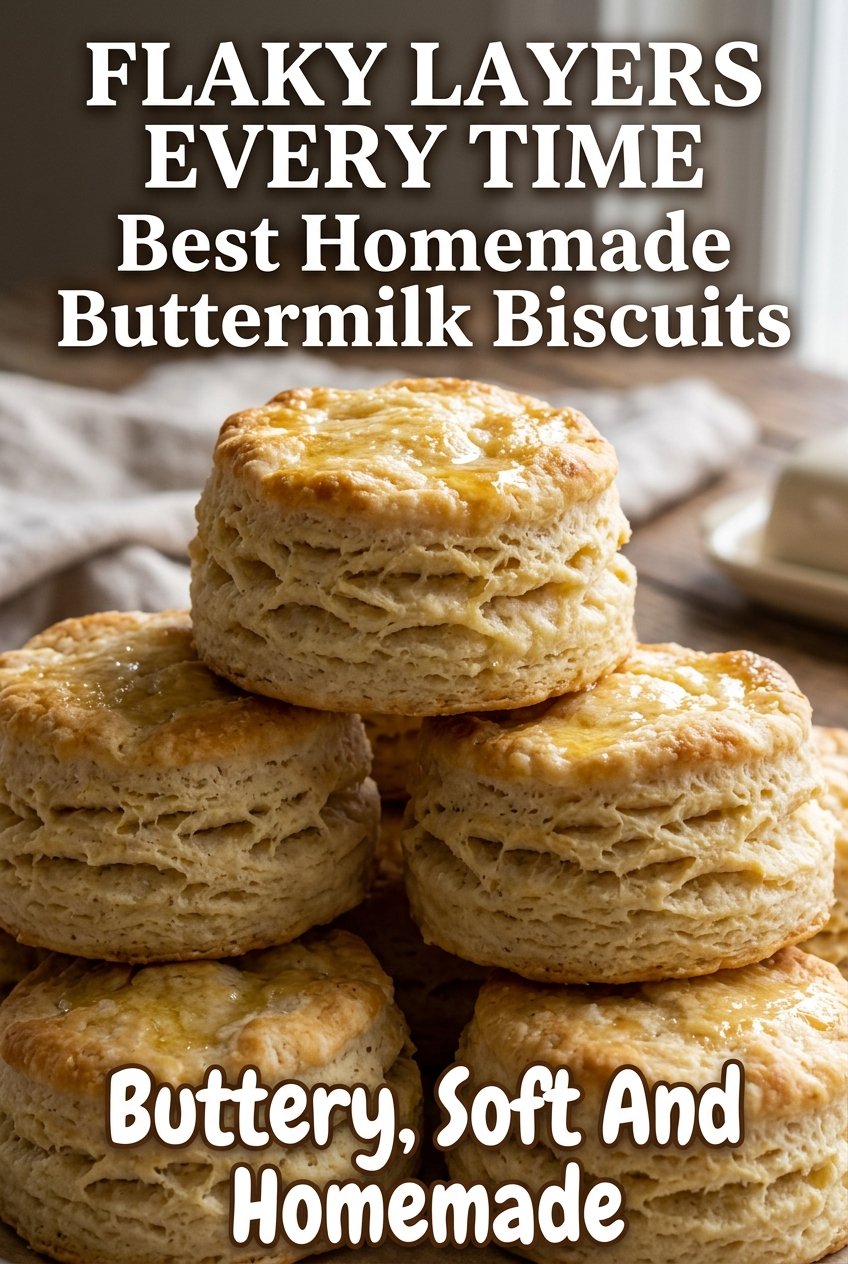
Tall, flaky buttermilk biscuits are one of those bakes that disappear fast because the texture gets everything right: crisp edges, soft centers, and buttery layers that pull apart instead of…
Tip: save now, read later.
Tall, flaky buttermilk biscuits are one of those bakes that disappear fast because the texture gets everything right: crisp edges, soft centers, and buttery layers that pull apart instead of crumbling. The difference between an average biscuit and a memorable one usually comes down to temperature and handling, and this version keeps both under control from the first stir to the last brush of butter.
Cold butter is the backbone here. It stays in little pockets as the biscuits bake, then melts and leaves those steam-formed layers behind. The other piece that matters is restraint. Once the buttermilk goes in, the dough only needs to come together, not turn perfectly smooth. A few folds build height without overworking the gluten, which is how you get biscuits that rise high instead of baking dense.
Below, I’ve included the small details that make these biscuits come out consistently well, plus the one shaping trick that gives you more flaky layers without making the dough fussy.
The biscuits rose so tall and the layers peeled apart beautifully. I used the folding trick and they baked up with crisp tops and soft middles, just like the ones from my favorite diner.
Love these tall, flaky buttermilk biscuits? Save them to Pinterest for the mornings when you want bakery-style layers without the bakery trip.
The Trick to Tall Biscuits Is Keeping the Butter Cold All the Way Through
Most biscuits go wrong before they ever hit the oven. If the butter softens into the flour too much, you lose the little pockets that create lift, and the biscuits bake up more like soft rolls than true layered biscuits. Cold butter, cold buttermilk, and a light hand are what keep this dough behaving.
The folding step matters just as much as the ingredients. Those quick turns stack the dough into rough layers, and that’s where the height comes from. If you knead until the dough is smooth, you’ve already worked past the point where biscuits stay tender.
What Each Ingredient Is Doing in This Biscuit Dough

- All-purpose flour — This gives the biscuits enough structure to rise without turning tough. Bread flour adds too much chew for this style, and cake flour can leave them a little fragile. Standard all-purpose flour is the sweet spot.
- Baking powder and baking soda — The baking powder provides the main lift, while the baking soda reacts with the buttermilk for a little extra rise and better browning. Don’t reduce either one unless you’re changing the whole formula.
- Cold unsalted butter — This is what creates the flakes. Salted butter works in a pinch, but the texture matters more than the brand; keep the butter cold and cut it into visible pea-sized pieces so it can steam inside the dough.
- Buttermilk — The acidity tenderizes the biscuits and helps the leavening work. If you don’t have it, mix 1 cup of milk with 1 tablespoon lemon juice or vinegar and let it sit for 5 minutes, but expect a slightly less rich flavor and a softer rise.
- Sugar — Just a small amount rounds out the flavor and helps the tops brown. You won’t taste sweetness; you’ll notice balance.
Building the Dough Without Losing the Layers
Cutting the butter into flour
Work the cold butter into the flour mixture until you have a shaggy mix with visible pieces no larger than peas. Those pieces are not a problem; they’re the point. If the butter disappears into the flour, the biscuits lose their flaky layers and bake up more compact.
Bringing the dough together
Pour in the cold buttermilk and stir only until the flour is moistened. The dough should look rough and a little sticky, not polished. If you keep stirring after it comes together, the biscuits turn tight and bready instead of soft.
Folding for height
Turn the dough onto a lightly floured surface and fold it over itself 4 to 5 times, patting it gently between folds. This creates layers without making the dough tough. If the dough starts sticking badly, dust the surface lightly, but don’t work in so much flour that the biscuits dry out.
Cutting and baking
Pat the dough to about 1 inch thick and cut straight down with a biscuit cutter. Twist-free cutting helps the biscuits rise instead of sealing the edges shut. Placing them close together on the pan encourages taller sides and softer edges, while baking at 425°F gives you quick lift and a deep golden top.
Dairy-Free Version
Use a plant-based butter that stays firm when cold and replace the buttermilk with unsweetened non-dairy milk plus 1 tablespoon lemon juice. The biscuits won’t taste exactly the same, but you’ll still get decent lift and a tender crumb if both ingredients stay cold.
Extra-Flaky Layered Biscuits
Add 1 or 2 extra folds if you want more distinct layers. Stop before the dough starts looking smooth; that smoothness is a sign you’ve crossed from layered into overworked.
Make-Ahead Biscuits
Cut the biscuits, place them on a lined tray, and freeze until firm. Bake from frozen, adding a few minutes to the time. That keeps the butter cold and gives you nearly the same rise as fresh dough.
Storage and Reheating
- Refrigerator: Store baked biscuits in an airtight container for up to 3 days. They soften a little on day two, especially if brushed with butter.
- Freezer: Freeze baked biscuits for up to 2 months, wrapped well. You can also freeze the unbaked cut biscuits and bake them straight from frozen for the best texture.
- Reheating: Warm in a 300°F oven for 8 to 10 minutes. The microwave makes them rubbery, so use the oven if you want the edges to stay crisp and the centers to turn soft again.
Answers to the Questions Worth Asking
Best Homemade Buttermilk Biscuits
Ingredients
Equipment
Method
- Preheat the oven to 425°F (220°C). Set a sheet pan aside ready for baking.
- Line a baking sheet with parchment paper. This prevents sticking and helps the bottoms brown evenly.
- Whisk together the all-purpose flour, baking powder, sugar, salt, and baking soda. Mix until the leaveners are evenly distributed.
- Cut the very cold, cubed unsalted butter into the flour mixture until pea-sized crumbs form. Keep the butter cold so the biscuits stay tall and flaky.
- Pour in the cold buttermilk and stir until just combined. Stop when no dry flour remains to avoid tough biscuits.
- Turn the dough onto a lightly floured surface. Handle gently so you preserve the flaky layers.
- Fold the dough over itself 4–5 times to create flaky layers. This quick folding builds lift without overworking the dough.
- Pat the dough to about 1-inch thickness. Keep it even so the biscuits bake at the same rate.
- Cut biscuits using a round biscuit cutter. Place them on the baking sheet touching slightly for taller sides.
- Bake for 12–15 minutes until golden brown. Look for set, risen biscuits with crisp edges.
- Brush the tops with melted butter immediately after baking. This adds shine and extra tenderness.
- Serve warm. Eat the biscuits soon after baking for the best texture.
