
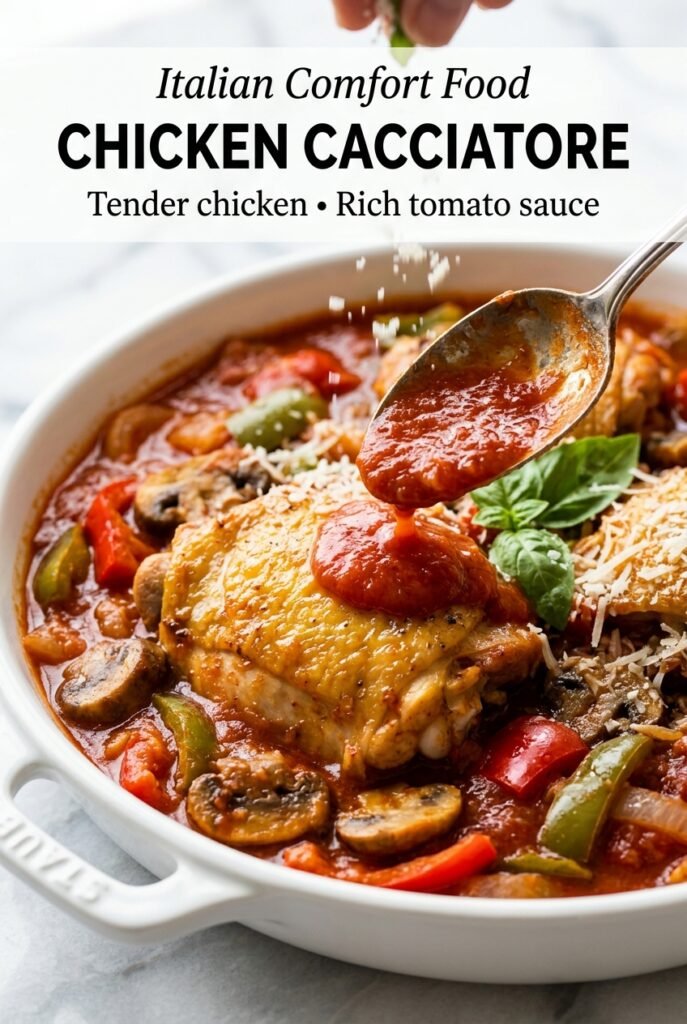
Classic Chicken Cacciatore
Chicken cacciatore earns its place in the dinner rotation when the sauce turns rich and layered, the chicken goes tender enough to fall from the bone, and the whole pan…
Tip: save now, read later.
Chicken cacciatore earns its place in the dinner rotation when the sauce turns rich and layered, the chicken goes tender enough to fall from the bone, and the whole pan tastes like it cooked for hours even though it didn’t. The best versions don’t drown the chicken in tomato sauce. They build flavor in stages, letting the onions, peppers, mushrooms, and browned bits from the chicken do the heavy lifting before the tomatoes ever go in.
This version uses bone-in, skin-on thighs for a reason. They stay juicy through the simmer and give the sauce more body than lean cuts ever could. A little red wine adds depth, but it’s the slow reduction with tomato paste and herbs that gives the sauce that rustic, savory finish people come back for. The vegetables aren’t just filler here; they soften, sweeten, and help turn the sauce from one-note into something worth mopping up with bread.
Below, I’ve included the searing cue that matters most, the ingredient choices that actually change the result, and a few easy variations for when you want to serve it over something other than pasta.
The sauce thickened up beautifully and the chicken was tender enough to pull apart with a spoon. I served it over polenta and my husband went back for seconds before I even sat down.
Save this Chicken Cacciatore for the nights when you want tender braised chicken, a rich tomato-pan sauce, and one skillet doing all the work.
The Browning Step That Gives Cacciatore Its Depth
If the chicken goes in pale and stays pale, the sauce will taste flat no matter how many herbs you add. The real flavor starts when the thighs brown properly and leave those dark, sticky bits in the pan. That fond gets dissolved with the wine and becomes part of the sauce instead of sitting at the bottom doing nothing.
The other common mistake is crowding the vegetables or rushing the simmer. Mushrooms and peppers need enough time in the pan to lose their raw edge and pick up some color. Then the chicken needs a gentle simmer, not a hard boil, so the meat turns tender without the sauce reducing into something salty and heavy.
- Bone-in, skin-on chicken thighs — These hold up best during braising and bring more flavor than boneless pieces. If you swap in boneless thighs, cut the simmering time back and watch closely so they don’t go stringy.
- Tomato paste — This is what deepens the sauce fast. Cooking it for a minute before adding liquid takes away the raw, metallic edge and gives the tomato base a more concentrated taste.
- Dry red wine — Wine adds a rounder finish than broth alone. If you skip it, use chicken broth plus a teaspoon of red wine vinegar at the end to bring some of that brightness back.
- Cremini mushrooms — They bring a fuller, earthier flavor than white mushrooms. If cremini aren’t available, white mushrooms work, but the sauce will be a little lighter.
Building the Sauce in the Right Order
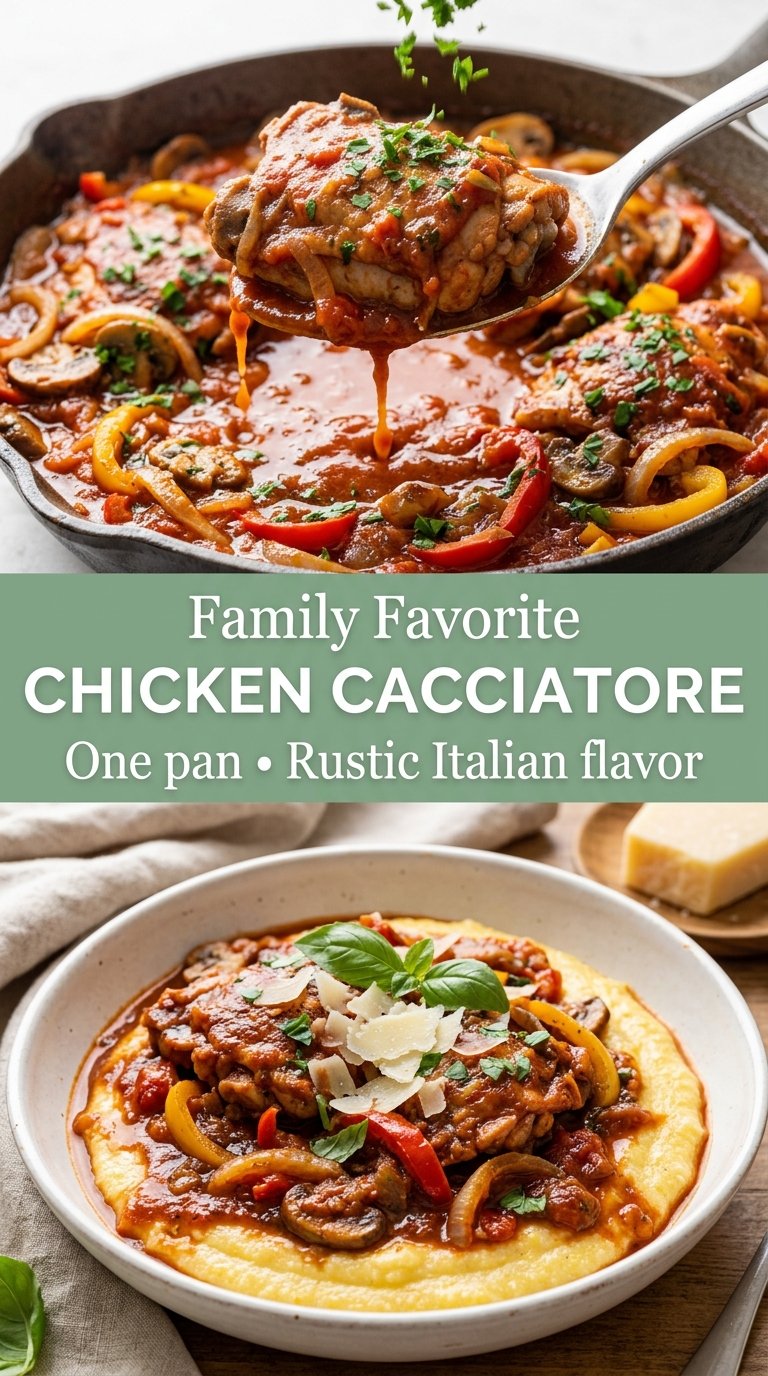
The order matters here because each layer depends on the one before it. The chicken gets seared first so the pan has flavor. The vegetables go in next so they can soften and pick up those browned bits, and the tomato paste needs a minute of heat before the liquids go in so it loses that canned edge.
Use the wine to loosen the pan, not to drown it. You want the liquid to pull up the browned residue and reduce slightly before the tomatoes and broth go in. That short simmer concentrates the base of the sauce and keeps the finished dish from tasting thin.
- Onion, peppers, and mushrooms — This trio gives the sauce its body and sweetness. Slice the peppers evenly so they soften at the same pace, and don’t add the garlic too early or it can burn before the pan is deglazed.
- Crushed tomatoes — Crushed tomatoes give the sauce a rustic texture that clings to chicken and pasta. If you use whole tomatoes, break them up by hand or with a spoon so the sauce doesn’t stay too chunky.
- Dried oregano, basil, thyme, and Italian seasoning — Together they create that classic cacciatore profile without needing a long herb list. If you only have one or two, keep oregano and basil; those carry the most recognizable flavor.
- Fresh parsley and basil — These go on at the end because they brighten the finished dish. Add them after the heat is off so they stay fresh instead of turning dull and muddy.
The Simmer That Turns It Into Dinner
Searing for Real Color
Pat the chicken dry before it ever hits the pan. Moisture is the enemy of browning, and wet skin will steam before it crisps. Let each thigh sit undisturbed until the skin releases easily and the color is deep golden with a few darker spots. If it sticks, it needs another minute.
Softening the Vegetables
The onion, peppers, and mushrooms should cook until they shrink, gloss over, and start picking up a little color around the edges. That’s when their flavor turns sweet and savory instead of raw and sharp. If the pan looks dry, add a small splash of olive oil rather than turning up the heat and scorching the garlic later.
Finishing with a Gentle Braise
Once the chicken goes back into the sauce, keep the heat low enough that you see small bubbles, not a hard boil. A rough boil can tighten the meat and push the sauce toward greasy. When the chicken is 165°F and the meat near the bone feels loose, it’s ready. The sauce should cling to a spoon instead of running off like soup.
Make It Dairy-Free Without Losing the Comfort
This recipe is naturally dairy-free as written if you skip the Parmesan at serving. The sauce still tastes full and rich because the chicken skin, vegetables, and tomato paste carry the depth. If you want a salty finish without cheese, use a little extra parsley and serve with crusty bread or polenta.
Swap the Wine for Broth
Chicken broth works if you don’t cook with wine. The sauce will be a little less sharp and slightly more savory, so add a small splash of red wine vinegar or lemon juice at the end if you want the same lift the wine gives.
Use Boneless Thighs for Faster Cooking
Boneless thighs shave off some time and are easier to eat, but they don’t bring quite as much flavor to the pot. Start checking them around 20 to 25 minutes of simmering so they stay tender. The sauce still works beautifully, just with a slightly lighter body.
Serve It Over Something Low-Carb
For a lower-carb plate, spoon the cacciatore over cauliflower mash, sautéed zucchini, or roasted spaghetti squash. You still get the same saucy, braised-chicken comfort, but the base stays lighter and lets the tomato-herb sauce take center stage.
Storage and Reheating
- Refrigerator: Store in an airtight container for up to 4 days. The sauce often tastes even better on day two.
- Freezer: It freezes well for up to 3 months. Cool it completely first, and freeze the chicken with plenty of sauce so it doesn’t dry out on thawing.
- Reheating: Reheat gently on the stovetop over low heat, covered, with a splash of broth if the sauce has thickened. High heat can make the chicken tough and can cause the sauce to break around the edges.
Answers to the Questions Worth Asking
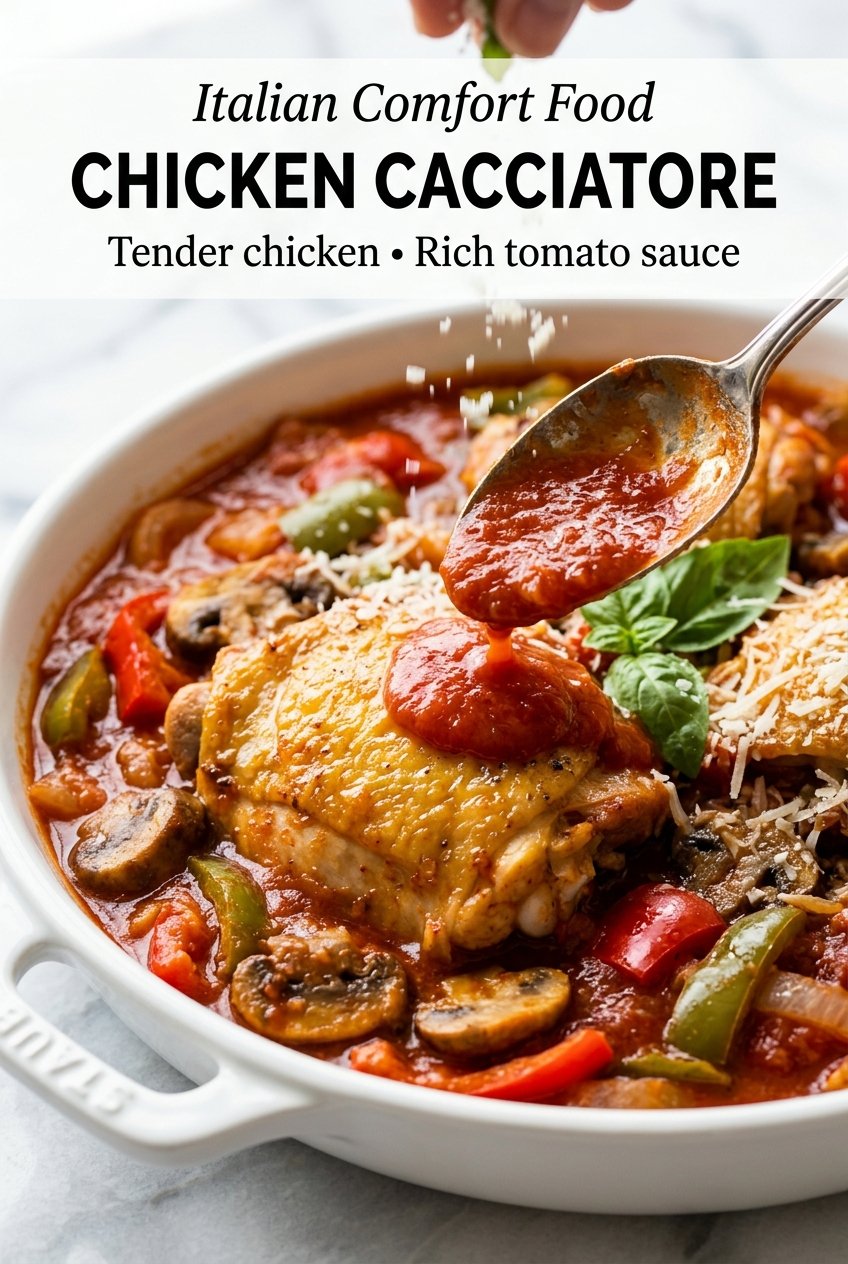
Classic Chicken Cacciatore
Ingredients
Equipment
Method
- Pat the chicken thighs dry and season both sides with salt and black pepper.
- Heat the olive oil in a large Dutch oven or deep skillet over medium-high heat. Sear the chicken for 5–6 minutes per side until golden brown, then transfer to a plate.
- Add the onion, red bell pepper, green bell pepper, and mushrooms to the pan. Sauté for 6–8 minutes until softened and lightly caramelized.
- Stir in the garlic and tomato paste, then cook for 1 minute until fragrant.
- Pour in the red wine and scrape the browned bits from the bottom of the pan. Simmer for 2 minutes.
- Add the crushed tomatoes, chicken broth, oregano, basil, thyme, Italian seasoning, and bay leaves. Stir until combined.
- Return the chicken to the pan, nestling it into the sauce. Cover and simmer over low heat for 35–40 minutes, or until the chicken reaches an internal temperature of 165°F and is tender.
- Remove the bay leaves, then sprinkle with chopped parsley and garnish with fresh basil.
- Serve hot over pasta, creamy polenta, mashed potatoes, or crusty bread, and finish with Parmesan cheese if desired.
