
Sourdough Banana Bread
Sourdough banana bread turns overripe bananas and leftover starter into a loaf that stays moist for days, slices cleanly once cooled, and carries just enough tang to keep the sweetness…
Tip: save now, read later.
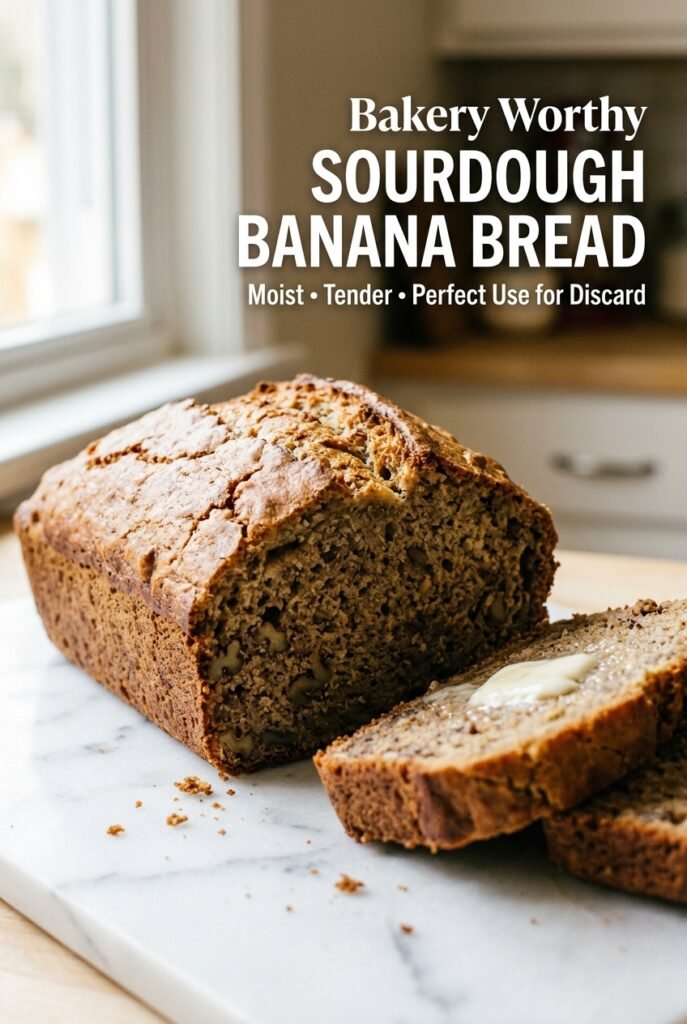
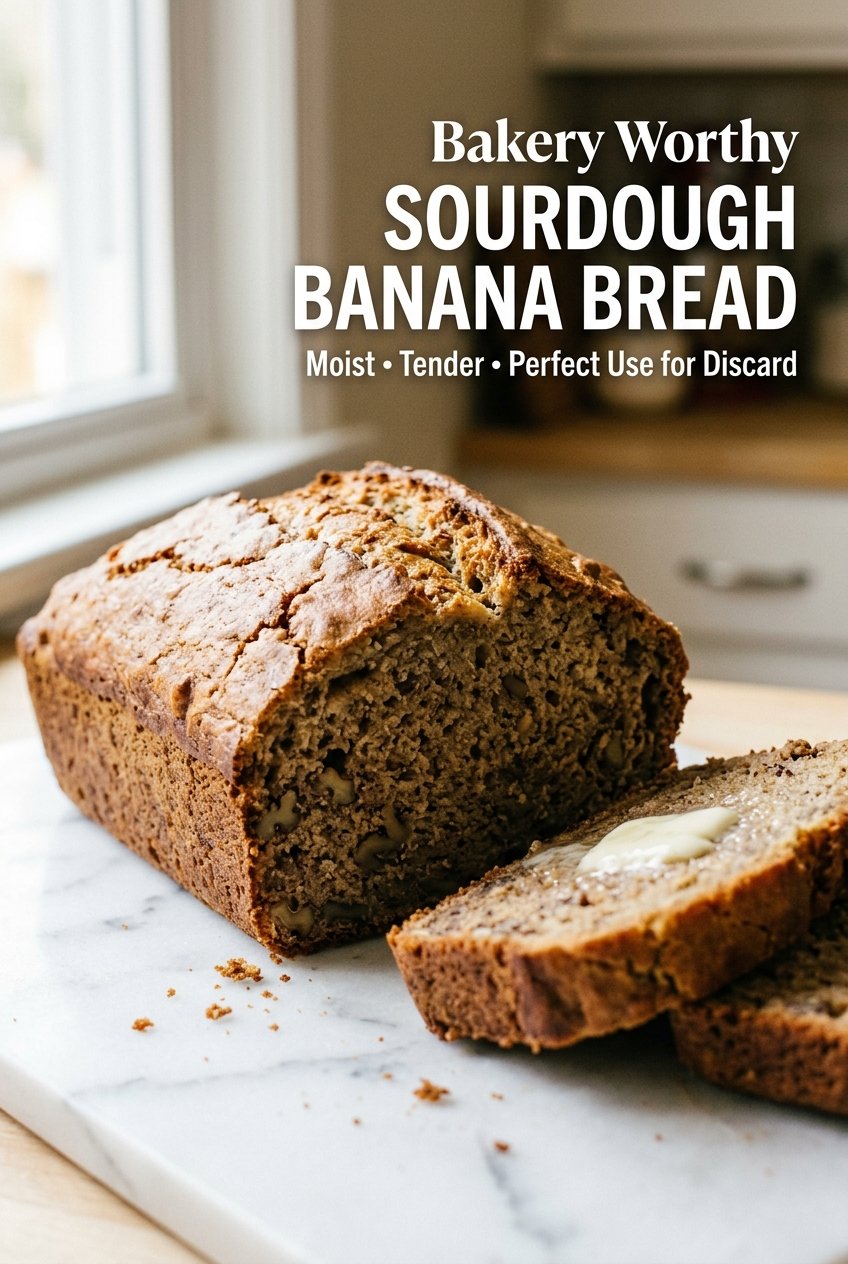
Sourdough banana bread turns overripe bananas and leftover starter into a loaf that stays moist for days, slices cleanly once cooled, and carries just enough tang to keep the sweetness in check. The crumb comes out tender instead of gummy, and the top bakes into that deep golden, slightly cracked lid that tells you the loaf is done the right way.
What makes this version work is the balance: ripe bananas bring moisture and natural sweetness, while sourdough discard adds flavor without making the bread taste overtly sour. The extra lift comes from both baking soda and baking powder, which helps the loaf rise even though banana bread batter is heavy and loaded with fruit puree. I also like using melted butter instead of creaming softened butter because it keeps the texture soft and lets the bananas stay front and center.
Below, you’ll find the exact signs that the batter is mixed enough, how to tell when the center is baked through, and a couple of smart ways to customize the loaf without losing that classic banana bread texture.
The sourdough discard kept the loaf unbelievably moist, and the crumb set up perfectly after cooling. I used chocolate chips and walnuts, and the banana flavor still came through without tasting too sweet.
Save this sourdough banana bread for the days when you want a moist loaf with a tangy edge, a crackly top, and a smart way to use up discard.
The Reason Banana Bread Turns Gummy Instead of Tender
The biggest mistake with banana bread is chasing extra moisture until the batter turns heavy and wet. Bananas and sourdough discard already bring plenty of moisture, so the goal is a batter that looks thick and somewhat lumpy, not smooth like cake batter. Overmixing after the flour goes in develops too much gluten and gives you a tight, rubbery slice instead of a soft crumb.
The other trap is underbaking. Banana bread can look done on top long before the center is set, especially in a loaf pan where the middle holds heat differently than the edges. You want a deeply browned top with the center just set and a tester coming out clean or with a few moist crumbs, not wet batter.
What Each Ingredient Is Doing in This Sourdough Banana Bread
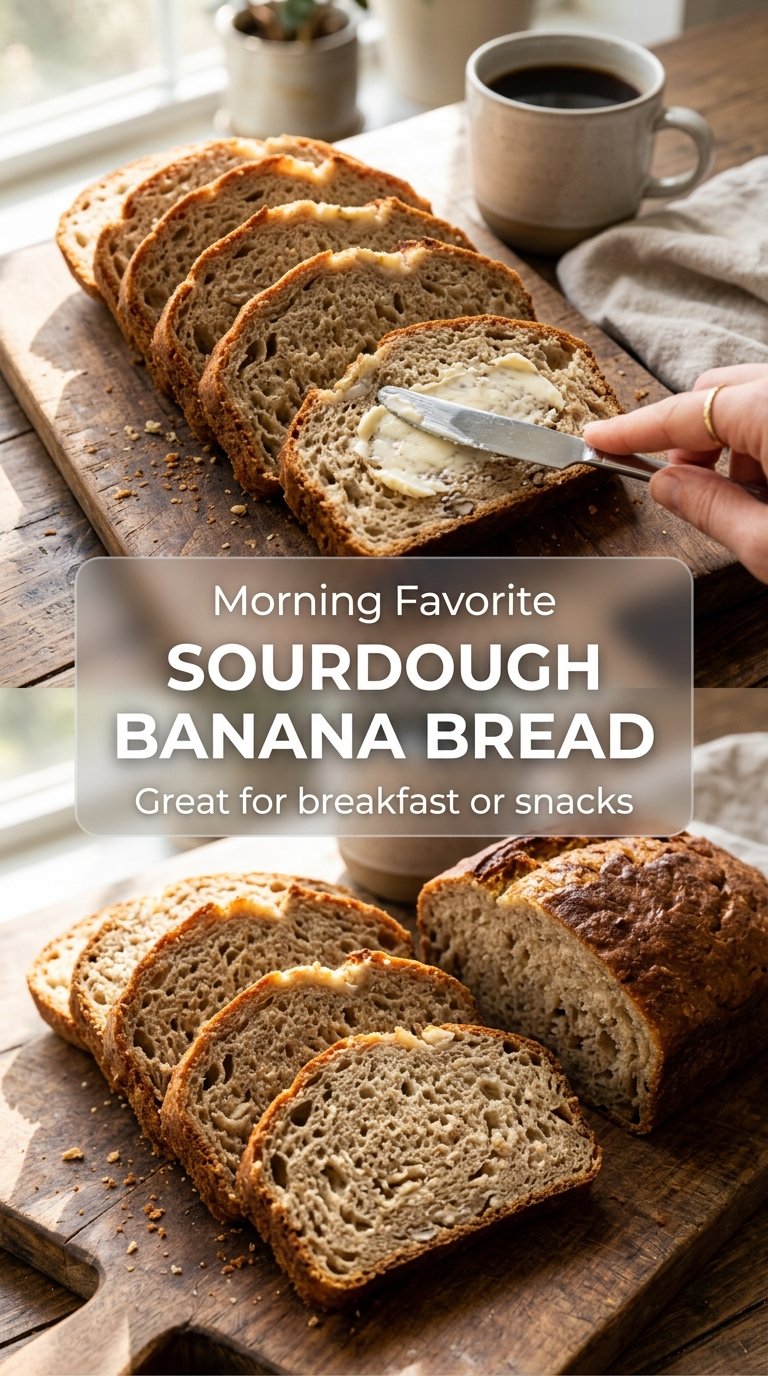
- Sourdough discard — This adds subtle tang and helps the loaf stay soft without making it taste sour. Room-temperature discard blends more easily into the batter, which keeps you from overmixing. If your discard is very thick, whisk it briefly before adding it so it disappears into the wet ingredients.
- Ripe bananas — These are the flavor and moisture engine here. Use bananas with lots of brown spotting or nearly black skins for the sweetest, strongest banana flavor. If yours are a little underripe, warm them in the oven for a few minutes until they soften and darken, then mash them well.
- Melted butter — Butter gives the loaf a richer, more bakery-style crumb than oil. Melted butter also mixes quickly with the bananas and discard, which helps keep the batter from being worked too much. If you need a dairy-free loaf, use a neutral oil in the same amount; the texture stays moist, but you lose a little of that rounded butter flavor.
- Brown sugar and granulated sugar — The brown sugar adds depth and a little extra moisture, while the granulated sugar helps the crust brown and keeps the sweetness balanced. You can reduce the granulated sugar slightly if your bananas are extremely ripe, but don’t cut both sugars too aggressively or the loaf loses tenderness.
- Flour, baking soda, and baking powder — The flour gives the loaf structure, and the two leaveners work together to lift a batter that’s naturally dense from bananas and discard. Baking soda reacts with the acidic ingredients, while baking powder gives the bread a little extra insurance in the oven. Use all-purpose flour here; bread flour makes the loaf chewier than you want.
- Cinnamon, walnuts, and chocolate chips — Cinnamon rounds out the banana flavor without making the loaf taste spiced. Walnuts add crunch and keep each slice interesting, while chocolate chips melt into little pockets that work well with the tangy batter. Leave both add-ins out if you want a cleaner banana bread, or keep them to a total of about one cup so the loaf still bakes through properly.
How to Mix the Batter So the Crumb Stays Soft
Start With the Wet Ingredients
Whisk the discard, mashed bananas, eggs, melted butter, both sugars, and vanilla until the mixture looks smooth and glossy. A few banana streaks are fine, but you don’t want large chunks hiding in the batter because they can create wet pockets in the finished loaf. The eggs should be fully incorporated before the flour goes in so the batter bakes evenly from edge to center.
Fold, Don’t Beat
Add the dry ingredients and stir only until the flour disappears. The batter will look thick, and that’s exactly right. If you keep mixing after the flour is hydrated, the loaf turns dense and the top can dome unevenly or sink in the center.
Watch the Pan, Not the Clock
Scrape the batter into a prepared 9×5-inch loaf pan and smooth the top. Bake until the crust is deep golden and a tester in the center comes out clean or with a few moist crumbs. If the top browns too quickly while the center is still loose, tent it loosely with foil for the last stretch of baking.
Let It Cool All the Way
Cool the bread in the pan for 15 minutes, then move it to a rack. Banana bread slices better after it cools fully, and the crumb finishes setting as it rests. If you cut into it too soon, the middle can seem gummy even when the loaf is baked properly.
Three Smart Ways to Adapt This Loaf
Make it dairy-free
Swap the butter for the same amount of neutral oil or melted dairy-free butter. Oil gives you the softest crumb and keeps the bread moist for days, while dairy-free butter adds a little more flavor. Either way, the loaf stays tender and slices well once cooled.
Skip the nuts and chocolate
Leave out both add-ins for a cleaner, more classic banana bread. The loaf will still be moist and flavorful, but the slices will hold together a little more neatly for breakfast or lunchboxes. If you want some texture without extra sweetness, sprinkle chopped walnuts on top instead of folding them in.
Make it gluten-free
Use a cup-for-cup gluten-free flour blend that includes xanthan gum. The loaf will still bake up moist, though the crumb will be a little more delicate and slightly less springy than the original. Let it cool completely before slicing so it sets properly.
Add a stronger banana flavor
Roast the bananas in their skins at 300°F until the peels darken and the fruit softens, then cool and mash them. That concentrates the flavor and brings a deeper caramel note to the loaf. It’s a good trick when your bananas are ripe but not quite at that super-sweet stage.
Storage and Reheating
- Refrigerator: Store tightly wrapped at room temperature for up to 3 days, or refrigerate for up to 5 days if your kitchen is warm. The crumb firms up a bit in the fridge, but the flavor stays good.
- Freezer: This loaf freezes well. Wrap individual slices or the whole cooled loaf tightly in plastic, then foil, and freeze for up to 3 months.
- Reheating: Thaw at room temperature, then warm slices briefly in the microwave or a 300°F oven. Don’t blast it on high heat or the edges dry out before the center softens.
Questions I Get Asked About This Recipe
Sourdough Banana Bread
Ingredients
Equipment
Method
- Preheat the oven to 350°F (175°C). Grease and line a 9×5-inch loaf pan with parchment paper.
- Whisk the sourdough discard, mashed bananas, eggs, melted butter, brown sugar, granulated sugar, and vanilla extract until smooth and creamy. Stop when no streaks of egg or sugar remain.
- In a separate bowl, combine the flour, baking soda, baking powder, salt, and cinnamon. Mix until the cinnamon is evenly distributed.
- Fold the dry ingredients into the wet mixture until just combined. Do not overmix—small flour streaks are ok as long as they disappear with a few folds.
- Fold in the walnuts and chocolate chips if using. Mix just enough to distribute them through the batter.
- Pour the batter into the prepared loaf pan and smooth the top evenly. Tap the pan once to settle the batter and reduce air bubbles.
- Bake for 55–65 minutes at 350°F (175°C), until a toothpick inserted into the center comes out clean or with a few moist crumbs. The loaf should have a deep golden crust with a naturally cracked top and smell strongly of bananas.
- Cool in the pan for 15 minutes. Transfer to a wire rack to cool completely before slicing for the cleanest cuts.
